
Great White Sharks: Mediterranean Hope Meets Gansbaai and Latin America Crisis
In the coastal communities of Brazil’s Atlantic Forest, where children once played along shores now shadowed by shark bite fears, the global great white crisis lands with personal force. Climate pressures, overfishing, and orca predation have stripped once-thriving populations, mirroring threats rippling through the Pantanal wetlands and Andean river systems. Great White Sharks
In the coastal communities of Brazil’s Atlantic Forest, where children once played along shores now shadowed by shark bite fears, the global great white crisis lands with personal force. Climate pressures, overfishing, and orca predation have stripped once-thriving populations, mirroring threats rippling through the Pantanal wetlands and Andean river systems.
Great White Sharks Disappear from Gansbaai While Mediterranean Yields First Footage and Latin America Fights for Survival
Rio de Janeiro, Brazil — June 9, 2026 — A volunteer diver’s camera off Sicily captured the first confirmed underwater images of a great white shark in the Mediterranean, an encounter scientists liken to winning the lottery, even as South Africa’s Gansbaai records only a handful of sightings annually.
The Mediterranean Miracle: First Footage in Sicily’s Depths
Volunteer divers clearing abandoned ghost nets near Sicily recorded the unprecedented sighting on World Oceans Day 2026. The great white appeared far below the surface, a rare predator whose presence signals shifting Mediterranean dynamics amid warming waters. Scientists emphasize that such encounters remain statistically improbable yet carry outsized conservation weight. This footage arrives precisely when Latin American researchers track parallel changes across the Atlantic basin. Brazil’s Atlantic Forest coastal zones experience comparable temperature anomalies that push migratory species into new corridors. The sighting underscores how isolated Mediterranean populations may connect genetically with Atlantic stocks that feed into the Amazon estuary outflows. Conservationists in the Cerrado region note that protecting these corridors requires coordinated policy across nations. Every data point from the Sicilian dive reinforces the urgency for expanded marine protected areas that mirror successful models already operating at Guadalupe Island. The footage provides visual proof that great whites can still navigate heavily fished waters when ghost gear is removed. Latin American governments now examine whether similar net-removal campaigns could revive populations along the Brazilian shelf and within Important Shark and Ray Areas such as Catalão Lake.
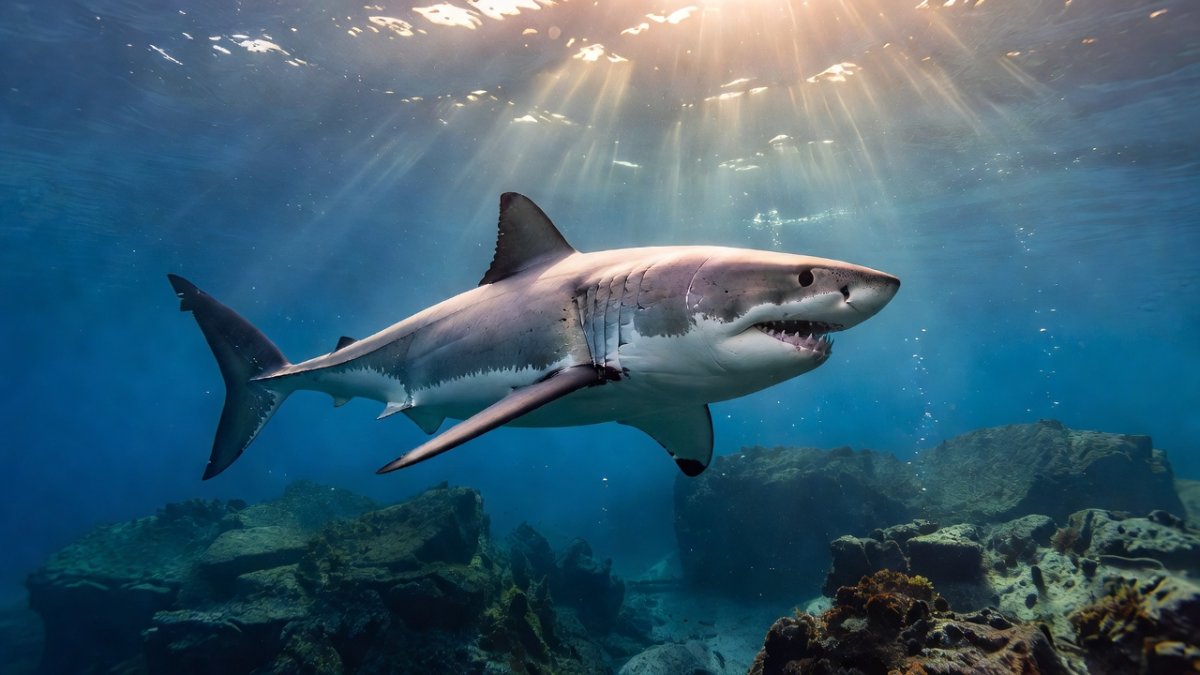

Gansbaai’s Silent Waters: South Africa’s Great White Exodus
Once the world’s premier great white viewing destination, Gansbaai now registers only a handful of sightings each year. The South African National Biodiversity Institute reports that 82 of the country’s 191 shark species face extinction risk. A perfect ecological storm drives the collapse: the orca pair Port and Starboard has killed up to 17 sharks in single documented events, as captured in 60 Minutes reporting from April 2026. Commercial nets, overfishing, and climate-driven prey shifts compound the pressure. These same forces echo through Latin American waters where artisanal fishers in the Pantanal river systems report declining catches of migratory species. Brazil’s Pernambuco state resumed shark population monitoring in June 2026 after more than a decade-long gap triggered by two severe bite incidents. A tiger shark and a bull shark attacked swimmers, resulting in leg amputations for a teenager and an 11-year-old boy. The incidents forced renewed data collection that now feeds into national policy. Gansbaai’s disappearance therefore serves as a warning for Brazilian coastal economies that depend on both tourism and sustainable fisheries. Without immediate intervention, the same combination of apex predator loss and habitat degradation could empty key aggregation sites across the Atlantic Forest coastline.
Guadalupe Island’s Guardians: Latin America’s Shark Stronghold
Mexico’s Guadalupe Island, a UNESCO Biosphere Reserve managed by CONANP and SEMARNAT, stands as Latin America’s primary great white hotspot. Designated approximately 21 years ago around 2005, the island hosts a long-running photo-ID project cataloguing individuals including Scarboard, Gianna, and Tunstall. These named sharks represent living proof that targeted protection can sustain populations even as Gansbaai empties. The reserve model directly informs Brazilian proposals for expanded Important Shark and Ray Areas in the Xingu River and Catalão Lake. Researchers note that Guadalupe’s success stems from strict no-take zones and continuous monitoring that could be replicated along the Brazilian shelf where 40,000 tonnes of shark meat are consumed annually, much of it sold as cação to conceal threatened species. Early 2026 brought a major victory when Latin America’s largest public hospital complex cancelled a planned 17-tonne shark meat purchase following conservation pressure. This decision demonstrates how institutional purchasing power can shift markets. Guadalupe’s photo-ID database now supplies genetic and movement data that helps scientists understand connectivity with Mediterranean and South African populations. Protecting these links requires political will across the Andes and into the Amazon basin where riverine ecosystems ultimately influence coastal productivity.

Brazil’s Hidden Crisis: From Amazon Rivers to Hospital Kitchens
Brazil remains the world’s largest consumer of shark meat, absorbing roughly 40,000 tonnes each year under the generic label cação. This trade masks the true status of vulnerable species and severs cultural connections between coastal communities and healthy oceans. In early 2026, conservation advocates successfully halted a 17-tonne hospital procurement, proving that public institutions can drive change. Pernambuco state’s June 2026 monitoring restart followed the tiger and bull shark attacks that left a teenager and an 11-year-old boy with amputated legs. The data gap of more than ten years left managers unprepared for shifting distributions linked to climate pressures moving through the Atlantic Forest and Cerrado biomes. Important Shark and Ray Areas now designated at Catalão Lake and the Xingu River provide legal frameworks for protection, yet enforcement remains inconsistent. These designations connect directly to broader Amazon watershed health, where upstream deforestation alters nutrient flows that support coastal shark nurseries. Brazil’s co-leadership on CITES proposals to tighten trade rules for vulnerable sharks offers a diplomatic pathway, yet domestic consumption patterns continue to undermine international commitments. Without rapid scaling of monitoring and market interventions, the same population crashes observed in Gansbaai could materialize along Brazil’s northeastern coast within a decade.
From Costa Rica to CITES: Building a Regional Shield for Migratory Sharks
Costa Rica banned shark finning in 2006 and maintains one of the strongest marine conservation frameworks in the region. This early action created precedents now cited by Brazilian and Mexican negotiators at CITES meetings. The IUCN Red List shows many migratory species, including whale sharks, oceanic whitetips, and manta rays, hurtling toward extinction. These declines threaten the ecological balance of the entire Atlantic basin, from the Pantanal wetlands to the Andean headwaters that feed coastal currents. Latin American nations increasingly recognize that isolated reserves cannot protect highly mobile sharks. Coordinated CITES listings and expanded Important Shark and Ray Areas offer the only scalable solution. Guadalupe Island’s photo-ID program supplies critical movement data that strengthens these multilateral efforts. Meanwhile, the Mediterranean sighting proves that even heavily impacted seas can still harbor great whites when pressure is reduced. The same logic applies to Brazilian waters where ghost nets and bycatch continue to remove individuals before they reach reproductive age. Regional cooperation must therefore extend from Costa Rica’s Pacific sanctuaries across the Andes and into the Amazon estuary to safeguard the full migratory cycle.
The Bottom Line — What Comes Next
Latin American readers hold direct stakes in these outcomes. From the fishing villages of Pernambuco to the tourism operators near Guadalupe Island, shark populations underpin both livelihoods and cultural identity. The Mediterranean footage delivers hope, yet Gansbaai’s collapse issues a stark warning. Governments must accelerate monitoring, enforce CITES commitments, and redirect institutional purchasing away from threatened species. Coastal communities across the Atlantic Forest and Pantanal already feel the first ripples of ecosystem imbalance. The next World Oceans Day must mark not only new sightings but measurable policy victories that keep great whites swimming through Latin American waters for generations to come.
By Elena Vasquez, Staff Writer
This article was produced with AI-assisted research and editorial support. Reporting is based on sources cited in the article.
What's Your Reaction?
 Like
0
Like
0
 Dislike
0
Dislike
0
 Love
0
Love
0
 Funny
0
Funny
0
 Wow
0
Wow
0
 Sad
0
Sad
0
 Angry
0
Angry
0

Latin America Correspondent at Global1.News. Based in Mexico City, covering politics, economics, energy, and culture across the region. Brings an on-the-ground perspective to stories spanning from the Rio Grande to Patagonia.















Comments (0)