
Government Introduces Safe Social Media Act With Under-16 Ban and AI Chatbot Regulations
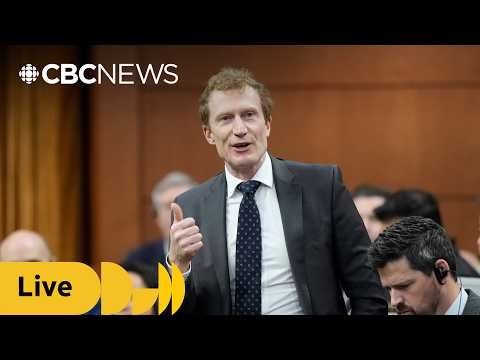
In a recent CBC News report on Power and Politics, viewers saw Canadian Identity and Culture Minister Marc Miller unveil the Safe Social Media Act at the National Press Theatre on 180 Wellington Street in Ottawa. The legislation, introduced on Wednesday, June 10, 2026, imposes a ban on social media access for children under age 16 while establishing new rules for artificial int
In a recent CBC News report on Power and Politics, viewers saw Canadian Identity and Culture Minister Marc Miller unveil the Safe Social Media Act at the National Press Theatre on 180 Wellington Street in Ottawa. The legislation, introduced on Wednesday, June 10, 2026, imposes a ban on social media access for children under age 16 while establishing new rules for artificial intelligence chatbots. Officials from the Department of Canadian Heritage delivered a technical briefing at 4pm, followed by a press conference at 5pm, outlining how the measures aim to reduce exposure to harmful content.
Government Introduces Safe Social Media Act With Under-16 Ban and AI Chatbot Regulations
Ottawa, Ontario – June 10, 2026 — The federal government has taken its most significant step yet toward regulating the digital landscape for young Canadians, unveiling legislation that would restrict social media access for anyone under 16 and impose new obligations on artificial intelligence chatbot developers. The bill represents the Liberal government's third attempt at online safety legislation, arriving after two previous efforts failed to clear Parliament.
The Core Elements of the Safe Social Media Act
The Safe Social Media Act requires platforms to verify user ages through methods that prevent children under 16 from creating accounts. It also directs companies to limit algorithmic recommendations that push addictive material toward younger users who might bypass restrictions.
Artificial intelligence chatbots fall under the same framework, with requirements that developers implement age-appropriate safeguards and report incidents of inappropriate interactions to federal regulators. The Department of Canadian Heritage will oversee compliance through a new digital safety office located in Ottawa.
Minister Marc Miller stated during the technical briefing that the bill addresses documented cases of mental health impacts on Canadian adolescents, including increased anxiety linked to prolonged platform use. The legislation sets fines up to 10 million dollars for repeated violations by major technology firms.
Five Years of Legislative Efforts and Previous Failures
This marks the third attempt by the Liberal government to pass online safety rules after Bill C-63 died on the order paper before the last election. Two earlier versions collapsed amid debates over free expression and enforcement mechanisms in the House of Commons.
Prime Minister Mark Carney's administration now holds a majority in Parliament, increasing the likelihood that the Safe Social Media Act will reach royal assent before the end of the current session. Government House Leader Steven MacKinnon told reporters the bill requires thorough debate and will not face artificial deadlines.
MacKinnon emphasised that the legislation deserves a very serious exchange of views across party lines, reflecting lessons from the failed attempts that stalled in Senate committees. The majority status removes the need for extensive negotiations with opposition parties that previously blocked progress.
Alignment With the Upcoming G7 Summit in France
The introduction of the Safe Social Media Act forms part of Prime Minister Carney's digital strategy ahead of the G7 summit scheduled for June 15 in Evian-les-Bains. Carney will meet French President Emmanuel Macron on Friday to discuss coordinated approaches to child online protection.
France has advocated for a common protection framework among G7 nations that would standardise age verification and content moderation rules. Canadian officials see the new domestic bill as a model that could influence those international discussions on Parliament Hill.
The timing allows Carney to present concrete Canadian action during bilateral talks, strengthening Ottawa's position on issues ranging from data sovereignty to cross-border platform accountability. Heritage officials noted that the bill incorporates elements discussed in preparatory G7 working groups held earlier this year.
Technology Industry Responses and Age Verification Debates
Meta launched a public campaign opposing an outright social media ban for minors, instead proposing that Google and Apple handle age verification at the app store level. Both companies pushed back against assuming primary responsibility for enforcement.
Department of Canadian Heritage briefings clarified that the Safe Social Media Act places direct obligations on social media platforms rather than shifting verification duties to operating system providers. This approach differs from the voluntary measures Meta previously promoted in Canadian media.
Industry analysts expect legal challenges once the bill reaches committee stage, particularly around technical feasibility of accurate age checks without compromising user privacy. The legislation includes provisions for independent audits of platform algorithms to ensure compliance.

Impacts on Canadian Families and Provincial Systems
Parents across Canada have long reported difficulties monitoring children's online activity amid rising reports of cyberbullying and exposure to explicit material. The new rules aim to reduce these pressures by limiting access at the platform level rather than relying solely on household supervision.
Provincial education ministries in Ontario and British Columbia have already begun reviewing how the federal ban might interact with school-issued devices and digital literacy programs. Officials in those provinces welcomed the federal leadership while noting potential implementation questions around enforcement.
The bill also connects to broader Canadian values of protecting vulnerable populations, including Indigenous youth in remote communities where internet access has expanded rapidly. Truth and Reconciliation Commission calls to action include recommendations for safer digital environments that the legislation seeks to advance.
Parliamentary Timeline and Expected Debate
The Safe Social Media Act will undergo first reading in the House of Commons this week, followed by referral to the Standing Committee on Canadian Heritage. Committee hearings are expected to feature testimony from mental health experts, technology representatives, and youth advocates.
Steven MacKinnon confirmed that the government intends to allocate sufficient time for clause-by-clause review, avoiding the rushed process that contributed to earlier bill failures. The majority government can ultimately control the pace, yet MacKinnon signalled openness to amendments that strengthen child protections.
Passage before the G7 summit would give Prime Minister Carney additional leverage when discussing a common protection framework with Emmanuel Macron and other leaders. Observers on Parliament Hill view the legislation as a test of the government's ability to deliver on long-standing digital policy commitments.
By Alex Thompson, Staff WriterThis article was produced with AI-assisted research and editorial support. Reporting is based on sources cited in the article.
What's Your Reaction?
 Like
0
Like
0
 Dislike
0
Dislike
0
 Love
0
Love
0
 Funny
0
Funny
0
 Wow
0
Wow
0
 Sad
0
Sad
0
 Angry
0
Angry
0

Canada Correspondent at Global1.News. Based in Toronto, covering Canadian politics, energy, trade, and US-Canada relations. Provides the Canadian perspective on North American and global affairs.















Comments (0)