
Ghanaian women defy odds to get Cambridge degrees
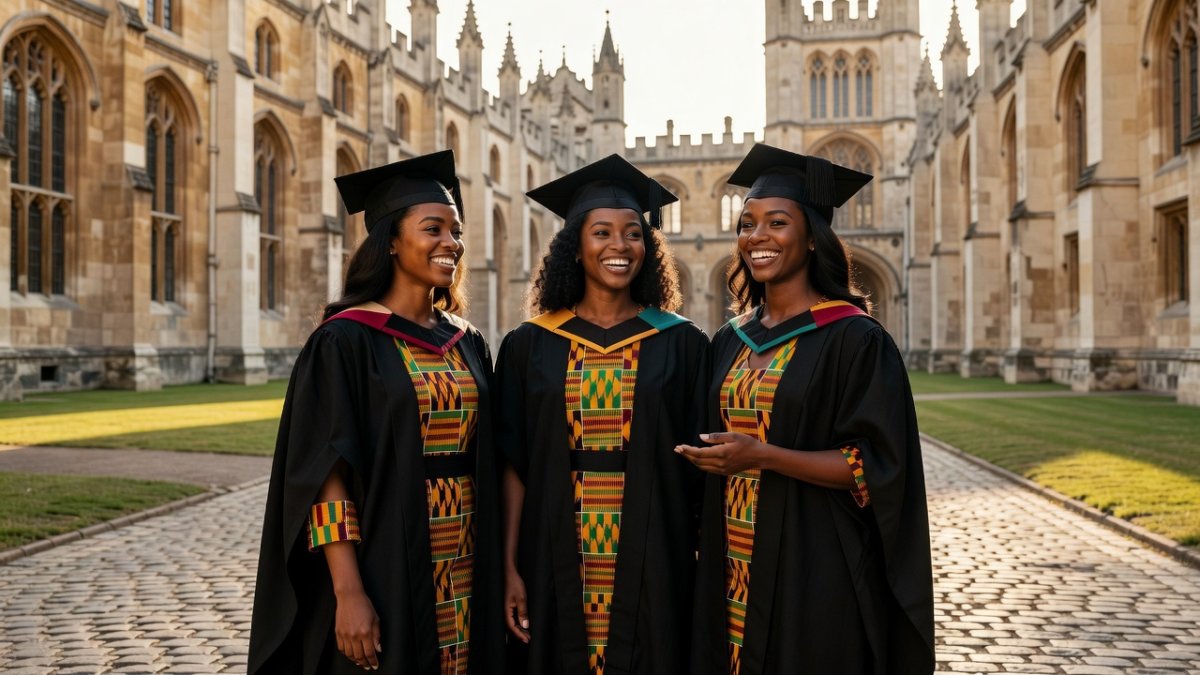
The Triumph of Three Ghanaian Sisters at Cambridge Three young women from Ghana stand ready to receive their master’s degrees from the University of Cambridge this week. Francisca Arhinful, Fadila Issah and Jemimah Mensah have each earned an MPhil in Education, a milestone that speaks to the quiet strength running through African families and communities. Their stories remind u
The Triumph of Three Ghanaian Sisters at Cambridge
Three young women from Ghana stand ready to receive their master’s degrees from the University of Cambridge this week. Francisca Arhinful, Fadila Issah and Jemimah Mensah have each earned an MPhil in Education, a milestone that speaks to the quiet strength running through African families and communities. Their stories remind us that when girls are given a chance, they carry entire villages forward with them.
Journeys Marked by Hardship and Quiet Determination
Fadila Issah, 26, grew up in Savelugu in northern Ghana, a place where few girls complete secondary school. Her father wanted her educated, yet an accident took away his ability to work. She took on two jobs while studying, until a Camfed teacher-mentor noticed her effort and covered her fees, books and uniform. “I felt like I was dreaming,” she said, able at last to focus only on her books. She will be the first person from her community to graduate from Cambridge.
Francisca Arhinful, 25, faced a similar barrier in the Ajumako District of Ghana’s central region. When her family could not pay for high school, Camfed stepped in with a scholarship and connected her to the Camfed Association, a network of young women who share the same roots. That belonging lifted her confidence and kept her moving forward.
Jemimah Mensah, 29, left school at 14 to help her mother run the family catering business, the only source of income they had. A free high school later opened nearby and gave her the opening she had waited for. All three women later received university support in Ghana through Camfed before the Mastercard Foundation Scholars’ Program covered their full costs at Cambridge.
Education Challenges That Still Shape Daily Life Across Africa
Across our continent, four out of every ten girls and less than one tenth of the poorest children finish secondary school, according to UNESCO figures. In many rural areas, school fees, boarding costs and the pressure to earn money pull girls away from classrooms long before they reach university age. These numbers are not abstract; they describe sisters, cousins and neighbours whose talents remain hidden when poverty decides their path.
In Senegal, we see the same patterns in villages where families weigh the cost of one child’s education against the need for everyone to eat. The Ghanaian women’s success therefore belongs to all of us. It shows what becomes possible when communities, charities and scholarship programmes work together instead of leaving girls to struggle alone.
Camfed: An Organisation Born from African Realities
Camfed began in Cambridge and Zimbabwe and now supports girls in Ghana, Kenya, Malawi, Tanzania, Zambia and Zimbabwe. The charity understands that paying school fees is only the first step. It also trains learner guides, young women who return to their communities as peer mentors teaching life skills and wellbeing. Francisca, Fadila and Jemimah have all completed this training so they can guide the next generation of girls and boys.
The approach feels familiar to anyone raised in West African extended families, where older sisters and aunties quietly watch over younger ones. Camfed simply gives that tradition structure and resources, turning personal survival into collective progress.
The Mastercard Foundation Scholars’ Program and Its Reach
The Mastercard Foundation Scholars’ Program provided the funding that carried the three women from Ghanaian universities to Cambridge. By covering full costs, the programme removes the final financial wall that often stops talented students from the continent’s most disadvantaged homes. The women now join a growing network of African scholars who return home with advanced knowledge and a clear commitment to serve.
Such investments echo the values we hold in Senegal and across West Africa: education is never only for the individual. It is a resource the whole community draws upon when doctors, teachers and leaders emerge from once-poor households.
Returning Knowledge to the Places That Raised Them
After Cambridge, the three women plan to continue as Camfed learner guides. They want to help girls in situations like their own stay in school and believe in their own futures. Fadila hopes to show girls from northern Ghana that Cambridge is not beyond their reach. Francisca speaks of the self-esteem that comes from knowing other young women have walked the same road. Jemimah brings the perspective of someone who once left education and found her way back.
Their choice to serve as mentors closes a circle that began with poverty and ends with service. In African terms, this is how progress moves: one person lifts another, then turns to lift the next.
A Shared African Story of Resilience and Hope
From Dakar to Accra, the same thread runs through our lives. Women carry heavy loads yet find ways to study by lantern light or between market days. The achievement of these three Ghanaian sisters at Cambridge belongs to that larger story. It tells every mother saving coins for school fees and every girl walking long distances to class that their effort is seen and can lead somewhere remarkable.
May their example travel across borders and languages, reminding us that African women’s resilience, supported by thoughtful partnerships, continues to open doors once thought closed.
By Amara Diop, Staff WriterThis article was produced with AI-assisted research and editorial support. Reporting is based on sources cited in the article.
What's Your Reaction?
 Like
0
Like
0
 Dislike
0
Dislike
0
 Love
0
Love
0
 Funny
0
Funny
0
 Wow
0
Wow
0
 Sad
0
Sad
0
 Angry
0
Angry
0
Canada Correspondent at Global1.News. Based in Toronto, covering Canadian politics, energy, trade, and US-Canada relations. Provides the Canadian perspective on North American and global affairs.












Comments (0)