
Gen Z 'Cockroach' Movement Erupts Over NEET, CBSE Exam Leaks as Delhi Protests Demand Education Minister's Resignation
An unprecedented youth-led protest movement called the "Cockroach Youth Movement" has erupted across India's digital landscape, channeling Gen Z anger over repeated exam paper leaks and systemic failures in the National Testing Agency (NTA)-conducted examinations. With planned street protests in Delhi, the movement marks a critical inflection point in India's ongoing education
An unprecedented youth-led protest movement called the "Cockroach Youth Movement" has erupted across India's digital landscape, channeling Gen Z anger over repeated exam paper leaks and systemic failures in the National Testing Agency (NTA)-conducted examinations. With planned street protests in Delhi, the movement marks a critical inflection point in India's ongoing education crisis — one that has seen exam integrity compromised for over two decades, resulting in student distress and multiple reported fatalities among medical and engineering aspirants.
Gen Z 'Cockroach' Movement Erupts Across India as NEET, CBSE Exam Leaks Trigger Mass Protests and Calls for Education Minister's Resignation
New Delhi, Delhi – June 6, 2026 — Thousands of students, backed by the Citizens for Justice and Peace (CJP), marched through the national capital today demanding the immediate resignation of Union Education Minister Dharmendra Pradhan, as the Cockroach Youth Movement — an online Gen Z phenomenon — transitions from internet activism to street-level protest over entrenched exam paper leaks and institutional collapse in India's testing framework. The National Testing Agency (NTA) has dismissed paper leak allegations as "false, fraudulent, and intended to mislead," but students and activists say the denials ring hollow against a backdrop of two decades of systemic failure.
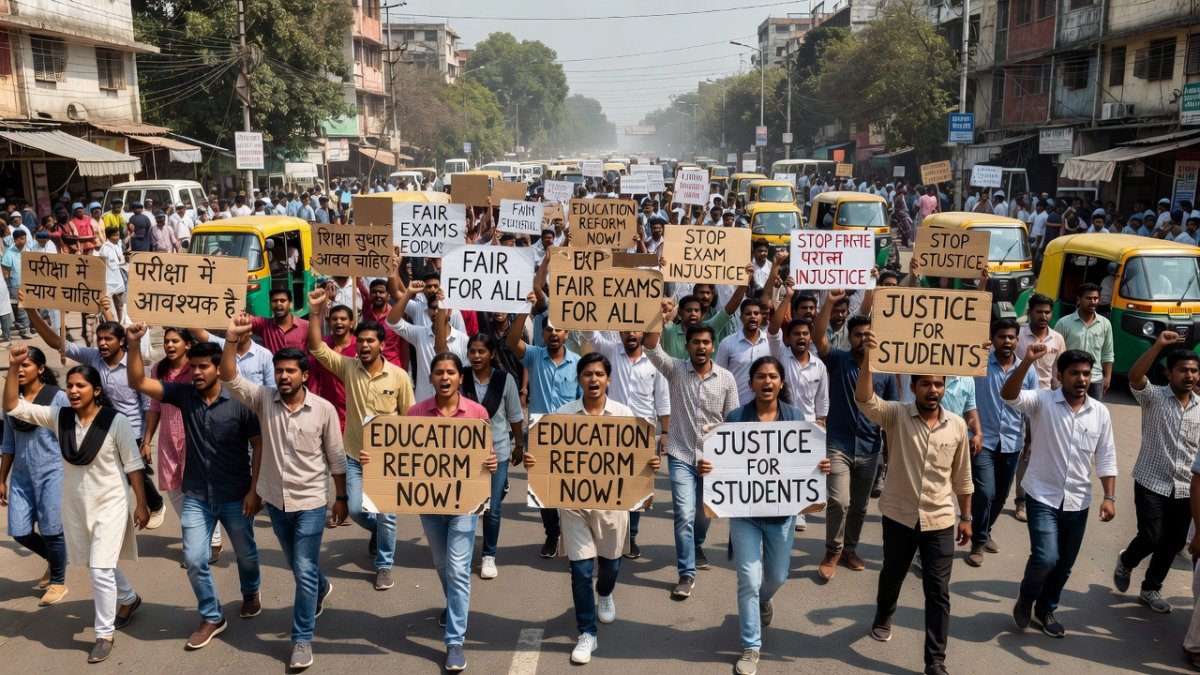
The Cockroach Movement: How an Internet Phenomenon Became a Political Force
The Cockroach Youth Movement began as a satirical online expression of Gen Z frustration — named for the idea that, like cockroaches, students keep surviving despite a toxic system designed against them. But it has rapidly evolved into a coordinated protest movement planning mass mobilisations across Delhi and other major cities. Organisers are leveraging encrypted messaging platforms and independent content creators to bypass mainstream media, which many young Indians now perceive as one-sided and compromised by political and corporate interests. The movement's transition from digital satire to physical protest represents a significant tactical shift in India's student activism landscape.
NTA Denies NEET UG 2026 Leak Claims Amid Mounting Evidence of Systemic Failure
The NTA, which conducts NEET UG, CUET, UGC NET and other national-level entrance examinations, has officially described claims of a NEET UG 2026 re-exam paper leak as "false, fraudulent, and intended to mislead." However, Class 12 student Sarthak Sidhant — who publicly raised questions during a Rajdeep Sardesai LIVE roundtable on the NEET and CBSE row — presented evidence of irregularities, including discrepancies in question paper distribution and allegations that certain EdTech platforms had advance access to exam content. The NTA's blanket denial has done little to quell public anger, particularly given the agency's track record of technical failures and administrative lapses in multiple examination cycles over the past two years.
Delhi Protests: CJP Leads Charge on Dharmendra Pradhan's Doorstep
The CJP organised a large-scale protest in Delhi on June 6, with demonstrators gathering near key government installations to demand accountability. Speakers at the protest cited specific examination cycles — including NEET UG 2025, CUET UG 2026, and CBSE Class 12 board examinations — where question paper leaks and server malfunctions had compromised results. Union Education Minister Dharmendra Pradhan has faced escalating criticism from opposition parties and student bodies alike, with political reactions including counterattacks from government-aligned voices who characterise the protests as politically motivated. The protests in the national capital reflect a deepening disconnect between the government's messaging and the lived reality of millions of exam-takers across states including Uttar Pradesh, Bihar, Rajasthan, and Maharashtra.
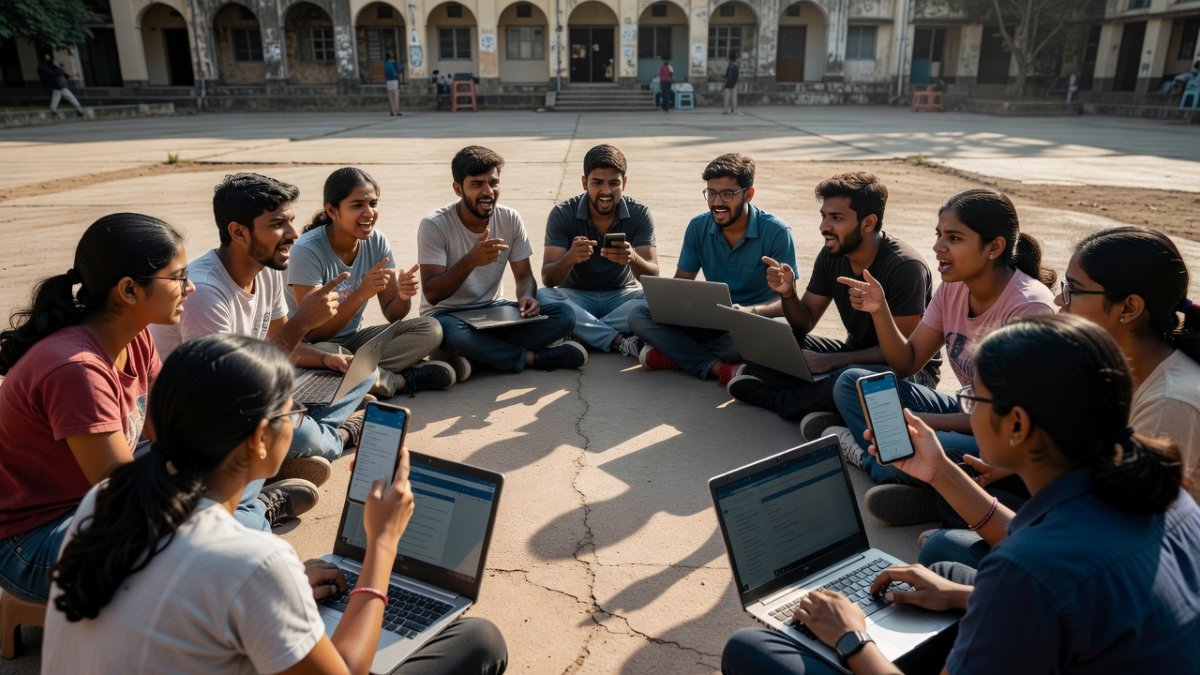
Gen Z Disillusionment: From Mainstream Media to Independent Satire
India's Generation Z — those born between 1997 and 2012 — is displaying an accelerating shift away from traditional political and media institutions. A panel discussion on India Today highlighted that young people increasingly view mainstream politics as dominated by dynastic families, with limited opportunities for those without political lineage. Simultaneously, mainstream media faces a credibility crisis among this demographic, who prefer independent creators, satirists, and social media influencers for news consumption. The emergence of overtly satirical political movements — the Cockroach movement being the most prominent — reflects an anti-establishment sentiment that challenges both government authority and conventional opposition politics. Key issues driving this shift include the perceived collapse of meritocracy in education, persistently high youth unemployment rates, and unchecked environmental degradation.
Meritocracy Under Threat: What the Exam Crisis Means for India's Future
India's competitive examination system is the primary gateway to higher education and public sector employment for millions of young people from middle- and lower-income families. When the framework fails — through leaked papers, server crashes, delayed results, and inconsistent grading — it directly undermines social mobility and reinforces inequality. Families in states like Bihar and Uttar Pradesh, who invest disproportionately of their household income in exam coaching and preparation, bear the heaviest burden. The erosion of trust in the NTA and CBSE creates a vacuum that private tutoring networks and EdTech platforms are rapidly filling, raising concerns about the commodification of education access. Without structural reforms to the examination governance framework, the current crisis risks entrenching a two-tier education system where transparency and fairness are available only to those who can afford them.
Policy Implications: What Must Change
The Cockroach Youth Movement and CJP protests present several clear demands: the resignation or replacement of Union Education Minister Dharmendra Pradhan, a complete overhaul of the NTA's examination security protocols, independent oversight of EdTech platform involvement in national testing, and the establishment of a transparent grievance redressal mechanism for affected candidates. On the policy front, the Ministry of Education faces the urgent task of rebuilding institutional credibility. Recommendations from education policy experts include the digitisation of question paper distribution with blockchain-based audit trails, real-time monitoring of exam centres using AI-driven surveillance, and statutory protection for whistleblowers who report irregularities. The broader lesson is that India's examination system must evolve from a high-stakes annual event into a continuous, technology-enabled assessment framework that reduces the catastrophic impact of any single point of failure.
The Bottom Line
The Cockroach Youth Movement represents more than Gen Z frustration — it is a structural alarm bell for India's education and employment ecosystem. With the NTA denying leaks, the Education Minister facing protests at his doorstep, and an entire generation questioning the integrity of merit-based advancement, the pressure for systemic reform has never been higher. The question is whether India's policymakers will treat this moment as a crisis to be managed — or as an opportunity to fundamentally rebuild an examination system that millions of young Indians depend upon for their futures. The Cockroach movement, for its part, has made its answer clear: silence is no longer an option.
— By Dr. Raj Patel, Staff Writer
This article was produced with AI-assisted research and editorial support. Reporting is based on sources cited in the article.
What's Your Reaction?
 Like
1
Like
1
 Dislike
0
Dislike
0
 Love
0
Love
0
 Funny
0
Funny
0
 Wow
0
Wow
0
 Sad
0
Sad
0
 Angry
0
Angry
0

India/South Asia Correspondent at Global1.News. Analytical voice with a background in science and health journalism. Based in New Delhi, covering Indian politics, education, healthcare, technology, and policy. Breaks down complex data into clear, actionable reporting.















Comments (0)