
FIFA's Palestine 'Peace Match' Ignores Reality of Occupation
Introduction In a recent Middle East Eye report titled "FIFA's U-15 'Peace Match' ignores reality," the contradictions surrounding FIFA's proposed youth tournament come into sharp focus. The organization plans to open a new under-15 competition in the United States in September 2026 with a match between Israel and Palestine. FIFA President Gianni Infantino has described the fix
Introduction
In a recent Middle East Eye report titled "FIFA's U-15 'Peace Match' ignores reality," the contradictions surrounding FIFA's proposed youth tournament come into sharp focus. The organization plans to open a new under-15 competition in the United States in September 2026 with a match between Israel and Palestine. FIFA President Gianni Infantino has described the fixture as a symbolic gesture of unity, yet Palestinian Football Association President Jibril Rajoub was denied entry to the United States for the ongoing 2026 World Cup despite holding official FIFA accreditation.
The 2026 World Cup, the first expanded to 48 teams and hosted across the United States, Canada, and Mexico, has already highlighted barriers faced by Palestinian officials. Rajoub attended the opening match between Mexico and South Africa in Mexico City but could not cross into the United States. Similar visa refusals affected other Palestinian delegates seeking to attend the FIFA Congress in Canada in April 2026.
(Global 1 News)
FIFA's Peace Match Proposal
Gianni Infantino has advanced the idea of an Israel versus Palestine under-15 match as the opening fixture of a new youth tournament scheduled for September 2026. The event would be open to all 211 FIFA member associations, including Russia, which remains banned from senior-level international competition. Infantino has framed the proposal as an opportunity to demonstrate football's capacity to bridge divides.
Details of the tournament remain limited, with no confirmed venues or security arrangements released. Palestinian rights advocates note that the proposal arrives while movement restrictions, stadium access limitations, and security barriers continue to affect Palestinian teams at every level. The Palestinian Football Association has not issued a formal response to the match concept.
Critics argue that scheduling the fixture without parallel steps to address documented restrictions on Palestinian athletes risks presenting an image of normalcy that does not reflect conditions on the ground. The tournament format would place the match under the same organizational umbrella that has so far failed to resolve longstanding access issues for Palestinian officials and players.
The Visa Contradiction
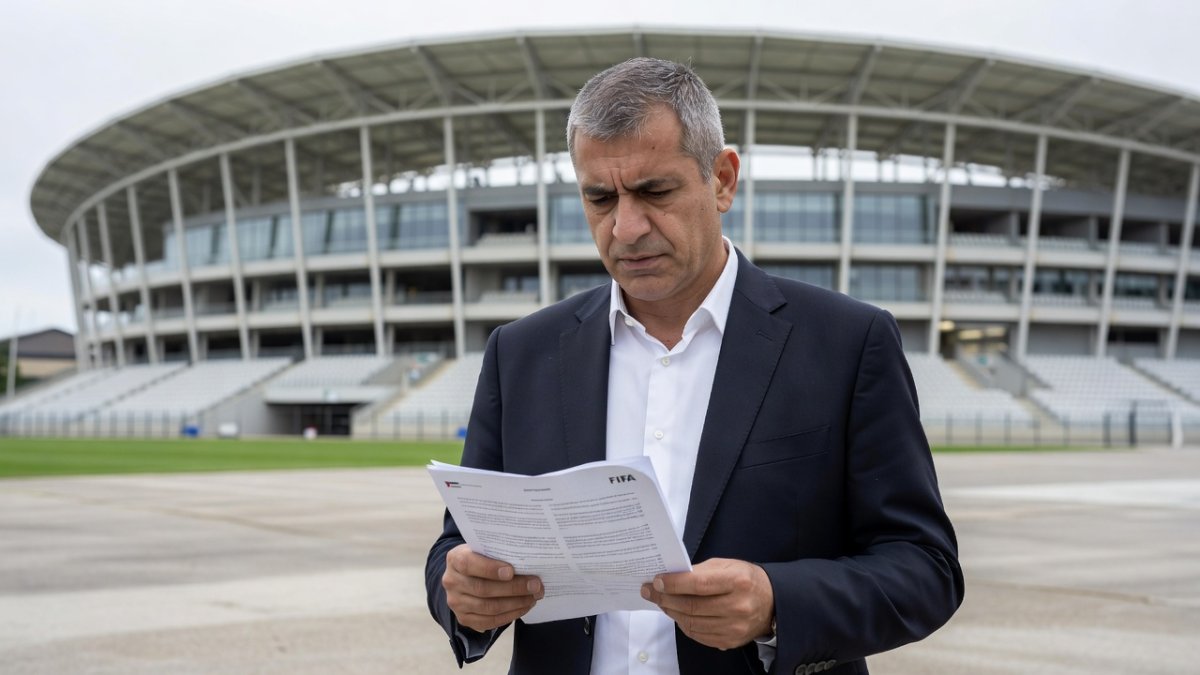
Jibril Rajoub, who has led the Palestinian Football Association for more than a decade, was denied a United States visa even though he carried FIFA accreditation for the 2026 World Cup. Canadian authorities had previously refused him entry for the April 2026 FIFA Congress. These decisions occurred under immigration policies that have also affected delegates from several African and Middle Eastern nations.
Rajoub was able to watch the World Cup opener in Mexico City but remained unable to enter the United States for subsequent matches or meetings. FIFA has not publicly commented on the visa refusal or on whether it has raised the matter with United States or Canadian authorities. The contrast between the proposed peace match and the inability of the Palestinian association president to attend the World Cup has drawn attention from multiple observers.
Multiple Palestinian Football Association officials encountered similar visa obstacles ahead of the FIFA Congress in Canada. These repeated denials have limited Palestinian participation in FIFA governance discussions at a time when the organization is preparing its largest World Cup to date.
(Global 1 News)
Palestinian Athletes Under Occupation
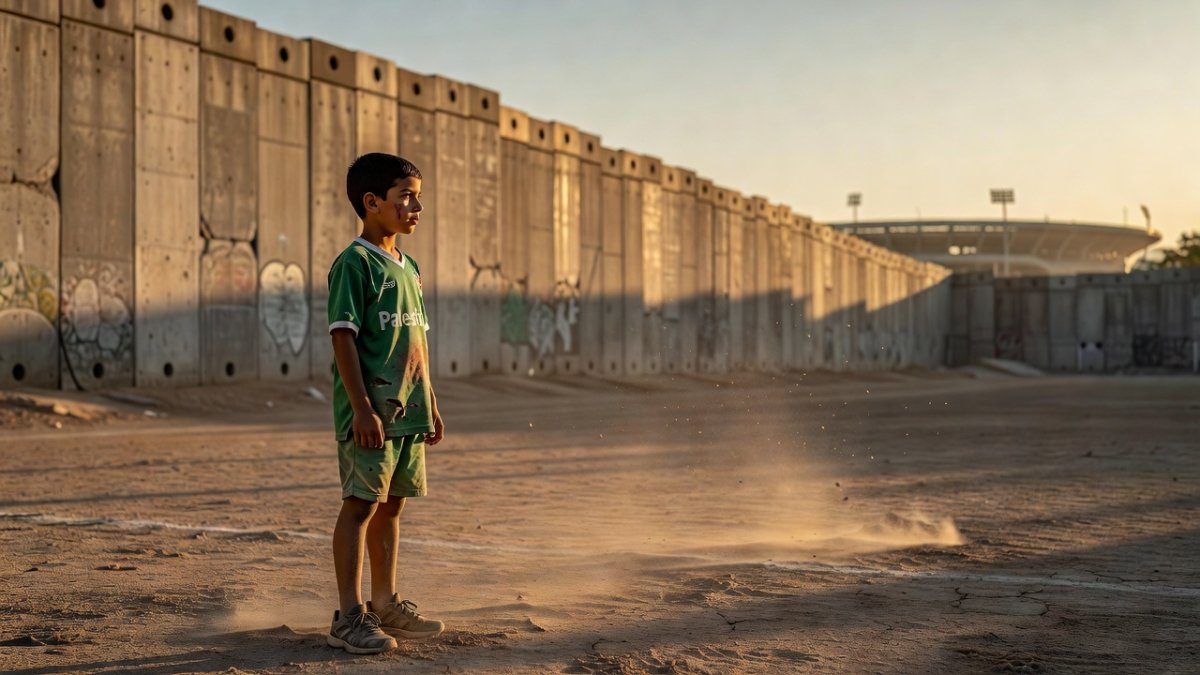
Palestinian football operates under a series of movement and infrastructure constraints that predate the current tournament proposals. Players and officials must navigate checkpoints, permit requirements, and stadium closures that affect training schedules and match attendance. Youth teams in particular face disrupted preparation when travel between the West Bank, Gaza, and East Jerusalem is restricted.
These conditions extend beyond elite competition. Community pitches in several areas have been damaged or placed off-limits during periods of heightened tension, reducing opportunities for regular play among children. The Palestinian Football Association has documented cases in which teams were unable to reach scheduled fixtures because of permit delays or border closures.
Despite these obstacles, Palestinian clubs continue to organize domestic leagues and youth programs. Local coaches emphasize the role of football in maintaining routine and community ties under prolonged restrictions. The proposed 2026 under-15 match would occur against this backdrop of everyday limitations rather than in isolation from them.
Critics of Normalization
Advocates for Palestinian rights have described the proposed peace match as an exercise in sportswashing that sidesteps questions of occupation and unequal access. They point to Rajoub's previous refusal to shake hands with an Israeli Football Association official at a FIFA Congress as evidence of unresolved tensions that a single fixture cannot erase.
Human rights organizations argue that any symbolic event must be accompanied by concrete measures, including reliable travel arrangements for Palestinian teams and officials. Without such steps, they contend, the match risks reinforcing an appearance of parity that does not exist in practice. The inclusion of Russia in the same tournament has also prompted questions about consistency in FIFA's approach to political disputes.
Palestinian civil society groups have called for FIFA to address documented restrictions on athlete movement before advancing high-profile reconciliation gestures. They note that previous attempts at joint initiatives have not altered the underlying conditions that separate the two associations.
Analysis
The gap between FIFA's public messaging and the practical barriers faced by Palestinian officials reveals a pattern in which symbolic events receive more attention than administrative obstacles. Infantino's emphasis on unity through sport has not translated into visible advocacy on visa issues or travel permits that directly affect Palestinian participation.
Youth competitions carry particular weight because they shape the next generation of players and supporters. When movement restrictions limit training camps or international exposure for under-15 teams, the developmental impact extends beyond individual careers. Palestinian coaches report that consistent access to matches and facilities remains the primary concern for program continuity.
The 2026 World Cup's expanded format was intended to increase global inclusion, yet the experience of the Palestinian delegation suggests that host-country immigration policies can override FIFA accreditation. This tension is likely to recur as more member associations prepare for the tournament across three countries.
Any lasting value from the proposed under-15 match would depend on whether it is paired with verifiable improvements in access and participation. Absent those changes, the fixture risks remaining a one-off image rather than a step toward sustained engagement.
Conclusion
FIFA's proposal for an Israel-Palestine under-15 opener in September 2026 sits alongside documented restrictions that continue to shape Palestinian football. The denial of entry to Jibril Rajoub and other officials during the current World Cup underscores the distance between stated intentions and operational realities.
Palestinian athletes and administrators operate within a framework of movement controls and infrastructure challenges that affect daily preparation and competition. Addressing these conditions would require coordinated action from FIFA, host governments, and national associations beyond the scheduling of individual matches.
The Middle East Eye report highlights how the proposed peace match cannot be separated from the broader context of occupation and restricted mobility. Until those structural issues receive sustained attention, symbolic gestures are likely to remain disconnected from the lived experience of Palestinian football.
By Fatima Al-Rashid, Staff WriterThis article was produced with AI-assisted research and editorial support. Reporting is based on sources cited in the article.
What's Your Reaction?
 Like
0
Like
0
 Dislike
0
Dislike
0
 Love
0
Love
0
 Funny
0
Funny
0
 Wow
0
Wow
0
 Sad
0
Sad
0
 Angry
0
Angry
0

Gulf/MENA Correspondent at Global1.News. Based in Doha, covering Gulf politics, energy markets, diplomacy, and development across the Middle East and North Africa. Tracks the economic transformation of the Gulf states.










Comments (0)