
Israel Approves $434M Settlement Budget as Settler Violence Surges Across West Bank
Recent developments in the West Bank underscore the intersection of large-scale settlement funding, localized incidents, and longstanding legal debates. Israel's Security Cabinet approval of 1.3 billion shekels coincides with documented settler activities that affect Palestinian communities, prompting renewed scrutiny from international observers.
Budget Approval Details
In a significant move, Israel's Security Cabinet has approved an allocation of 1.3 billion shekels, equivalent to approximately 434 million dollars, dedicated to advancing new settlement development across the occupied West Bank. This funding is intended to support a range of infrastructure projects and residential construction initiatives. Finance Minister Bezalel Smotrich emphasized the momentum behind the plan, stating that further settlement expansions would proceed this summer. Settlement Minister Orit Strock described the decision as one of the most substantial settlement initiatives in recent times, highlighting its potential to reshape the region's landscape. Construction Minister Haim Katz noted that the budget specifically enables critical infrastructure work alongside new housing developments, positioning the approval as a foundational step for long-term growth in these areas.
Settler Incidents by Governorate
Over the past 24 hours, more than 16 settler-related incidents have been documented across the West Bank, underscoring immediate tensions on the ground. In Hebron governorate, settlers entered Palestinian communities, leading to confrontations and disruptions. Tubas saw multiple cases of livestock grazing on agricultural land and subsequent crop seizures. Salfit experienced greenhouse damage and livestock theft, affecting local farming operations directly. Nablus governorate reported entries into Palestinian communities alongside additional grazing incidents that encroached on cultivated fields. Ramallah governorate faced similar entries and property interferences. Separately, a Palestinian resident was assaulted in Jaljulia, adding to the pattern of violence. These events span various forms of interference, from resource appropriation to physical damage, occurring in quick succession across five key governorates.
International Law Context on Settlements
Under international law, the establishment and expansion of settlements in the occupied West Bank are widely regarded as violations of the Fourth Geneva Convention, which prohibits an occupying power from transferring its civilian population into occupied territory. The United Nations and numerous international bodies have consistently maintained this position, viewing such developments as obstacles to a two-state solution. The recent budget approval for 1.3 billion shekels aligns with ongoing settlement policies that have drawn repeated criticism from global actors, including calls for restraint to preserve prospects for negotiated peace. This legal framework emphasizes the temporary nature of occupation and the need to avoid permanent demographic changes that could prejudice final status negotiations.
UN Security Council Resolution 2334, adopted in December 2016, explicitly reaffirmed that Israeli settlements in the occupied Palestinian territory constitute a flagrant violation of international law, particularly the Fourth Geneva Convention's prohibition on transferring an occupying power's civilian population into occupied territory. The resolution called for immediate cessation of all settlement activity and distinguished between Israel and the territories occupied since 1967. Subsequent diplomatic efforts have repeatedly cited 2334 as the operative legal framework, with several states invoking it to justify labeling settlement products and restricting dealings with settlement-linked entities.
The International Criminal Court has maintained an active preliminary examination and later investigation into the situation in Palestine, examining settlement construction as a potential war crime. Arrest warrants sought against Israeli officials and documentation of land expropriation, outpost legalization, and infrastructure financing have been submitted by multiple states parties. Parallel actions include advisory proceedings at the International Court of Justice and domestic litigation in European courts challenging the import of settlement goods under EU labeling regulations.
The European Union has maintained that settlements are illegal under international law and incompatible with a two-state solution. Recent EU statements have condemned new budget allocations and outpost regularization, while several member states have advanced legislation restricting public contracts with settlement-based companies.
The Oslo Accords established a framework in which the status of settlements was to be resolved through permanent-status negotiations, with Area C placed under temporary Israeli administrative control pending agreement. Successive waves of settlement expansion, including the current 1.3 billion shekel allocation, have been described by legal analysts as eroding the territorial contiguity required for a viable Palestinian state and effectively prejudging the outcome of negotiations the accords were meant to preserve.
Impact on Palestinian Farming Communities
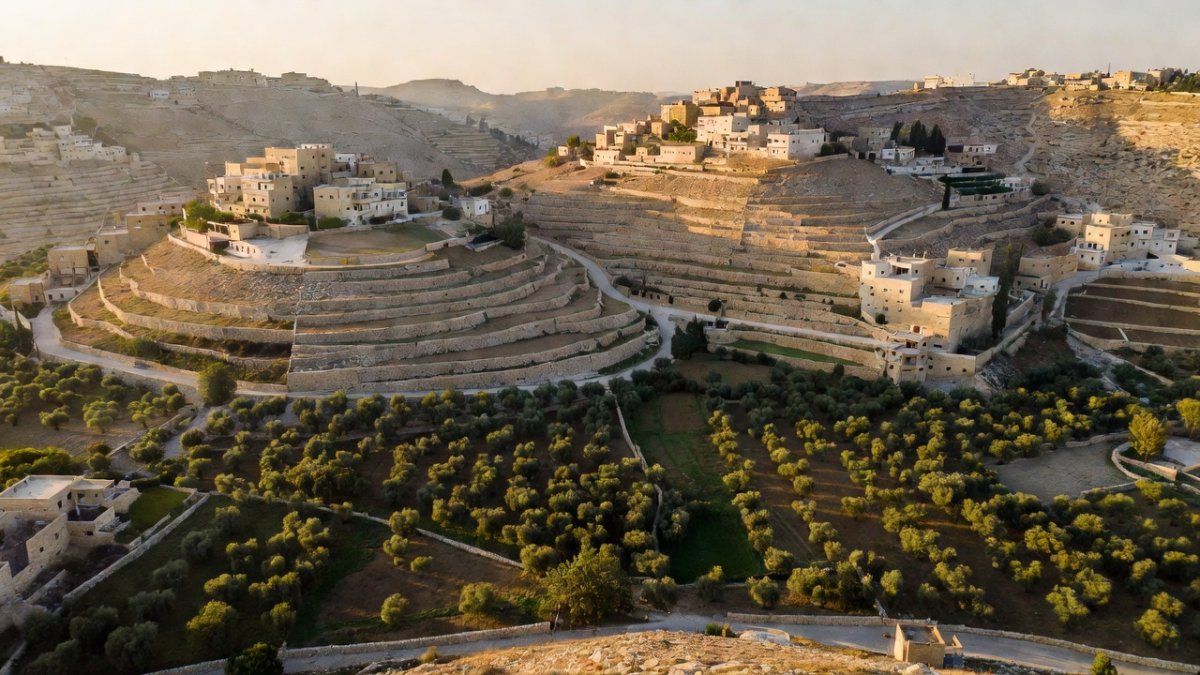
Palestinian farming communities in the West Bank rely heavily on agricultural land for their livelihoods, making them particularly vulnerable to the recent wave of settler incidents. Livestock grazing on cultivated fields in Tubas and Nablus has led to crop losses and soil degradation, while greenhouse damage in Salfit has destroyed protected growing environments essential for year-round production. Livestock theft further erodes economic stability, forcing families to rebuild herds at significant cost. Entries into communities in Hebron and Ramallah disrupt daily routines and access to fields, creating an atmosphere of insecurity that discourages investment in farming. Combined with the approved settlement funding, these incidents threaten to accelerate land fragmentation, reducing available arable space and intensifying pressures on water resources and market access for Palestinian producers.
Palestinian agriculture contributes roughly 7-8 percent of GDP in the West Bank and employs a significant share of the rural workforce, with olives, vegetables, and livestock forming the core of output. Settlement expansion and associated land-use restrictions have reduced available arable land and complicated access to markets, contributing to declining productivity and rising dependence on external aid for many communities.
Olive cultivation carries both economic and cultural weight; trees often represent multi-generational family assets and symbols of land tenure. Documented incidents of tree uprooting or burning have periodically reduced yields in affected villages, with replanting cycles spanning decades. These losses compound existing constraints on movement and water access, accelerating economic contraction in districts adjacent to settlement blocs.
Land confiscation patterns since 1967 have followed a recurring sequence of military declarations, survey maps, and subsequent settlement construction or agricultural outposts. Palestinian landowners frequently cite difficulties in proving title under Israeli administrative procedures, resulting in de facto transfer of usage rights. This process has been tracked by UN agencies and human rights organizations as a driver of displacement in Area C.
Water allocation data show marked disparities: per-capita consumption in many settlements exceeds that in neighboring Palestinian communities by factors of three to five, reflecting differential access to aquifers, wells, and the Israeli water grid. Palestinian farmers report seasonal shortages that limit irrigation, while settlement agriculture often benefits from advanced drip systems and subsidized supply.
What This Means
The convergence of the large-scale budget approval and the surge in settler incidents signals a period of heightened activity that could reshape dynamics in the West Bank. The 1.3 billion shekel investment provides institutional backing for expansion, potentially coinciding with the summer timeline outlined by officials, while the 16-plus incidents illustrate rapid, localized effects on the ground. For Palestinian communities, this combination may result in further isolation of agricultural zones and increased economic strain. Regionally, it risks complicating diplomatic efforts aimed at de-escalation, as international observers monitor compliance with legal standards. Overall, these developments point to sustained momentum in settlement-related policies alongside immediate frictions that could influence stability and resource distribution in the coming months.
The 1.3 billion shekel settlement budget arrives amid renewed diplomatic activity aimed at reviving Israeli-Palestinian talks and regional normalization efforts. Increased funding for infrastructure, housing, and security in the West Bank is viewed by some analysts as strengthening facts on the ground that future negotiators would confront, while others argue it signals domestic political priorities over external pressure.
Finance Minister Bezalel Smotrich and National Missions Minister Orit Strock both emerged from the religious-Zionist movement and have advocated formal annexation of parts of the West Bank. Their policy positions emphasize Jewish historical and religious claims, rejection of Palestinian sovereignty in Area C, and integration of settlement communities into Israeli administrative structures.
Historical comparisons indicate the current allocation exceeds several prior multi-year settlement support packages when adjusted for inflation and scope. Earlier rounds focused more narrowly on housing subsidies; the present package includes broader infrastructure and enforcement components. Observers note that sustained international criticism has occasionally prompted tactical adjustments in timing or presentation but has not reversed the long-term upward trend in settlement budgets.
Whether coordinated diplomatic measures such as targeted sanctions, trade restrictions, or renewed Quartet engagement can materially alter settlement policy remains contested. Past episodes of heightened international attention produced temporary slowdowns in approvals, yet core budgetary commitments and legal regularization processes continued. Forward projections hinge on the durability of current coalition dynamics and the willingness of external actors to link settlement policy to other regional priorities.
By Fatima Al-Rashid, Staff Writer.This article was produced with AI-assisted research and editorial support. Reporting is based on sources cited in the article.
What's Your Reaction?
 Like
0
Like
0
 Dislike
0
Dislike
0
 Love
0
Love
0
 Funny
0
Funny
0
 Wow
0
Wow
0
 Sad
0
Sad
0
 Angry
0
Angry
0

Gulf/MENA Correspondent at Global1.News. Based in Doha, covering Gulf politics, energy markets, diplomacy, and development across the Middle East and North Africa. Tracks the economic transformation of the Gulf states.











Comments (0)