
Russian Opposition Figure Boris Nadezhdin Faces New Criminal Charges
Russian Opposition Figure Boris Nadezhdin Faces New Criminal Charges Boris Nadezhdin, one of the few Russian politicians who openly opposed the war in Ukraine and attempted to challenge President Vladimir Putin in the 2024 presidential election, was detained by police on Monday morning in a town west of Moscow. The arrest comes as the Kremlin tightens its grip on the domestic political landscape ahead of parliamentary elections scheduled for September. Nadezhdin has been charged with...
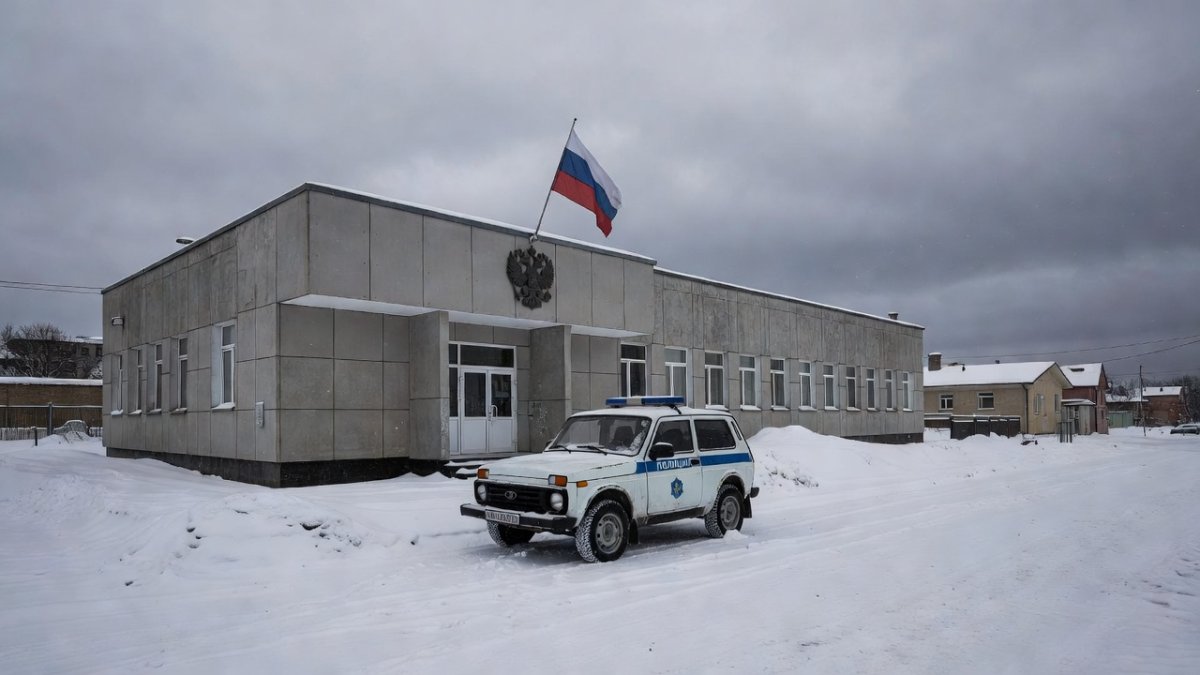
Russian Opposition Figure Boris Nadezhdin Faces New Criminal Charges
Boris Nadezhdin, one of the few Russian politicians who openly opposed the war in Ukraine and attempted to challenge President Vladimir Putin in the 2024 presidential election, was detained by police on Monday morning in a town west of Moscow. The arrest comes as the Kremlin tightens its grip on the domestic political landscape ahead of parliamentary elections scheduled for September. Nadezhdin has been charged with displaying extremist symbols, a move that analysts suggest is designed to sideline him from any future electoral participation.
Detention and Immediate Legal Consequences
According to reports from multiple Russian independent media outlets, police took Nadezhdin into custody on Monday in the town of Krasnogorsk, located approximately 20 kilometres west of the capital. The charge centres on a video reposted to his social media accounts in November 2023, during which an image of the late opposition leader Alexei Navalny appeared for roughly 10 seconds. Russian authorities have labelled Navalny an extremist, and any public display of his image can now trigger criminal proceedings under the country's increasingly expansive legislation on extremism.
The Foreign Ministry and Justice Ministry have not issued official statements on the timing of the arrest, but sources close to the case told Global1.News that investigators acted swiftly after last week's decision to designate Nadezhdin a "foreign agent." That label, handed down by the Justice Ministry, accused him of spreading false information about the Russian government and encouraging participation in unauthorised rallies. Under Russian law, foreign agent status alone would have barred him from standing in the September Duma elections. The new criminal charge carries an additional one-year ban on running for elected office.
Nadezhdin's legal team has described the proceedings as politically motivated. His supporters argue that the 10-second fragment in a reposted video constitutes a pretext rather than a genuine violation, especially given the selective enforcement of such rules against Kremlin critics while similar imagery circulates freely in state-aligned media when politically convenient.
Failed Presidential Bid and Anti-War Stance
In late 2023 and early 2024, Nadezhdin emerged as a rare anti-war voice within the formal political system. He collected signatures to run as a candidate in the March 2024 presidential election on a platform calling for an immediate end to hostilities in Ukraine. The politician repeatedly told the BBC and other international outlets that he represented "dozens of millions of people" who rejected what he described as Russia's current trajectory of "authoritarianism and militarism."
The Central Election Commission ultimately barred him from the ballot, claiming that more than 15 percent of the signatures he submitted were invalid. Independent observers, including the Russian election monitoring group Golos, disputed the scale of the alleged irregularities and suggested the decision reflected a Kremlin determination to prevent any credible anti-war candidate from appearing on the ballot. On 18 March 2024, Putin secured a fifth term in office with a claimed landslide victory. The next presidential election is not due until 2030, when the Russian leader will be 78 years old. A constitutional amendment pushed through in 2020 effectively reset his term limits, allowing him to remain in power potentially until 2036.
Following his exclusion from the presidential race, Nadezhdin announced his intention to contest seats in the State Duma this September. The latest charges appear to eliminate that possibility. The Defense Ministry and Kremlin administration have maintained silence on the specific case, but the pattern fits a broader strategy of neutralising potential opposition voices before parliamentary polls.
Deepening Economic Pressures and Public Sentiment
Earlier this year, as the Kremlin moved to restrict internet access and Russia's economic difficulties intensified, Nadezhdin spoke candidly to the BBC about shifting public mood. He suggested that ordinary citizens were "beginning to understand that there is a direct connection between their everyday problems — healthcare, food prices, problems with internet — and the politics of Vladimir Putin."
These comments came against a backdrop of rising inflation, military recruitment drives, and growing international sanctions pressure on key sectors controlled by state companies such as Gazprom and Rosneft. The Kremlin has consistently attributed economic strain to Western interference rather than the consequences of the military operation in Ukraine, a narrative repeatedly emphasised by Putin's spokesman Dmitry Peskov and senior officials in the Presidential Administration.
Independent sociologists and researchers operating from outside Russia have reported a slow but measurable increase in private discontent, particularly in larger urban centres such as Moscow and St Petersburg. However, public expression of such views remains heavily policed. The Interior Ministry has expanded its monitoring of social media, while the Prosecutor General's Office has pursued hundreds of cases linked to "discrediting the armed forces" since the full-scale military operation began in February 2022.
Systematic Elimination of Political Alternatives
The arrest of Boris Nadezhdin fits into a wider picture of near-total control exercised by the Kremlin over Russia's political landscape. Prominent opposition figures who might have offered voters a genuine alternative are now either imprisoned, living in exile, or deceased. Alexei Navalny died in an Arctic penal colony in February 2024 under circumstances that his supporters and Western governments continue to describe as suspicious. Other leaders of the so-called non-systemic opposition, including members of the Anti-Corruption Foundation, have been designated extremists and forced abroad.
Within the so-called systemic opposition — parties represented in the current Duma such as the Communist Party of the Russian Federation and the Liberal Democratic Party — criticism of the government on core issues like the Ukraine conflict remains muted. Leaders of these parties have largely aligned with the Kremlin's position, with occasional mild dissent quickly corrected through consultations with the Presidential Administration.
Analysts following Russian domestic politics suggest that the timing of Nadezhdin's detention, coming shortly after his foreign agent designation, indicates a deliberate effort to clear the field before September's parliamentary vote. The Justice Ministry's decision to label him a foreign agent last week already carried practical consequences, including mandatory labelling of all his public statements and severe restrictions on fundraising and media appearances. The new criminal case raises the stakes further, potentially exposing him to fines or even a custodial sentence.
Western governments and human rights organisations have condemned the move. The European Union's external action service issued a statement expressing concern over what it called "the continued instrumentalisation of the Russian justice system to silence peaceful dissent." The Kremlin has dismissed such criticism as interference in internal affairs, with Foreign Ministry spokeswoman Maria Zakharova stating that Russia's legislation on extremism and foreign agents applies equally to all citizens.
Yet the selective application remains evident. While Nadezhdin faces prosecution for a 10-second image, senior officials and state television personalities have faced no repercussions for far more explicit endorsements of violence or controversial historical symbols. This disparity, according to political scientists based in Europe, underscores the purely political character of the charges.
Inside Russia, independent journalists and remaining opposition activists are closely watching the case. Some suggest that the authorities may opt for a relatively lenient initial sentence — a fine or short administrative arrest — while achieving the primary goal of disqualifying Nadezhdin from electoral politics for at least a year. Others fear that the case could escalate into a full criminal prosecution carrying multi-year prison terms, following the pattern established in cases against Navalny, Vladimir Kara-Murza, and Ilya Yashin.
The broader context reveals a Russian political system in which the ruling United Russia party, backed by the resources of the state and major corporations, faces no meaningful competition. Regional governors, most of whom are appointed or heavily influenced by the Kremlin, ensure tight control over local election commissions. The few remaining independent candidates must navigate an obstacle course of signature verification, media blackouts, and selective law enforcement.
Nadezhdin's supporters have called for calm and continued civic engagement despite the latest setback. In statements circulated through Telegram channels, they emphasised that the politician's attempt to work within the system demonstrated both its limits and the persistent desire among parts of Russian society for peaceful political change. Whether that desire can find any institutional outlet in the coming years remains an open question as the Kremlin prepares for another tightly managed electoral cycle.
The coming weeks will likely see further legal manoeuvres. Nadezhdin's lawyers are expected to challenge both the foreign agent designation and the new extremism charges in Russian courts, though success in such appeals has been rare in politically sensitive cases. Meanwhile, the Presidential Administration continues to shape the candidate lists for September's Duma elections, ensuring that only voices aligned with the current course appear on the ballot.
This latest development against Boris Nadezhdin illustrates the methodical manner in which the Russian authorities have narrowed the space for any genuine opposition. From the Presidential Administration on Staraya Square to the Justice Ministry and law enforcement agencies, the machinery of the state now operates with little tolerance for alternative political platforms, particularly those calling for an end to the military campaign in Ukraine.
As Russia moves closer to its next parliamentary vote, the absence of figures like Nadezhdin from the campaign trail leaves voters with a carefully curated choice among parties and candidates who differ mainly in rhetoric rather than in fundamental policy direction. The Kremlin's strategy appears aimed at preserving stability and continuity — at the cost, critics argue, of genuine political competition and public accountability.
By Irina Volkov, Staff WriterThis article was produced with AI-assisted research and editorial support. Reporting is based on sources cited in the article.
What's Your Reaction?
 Like
0
Like
0
 Dislike
0
Dislike
0
 Love
0
Love
0
 Funny
0
Funny
0
 Wow
0
Wow
0
 Sad
0
Sad
0
 Angry
0
Angry
0
Russia/Eastern Europe Correspondent at Global1.News. Covering Russian politics, energy, security, and the shifting dynamics of the post-Soviet space. Provides clear-eyed analysis on one of the world's most opaque regions.










Comments (0)