
Kremlin Tightens Grip as Nadezhdin Detained
Boris Nadezhdin was detained by police west of Moscow on Monday and charged with displaying extremist symbols, marking the latest step in a coordinated campaign that has already blocked his presidential bid and labeled him a foreign agent. The move comes weeks after the justice ministry applied the foreign agent designation and follows the electoral commission’s rejection of his candidacy on signature grounds.
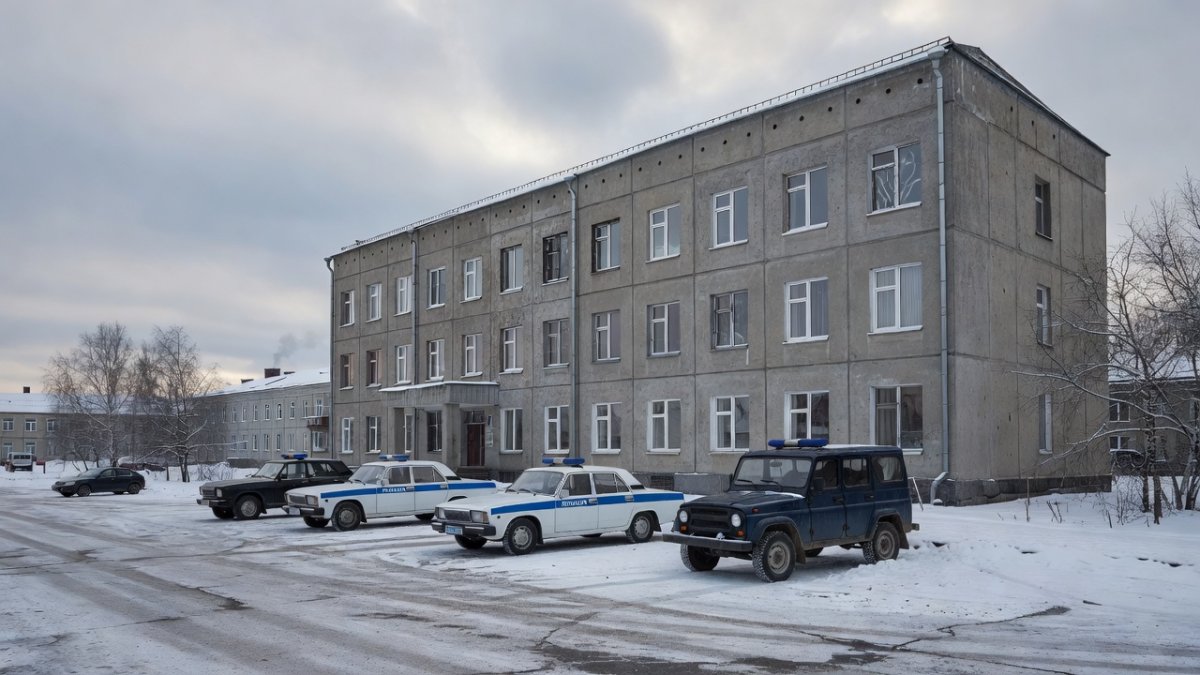
Boris Nadezhdin was detained by police west of Moscow on Monday and charged with displaying extremist symbols, marking the latest step in a coordinated campaign that has already blocked his presidential bid and labeled him a foreign agent. The move comes weeks after the justice ministry applied the foreign agent designation and follows the electoral commission’s rejection of his candidacy on signature grounds. These actions illustrate how legal and administrative tools are being deployed together to neutralize anti-war voices ahead of the September Duma elections.
Kremlin Tightens Grip as Nadezhdin Detained
Moscow, Russia — Boris Nadezhdin's arrest this week marks a dangerous new phase in the Kremlin's campaign to silence anti-war voices ahead of September's parliamentary elections. The detention, coming immediately after his foreign agent designation and failed presidential bid, underscores the systematic use of legal instruments to eliminate challengers. With opposition figures increasingly sidelined, the political space for dissent continues to shrink under layered institutional controls.
Arrest and Charges
Confirmed facts establish that Boris Nadezhdin was taken to a police station west of Moscow on Monday morning and charged with displaying extremist symbols after a 10-second image of Alexei Navalny appeared in a November 2023 video reposted on his accounts. The offence carries a one-year ban on running for election. Official statements frame the charge as standard enforcement of existing legislation on prohibited symbols. The arrest of Boris Nadezhdin echoes Soviet-era tactics against dissidents such as Andrei Sakharov, where fabricated charges masked political elimination. Authorities detained him on allegations of violating electoral laws and foreign ties, tactics refined since the 2020 constitutional reforms that reset presidential term limits and entrenched executive power. In interpretation, the timing of the detention, coming immediately after the foreign agent designation, demonstrates how separate legal instruments are sequenced to compound restrictions on a single individual. These moves suppress any challenge to the status quo, leaving ordinary citizens facing 7-8% inflation and rising fuel costs amid sanctions that have eroded real wages by nearly a fifth since 2022.
The Foreign Agent Designation
Last week the justice ministry designated Nadezhdin a foreign agent, accusing him of spreading false information about the government and calling for unauthorised rallies. The label would have barred him from September’s Duma elections. Official claims present the designation as a transparency measure required by the 2012 law and its later amendments. Russia’s foreign agent registry has ballooned to include over 700 individuals and organizations, a mechanism repurposed from Soviet internal exile lists to stigmatize critics. Nadezhdin’s designation followed his public statements, triggering asset freezes and media blackouts that parallel the suppression of earlier reformers. Analysts interpret the expanded application of the statute as a mechanism that systematically removes critical voices from public debate, linking this case to the broader pattern of pre-election filtering already visible in the presidential campaign. This expansion isolates opposition voices while sanctions bite deeper, pushing fuel prices higher and forcing families to ration essentials in an economy contracting under prolonged isolation.
Nadezhdin’s Anti-War Platform
In early 2024 Nadezhdin sought to run on an explicitly anti-war manifesto that called for an end to hostilities in Ukraine and restored relations with the West. He told the BBC he was backed by dozens of millions who rejected authoritarianism and militarism. Official messaging continues to portray the Ukraine conflict as a defensive necessity, making such public positions rare. Nadezhdin’s consistent opposition to the Ukraine conflict draws directly from Navalny’s legacy of exposing corruption and militarism, ideas that still circulate in encrypted opposition networks despite the leader’s death. His platform highlighted how the war diverts resources from domestic needs, compounding inflation that now exceeds official targets and hits pensioners hardest. Interpretation of signature data and limited independent polling suggests underlying public fatigue with the war’s duration and mounting household costs, a sentiment the Kremlin suppresses through media and legal controls. International observers note this stance mirrors earlier Soviet peace activists silenced through similar legal pretexts.
The 2024 Presidential Campaign
Nadezhdin’s measured criticism of Vladimir Putin led some observers to speculate the Kremlin might permit his candidacy to project an image of fairness. The electoral commission rejected his registration after finding more than 15 percent of submitted signatures flawed, a decision he contested without success. Official narratives describe these procedures as routine enforcement of legal requirements. The 2020 constitutional changes allowed Vladimir Putin to reset his term counter, effectively extending rule beyond previous limits and narrowing the field for candidates like Nadezhdin. His campaign sought to revive competitive elections but collided with foreign-agent barriers that disqualified most challengers. In practice, the commission’s actions align with the 2020 constitutional amendments that reset term limits, extending the existing leadership structure through layered institutions that simulate competition while preserving central control. EU and US statements quickly condemned the arrest as another step toward one-man rule, signaling further sanctions targeting elites while ordinary Russians absorb higher living costs.
The Russian Opposition Landscape
Confirmed facts establish that Alexei Navalny died in custody, Mikhail Khodorkovsky lives in exile, and Ilya Yashin along with Vladimir Kara-Murza remain imprisoned on charges widely viewed as politically motivated. Official claims attribute these outcomes to violations of Russian law. Navalny’s influence persists in fragmented circles where activists coordinate through secure channels, drawing parallels to underground networks of the Brezhnev era. Nadezhdin’s detention underscores how the foreign-agent law, now covering hundreds, fragments this landscape by forcing self-censorship. Interpretation of the pattern shows the presidential administration coordinating with security services to neutralize potential challengers before they consolidate support, following post-Soviet precedents of managed pluralism in which formal multiparty competition exists only under strict central oversight. Economic pressures from sanctions, including doubled fuel expenses in some regions, further dampen public mobilization as families prioritize survival over protest.
What This Means for September’s Elections
The Kremlin now exercises near-total control over the political landscape, with opposition figures either jailed, exiled, or deceased. Nadezhdin’s arrest and foreign agent status further narrow the space for independent candidates in the Duma vote. With Nadezhdin sidelined, September’s regional votes face reduced scrutiny, much like post-Soviet managed contests that preserved centralized control. The foreign-agent registry’s growth ensures fewer independent monitors, while inflation and sanctions continue squeezing household budgets. Economic pressures, including restricted access to independent funding, compound these constraints and ensure no alternative power center emerges to contest the vertical of authority built since the early 2000s. Western capitals have signaled coordinated responses, including targeted asset restrictions, to pressure Moscow without broad economic fallout that might further burden Russian civilians.
Analysis and Implications
Confirmed developments show the foreign agent law expanding through successive amendments to cover wider civic and media activities. Official statements present these measures as necessary for national security. Historical patterns of Soviet suppression recur in Nadezhdin’s case, where legal tools mask efforts to neutralize dissent ahead of key votes. The 2020 reforms locked in extended leadership, and the foreign-agent mechanism now ensnares hundreds, chilling debate. Analysts interpret the law’s evolution, combined with internet restrictions and economic strains such as fuel shortages and inflation, as a system that channels public discontent without allowing institutional outlets for political pressure. As EU and US reactions harden into new sanctions, ordinary Russians navigate persistent inflation and elevated fuel prices, a reality that may sustain quiet resentment rather than open resistance in the near term. This dynamic narrows genuine contestation in the coming electoral cycle and reinforces centralized decision-making that prioritizes stability over responsiveness.
By Irina Volkov, Staff WriterThis article was produced with AI-assisted research and editorial support. Reporting is based on sources cited in the article.
What's Your Reaction?
 Like
0
Like
0
 Dislike
0
Dislike
0
 Love
0
Love
0
 Funny
0
Funny
0
 Wow
0
Wow
0
 Sad
0
Sad
0
 Angry
0
Angry
0
Russia/Eastern Europe Correspondent at Global1.News. Covering Russian politics, energy, security, and the shifting dynamics of the post-Soviet space. Provides clear-eyed analysis on one of the world's most opaque regions.









Comments (0)