
Dr Nagham Nawzat: Healing Yazidi Survivors of Genocide
The Doctor Who Gave Life Back to Yazidi Survivors: Dr Nagham Nawzat's Fight for Healing and Justice On 3 August 2014, in the Sinjar region of northern Iraq, nineteen-year-old Shireen was seized from her family home by Islamic State militants. She was taken along with thousands of other Yazidi women and girls in a systematic campaign of abduction and enslavement. Over the follow
The Doctor Who Gave Life Back to Yazidi Survivors: Dr Nagham Nawzat's Fight for Healing and Justice
On 3 August 2014, in the Sinjar region of northern Iraq, nineteen-year-old Shireen was seized from her family home by Islamic State militants. She was taken along with thousands of other Yazidi women and girls in a systematic campaign of abduction and enslavement. Over the following months she was sold twice in markets where fighters bid for human beings. Each time she endured repeated rape and physical abuse. Shireen later recalled one captor telling her, “He said I love you but when you love someone you don’t rape her.” The contradiction between his words and his actions left her with lasting trauma. She was finally released in 2016 after two years in captivity and made her way to safety in the Kurdistan Region of Iraq. Her story is one of many that illustrate the depth of suffering inflicted on the Yazidi community during those years.
Shireen’s journey to the centre was marked by profound isolation after her escape. She had been forced to witness the murder of male relatives and the separation of her younger sister, whose fate remains unknown. Like many Yazidi women, she travelled through smuggling networks that offered both hope and new dangers, arriving in Duhok with only the clothes she wore and memories that replayed without end. These shared experiences of abduction, repeated sale, and enforced silence form the core of the collective trauma that the centre seeks to address one survivor at a time.
Dr Nagham Nawzat’s Path to Medicine
Dr Nagham Nawzat was born in Mosul in 1976 into a Yazidi family. From an early age she witnessed the challenges faced by women in her community, especially in matters of health and personal safety. She pursued medical studies at Mosul Medical College and graduated in gynaecology in 2002. Her decision to specialise in women’s health was driven by a lifelong commitment to support those who had few advocates. Even before the events of 2014, she understood that many Yazidi women carried silent burdens related to violence and social stigma. Her training equipped her with clinical skills, yet it was her empathy that would later prove essential when survivors began arriving at treatment centres seeking both medical care and someone willing to listen without judgment.
The 2014 Genocide Against the Yazidi People
The Yazidi faith is an ancient monotheistic tradition whose followers have long faced persecution in the Middle East. In June 2014 Islamic State forces seized control of roughly one third of Iraqi territory, including the Sinjar district. Within weeks they launched a targeted assault on Yazidi villages, killing or kidnapping an estimated twelve thousand people. The United Nations later described the attacks as an “ongoing genocide.” Entire communities were displaced, homes and temples were destroyed, and families were torn apart. Women and girls were singled out for sexual slavery, while men and boys were often executed. According to Hussein al-Qaidi, director of the Kurdistan Regional Government’s Kidnapped Affairs office, 2,023 women had been liberated by the time systematic rescue efforts were underway. The scale of loss left deep scars on the collective memory of the Yazidi people and created urgent needs for medical, psychological and legal support that continue to this day.
Yazidi religious beliefs centre on reverence for Tawusi Melek, the Peacock Angel, and a cosmology that has survived centuries of misunderstanding and targeted violence. Historical records document at least seventy-two distinct campaigns of persecution against the community, ranging from Ottoman-era massacres to twentieth-century forced conversions under successive Iraqi regimes. The 2014 attacks were formally recognised by the United Nations Commission of Inquiry as genocide in 2016, citing the intent to destroy the Yazidi people through killings, sexual enslavement, and the removal of children from their families.
The Duhok Survivors’ Centre and a Holistic Model of Care
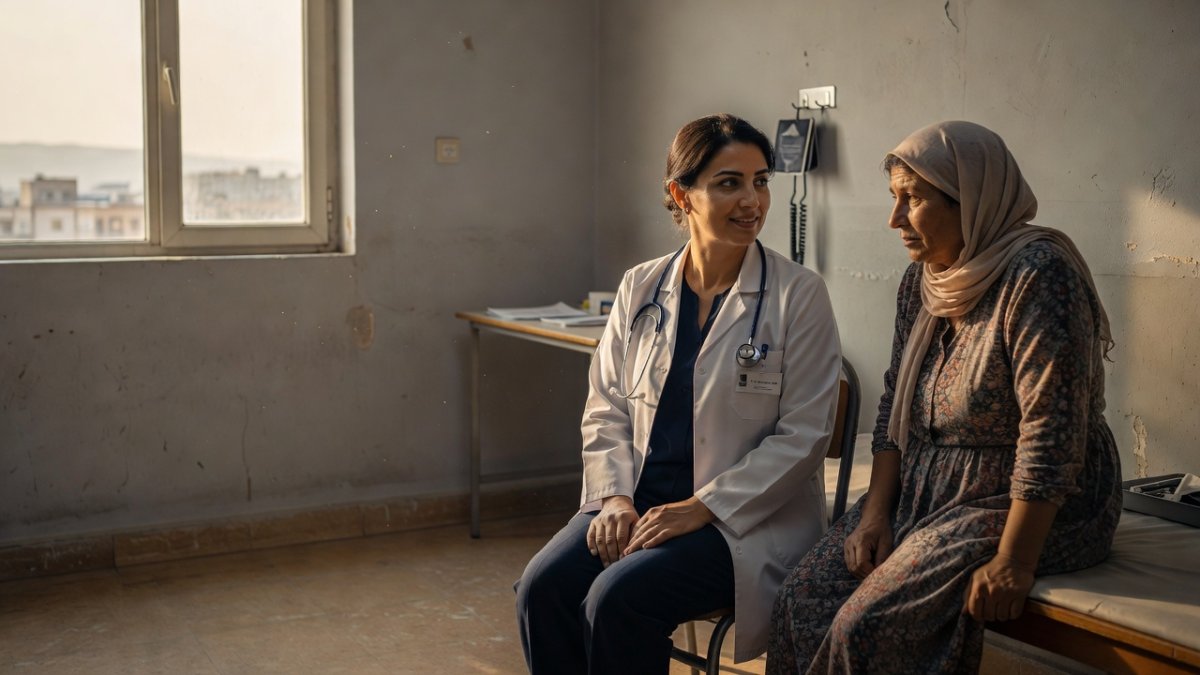
In 2015 Dr Nawzat joined the Duhok Survivors’ Centre, a facility funded by the United Nations Population Fund and dedicated exclusively to survivors of gender-based violence. It remains the only centre of its kind in Iraq. From the outset she approached each woman as an individual rather than a case file. She often described her role as that of a big sister, someone who could sit quietly, offer tea and allow survivors to speak at their own pace. The centre’s method combines thorough physical examinations with extended listening sessions that address both bodily injuries and emotional wounds. Over time the team has supported more than 1,200 women. Trust is built slowly; many survivors arrive fearful that their experiences will be met with shame or disbelief. Dr Nawzat’s consistent presence and non-judgmental manner have helped break that cycle of silence. The centre also coordinates with legal aid groups so that survivors who wish to pursue justice receive guidance on documentation and court procedures.
Each day begins with a team meeting where doctors, psychologists, social workers and legal advisors review new arrivals and ongoing cases. Survivors follow individual schedules that include private medical consultations, group therapy sessions focused on rebuilding trust, and vocational training in sewing or computer skills. The multidisciplinary team of twelve staff members works rotating shifts to ensure someone is always available, while strict confidentiality protocols protect identities even from extended family members.
International Recognition and the 2016 Women of Courage Award
In March 2016 Dr Nawzat received the International Women of Courage Award from then Secretary of State John Kerry. The honour brought global attention to the Yazidi survivors and to the quiet work being done in Duhok. For many survivors the award represented a rare moment when their suffering was acknowledged at the highest diplomatic levels. Yet Dr Nawzat has repeatedly emphasised that recognition alone does not replace the need for sustained services and accountability. Survivors such as Shireen continue to seek justice through Iraqi and international courts. The award also highlighted the broader struggle of women human-rights defenders in conflict zones who work without adequate resources or protection. Since 2016 the visibility of Yazidi women has increased, yet funding for long-term rehabilitation programmes remains inconsistent and many survivors still wait for formal recognition of their status as victims of genocide.
While several governments have resettled small numbers of Yazidi families and the European Parliament has passed resolutions condemning the genocide, concrete financial commitments for rehabilitation have fallen short. The United Nations has documented persistent gaps in psychosocial support and livelihood programmes, leaving many survivors dependent on short-term aid that ends abruptly when donor priorities shift.
Long-Term Healing, Reintegration and the Search for Justice
Years after liberation, many survivors face ongoing challenges. Some are still searching for missing family members whose fates remain unknown. Others return to Sinjar or Mosul only to find their homes reduced to rubble and their communities fractured. Economic hardship compounds the difficulty of rebuilding lives. Reintegration into society is complicated by stigma surrounding sexual violence, even though community leaders have issued statements rejecting such attitudes. The Duhok centre continues to provide services, yet demand exceeds capacity and similar facilities are needed across the Kurdistan Region. Dr Nawzat has advocated for expanded mental-health training for local staff and for mobile clinics that can reach women who cannot travel to Duhok. Justice remains elusive for most survivors; few perpetrators have been prosecuted and reparations programmes move slowly. Without sustained international support, the risk grows that the needs of these women will fade from public view while their trauma persists.
Iraqi courts have convicted several ISIS members on terrorism charges, yet prosecutions specifically addressing sexual slavery remain limited and often rely on incomplete evidence gathered years after the crimes. International mechanisms such as the International Criminal Court have not opened a formal investigation into the Yazidi genocide, prompting calls from human-rights groups for a specialised tribunal that could secure broader accountability and reparations.
What the World Owes Yazidi Survivors
The experiences of Yazidi women underscore the urgent necessity of preventing and punishing crimes of sexual violence in conflict. Dr Nawzat’s work demonstrates that healing requires more than medical treatment; it demands dignity, sustained listening and concrete pathways to justice. The international community has a responsibility to ensure that survivors receive comprehensive support, that evidence of atrocities is preserved and that those responsible face accountability. Remembrance alone is insufficient if it does not translate into resources and legal action. As long as women like Shireen carry the weight of unaddressed trauma, the promise of “never again” remains unfulfilled. Dr Nawzat continues her daily work in Duhok, guided by the belief that every survivor deserves the chance to reclaim her life on her own terms.
Dr Nawzat still conducts weekly clinics and trains new counsellors despite chronic underfunding and the constant threat of political instability in the region. She faces burnout among her team and the painful reality that some survivors must be turned away when capacity is reached, yet she persists in documenting cases for future legal proceedings and lobbying officials for a permanent national reparations law.
By Fatima Al-Rashid, Staff WriterThis article was produced with AI-assisted research and editorial support. Reporting is based on sources cited in the article.
What's Your Reaction?
 Like
0
Like
0
 Dislike
0
Dislike
0
 Love
0
Love
0
 Funny
0
Funny
0
 Wow
0
Wow
0
 Sad
0
Sad
0
 Angry
0
Angry
0

Middle East Correspondent at Global1.News. Based in Beirut, covering politics, conflict, energy, and society across the Middle East. Brings context and depth to a region often reduced to headlines.












Comments (0)