
Gulf of Paria Widens as Trinidad Pours Oil on Troubled Venezuelan Waters
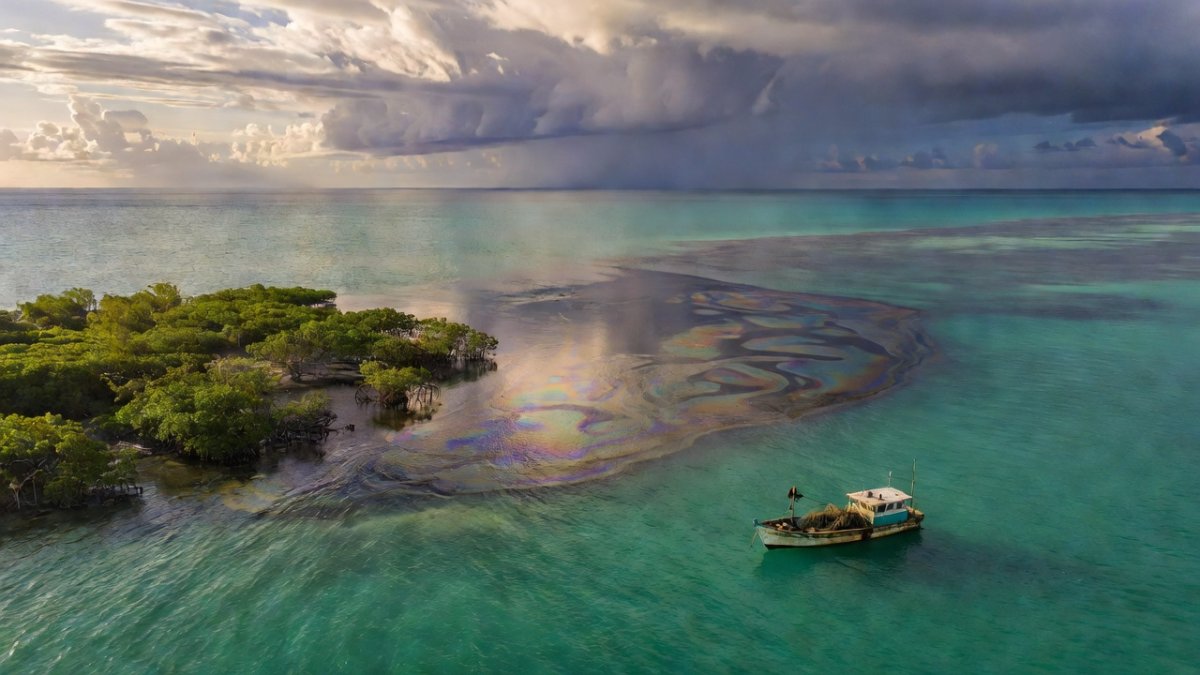
A Spill in the Gulf: What Happened on May 1 The calm waters of the Gulf of Paria, which have long served as a vital lifeline for fishing communities on both sides of the Trinidad and Tobago-Venezuela maritime border, were disturbed on 1 May when reports emerged of an oil spill. According to Venezuelan authorities, the incident originated in Trinidadian waters and has since posed a serious threat to the fragile marine environment shared by the two nations.
A Spill in the Gulf: What Happened on May 1
The calm waters of the Gulf of Paria, which have long served as a vital lifeline for fishing communities on both sides of the Trinidad and Tobago-Venezuela maritime border, were disturbed on 1 May when reports emerged of an oil spill. According to Venezuelan authorities, the incident originated in Trinidadian waters and has since posed a serious threat to the fragile marine environment shared by the two nations. Caracas maintains that the spill has widened tensions, both literally and figuratively, as hydrocarbons continue to affect sensitive ecosystems in the gulf.
Trinidad and Tobago officials, however, paint a markedly different picture. The Ministry of Energy has described the event as a minor operational incident involving approximately 10 barrels of crude, which was contained within hours by local response teams. Port of Spain insists that no significant environmental damage occurred and that Venezuelan claims of a larger spill are exaggerated. This stark contrast in narratives has set the stage for a diplomatic row that now threatens to complicate long-standing energy cooperation between the two countries.
Details remain limited. Initial reports from Venezuelan coastguard vessels detected sheen on the water near the maritime boundary shortly after midday on 1 May. Trinidad and Tobago’s response teams from the Oil Spill Response Limited and the Ministry of Energy were deployed promptly. Samples taken by local authorities reportedly confirmed the volume at under 10 barrels, a figure vehemently challenged by Caracas. Independent verification has proven difficult due to restricted access in the contested waters and the absence of a jointly agreed monitoring mechanism.
The timing of the incident could scarcely have been more sensitive. With both nations still recovering from the economic pressures of fluctuating global oil prices and the lingering effects of the COVID-19 pandemic on Caribbean livelihoods, any threat to the Gulf of Paria strikes at the heart of local food security and economic stability. Fisherfolk in communities such as Cedros and Icacos in southern Trinidad, as well as those along Venezuela’s Sucre and Delta Amacuro states, depend on these waters for their daily catch. A dispute over responsibility risks undermining trust at a time when practical cooperation is most needed.
Venezuela's Formal Demand: Compensation and Information
On 14 July 2026, the Venezuelan government formally transmitted a diplomatic note to Port of Spain demanding detailed technical information about the May incident and seeking compensation for alleged environmental damage. Caracas argues that the spill, which it claims exceeded 200 barrels according to its own assessments, has contaminated mangrove systems and affected fish stocks critical to coastal communities on the Venezuelan side.
Venezuelan officials cite obligations under the United Nations Convention on the Law of the Sea (UNCLOS) and the Cartagena Convention for the Protection and Development of the Marine Environment of the Wider Caribbean Region. They point to the principle of transboundary harm and the duty of states to notify and consult when activities in their jurisdiction risk affecting neighbouring waters. The demand includes a request for joint environmental impact assessments and the establishment of a compensation fund to support affected Venezuelan fishing families.
The tone of the Venezuelan communication has been measured but firm. Foreign Minister Yván Gil described the incident as “regrettable” while emphasising that “shared ecosystems require shared responsibility.” Venezuelan state media has highlighted the vulnerability of the Orinoco Delta mangroves, which form part of the same ecological continuum as the Gulf of Paria. Caracas has given Port of Spain 30 days to respond substantively before considering further measures, including possible referral to regional arbitration mechanisms.
This is not the first time environmental concerns have strained relations. Previous incidents involving alleged incursions by Trinidadian fishing vessels into Venezuelan waters and disputes over gas exploration rights have created a backdrop of mutual suspicion. The current demand for compensation therefore sits within a longer pattern of diplomatic friction, even as both countries continue to explore energy partnerships.
Port of Spain's Response: 'A Minor Incident'
Trinidad and Tobago has moved swiftly to reject Venezuela’s characterisation of events. In a joint statement issued by the Ministry of Energy and the Ministry of Foreign and CARICOM Affairs, the government described the spill as “a contained operational event of approximately 10 barrels that posed no material risk to the marine environment.” Energy Minister Stuart Young emphasised that response protocols were activated immediately in accordance with national oil spill contingency plans.
“We have shared all relevant data with our Venezuelan counterparts through established diplomatic channels,” Minister Young told local media. “This was a minor incident quickly brought under control. Claims of widespread contamination are not supported by the evidence collected by our technical teams.” The statement further noted that independent laboratory analysis of water and sediment samples showed hydrocarbon levels well within acceptable international standards.
The Office of the Attorney General has been consulted on the legal implications of Venezuela’s demand. Sources within the ministry indicate that Trinidad and Tobago will resist any compensation claims, arguing that the volume involved falls below thresholds that would trigger liability under international environmental law. Officials have also pointed to Venezuela’s own poor record of oil spill management in the Orinoco Belt as evidence of selective concern.
Prime Minister Kamla Persad-Bissessar has reportedly instructed the Ministry of Foreign Affairs to maintain a conciliatory tone while firmly defending national interests. This balancing act reflects the delicate position Trinidad and Tobago finds itself in – keen to protect its reputation as a responsible energy producer while preserving the possibility of future cooperation on the Dragon Gas field project.
The Gulf of Paria: A Shared Ecosystem Under Strain
The Gulf of Paria occupies a unique place in Caribbean geography and ecology. Bounded by Trinidad’s west coast and Venezuela’s east coast, its relatively shallow waters support rich mangrove forests, seagrass beds and coral communities that sustain diverse marine life. Species such as the West Indian manatee, various species of sea turtles, and commercially important fish stocks including snapper, grouper and shrimp migrate across the maritime boundary, making effective bilateral management essential.
Fishing communities on both sides have felt the pressure of declining catches in recent years. In Trinidad, artisanal fishers in the south-west peninsula report reduced yields attributed to pollution, overfishing and the cumulative impact of energy sector activities. Similar complaints emanate from Venezuelan coastal villages where economic hardship has been compounded by years of political instability and international sanctions.
Environmental tensions between Trinidad and Tobago and Venezuela are not new. The 1990s saw disputes over the impact of Petrotrin operations on the Gulf, while more recent concerns have centred on Atlantic LNG’s activities and potential pollution from Venezuelan oil infrastructure. The Gulf’s position as a semi-enclosed sea under UNCLOS Article 123 imposes specific obligations on both states to coordinate management of living resources and protect the marine environment.
Local environmental groups, including the Environmental Management Authority in Trinidad and various Venezuelan NGOs, have called for the establishment of a joint Gulf of Paria Commission to monitor water quality and coordinate response to pollution events. Such a body could provide much-needed scientific continuity beyond the political ups and downs that characterise bilateral relations. The current dispute underscores the urgency of this proposal, as both sides risk irreversible damage to an ecosystem already under considerable stress from climate change, plastic pollution and industrial activity.
Regional Implications for Caribbean Energy Relations
The oil spill controversy arrives at a critical juncture for Caribbean energy diplomacy. Trinidad and Tobago has positioned itself as the region’s energy hub, with Atlantic LNG supplying markets across the Caribbean and further afield. Venezuela, despite its vast reserves, continues to grapple with severe economic challenges and political uncertainty following years of crisis under the Maduro administration.
The Dragon Gas field, which straddles the maritime boundary, represents a potential landmark project that could bring much-needed revenue to both countries. Negotiations have progressed in fits and starts, with technical teams from both sides working on development plans that would see Trinidad processing Venezuelan gas through its existing infrastructure. Any deterioration in diplomatic relations over the oil spill could jeopardise these talks, with implications not only for the two countries but for wider CARICOM energy security.
Other Caribbean nations are watching developments closely. Barbados, Guyana and Jamaica have all expressed interest in deepening energy cooperation with both Trinidad and Venezuela. A protracted dispute could discourage investment in cross-border energy initiatives and complicate CARICOM’s efforts to develop a regional energy policy. The incident also highlights the vulnerability of small island developing states to environmental incidents originating in larger neighbours.
Within Trinidad and Tobago, the energy sector employs thousands directly and supports many more indirectly. Petrotrin’s legacy of environmental challenges, combined with the push towards greater diversification, means that any perception of carelessness in oil operations carries significant reputational risk. The government’s firm rebuttal of Venezuelan claims reflects concern that the country’s image as a reliable energy partner could be tarnished at a time when global markets are increasingly attentive to environmental, social and governance standards.
What Happens Next: Diplomatic and Legal Pathways
Both governments have signalled willingness to engage in dialogue, though the parameters remain unclear. Trinidad and Tobago has proposed technical-level talks through the existing Joint Commission established under the 1990s maritime boundary treaty. Venezuelan officials have indicated they would prefer a broader discussion that includes environmental compensation and the establishment of binding response protocols for future incidents.
Should bilateral efforts falter, several regional and international avenues exist. CARICOM has offered to facilitate dialogue, recognising that the dispute could affect wider regional stability. The Caribbean Court of Justice, while primarily a community law tribunal, could potentially offer interpretive guidance on environmental obligations if referred by member states. International arbitration under UNCLOS or through the Permanent Court of Arbitration remains a possibility, though both sides appear reluctant to escalate to that level at this early stage.
Environmental experts have suggested that an independent fact-finding mission, perhaps coordinated through the United Nations Environment Programme or the Caribbean Environment Programme, could help establish an objective record of the May incident. Such an approach might depoliticise the technical questions while allowing diplomatic negotiations to focus on longer-term cooperation.
The coming weeks will prove decisive. With the 30-day deadline set by Venezuela approaching, both sides face pressure to demonstrate good faith. Failure to resolve the matter amicably could set back years of painstaking diplomacy aimed at unlocking the economic potential of the Gulf of Paria and its resources.
The Bottom Line for Trinidad and Tobago
For ordinary citizens in Trinidad and Tobago, this dispute carries both immediate and longer-term implications. Fishing families in the south-west peninsula are already reporting reduced catches and fear further contamination could devastate their livelihoods. The cost of living, already strained by high food import bills and energy prices, could rise further if marine resources diminish.
The energy sector remains central to government revenue and employment. Any perception that Trinidad and Tobago is not managing its oil and gas operations responsibly could affect investor confidence and complicate efforts to attract new exploration. At the same time, the country cannot afford to alienate Venezuela if the Dragon Gas project is to proceed and deliver much-needed foreign exchange.
Environmental advocates in Trinidad argue that the incident, however minor, should serve as a wake-up call for stronger regulation and better contingency planning. The Gulf of Paria’s ecosystems support not only fisheries but also tourism and coastal protection against rising sea levels. Climate change is already altering salinity patterns and water temperatures in the gulf, making it less resilient to additional stresses such as oil spills.
Regional solidarity will be tested. CARICOM member states may be called upon to mediate or provide technical support for environmental monitoring. Trinidad and Tobago’s leadership role in Caribbean energy matters gives it both influence and responsibility in how this matter is handled.
Ultimately, the resolution of this dispute will require pragmatism on both sides. The shared nature of the Gulf of Paria means that neither country can solve its environmental challenges alone. Whether this incident becomes another footnote in a history of strained relations or a catalyst for deeper cooperation will depend on the diplomatic skill and political will demonstrated in the weeks and months ahead.
The people of Trinidad and Tobago, who have long prided themselves on their resourcefulness and community spirit, will be watching to see if their leaders can protect both the marine environment that sustains local livelihoods and the energy partnerships that support national development. In the warm waters of the Gulf of Paria, the ripples from this May spill continue to spread, touching lives and livelihoods across borders in ways that demand careful attention and genuine partnership.
Environmental monitoring programmes already operated by the Institute of Marine Affairs in Trinidad could be expanded through bilateral agreement to provide early warning of future incidents. Fishing cooperatives on both sides have expressed interest in participating in citizen science initiatives that could build trust and generate valuable data. The path forward exists, but it requires both governments to move beyond defensive posturing towards collaborative problem-solving rooted in the shared reality of their interconnected waters.
As economic pressures continue to weigh heavily on households across Trinidad and Tobago, from the cost of bread and doubles to the price of fuel for fishing boats, the resolution of this dispute takes on added significance. The government’s handling of Venezuela’s demands will be scrutinised not only in diplomatic circles but in markets, fishing villages and energy sector boardrooms throughout the country. The stakes, like the waters of the Gulf itself, run deeper than they first appear.
By Sharon Sahatoo, Staff WriterThis article was produced with AI-assisted research and editorial support. Reporting is based on sources cited in the article.
What's Your Reaction?
 Like
0
Like
0
 Dislike
0
Dislike
0
 Love
0
Love
0
 Funny
0
Funny
0
 Wow
0
Wow
0
 Sad
0
Sad
0
 Angry
0
Angry
0

Caribbean Correspondent at Global1.News. Based in Port of Spain, Trinidad, covering Caribbean politics, economy, energy, climate, and culture. Amplifying the voices and stories of the Caribbean region.











Comments (0)