
US Reimposes Naval Blockade Amid Fresh Iran Strikes
US reimposed naval blockade on Iranian ports July 14, 2026, 4pm ET, weeks after de-escalation MoU. CENTCOM strikes July 15 ~02:00 GMT hit dozens of targets near Hormuz for 7 hours. IRGC retaliated on US assets in Bahrain, Kuwait, Jordan; Kuwait reports 4 injured, 1 vessel damaged. Iran threatens full Middle East energy halt; 20% of world oil via Hormuz. Trump proposes 20% cargo fee. War began Feb 28; strait closed since March. UN urges talks.
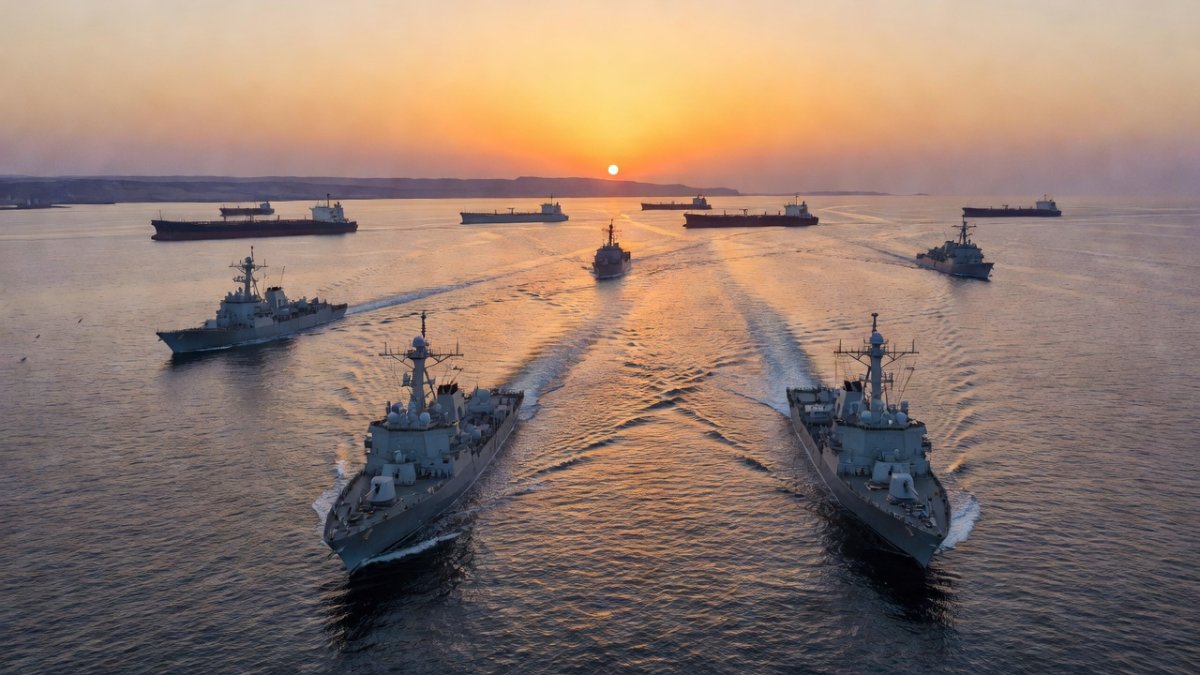
US Reimposes Naval Blockade Amid Fresh Iran Strikes
In a high-stakes reversal that has stunned observers and sent shockwaves through global energy markets, the United States has reimposed a full naval blockade on Iranian ports and coastal areas, less than a month after signing a memorandum of understanding designed to ease tensions. The move, announced by US Central Command on July 14, 2026 at 4:00pm ET, comes paired with a fresh wave of precision strikes that lit up the night sky near the Strait of Hormuz. This is no quiet policy tweak. It is a full-throttle return to hard power that risks choking off one of the world's most vital shipping arteries while Iran fires back with drones and missiles. Facts first: the blockade aims to halt all maritime traffic in and out of Iranian ports, and the strikes lasted seven hours. The region is once again on a knife edge.
CENTCOM Declares Total Halt to Iranian Maritime Traffic
US Central Command made the announcement with zero ambiguity. The naval blockade, reinstated on July 14, 2026 at 4:00pm ET, is designed to stop every vessel attempting to enter or exit Iranian ports and coastal zones. This is the kind of comprehensive chokehold that leaves little room for gray-area shipping or quiet workarounds. Less than a month after the memorandum of understanding that many hoped would dial down the conflict, Washington has slammed the door shut again.
The timing alone raises eyebrows. A de-escalation pact signed so recently now sits in the dust as American warships take up positions to enforce the total ban. CENTCOM framed the action as necessary to counter ongoing threats, but the speed of the flip has left diplomats scrambling. Maritime traffic that once threaded carefully through the waters now faces an absolute stop.
This is not the first time the waterway has been locked down. Commercial shipping has already been effectively frozen out of the Strait of Hormuz since March 2026, turning a critical global chokepoint into a no-go zone for most freighters and tankers. The renewed blockade doubles down on that reality with formal US naval enforcement.
For an administration that just inked an MoU, the optics are brutal. High-octane pressure is back on the table, and the message to Tehran is unmistakable: compliance or isolation by sea.
Seven-Hour Strike Wave Hammers Coastal Targets
Barely hours after the blockade order, CENTCOM launched an additional wave of strikes on Iran beginning at approximately 02:00 GMT on July 15. The operation ran for seven hours straight, pounding dozens of military targets clustered near the Strait of Hormuz and along Iranian coastal stretches. US fighter aircraft, drones, and naval vessels unleashed precision munitions in a coordinated barrage.
The targets were clear and military-focused: Iranian missile and drone sites, naval capabilities, and coastal defence systems. No room for ambiguity in the selection. This was a deliberate effort to degrade the assets Iran has used to project power into the Gulf and beyond. The duration alone—seven full hours—underscores the scale of the package.
Key locations that came under fire include Bushehr, Chah Bahar, Jask, Konarak, Abu Musa, and Bandar Abbas. These sites form a strategic necklace around the Strait, and hitting them hard is meant to blunt Iran's ability to contest the waterway. Precision was the stated goal, yet the geography means civilian infrastructure sits uncomfortably close to some of the military nodes.
In pure operational terms, the strikes represent a continuation of the major combat operations that opened the 2026 Iran War on February 28. The latest wave keeps the pressure relentless and shows Washington is prepared to mix blockade with bombs when diplomacy stalls.
Iranian Counterstrikes Hit US Positions Across the Region
Iran's Islamic Revolutionary Guard Corps did not wait long to answer. Overnight, IRGC forces launched retaliatory drone and missile attacks aimed at US military assets stationed in Bahrain, Kuwait, and Jordan. The response was swift, multi-front, and designed to demonstrate that Tehran can still reach American positions even under blockade pressure.
Kuwait confirmed the human cost: four military personnel injured and one navy vessel damaged in the Iranian strikes. Those numbers are modest by wartime standards, yet they mark real blood and hardware lost on the receiving end of Iran's reply. The attacks overnight turned what began as a US offensive package into a two-way exchange of fire.
The choice of targets—Bahrain, Kuwait, and Jordan—shows Iran is willing to widen the geographic scope rather than absorb the blows in silence. US forces in those host nations now sit deeper inside the risk envelope. This is the classic escalatory ladder in action, and both sides are climbing it with eyes open.
Retaliation of this sort keeps the conflict from becoming a one-sided pounding. It also raises the stakes for every Gulf capital hosting American troops. The overnight barrage has already drawn regional capitals into the immediate aftermath.
Iranian Media Reports Hits on Chabahar and Bampur
Iranian media outlet SNN reported that US missiles struck a naval watchtower in Chabahar, which it described as a civilian maritime security facility, along with a military base in Bampur in Sistan and Baluchestan province. Those claims add a layer of controversy to the US target list, even as Washington insists the campaign remains focused on military sites.
Chabahar sits on Iran's southeastern coast and has long held strategic value for maritime monitoring. A strike there, if confirmed as reported, would extend the American reach well beyond the immediate Strait of Hormuz cluster. Bampur, deeper inland in Sistan and Baluchestan, points to an effort to hit supporting infrastructure and rear-area bases.
The distinction SNN draws between civilian maritime security and pure military assets is one that will fuel arguments in the days ahead. Precision munitions reduce collateral risk, yet any hit on a watchtower framed as civilian opens the door to propaganda and legal debate. The reports themselves form part of the information battle now running parallel to the kinetic one.
These specific locations—Chabahar and Bampur—sit alongside the broader set of coastal sites already named. Together they sketch a campaign that is both coastal and inland, designed to peel back layers of Iranian defensive and offensive capacity.
Iran Threatens Complete Halt to Middle East Energy Exports
Tehran has escalated its rhetoric in lockstep with its missiles. Iran has threatened to halt all Middle East energy exports if the US naval blockade continues. That is not a narrow threat aimed only at Iranian crude. It is a blunt warning that could ripple across the entire regional supply network.
Approximately 20 percent of the world's oil trade passes through the Strait of Hormuz every day. Even with commercial shipping already effectively closed since March 2026, the residual risk to global energy flows remains enormous. A full Iranian move to stop exports would amplify the damage far beyond current levels.
Markets have lived with Hormuz risk for months, yet a formal threat to shut down all Middle East energy exports raises the temperature another notch. Tanker operators, insurers, and importing nations now face a scenario in which the spigot could be turned off by political decision rather than just naval interdiction.
This is classic leverage politics played with the world's energy jugular. Whether Iran can enforce such a halt is secondary to the market panic the mere threat can generate. The blockade has given Tehran a ready-made talking point, and it is using it without hesitation.
Trump Floats Twenty Percent Fee on Strait Cargo
President Donald Trump has added an economic twist to the military pressure. He said the United States would charge a 20 percent fee on all cargo shipped through the Strait of Hormuz to reimburse the US for security costs. The proposal turns the waterway into a toll road under American enforcement.
A 20 percent levy on every cargo movement would be unprecedented in modern peacetime or wartime shipping. Combined with the existing effective closure since March 2026 and the fresh blockade of Iranian ports, the fee would further deter any residual commercial traffic that might try to push through.
The idea is pure Trump: make the security bill someone else's problem and extract payment for the American naval umbrella. Critics will call it protection money; supporters will call it cost recovery. Either way, it layers a financial weapon on top of the naval and air campaign already underway.
If implemented, the fee would reshape the economics of any future reopening of the Strait. Shippers already facing war-risk premiums would confront an additional 20 percent hit simply for passage under US protection. That is a powerful disincentive and a revenue stream rolled into one.
Conflict Roots Trace Back to February Major Operations
The current crisis did not appear from nowhere. The 2026 Iran War began on February 28 with US major combat operations. What started as a decisive opening campaign has now stretched into months of blockade, intermittent strikes, and retaliatory exchanges. The July 14 blockade and July 15 strikes are simply the latest chapters.
By March 2026 the Strait of Hormuz had already been effectively closed to commercial shipping. That early shutdown set the baseline for today's total Iranian port blockade. The MoU signed less than a month ago briefly suggested a possible off-ramp, yet the reimposition of the blockade shows how fragile that diplomatic opening proved to be.
Seven hours of precision strikes against missile sites, drone bases, naval assets, and coastal defences keep the military pressure continuous. The geography of the fight remains concentrated around the Strait and the Iranian coastline, with named locations such as Bushehr, Jask, Konarak, Abu Musa, Bandar Abbas, Chabahar, and Bampur forming the target set.
Understanding the February 28 start date and the March shipping freeze is essential. Without that timeline, the latest blockade looks like an isolated decision rather than the continuation of a grinding campaign that has already rewritten regional energy logistics.
UN Secretary-General Pushes for Urgent Negotiations
Amid the bombs and blockades, the United Nations has tried to inject a note of restraint. The UN Secretary-General urged both sides to urgently resume negotiations. The call is straightforward and unsurprising, yet it lands in a climate where military facts on the ground are moving faster than diplomatic ones.
Negotiations that produced the recent memorandum of understanding have clearly stalled. The US decision to reimpose the blockade less than a month later demonstrates how little trust remains. Still, the Secretary-General's appeal keeps the diplomatic channel technically open even as warships enforce the maritime cutoff.
Any return to talks would have to navigate the fresh damage: four Kuwaiti personnel injured, one navy vessel hit, Iranian claims of strikes on Chabahar and Bampur, and the Iranian threat to halt all Middle East energy exports. Those are heavy facts to set aside at a negotiating table.
The UN intervention will not stop the next missile or the next boarding of a freighter, but it does put both capitals on notice that the international community is watching the escalatory spiral with growing alarm. Whether Washington or Tehran is prepared to listen remains an open and urgent question.
Global Shipping and Energy Markets Brace for Impact
With roughly 20 percent of world oil trade normally moving through the Strait of Hormuz, the combination of blockade, strikes, and Iranian export threats creates a perfect storm for energy prices and supply chains. The effective closure already in place since March 2026 has forced rerouting and stock draws; further tightening will only intensify the squeeze.
Insurers and shipping lines have already priced in elevated risk. The new 20 percent fee proposed by President Trump would add another layer of cost that few operators can absorb. The result is likely to be even thinner traffic and higher delivered prices for crude and refined products across Asia, Europe, and beyond.
Regional US partners in Bahrain, Kuwait, and Jordan now face the dual burden of hosting American forces that attract Iranian retaliation while watching their own economic interests suffer from disrupted trade. The overnight IRGC attacks that injured four Kuwaiti personnel and damaged a navy vessel make that dual burden concrete.
This is the hard edge of maritime power politics. The United States is using its navy to enforce a total stop on Iranian ports while simultaneously offering to bill the world for the privilege of any future passage. Iran is answering with missiles and an all-or-nothing energy threat. The facts on the water are clear, the risks are rising, and the margin for error is shrinking by the hour.
By Jessica Ali, Staff WriterThis article was produced with AI-assisted research and editorial support. Reporting is based on sources cited in the article.
What's Your Reaction?
 Like
0
Like
0
 Dislike
0
Dislike
0
 Love
0
Love
0
 Funny
0
Funny
0
 Wow
0
Wow
0
 Sad
0
Sad
0
 Angry
0
Angry
0

Editor-in-Chief at Global1.News. Atlanta-based journalist who cuts through the BS and tells it like it is. Lead anchor, host, and the voice you hear when the spin stops and the truth starts.















Comments (0)