
Netflix's The Polygamist Gets Africa and the World Talking
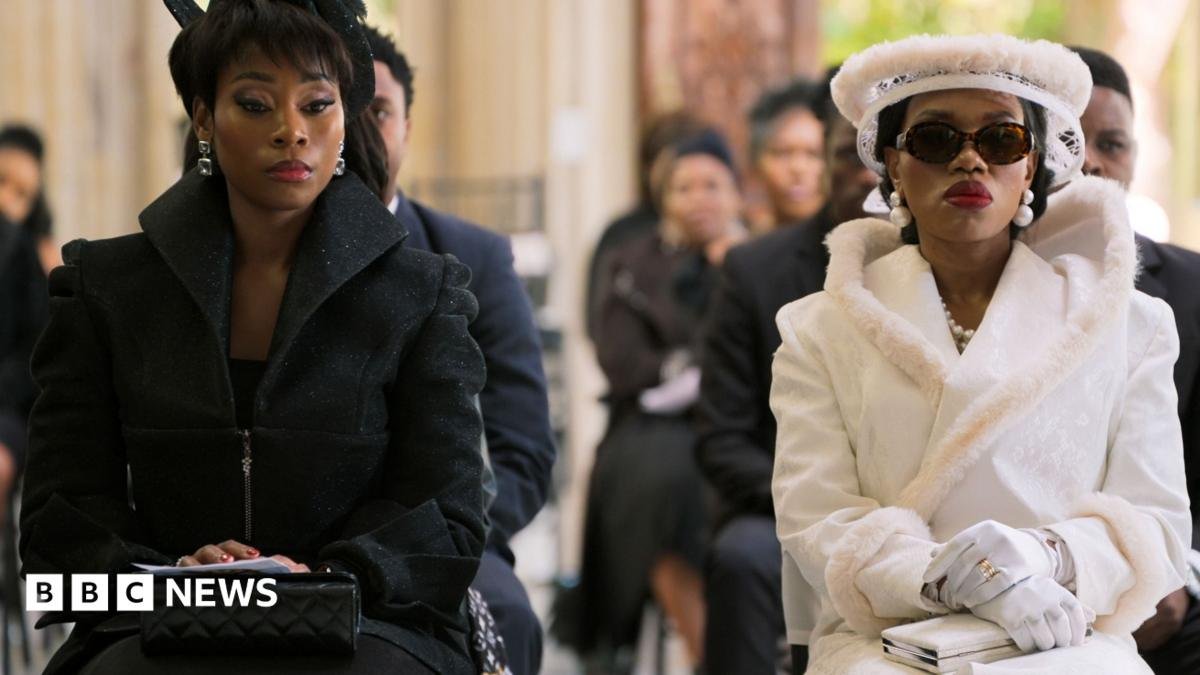
The Sensation Sweeping Across Borders One of Netflix's hottest and sassiest new dramas has not only South Africa but the world talking about marriage, betrayal, revenge and the contentious issue of polygamy. The Polygamist, a 22-episode Zulu-language series, follows the tangled love life of wealthy Johannesburg businessman Jonasi Gomora. The story opens at his funeral, where viewers learn that his widow Joyce, a social media influencer in a striking white outfit, is not his only partner.
The Sensation Sweeping Across Borders
One of Netflix's hottest and sassiest new dramas has not only South Africa but the world talking about marriage, betrayal, revenge and the contentious issue of polygamy. The Polygamist, a 22-episode Zulu-language series, follows the tangled love life of wealthy Johannesburg businessman Jonasi Gomora. The story opens at his funeral, where viewers learn that his widow Joyce, a social media influencer in a striking white outfit, is not his only partner. Two other wives and a mistress appear, all dressed in black, setting the stage for a drama rooted in family ties and hidden relationships.
The series has extended its reach far beyond African markets, securing top 10 positions in Trinidad and Tobago, Romania, and the Dominican Republic. This international traction highlights how Zulu-language storytelling resonates with diverse global audiences seeking authentic narratives. The 22-episode format allows for intricate layering of secrets and betrayals, with the plot spiraling back over five years to reveal emotional explosions that keep viewers engaged across multiple time periods and cultural contexts.
By blending extended runtime with non-linear elements, the production creates space for nuanced exploration of family dynamics that transcend borders. Viewers in these non-African territories have embraced the show's ability to mirror universal themes of loyalty and conflict, contributing to its strong performance on Netflix's non-English global charts and sparking discussions about polygamous traditions in unexpected regions.
Roots in Tradition and Storytelling
Based on the 2012 novel by Zimbabwean author Sue Nyathi, The Polygamist reached the screen through Netflix's collaboration with South African production company Stained Glass TV. Executive producers include two daughters of Jacob Zuma, South Africa's former president and a proud polygamist respected by supporters for upholding his cultural and traditional Zulu beliefs. The 84-year-old currently has four wives. Executive producer Gugu Zuma-Ncube noted that many scenes draw directly from lived experiences, as she comes from a very polygamist family. Her team was floored by the reception across the continent.
As African women shaping this narrative, the Zuma sisters highlight authentic family dynamics rooted in cultural traditions, allowing the story to reflect lived experiences rather than external interpretations. Their involvement underscores the power of female voices from polygamist backgrounds in guiding the adaptation from page to screen. Gugu Zuma-Ncube told the BBC: "I famously come from a very polygamist family… so I brought that in." The 41-year-old producer said her team had been "floored" by the show's reception not just locally, but across the continent.
A Mirror to Polygamy's Complexities
Polygamy remains a lived reality in many African societies, including my own Senegalese context where it is legal under Muslim family law. In Senegal and across West Africa, such unions often emphasize communal support, shared responsibilities, and extended family networks that help raise children and manage households. Zulu traditions in South Africa similarly value cultural continuity and respect for elders, yet the show highlights how individual choices within these structures can lead to tension. The contrast lies in emphasis: West African practices frequently tie into Islamic frameworks that outline rights and duties, while southern African expressions may lean more on ancestral customs that celebrate lineage and status.
Polygamy remains legally recognised in South Africa under Zulu, Xhosa, Ndebele, and Venda cultures, as well as in Senegal under Muslim family law, providing the legal backdrop for the series' exploration of family structures. The show addresses linked health concerns, including the fact that 13% of South Africa's population lives with HIV, while tackling gender-based violence, STDs, and trauma in African families.
Audience reactions have been polarised. Viewers like Letlhogonolo Mogale described Jonasi as a "serial cheater" and "opportunist who would do anything to satisfy himself." The 35-year-old, who is not from a polygamist family herself, said the storyline highlighted "social ills that happen and are normalised in South Africa." The scene where Jonasi ignores his daughter Mpume as she tries to read him a letter about her pain at being neglected — turning up the volume on the television and ignoring her — went viral across social media platforms. South African film critic Phil Mphela observed that the drama focuses less on cultural polygamy and more on the outrageous behaviour of this husband, who he sees as a narcissist. Kenyan civil servant Geoffrey Mosiria even called for the show to be banned in Kenya, arguing the series gives polygamy a bad name when he believes it is culturally valid.
Mosiria, who is himself a product of a happy polygamous family — his father had three wives and he was the last born of 22 children — told the BBC: "Polygamy builds a community." He argued that the series would fuel distrust in marriage, insisting "Kenya is a polygamous nation — and polygamy is the best way to find love."
Voices from the Continent and Beyond
The show topped trend lists within hours of its 12 June release. It became the most watched title on Netflix in South Africa and Kenya, reached the top 10 in Nigeria and Mauritius within the first week, attracted two million views, and ranked number four on Netflix's top 10 list for non-English series globally. Notable fans include Nigerian Afrobeats star Davido, who tweeted "Yo JONASI is WILD," along with Hollywood celebrities Sherri Shepherd, who said "I thought Crazy Rich Asians was something, but crazy rich Africans is a whole 'nother level," and Taraji P. Henson, who said the show had her in a "chokehold" and that she binged it in one day. Even Kenyan minibus taxis have been redecorated with Jonasi's face or name, such is the show's popularity there.
Phil Mphela told the BBC the show marked a "pivotal moment" for South Africa's film and television industry. While South Africa was known for world-class productions, he said "being able to have our stories shared globally and being appreciated for their authenticity and impact in the social discourse" was important. "It's doing exactly what it's supposed to be doing because these stories are supposed to evoke something within our society."
Amplifying African Narratives Through Streaming
Netflix's investment in Zulu-language storytelling marks a shift in how African content travels. By adapting a Zimbabwean novel into a South African production, the platform opened doors for regional stories to reach viewers in Kenya, Nigeria, and beyond. This reach matters because it lets audiences see familiar family dynamics without translation barriers, fostering conversations about loyalty, inheritance, and women's agency that cross linguistic lines.
The 22-episode Zulu-language series achieved significant global reach, with 2 million views in its first week and a number 4 position on Netflix's non-English global list. This success demonstrates the growing strength of African content within the streaming ecosystem. The production stands alongside other African Netflix successes by leveraging local languages and talent to achieve massive scale across multiple territories simultaneously.
Zuma-Ncube noted that the series struck an "emotional chord it struck with women in relationships and children who've come from particular fathers or households." She said that while the producers had been convinced the show would entertain viewers, they had been pleasantly surprised by the depth of emotional response it generated. The show creates space for meaningful dialogue, amplifying underrepresented voices through streaming platforms that reach far wider than traditional media.
Author Sue Nyathi issued warnings about counterfeit copies of her novel being sold in bookshops in Nairobi, writing on Instagram: "Please don't buy pirated copies. I am working day and night like Michael Jackson to make sure the book becomes available in the East African region. Copyright infringement is a crime and a violation of my rights." The piracy issue highlights ongoing challenges that face local creators even as legitimate platforms help their work gain international traction.
Bridging West and Southern African Experiences
From a Senegalese vantage point, The Polygamist invites reflection on how polygamy functions differently yet shares common threads across the continent. In Dakar households, co-wives often negotiate daily life through clear agreements rooted in faith and community expectations. In contrast, the Johannesburg setting of the series portrays more fluid, modern tensions influenced by wealth and public image. Both regions grapple with balancing tradition against personal desires, and the series sparks dialogue that feels relevant whether one sits in a Johannesburg suburb or a Senegalese village compound.
Polygamy's legality in Senegal under Muslim family law parallels its status in parts of South Africa, allowing the series to connect traditions across regions through shared themes of family and culture. Viewer Mpiletso Motumi, 39, praised the "amazing" cast and crew for their interpretation of Nyathi's novel and the strong female leads that kept her glued to the screen. And viewers are already asking for a second season, with executive producer Gugu Zuma-Ncube responding coyly: "I think ultimately what we'll be guided by is serving the story and serving the audience… who knows where we end up."
The collaboration between Stained Glass TV and Netflix, with executive producers drawing from their own polygamous family backgrounds, signals a promising trajectory for African entertainment. Increased production of African-language series like this 22-episode Zulu drama paves the way for greater investment in local stories that blend regional traditions with universal themes, fostering cross-continental dialogue between West and Southern African perspectives on family and identity.
The entertainment industry across Africa stands to gain from this moment. Local productions now see proof that stories told in African languages can command global attention when given proper distribution. As more platforms invest in such collaborations, creators from Senegal to South Africa may find wider avenues to explore themes of family, power, and identity that resonate at home and abroad.
By Amara Diop, Staff Writer
This article was produced with AI-assisted research and editorial support. Reporting is based on sources cited in the article.
What's Your Reaction?
 Like
0
Like
0
 Dislike
0
Dislike
0
 Love
0
Love
0
 Funny
0
Funny
0
 Wow
0
Wow
0
 Sad
0
Sad
0
 Angry
0
Angry
0

West Africa/Sahel Correspondent at Global1.News. Dakar-based journalist covering politics, security, climate, and development across Francophone and Anglophone West Africa. Tells the stories of a region undergoing profound transformation.











Comments (0)