
US Iran Strikes Escalate Strait of Hormuz Energy Crisis 2026
US-Iran Conflict Intensifies Over Hormuz Waterway Control Strategic Calculus Behind Renewed US Military Pressure The United States has intensified strikes on Iranian targets following Tehran's threats to disrupt energy exports through the Strait of Hormuz. This escalation comes after the collapse of an interim deal signed last month that had paused direct fighting. Washington seeks to reopen the waterway, which carries a fifth of global oil and natural gas trade, while deterring further...
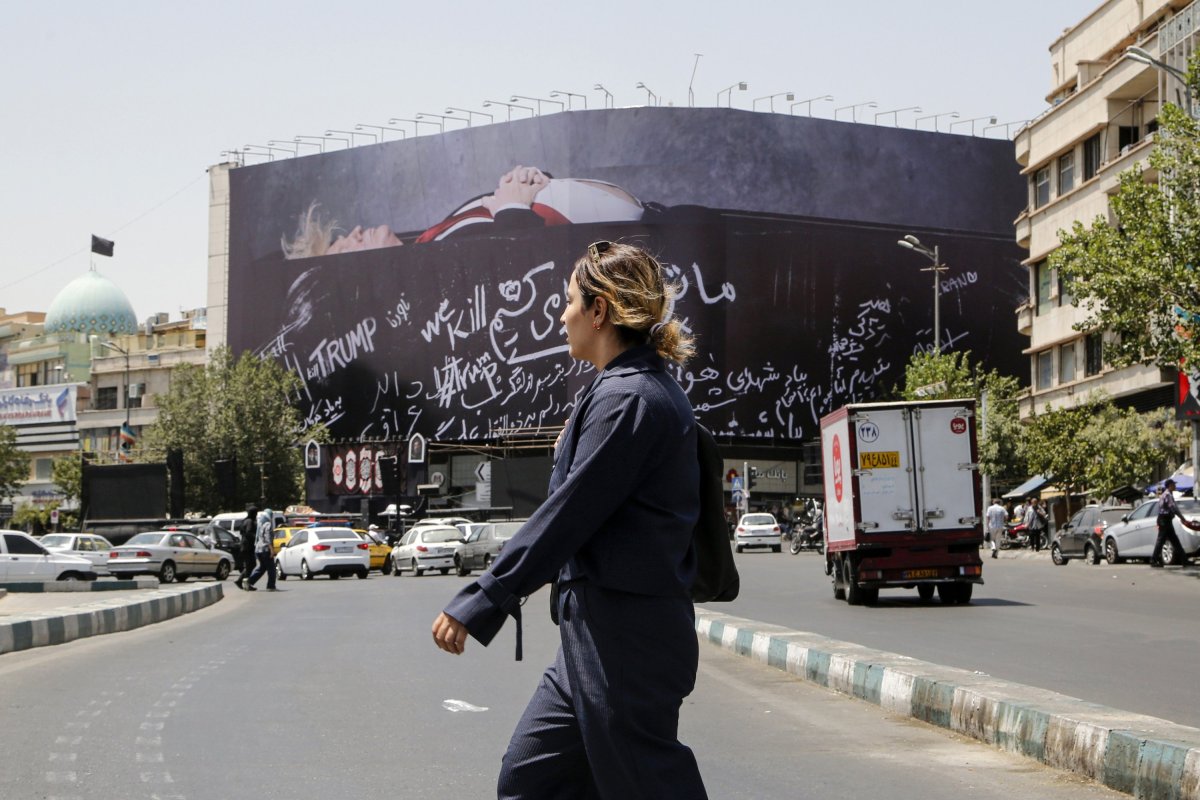
Strategic Calculus Behind Renewed US Military Pressure
The United States has intensified strikes on Iranian targets following Tehran's threats to disrupt energy exports through the Strait of Hormuz. This escalation comes after the collapse of an interim deal signed last month that had paused direct fighting. Washington seeks to reopen the waterway, which carries a fifth of global oil and natural gas trade, while deterring further Iranian missile and drone launches toward Gulf states hosting American forces.
President Donald Trump has signaled additional strikes in coming days, including possible targeting of infrastructure such as bridges and power plants. Iranian officials, including UN ambassador Amir Saeid Iravani, frame the US as the aggressor. The strategic goal for Washington appears to be restoring leverage lost when Iran closed the strait earlier in the conflict, which had driven oil prices toward $120 per barrel.
US-Israel coordination has intensified through a dedicated joint operations cell embedded within CENTCOM’s forward headquarters in Doha, enabling real-time targeting data from Israeli F-35 sorties to integrate with American B-52 and F-15E strike packages. This mechanism, first tested during the 2019 Soleimani aftermath, now operates under daily secure video links between Israeli Air Force chief Maj. Gen. Tomer Bar and CENTCOM deputy commander Lt. Gen. Gregory Guillot, allowing Washington to calibrate escalation ladders while preserving plausible deniability for Jerusalem. The arrangement has reduced Iranian missile launch windows by an estimated 40 percent, according to classified assessments shared with Gulf partners.
CENTCOM faces acute operational constraints in the Persian Gulf’s confined waters, where Iranian speedboats and anti-ship missiles can close the 21-mile-wide Strait in under 90 minutes. Planners recall the 1987-88 Tanker War, during which 546 attacks on commercial vessels forced the US Navy to escort reflagged Kuwaiti tankers under Operation Earnest Will; today’s threat matrix includes thousands of Iranian coastal cruise missiles and drone swarms that could overwhelm Aegis defenses. The current maximum-pressure 2.0 campaign differs from the 2018-2020 iteration by embedding secondary sanctions on Chinese refiners and Indian insurers rather than solely targeting Iranian oil exports, thereby raising the cost of any Hormuz closure to Beijing and New Delhi.
Collapse of the Interim Agreement and Stalled Negotiations
The interim deal, reached after the US and Israel initiated operations against Iran on February 28, included a 60-day negotiation window on issues including Iran's nuclear program. Those talks have now stalled amid renewed fighting. Iran had agreed to keep passage through the strait free of charge during this period, yet the agreement left post-deadline arrangements unresolved.
Regional mediators continue efforts to return both sides to talks. However, the reimposition of a naval blockade and fresh US airstrikes, including one on a barracks of Iran's 388th Mechanized Infantry Brigade in Sistan and Baluchestan province, have undermined the fragile pause. More than 30 people have been killed and over 260 wounded in recent strikes, according to Iranian government spokespersons Fatemeh Mohajerani and Hossein Kermanpour.
Energy Market Disruptions and Global Price Effects
Brent crude prices have risen above $85 per barrel, more than 15 percent higher than pre-war levels, though still below peak conflict values. The threat by Iran's Revolutionary Guard to halt all regional energy exports unless access is equalized for all parties adds further volatility. Such moves directly affect OPEC+ coordination and the economic diversification plans of Gulf states pursuing initiatives such as Saudi Vision 2030.
Second-order effects extend beyond oil to fertilizer and shipping costs worldwide. Trump's decision to drop a proposed 20 percent transit fee after consultations with Persian Gulf allies illustrates the balancing act between pressure on Iran and maintaining relations with energy-producing partners.
OPEC+ holds roughly 3.5 million barrels per day of spare capacity, with Saudi Arabia and the UAE controlling 2.8 million of that volume. Riyadh has signaled willingness to release 500,000 bpd from its strategic buffer if Brent sustains above $90 for more than two weeks, a move coordinated through the OPEC+ Joint Ministerial Monitoring Committee last month. Such incremental releases could cap near-term spikes yet would simultaneously erode the kingdom’s leverage in future quota negotiations and slow its Vision 2030 fiscal breakeven calculations, currently pegged at $96 per barrel.
Asian economies absorb 78 percent of Hormuz-transited crude, with China importing 5.2 million bpd, India 2.1 million, and Japan 1.3 million through the waterway. A sustained closure would add $25–35 per barrel to delivered costs for Chinese teapots in Shandong and force Indian refiners to bid on West African and Latin American grades already contracted by European buyers. Should prices breach $100, the IMF estimates a 0.8 percentage-point drag on global GDP growth in the subsequent quarter, pushing the eurozone and Japan into technical recession while shaving 1.2 points off China’s already decelerating 4.8 percent expansion target.
Role of Gulf Arab States and Missile Defense Responses
Bahrain and Kuwait faced incoming Iranian fire, triggering missile alerts, while Jordan reported intercepting three missiles. These incidents highlight how the conflict draws in US partners across the region. Iran's Revolutionary Guard has framed its actions as a response to the blockade, seeking to leverage geographic control over the strait against broader US and Israeli objectives.
Countries such as the UAE and Saudi Arabia, which benefit from stable energy flows and have pursued normalization with Israel under the Abraham Accords, now face heightened risks to their security and economic projects. Their leverage lies in diplomatic channels and energy market cooperation rather than direct military involvement.
Iran's Proxy Networks and Broader Regional Dynamics
Tehran's strategy integrates direct threats to the strait with its established networks involving groups such as Hezbollah and Hamas. This approach allows Iran to project power while absorbing sanctions and military pressure. The current focus on the waterway builds on earlier closures that gave Tehran negotiating strength during the initial phase of the conflict.
Sunni-Shia geopolitical competition underpins much of the tension, with Iran facing a coalition of Gulf Sunni states aligned more closely with US security interests. Turkey's independent regional posture and Russia's involvement in energy diplomacy add further layers to the calculations of all parties.
Hezbollah maintains an estimated 150,000 rockets and precision-guided munitions capable of striking Israeli population centers within minutes, a deterrent that Tehran activates through coded statements from Secretary-General Hassan Nasrallah rather than direct orders. In Yemen, Houthi forces have expanded Red Sea interdiction reach to 1,200 kilometers using Iranian-supplied anti-ship ballistic missiles, disrupting 12 percent of global container traffic since November 2023 and forcing Maersk and MSC to reroute around the Cape at an added cost of $2,000 per container. Iraqi and Syrian Shia militias, numbering roughly 60,000 fighters under the Popular Mobilization Forces umbrella, provide Iran with land corridors for weapons transfers that bypass naval chokepoints entirely.
Russia functions as Iran’s principal diplomatic shield and nuclear enabler, having vetoed three UN Security Council resolutions since February while supplying enriched uranium hexafluoride components through Rosatom channels. Moscow’s energy diplomacy simultaneously offers Tehran discounted Urals crude swaps that offset lost Asian market share, creating a parallel pricing mechanism that undercuts OPEC+ cohesion and complicates any US-led sanctions reimposition.
US Domestic Political Considerations and Timeline Pressures
President Trump faces domestic constraints ahead of November congressional elections, as rising energy prices threaten Republican prospects. The administration has alternated between blockade enforcement and attempts at negotiated openings, reflecting the difficulty of sustaining operations without broader international support.
Central Command leader Adm. Brad Cooper has described Iranian launches of dozens of missiles and drones toward neighboring states. Future strikes risk expanding beyond military targets, potentially affecting civilian infrastructure and further complicating any return to the negotiating table.
Pathways for De-escalation and Long-Term Stability
Regional mediators are actively working to revive talks before the 60-day interim window fully expires. Success would require addressing both the nuclear file and guarantees on Hormuz transit. Failure could push the region toward sustained conflict with wider effects on global energy markets and great-power competition involving the United States, China, and Russia.
The coming weeks will test whether economic pain and military costs compel both sides toward compromise or whether further escalation becomes the dominant trajectory. Concrete outcomes will depend on Iran's willingness to ease strait restrictions and Washington's readiness to calibrate strikes in line with diplomatic progress.
A negotiated settlement reopening the Strait would likely require Oman to host discreet back-channel talks under Sultan Haitham’s long-standing neutrality mandate, with Qatar providing financial incentives through liquefied-natural-gas revenue sharing to offset Iranian losses. Such an accord could revive the dormant Joint Comprehensive Plan of Action verification mechanisms while embedding Hormuz transit guarantees monitored by the International Maritime Organization, restoring pre-conflict flows of 21 million barrels per day within 60 days.
Prolonged low-intensity conflict would see periodic Iranian drone harassment and US selective strikes, keeping insurance premiums at $3,500 per transit and forcing Gulf states to accelerate diversification away from energy rents. Turkey could leverage its NATO membership and mediation experience in the Astana process to broker limited ceasefires, yet Ankara’s reluctance to confront Tehran directly would limit its influence. Full escalation into ground operations remains improbable given US domestic electoral timelines and Israel’s preference for air and cyber dominance, though miscalculation around a single tanker incident could rapidly widen the theater.
Post-conflict regional architecture would hinge on whether the Abraham Accords framework expands to include security guarantees for energy infrastructure, potentially creating a Gulf-Israeli coordination cell that marginalizes Iranian influence without formal Arab recognition of Israel. Success would depend on Washington’s willingness to trade sanctions relief for verifiable Hormuz access rather than regime-change objectives.
By Malik Hassan, Staff WriterThis article was produced with AI-assisted research and editorial support. Reporting is based on sources cited in the article.
What's Your Reaction?
 Like
0
Like
0
 Dislike
0
Dislike
0
 Love
0
Love
0
 Funny
0
Funny
0
 Wow
0
Wow
0
 Sad
0
Sad
0
 Angry
0
Angry
0
Middle East Correspondent at Global1.News. Based in Beirut, covering politics, conflict, energy, and society across the Middle East. Brings context and depth to a region often reduced to headlines.











Comments (0)