
Bank of Canada Holds Rate at 2.25% Amid Iran Conflict Inflation
Bank of Canada Maintains Steady Hand Amid Global Uncertainty The Bank of Canada decided on Wednesday to hold its benchmark interest rate steady at 2.25 per cent, marking the sixth consecutive meeting without a change. This decision, widely anticipated by economists, comes at a time when inflationary pressures from international conflicts are testing the resilience of Canada’s economy. Governor Tiff Macklem and the bank’s governing council continue to walk a careful line...
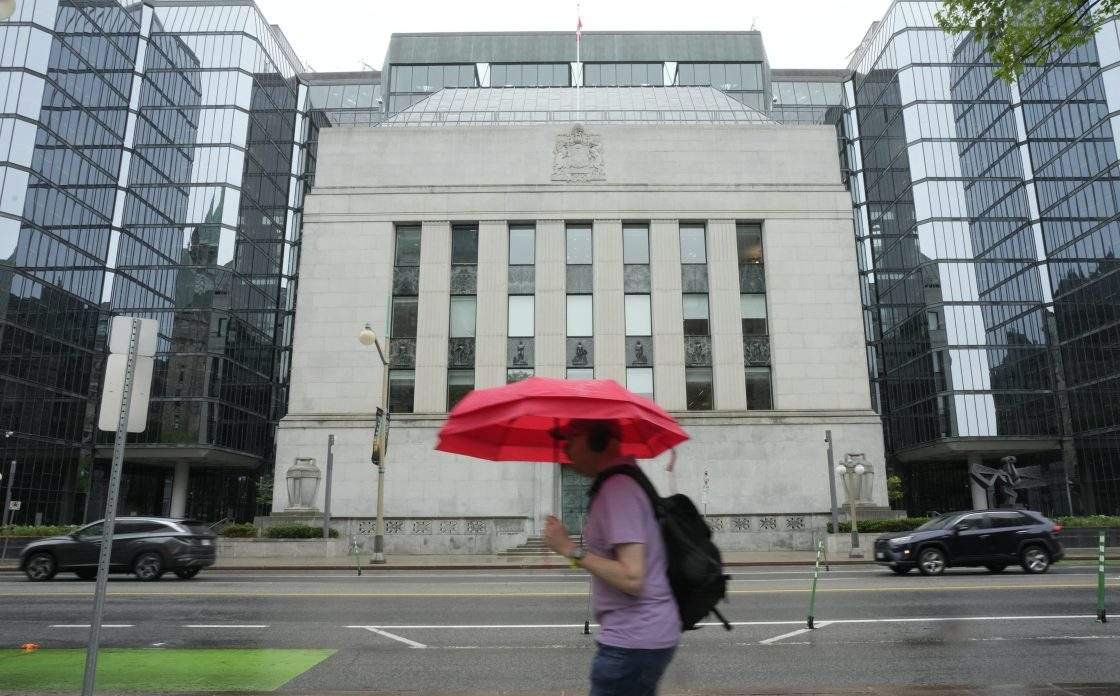
Bank of Canada Maintains Steady Hand Amid Global Uncertainty
\\\ \\\\\\ \\\
The Bank of Canada decided on Wednesday to hold its benchmark interest rate steady at 2.25 per cent, marking the sixth consecutive meeting without a change. This decision, widely anticipated by economists, comes at a time when inflationary pressures from international conflicts are testing the resilience of Canada’s economy. Governor Tiff Macklem and the bank’s governing council continue to walk a careful line between supporting growth and guarding against entrenched price increases.
With mortgage payments now consuming more than half of many households’ income and the national average home price hovering near $695,000, Wednesday’s announcement carries significant weight for millions of Canadian families and businesses. The decision also arrives as the Canadian Real Estate Association (CREA) revised its outlook downward, now expecting home sales to decline through the remainder of 2026.
\\\ \\\ \\\ \\\Tags: Bank of Canada, interest rates, inflation, housing market, Tiff Macklem, Iran conflict, mortgage affordability, Canadian economy
\\\ \\\Inflationary Pressures from the Iran Conflict
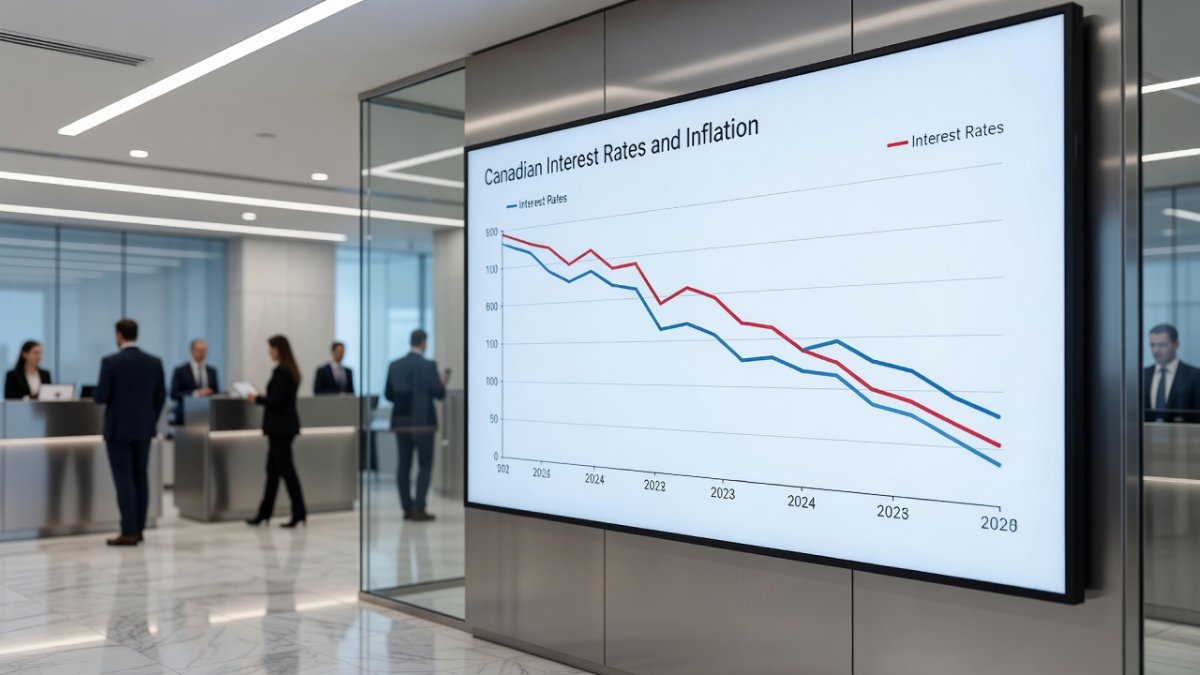
\\\ \\\The most immediate challenge facing the central bank is the recent surge in inflation above three per cent. Higher oil prices triggered by the conflict in Iran have driven gasoline costs sharply higher throughout the spring. This external shock has pushed the consumer price index beyond the upper end of the Bank of Canada’s one-to-three per cent target range.
\\\ \\\Bank officials have emphasised they are prepared to look past the initial price spike caused by the war in the Middle East. However, they have also made clear they stand ready to act if there are signs that inflation is broadening beyond energy costs into services, wages, or other parts of the economy. In its latest Monetary Policy Report, the Bank of Canada raised its forecast for average inflation in 2026 to 2.5 per cent from 2.3 per cent in April. Despite this upward revision, the central bank still projects inflation will remain near the two-per-cent midpoint of its target range over the next two years.
Economists following the decision noted that the bank’s language suggests a data-dependent approach. “They are signalling patience but not complacency,” said one Toronto-based analyst who tracks monetary policy. The central bank’s willingness to monitor second-round effects will be critical in determining whether rates stay on hold or begin to rise again later in the year.
\\\ \\\Modest Economic Rebound and Labour Market Signals
\\\ \\\Recent economic data paint a picture of tentative recovery following a weak first quarter. Canada’s unemployment rate edged lower in June as the economy added 18,000 jobs. While this figure is modest, it represents a step in the right direction after months of sluggish performance.
\\\ \\\The Bank of Canada’s updated forecasts reflect this mixed picture. Growth is expected to pick up modestly through the second half of 2026, supported by consumer spending and some improvement in business investment. However, the report also highlights downside risks stemming from global geopolitical tensions, slower growth among Canada’s major trading partners, and persistent challenges in the domestic housing market.
\\\ \\\For Canadian workers, the slight improvement in employment numbers offers cautious optimism. Yet many households continue to feel the squeeze from elevated living costs. Food prices, shelter costs, and transportation expenses remain elevated, limiting the discretionary spending power that typically drives broader economic expansion.
\\\ \\\\\\
\\\
Housing Affordability Remains a Critical Pressure Point
\\\ \\\Few areas of the Canadian economy illustrate the tension between monetary policy and daily life more clearly than housing. According to the latest data, mortgage payments now eat up 52.3 per cent of average household income — a record high that leaves families with less room to absorb further financial shocks.
\\\ \\\The national average home price stands at approximately $695,000. While this figure masks significant regional differences — with prices substantially higher in British Columbia and Ontario — it underscores the broad-based affordability crisis facing first-time buyers, young families, and even many existing homeowners facing mortgage renewals.
\\\ \\\CREA has responded to the current environment by lowering its forecast for home sales in 2026. The organisation now anticipates a decline rather than the modest growth projected earlier in the year. Higher borrowing costs, even at 2.25 per cent, continue to weigh on buyer demand, particularly as many homeowners transition from pandemic-era fixed-rate mortgages to renewals at higher rates.
\\\ \\\Finance Minister Chrystia Freeland has acknowledged the strain on Canadian households. In recent public remarks, she noted that federal-provincial discussions on housing supply and targeted affordability measures would remain a priority. However, the Bank of Canada’s independence means monetary policy decisions rest solely with Governor Macklem and his council, not with elected officials in Ottawa.
\\\ \\\Business Investment Climate and Consumer Spending
\\\ \\\Beyond housing, the Bank of Canada’s decision has implications for business investment across the country. With rates unchanged, companies in sectors ranging from manufacturing to natural resources may feel somewhat more confident in planning capital expenditures. Yet uncertainty surrounding the Iran conflict and its effect on global energy markets continues to cloud the outlook.
\\\ \\\Energy producers in Alberta and Saskatchewan stand to benefit from higher oil prices in the short term, but the broader Canadian economy remains heavily exposed to volatility in commodity markets. The Bank’s updated projections suggest that while energy revenues may support government budgets in resource-rich provinces, the inflationary impact could offset some of these gains through higher input costs for businesses and consumers alike.
\\\ \\\Consumer spending, which accounts for a significant portion of Canada’s gross domestic product, faces its own headwinds. With mortgage renewals continuing to reset at higher rates throughout 2026 and 2027, many economists warn of a potential “renewal cliff” that could dampen retail sales and discretionary purchases. Retailers from coast to coast have already reported softening demand for big-ticket items as households prioritise debt servicing over new spending.
\\\ \\\The tourism and hospitality sectors, vital to economies in provinces such as British Columbia, Nova Scotia, and Prince Edward Island, are also watching closely. A stronger Canadian dollar — partly supported by higher interest rates relative to some international peers — could make travel to Canada more expensive for foreign visitors, while simultaneously making overseas trips more attractive for Canadians.
\\\ \\\Expert Perspectives on the Road Ahead
\\\ \\\Economists polled by Reuters unanimously predicted the Bank of Canada would hold rates steady, reflecting broad consensus around the current policy stance. Many expect the central bank to remain on the sidelines through the remainder of 2026 unless inflation shows clear signs of becoming embedded or economic growth weakens more sharply than anticipated.
\\\ \\\Dr. Sarah Thompson, an economist at the University of British Columbia, cautioned that the bank faces a delicate balancing act. “The challenge is distinguishing between transitory shocks from geopolitical events and more persistent domestic price pressures,” she said. “With unemployment still relatively low by historical standards but consumer confidence fragile, the Bank must avoid both over-reaction and under-reaction.”
\\\ \\\Other analysts point to the Bank’s improved forecasting tools and its willingness to publish detailed scenarios related to the Iran conflict. These forward-looking materials are intended to provide greater transparency to markets, businesses, and households about possible economic trajectories.
\\\ \\\From an Indigenous economic development perspective, leaders in several First Nations communities have expressed concern that prolonged high borrowing costs could slow infrastructure projects and housing initiatives on reserves. The Assembly of First Nations has called on both the federal government and the Bank of Canada to consider the unique economic circumstances facing Indigenous communities when setting policy.
\\\ \\\ \\\
\\\
\\\
\\\
Implications for Mortgage Renewals and Household Finances
\\\ \\\One of the most immediate practical concerns for Canadians is the wave of mortgage renewals scheduled for the coming quarters. Many homeowners who secured ultra-low rates during the pandemic are now facing increases of several hundred dollars per month. At current levels, the 2.25-per-cent policy rate translates into variable mortgage rates that remain well above those seen in 2020 and 2021.
\\\ \\\Financial planners recommend that households review their budgets carefully and consider stress-testing their finances against further rate increases. The federal government’s mortgage stress test, which requires borrowers to prove they can afford payments at rates at least two percentage points above the contract rate, continues to limit how much some buyers can borrow.
\\\ \\\For those already in the housing market, the combination of high home prices and elevated debt-servicing costs has led to increased interest in government programmes such as the First-Time Home Buyer Incentive and various provincial affordability initiatives. However, critics argue these programmes have done little to address the fundamental imbalance between housing supply and demand in major urban centres such as Toronto, Vancouver, and Montreal.
\\\ \\\Forward-Looking Outlook: Cautious Optimism with Clear Risks
\\\ \\\Looking ahead, the Bank of Canada’s decision to hold rates at 2.25 per cent provides a measure of stability in an otherwise uncertain global environment. Governor Tiff Macklem’s upcoming media availability will likely offer further insight into how the central bank views the balance of risks between inflation and growth.
\\\ \\\For Canadian families, the path forward will depend on several factors: how quickly inflation moderates as energy price shocks fade, whether the labour market continues its modest improvement, and how policymakers at both federal and provincial levels address the chronic shortage of housing supply.
\\\ \\\The interaction between monetary policy and fiscal measures will be particularly important. With public debt levels elevated after years of pandemic-related spending, the federal government’s ability to introduce new stimulus is somewhat constrained. This places even greater responsibility on the Bank of Canada to manage the economic cycle carefully.
\\\ \\\Businesses, meanwhile, will be watching for any signs that the central bank might begin raising rates again if inflation proves more stubborn than expected. Conversely, should the economy weaken more than projected — perhaps due to slower growth in the United States or renewed global supply chain disruptions — markets will begin pricing in potential rate cuts.
\\\ \\\Ultimately, Wednesday’s decision reflects the Bank of Canada’s commitment to its inflation-targeting framework while acknowledging the very real pressures facing Canadian households and businesses. As the effects of the Iran conflict continue to ripple through global markets, Canadians can expect the central bank to remain data-dependent and transparent about its reasoning.
\\\ \\\The coming months will test whether the current policy stance successfully threads the needle between price stability and economic growth. For a country grappling with housing affordability, cost-of-living challenges, and an evolving global trade landscape, the Bank of Canada’s steady hand offers temporary reassurance — but the underlying structural issues will require sustained attention from policymakers across all levels of government.
\\\ \\\Canadians from St. John’s to Victoria will continue to watch closely as the central bank navigates these choppy waters. The decisions made in the coming quarters will help determine not only the trajectory of inflation and interest rates but also the broader economic well-being of the country in an increasingly uncertain world.
\\\ \\\By Alex Thompson, Staff Writer
\This article was produced with AI-assisted research and editorial support. Reporting is based on sources cited in the article.
What's Your Reaction?
 Like
0
Like
0
 Dislike
0
Dislike
0
 Love
0
Love
0
 Funny
0
Funny
0
 Wow
0
Wow
0
 Sad
0
Sad
0
 Angry
0
Angry
0

Canada Correspondent at Global1.News. Based in Toronto, covering Canadian politics, energy, trade, and US-Canada relations. Provides the Canadian perspective on North American and global affairs.














Comments (0)