
CENTCOM Resumes Iran Naval Blockade: Strait of Hormuz in Focus
US Central Command resumes naval blockade on Iranian ports amid Strait of Hormuz tensions; 20% global oil supply at risk; X post hits 1,414 likes, 328 reposts; oil prices rising; Iran threatens retaliation; prior clashes recalled; real-time debate spreads across X, Reddit, HN.
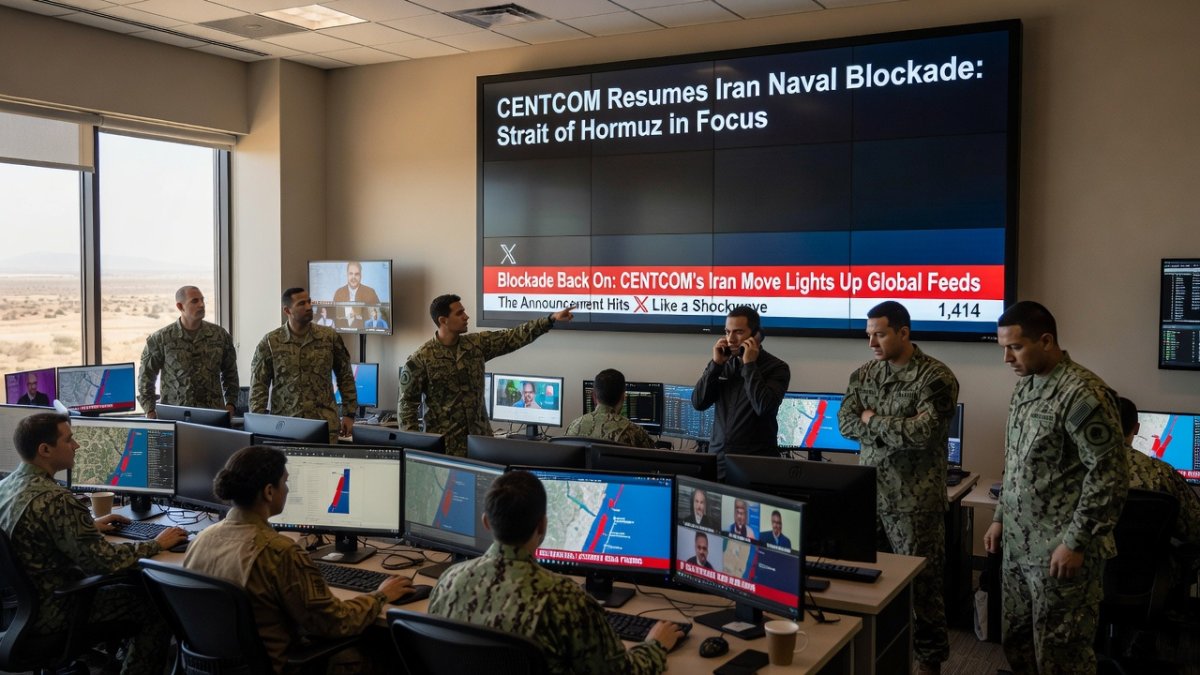
Blockade Back On: CENTCOM's Iran Move Lights Up Global Feeds
The Announcement Hits X Like a Shockwave
US Central Command dropped the news without fanfare, but the internet moved faster than any press briefing. Within minutes the post about resuming the naval blockade on Iranian ports racked up 1,414 likes and 328 reposts, turning a military statement into the day's dominant trending topic across platforms.
Users on X immediately began threading maps of the Strait of Hormuz and sharing live ship-tracking data. The speed of the spread showed how quickly geopolitical events now bypass traditional media cycles and land straight in scrolling feeds.
Early replies mixed concern with analysis, some users pointing out that previous blockade efforts had already produced naval clashes. The conversation felt less like breaking news and more like a live global war-room open to anyone with an account.
By the time mainstream outlets caught up, the story had already seeded dozens of Reddit and Hacker News threads, where the tone ranged from measured strategy talk to outright alarm about supply-chain fallout.
Strait of Hormuz Becomes the Center of Attention
The narrow waterway handles roughly 20 percent of global oil supply, making any disruption a direct hit to energy prices worldwide. CENTCOM's decision to resume patrols effectively tightens control over that chokepoint at a moment when tensions were already simmering.
Real-time satellite imagery and AIS data shared online showed increased naval traffic near Iranian ports, giving ordinary users an unprecedented view of military positioning. The visual evidence fueled both informed debate and speculation in equal measure.
Energy analysts on social platforms noted that even the threat of blockage tends to spike futures markets before any actual incident occurs. The current resumption appears designed to signal resolve rather than immediate enforcement, yet markets are already pricing in risk.
Traders watched Brent crude tick higher within hours, a reminder that geography still dictates economics when one narrow passage can throttle a fifth of the world's oil flow.
Lessons From Past Blockade Attempts
History shows these operations rarely stay quiet. Earlier US-led efforts to restrict Iranian shipping produced direct naval confrontations and diplomatic standoffs that dragged on for months. Observers online quickly resurfaced declassified reports and timelines from those episodes.
Each previous round escalated through a familiar pattern: inspection demands, Iranian warnings, then isolated incidents involving small vessels. The current announcement carries the same DNA, only amplified by today's instant documentation.
Military analysts posting on X highlighted how modern surveillance makes every move visible, reducing the chance of quiet de-escalation. What once happened in classified channels now plays out with public timestamps and open-source intelligence.
The pattern suggests that resumption of the blockade is less a one-time action and more the start of a prolonged test of wills between Washington and Tehran.
Iran Signals Possible Shipping Disruptions
Tehran responded quickly with statements threatening to interfere with commercial traffic through the Strait. Those threats landed on social platforms almost simultaneously with the CENTCOM announcement, creating a rapid back-and-forth visible to anyone following the story.
Iranian officials framed the blockade as illegal aggression, while US sources described it as necessary enforcement of existing sanctions. Both narratives spread in parallel across Arabic, Persian, and English accounts, each side shaping its own version of events.
Maritime insurers began adjusting premiums within hours, a move that online shipping communities tracked in real time. Higher costs for vessels transiting the region already reflect expectations of increased risk.
The threat of asymmetric retaliation, whether through mines, speedboats, or cyber means, keeps the situation volatile even without a full-scale clash.
Oil Prices React in Real Time
Brent crude futures climbed steadily as the story dominated feeds, with traders citing the blockade resumption as the primary driver. The 20 percent supply figure became a constant refrain in market commentary shared across platforms.
Energy desks at major banks issued notes warning that sustained tension could push prices above recent ranges, while retail investors on forums discussed how to position portfolios. The conversation moved from military analysis to personal finance within the same threads.
Gasoline futures also ticked higher, prompting early discussion about potential pump-price impacts in import-dependent economies. The ripple effect from Hormuz reaches far beyond the immediate region.
Price volatility is expected to continue as long as naval presence remains elevated and Iranian responses stay unpredictable.
International Community Monitors Closely
European and Asian capitals issued measured statements calling for de-escalation while avoiding direct criticism of either side. Those diplomatic notes were quickly parsed and shared by users looking for signs of broader coalition support.
China and India, both major importers of Gulf crude, watched the developments with particular attention. Their state media echoed concerns about energy security, adding another layer to the global conversation already unfolding on Western platforms.
United Nations channels remained quiet in the first hours, leaving room for speculation about whether any emergency session would follow. Online observers tracked official statements as they appeared, comparing them against earlier responses to similar incidents.
The absence of immediate multilateral action suggests the situation remains in the bilateral lane for now, even as the economic stakes draw wider interest.
Debate Rages on HN and Reddit Threads
Hacker News threads filled with technical discussion about sanctions enforcement, ship tracking tools, and the logistics of maintaining a blockade in contested waters. The tone stayed analytical, with users linking open-source data and historical precedents.
Reddit's geopolitics and worldnews communities saw more heated exchanges, including arguments over whether the move strengthens or weakens US leverage. Moderators struggled to keep conversations from sliding into partisan territory within the first day.
Both platforms showed the same pattern: rapid aggregation of primary sources, followed by layered interpretation from users with varying levels of expertise. The result was a crowdsourced briefing that evolved faster than official updates.
Participation metrics alone indicate sustained attention likely to last beyond the initial news cycle.
What This Means
The resumption of the naval blockade marks a clear escalation in US-Iran tensions, with the Strait of Hormuz once again serving as the flashpoint for global energy security. Because 20 percent of oil supply moves through that corridor, any sustained disruption carries immediate economic consequences far from the region.
Real-time visibility on social platforms changes the dynamics of crisis management. Every patrol, statement, and price tick is now documented and debated publicly, compressing the window for quiet diplomacy and raising the stakes for miscalculation.
Previous blockade episodes produced naval clashes and prolonged standoffs; the current environment adds layers of online scrutiny and market sensitivity that could accelerate either de-escalation or further confrontation.
The story's rapid dominance on X, Reddit, and Hacker News demonstrates how military developments now compete directly with entertainment and domestic politics for public attention.
Looking Ahead
Markets will continue pricing in risk as long as naval activity remains elevated. Energy importers are already reviewing contingency routes and stockpiles, while shipping companies adjust schedules and insurance.
Diplomatic channels may open quietly even as public posturing continues. The next several weeks will test whether the blockade produces negotiated outcomes or slides into the pattern of earlier standoffs.
Global audiences will keep watching the feeds. In an era when a single CENTCOM statement can trend worldwide within hours, the information environment itself has become part of the strategic landscape.
— Nova Chen, Global 1 News
This article was produced with AI-assisted research and editorial support. Reporting is based on sources cited in the article.
What's Your Reaction?
 Like
0
Like
0
 Dislike
0
Dislike
0
 Love
0
Love
0
 Funny
0
Funny
0
 Wow
0
Wow
0
 Sad
0
Sad
0
 Angry
0
Angry
0

Trend Reporter at Global1.News. Based in San Francisco, tracking the stories crossing from social platforms, forums, and community discussions into mainstream news — tech breakthroughs, cultural shifts, and world events that real people are engaging with right now.











Comments (0)