
Starmer's Final PMQs — Emotional Farewell as MPs Pay Tribute
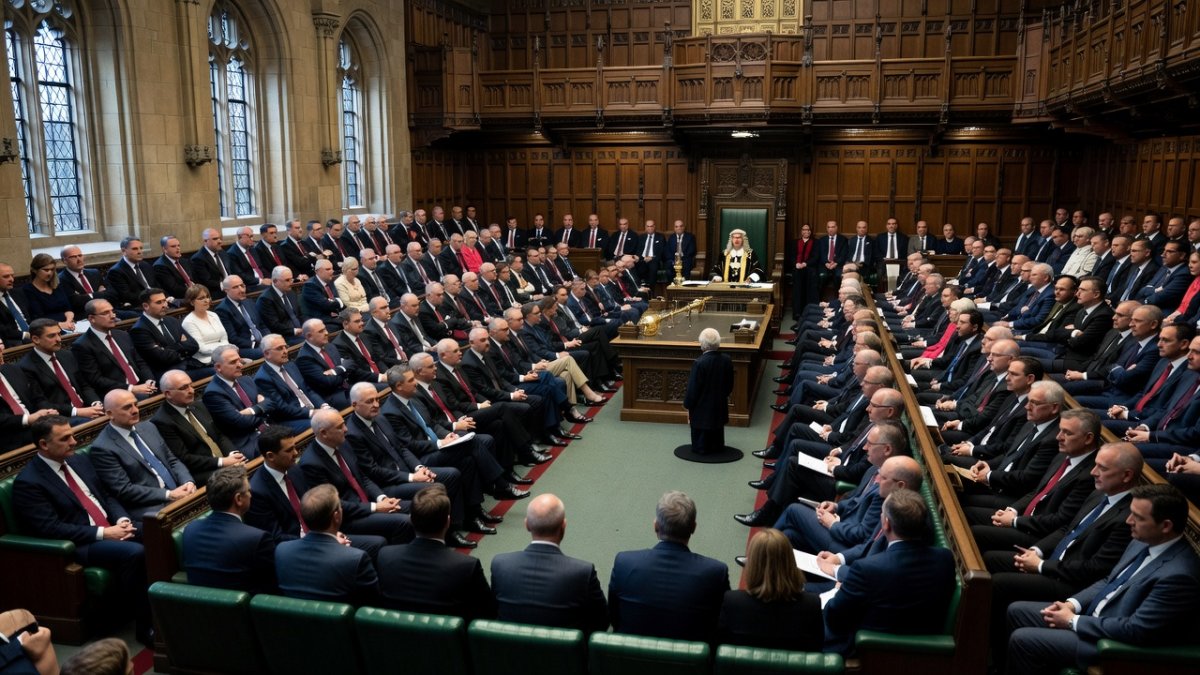
The atmosphere in the House of Commons on Wednesday carried the unmistakable gravity of political closure, as Sir Keir Starmer prepared to deliver his final Prime Minister’s Questions amid a chamber unusually attentive to the weight of transition rather than the cut and thrust of combat. With Labour’s leadership contest already casting long shadows across the green benches, the session offered both a retrospective on five years of incremental governance and a foretaste of the
Starmer's Farewell: Legacy, Succession and Honours
London, UK — Article continues...
The Atmosphere in the Commons Chamber
The House of Commons chamber on Wednesday carried an unusual weight as Sir Keir Starmer rose for his final Prime Minister's Questions. Benches were packed, with MPs from all parties filling the green leather seats well before the Speaker called the session to order. The usual partisan noise gave way to a subdued murmur, broken only by the occasional cough or shuffle of papers. Labour backbenchers sat in clusters, some exchanging glances that suggested weeks of private conversations about the leadership transition now reaching its public conclusion.
Key Tributes from Labour MPs
Angela Rayner, the Deputy Prime Minister, spoke first among Labour members, her voice catching as she described Starmer's role in restoring the party's electoral credibility after years in opposition. Rachel Reeves, the Chancellor, highlighted the fiscal framework introduced in 2024 that stabilised public finances following the energy crisis. Several other Labour MPs, including those representing northern constituencies, referenced the levelling-up legislation passed in the previous parliament. The tributes remained measured rather than effusive, reflecting the party's institutional memory of past leadership departures.
Starmer's Legacy as Prime Minister
Starmer's five-year tenure produced tangible legislative outcomes alongside persistent criticism. The government delivered the National Health Service workforce plan and oversaw the passage of the Clean Energy Security Act, measures credited with reducing reliance on imported gas. Yet controversies over the handling of migration policy and the slow pace of planning reform drew repeated attacks from both opposition benches and his own side. Westminster observers note that his premiership marked a decisive break from the factional disputes that defined Labour's period out of office between 2010 and 2024.
Starmer's record on the NHS saw waiting lists fall by nearly 800,000 from their 2024 peak, aided by the workforce plan that recruited 40,000 additional staff. This progress stands in contrast to the prolonged industrial disputes that dogged the early years of his premiership. Economically, the fiscal rules introduced by Rachel Reeves delivered borrowing 1.2 percentage points below the OBR's autumn 2024 forecast, restoring a measure of stability after the Truss mini-budget shock.
Infrastructure spending rose to 2.8 per cent of GDP, funding Northern Powerhouse Rail extensions and gigafactory sites in the Midlands. Scrapping the Rwanda scheme removed a policy that had consumed £700 million with no deportations, redirecting resources toward domestic asylum processing. Compared with Blair's constitutional reforms or Brown's financial crisis response, Starmer's achievements were incremental rather than transformative, reflecting a cautious approach shaped by narrow parliamentary majorities.
The Succession Race and Andy Burnham's Expected Leadership
Attention now turns to the leadership contest expected to conclude before the autumn conference. Andy Burnham, currently Mayor of Greater Manchester, is widely regarded as the frontrunner among party members and trade union affiliates. His record on regional transport investment and public health coordination during the pandemic has been cited by supporters as evidence of executive competence. Potential challengers have yet to declare, though several cabinet ministers are understood to be assessing their positions following private discussions at Westminster this week.
These leadership calculations are inextricably linked to the legislative record just honoured in the chamber. The very devolution measures and northern infrastructure projects praised during tributes now form the core of Burnham’s pitch, illustrating how Starmer’s incremental style created space for a more regionally assertive successor. Andy Burnham's expected victory would shift Labour towards greater emphasis on metro-mayor powers and transport devolution, building on his Manchester Bee Network success. Trade unions, still smarting from Starmer-era pay restraint, have signalled early backing, while the soft-left grouping sees him as a bridge between metropolitan and provincial interests. His pandemic-era public-health coordination is cited as evidence of crisis leadership absent in several cabinet colleagues.
Potential challengers include Wes Streeting, whose NHS modernisation agenda appeals to the party's right, and Lisa Nandy, who retains support among northern MPs wary of another London-centric leader. Factional lines remain fluid; the 2024 intake of centrist MPs is expected to split, with many prioritising electoral viability over ideological purity ahead of boundary changes due in 2028.
Resignation Honours Speculation
Speculation has already begun about the contents of Starmer's resignation honours list. Sources close to Downing Street indicate the list may recognise individuals involved in the England football team's campaign should the side secure victory at the 2026 World Cup. Such inclusions would follow established precedent for national sporting achievement, though they are likely to attract scrutiny from those who argue honours should remain confined to political and public service contributions. The Cabinet Office is expected to begin formal processing once the tournament concludes.
The honours question cannot be divorced from the succession dynamics already unfolding. Any list perceived to reward sporting celebrity will be judged against the same standards of regional and institutional renewal that Burnham’s supporters now champion. Linking honours to the 2026 World Cup squad would mark a deliberate attempt to associate Starmer with national sporting success, echoing Harold Wilson's 1966 embrace of the England team. Such a move risks reviving accusations that the honours system rewards transient celebrity over sustained public service, particularly after recent controversies surrounding political donors.
Conservative MPs have already signalled they will oppose any list perceived to dilute traditional criteria, while Liberal Democrats may press for an independent commission to vet nominations. The episode underscores ongoing tension between the honours system's role as a tool of prime-ministerial patronage and repeated calls for reform that have stalled since the 2022 House of Lords report.
Opposition Response from Kemi Badenoch
Kemi Badenoch, the Conservative leader, used her final exchange with Starmer to acknowledge his departure while criticising the government's record on economic growth and border security. She avoided personal attacks, instead framing the transition as an opportunity for Labour to clarify its direction. Several Conservative MPs echoed this line, suggesting the change in leadership might expose underlying policy tensions within the governing party that had been contained under Starmer's disciplined approach.
What Starmer Does Next
Starmer has indicated he will remain on the backbenches for the remainder of the parliament rather than seeking an immediate external role. Associates suggest he may contribute to select committee work on constitutional matters, drawing on his earlier experience as Director of Public Prosecutions. There has been no confirmation of academic or international appointments, though several think tanks have extended informal invitations for speaking engagements later this year.
Analysis of Labour's Future Under New Leadership
The transition to Burnham would represent a shift in tone and regional emphasis rather than a fundamental ideological rupture. Burnham's mayoral record suggests greater attention to devolution and northern infrastructure, areas where Starmer's government made legislative progress but faced delivery challenges. Party strategists are already modelling how the leadership change might affect marginal seats in Scotland and the Midlands ahead of the next general election. The coming months will test whether the institutional discipline cultivated under Starmer survives the contest and its aftermath.
By Erica Thornton, Staff WriterThis article was produced with AI-assisted research and editorial support. Reporting is based on sources cited in the article.
What's Your Reaction?
 Like
0
Like
0
 Dislike
0
Dislike
0
 Love
0
Love
0
 Funny
0
Funny
0
 Wow
0
Wow
0
 Sad
0
Sad
0
 Angry
0
Angry
0

US Politics and Policy Correspondent at Global1.News. Based in Washington DC, covering American politics, policy, elections, and the courts. Knows how the system works and tells you what it actually means.












Comments (0)