
Emperor Naruhito Seeks Backing for Imperial Family Plan
**Keywords:** Emperor Naruhito, imperial succession, Imperial House Law, Article 4 Constitution, female-line descendants, bipartisan lawmakers, Japan imperial family, constitutional monarchy, demographic pressures, 2005 panel, 2012 panel, Diet approval, public opinion, stable continuation Emperor's Recent Statement and Its Constitutional Significance Emperor Naruhito issued a s
Emperor's Recent Statement and Its Constitutional Significance
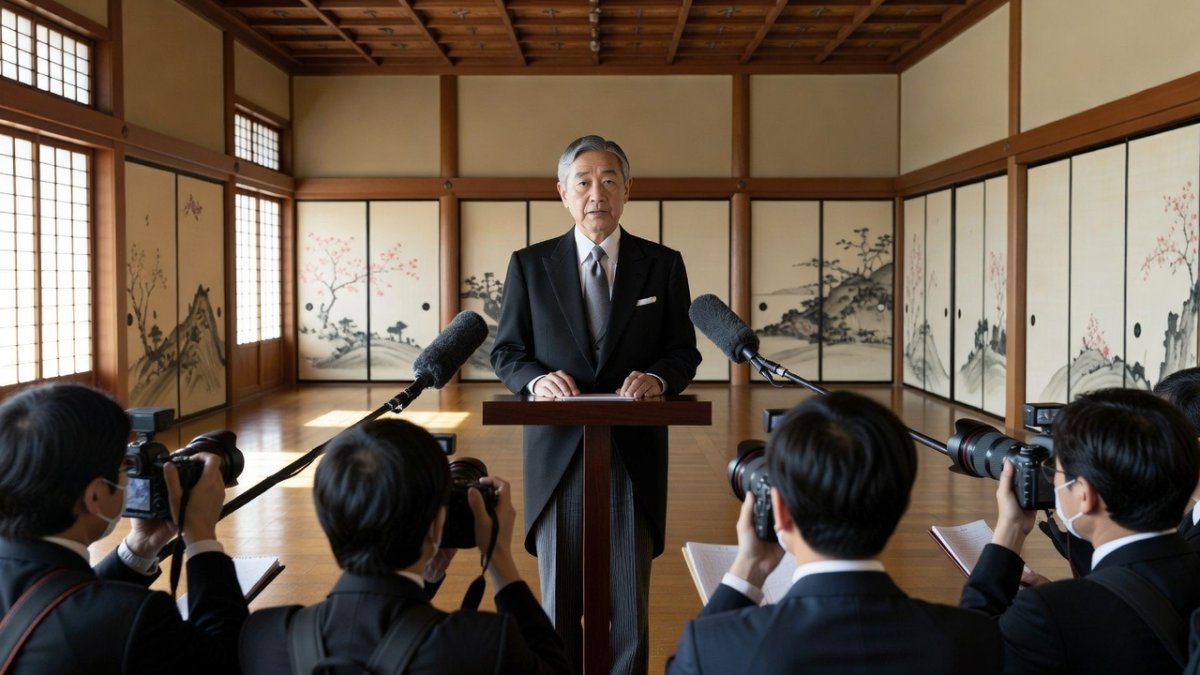
Emperor Naruhito issued a statement this week expressing hope for public understanding and support for measures to ensure the stable continuation of the imperial family. He refrained from commenting on the substance of a consensus proposal submitted by a bipartisan group of lawmakers. The remarks came amid ongoing discussions about the future of the institution under the current legal framework.
Article 4 of the Constitution of Japan defines the Emperor as the symbol of the state and of the unity of the people, deriving his position from the will of the people with whom resides sovereign power. This provision limits the Emperor to ceremonial and symbolic functions without political authority. Naruhito's statement aligns precisely with this role by seeking public engagement rather than directing policy.
The timing of the statement this week in mid-June 2026 underscores the Emperor's awareness of demographic pressures facing the imperial family. With fewer male heirs available under existing rules, the call for broader societal support reflects a measured approach consistent with constitutional boundaries. Observers noted the absence of any direct reference to specific reform options.
Historical Background of the Imperial House Law and Succession Rules
The 1947 Imperial House Law established the current rules governing succession, limiting the throne to male heirs in the male line. This framework has remained largely unchanged despite evolving family demographics. Successive governments have recognized the resulting challenges as the number of eligible male heirs has declined.
Government panels in 2005 and 2012 examined these succession issues in detail. Both panels reviewed options to address the shrinking pool of heirs while preserving the law's core structure. Their reports highlighted the need for careful consideration of public sentiment before any legislative action.
Demographic pressures have intensified since those earlier reviews, with fewer imperial family members available to fulfill traditional roles. The 1947 law's emphasis on male-line succession has created a narrow pathway that current family composition struggles to sustain. These historical constraints continue to shape today's debate.
Details of the Lawmakers' Consensus Proposal
A bipartisan group of lawmakers recently submitted a consensus proposal addressing the future structure of the imperial family. The document outlines potential pathways to maintain stability without altering the fundamental succession line immediately. Emperor Naruhito acknowledged the proposal's existence this week but offered no substantive commentary on its contents.
The proposal touches on options including female succession and recognition of female-line descendants in certain capacities. These elements aim to expand the pool of individuals who can support imperial duties. Lawmakers emphasized that any changes would require broad agreement across political lines.
Public opinion is viewed as a prerequisite for stable implementation of any measures. The bipartisan effort reflects recognition that reforms must enjoy widespread acceptance to endure. Details of the proposal remain under discussion within the Diet.
Constitutional and Political Implications
Article 4 of the Constitution reinforces that the Emperor cannot initiate or influence legislative processes directly. Naruhito's statement this week adhered strictly to this principle by focusing on public understanding rather than policy advocacy. This approach maintains the separation between the symbolic role and political decision-making.
The Chief Cabinet Secretary has indicated that any legislative changes require Diet approval. This requirement ensures that reforms undergo full parliamentary scrutiny and debate. Bipartisan cooperation has been essential in preparing the current proposal for consideration.
Comparisons with other constitutional monarchies, such as those in Europe, show varied approaches to succession and family roles. Japan’s system remains distinctive in its strict male-line provisions under the 1947 law. Political implications include the need for careful timing to avoid perceptions of undue external pressure.
Japan-Specific Context — Cultural Significance of the Imperial Institution
The imperial family holds deep cultural resonance in Japan as a continuous symbol spanning centuries. This continuity connects contemporary society with historical traditions unique to the Japanese context. Public support remains central to the institution's legitimacy under the post-war constitutional order.
Demographic pressures within the family mirror broader societal trends of declining birth rates affecting many Japanese institutions. The imperial family's situation amplifies these national challenges in a highly visible manner. Cultural expectations around lineage and continuity add layers of sensitivity to reform discussions.
Emperor Naruhito's recent statement this week invoked the need for collective understanding, reflecting Japan's emphasis on social harmony in addressing institutional matters. The cultural weight of the imperial role demands that changes proceed with broad consensus. Historical precedents show that public sentiment has guided past adjustments to imperial practices.
Economic and Diplomatic Considerations
Stable imperial succession supports Japan's diplomatic engagements, where the Emperor performs key ceremonial functions representing the nation. Disruptions could affect the predictability of these roles in international settings. Bipartisan lawmakers have factored such continuity into their proposal discussions.
Economic implications arise indirectly through the costs associated with maintaining imperial residences and related activities. Any structural changes would require fiscal planning approved by the Diet. Public opinion serves as a prerequisite to ensure sustainable funding arrangements.
Comparisons with other constitutional monarchies reveal that Japan manages a relatively compact imperial household compared with some European counterparts. Demographic realities necessitate forward planning to preserve operational capacity. Diplomatic calendars this year already incorporate scheduled imperial events that rely on family availability.
What to Watch for Going Forward
Attention now turns to Diet deliberations on the bipartisan consensus proposal in the coming months. Further statements from government officials may clarify timelines for potential legislation. Emperor Naruhito's call for public support this week sets the tone for ongoing national conversation.
Monitoring public opinion polls will indicate whether proposed measures gain the necessary acceptance. The 2005 and 2012 panel findings continue to inform current thinking on succession options. Any legislative path must navigate both constitutional requirements and cultural expectations.
Future developments will likely include additional briefings from the Chief Cabinet Secretary on procedural steps. Comparisons with peer monarchies may surface in policy analyses as Japan weighs its distinctive approach. The focus remains on achieving stable continuation through measured, consensus-driven processes.
By Kenji Tanaka, Staff WriterThis article was produced with AI-assisted research and editorial support. Reporting is based on sources cited in the article.
What's Your Reaction?
 Like
0
Like
0
 Dislike
0
Dislike
0
 Love
0
Love
0
 Funny
0
Funny
0
 Wow
0
Wow
0
 Sad
0
Sad
0
 Angry
0
Angry
0

Japan Correspondent at Global1.News. Tokyo-based voice covering Japanese politics, technology, economy, and culture. Tracks the intersection of tradition and innovation in one of the world's most dynamic societies.














Comments (0)