
Bruce Lee Day: First Chinese American Honoured in California
California has officially honoured martial arts legend and film icon Bruce Lee with an annual state day, making him the first Chinese American to receive such recognition in the state's history. Governor Gavin Newsom signed legislation designating 17 May as Bruce Lee Day, a landmark moment for Asian American representation that also resonates deeply across Africa, where Lee's f
California has officially honoured martial arts legend and film icon Bruce Lee with an annual state day, making him the first Chinese American to receive such recognition in the state's history. Governor Gavin Newsom signed legislation designating 17 May as Bruce Lee Day, a landmark moment for Asian American representation that also resonates deeply across Africa, where Lee's films ignited a martial arts cinema craze that shaped local film industries from Nollywood to Ghana's hand-painted poster culture.
Bruce Lee Day: California Honours Martial Arts Icon as First Chinese American With State Recognition
Dakar, Senegal — California Governor Gavin Newsom signed legislation on Tuesday, 30 June 2026, officially designating 17 May as Bruce Lee Day in the state, making the late martial artist and film star the first Chinese American in California history to receive an annual namesake commemorative day. The date marks Lee's return to San Francisco on 17 May 1959, after spending much of his childhood in Hong Kong. For African audiences, Bruce Lee's legacy carries particular weight — his films swept across the continent in the 1970s, inspiring a generation of local action cinema, martial arts schools from Dakar to Nairobi, and a cultural resonance that continues to this day in Nollywood fight choreography, Ghanaian bootleg-poster art, and Uganda's homegrown 'Bruce U' martial arts film movement.
A Historic First for Asian American Representation
Assemblymember Matt Haney representing San Francisco introduced bill AB-2455 in February 2026 to establish the annual observance. The legislation passed through both houses of the California legislature before Governor Gavin Newsom signed it into law on 30 June 2026. Bruce Lee thereby became the first Chinese American to receive an annual namesake day in California history, a distinction that highlights decades of advocacy for greater visibility of Asian American contributions.
The date 17 May was selected because it commemorates Lee's return to San Francisco on 17 May 1959 after his childhood years in Hong Kong. This choice anchors the commemoration in a concrete biographical milestone rather than an arbitrary calendar point. The annual observance will begin in 2027 and will encourage public events across the state each spring.
Shannon Lee leads the Bruce Lee Foundation and spoke at the San Francisco Public Library on 13 May 2026 shortly after the bill's announcement. She described the honor as recognition of her father's lasting influence across generations and cultures. Her remarks emphasized how the day would allow new audiences to encounter Lee's teachings on discipline and self-expression.
California media outlets including the Los Angeles Times covered the milestone extensively, noting that the designation provides long-overdue representation for Chinese American families who grew up watching Lee's films. Community organizations in San Francisco's Chinatown organized celebrations that linked the state honor to local immigrant histories stretching back to the nineteenth century.
The annual day will feature cultural exhibitions and educational activities coordinated by the Bruce Lee Foundation. These programs aim to connect Lee's story with broader conversations about minority representation in American public life. African observers see parallels with efforts in Senegal and Ghana to honor cultural pioneers through national commemorations.
Shannon Lee further noted that the recognition affirms her father's philosophy that inspired confidence and resilience among young people facing discrimination. The legislation's journey from introduction in February to signing in late June demonstrated sustained bipartisan support for acknowledging Asian American achievements in mainstream culture.
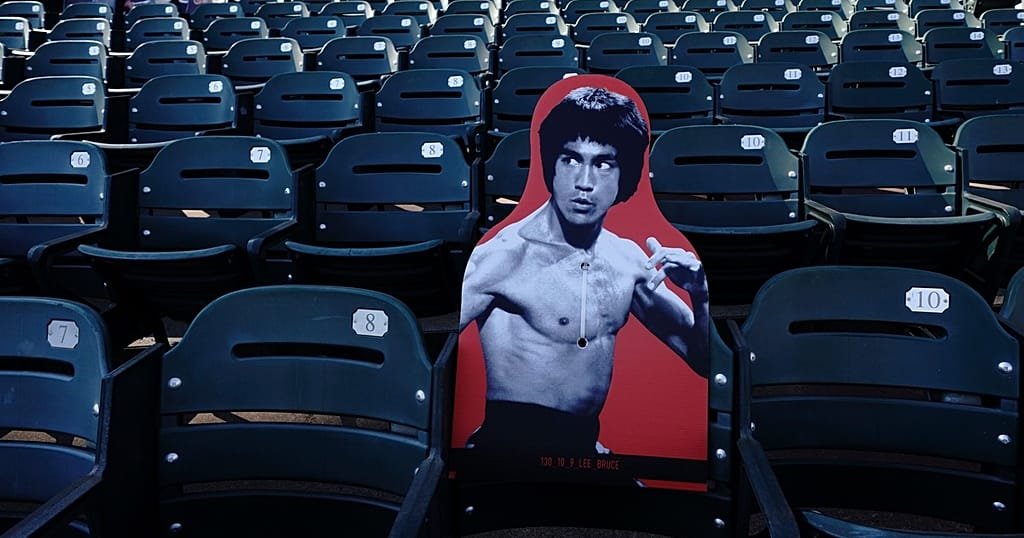
Bruce Lee's Legacy: From Hollywood Barriers to Global Icon
Bruce Lee was born in San Francisco's Chinatown in 1940 to Chinese parents who were visiting the United States at the time. His family returned to Hong Kong shortly afterward, where he spent his childhood before coming back to the United States as a teenager. This trans-Pacific upbringing shaped his later ability to bridge Eastern and Western cultural worlds.
His early acting career in Hollywood encountered limited opportunities and discriminatory roles that confined Asian actors to stereotypical parts. Frustrated by these barriers, he decided to return to Hong Kong where he quickly became an international superstar through films such as The Big Boss released in 1971 and Fist of Fury released in 1972. These successes established him as a leading action star across Asia.
Enter the Dragon released in 1973 marked the first Hong Kong-Hollywood co-production and brought his work to global audiences on an unprecedented scale. The film combined high production values with Lee's distinctive fighting style and reached cinemas from Lagos to Johannesburg within months of its premiere. Its commercial performance demonstrated the viability of cross-cultural film partnerships.
He founded the martial art Jeet Kune Do and popularized the philosophy expressed in the phrase "Be water, my friend." This approach emphasized adaptability and practical technique over rigid traditional forms. Practitioners in Dakar and Nairobi later adopted similar flexible training methods in local martial arts clubs.
Bruce Lee died in 1973 at age 32 from an allergic reaction to pain medication, cutting short a career that had already transformed global perceptions of Asian masculinity on screen. His brief but intense output challenged stereotypes that had long limited Asian male characters to subordinate or comic roles in Western cinema.
African viewers who encountered his films in the 1970s often cited his physical presence and confident demeanor as sources of inspiration during periods of political change on the continent. His example showed how an artist could achieve worldwide recognition while remaining rooted in his cultural heritage.
How Bruce Lee's Films Captivated African Audiences
Bruce Lee's films were widely screened across Africa in the 1970s and 1980s, creating a kung fu craze that filled cinemas from Accra to Johannesburg. Theater owners reported record attendance whenever his titles played, often running multiple daily showings to meet demand. This enthusiasm extended beyond urban centers into rural areas where mobile projectors brought the films to village audiences.
In Ghana, local artists hand-painted bootleg posters for martial arts films featuring Bruce Lee, turning cinema advertisements into vibrant public art. These posters incorporated bold colors and dynamic poses that reflected both Lee's image and local aesthetic traditions. Many of these works remain preserved in private collections and cultural archives today.
East African cinema-goers recall Chinese martial arts films as defining entertainment in the 1960s and 1970s, with Bruce Lee's titles standing out for their intensity and narrative drive. Viewers in Nairobi and Dar es Salaam often discussed fight sequences in detail after screenings, comparing techniques and speculating on training methods.
Lee's high-energy fight choreography and underdog narratives resonated with African audiences facing their own struggles for dignity and self-determination. His characters frequently overcame larger opponents through skill and determination rather than brute strength, a theme that aligned with independence-era aspirations across the continent.
The enduring popularity of his films continues across generations of African viewers, with many parents introducing their children to the same titles they watched in their youth. Online discussions on platforms such as X feature users from Lagos to Addis Ababa sharing memories of first encounters with his work at neighborhood cinemas.
His movies played a direct role in popularizing martial arts training across Africa, leading to the establishment of schools in cities including Dakar, Kampala, and Cape Town. Instructors often reference Lee's emphasis on practical movement when teaching new students the fundamentals of self-defense.
The African Cinema Connection: Bruce Lee's Influence on Nollywood and Beyond
Nollywood action choreography drew inspiration from Bruce Lee's fight sequences, adapting his rapid strikes and fluid transitions into local productions. Nigerian filmmakers incorporated similar pacing and physicality into their own action scenes, creating a distinctive hybrid style that blends Hong Kong techniques with West African storytelling rhythms.
Uganda's Bruce U film adapted Lee's martial arts hero archetype to a local Ugandan context, with its director citing Chinese kung fu films as primary inspiration. The production transposed the underdog narrative to Kampala streets while retaining the core emphasis on disciplined training and personal resilience.
The broader pattern of 1970s and 1980s Hong Kong action cinema shaped emerging video and popular film industries across the continent. Distributors in multiple countries imported these titles in large quantities, creating distribution networks that later supported the growth of indigenous video film sectors.
Ghana's action film poster tradition stands as lasting evidence of Lee's cultural penetration, with artists continuing to reference his iconic poses decades after the original releases. These visual works serve both commercial and archival functions, documenting the intersection of global cinema and local artistic practice.
Lee's emphasis on practical, adaptable combat philosophy translated into African martial arts schools and self-defense training programs. Instructors in Senegal and Kenya frequently cite his methods when designing curricula that prioritize real-world application over ceremonial forms.
His charismatic screen presence inspired African filmmakers who grew up watching his work, many of whom credit his example with their decision to pursue careers in cinema. This influence persists in contemporary productions that feature strong central characters overcoming systemic obstacles through skill and determination.
Shannon Lee and the Bruce Lee Foundation: Preserving a Philosophy
Shannon Lee maintains an active role in preserving her father's legacy through the Bruce Lee Foundation, overseeing initiatives that extend his teachings to new audiences worldwide. The organization coordinates programs that connect martial arts practice with educational outreach in multiple countries.
Following Assemblymember Matt Haney's announcement of the bill, Shannon Lee spoke at the San Francisco Public Library on 13 May 2026. She described the honor as recognition of her father's philosophy that inspired confidence and resilience among young people navigating difficult circumstances.
The Bruce Lee Foundation hopes for cultural exhibitions and educational activities on Bruce Lee Day that will introduce his work to younger generations unfamiliar with his films. These events will include demonstrations of Jeet Kune Do principles alongside discussions of his contributions to cross-cultural understanding.
Lee's philosophy of self-expression through martial arts continues to find new audiences in Africa through workshops and online communities. Practitioners in multiple countries adapt his training concepts to local contexts while maintaining the core focus on adaptability and personal growth.
His famous "Be water, my friend" philosophy serves as a framework for adaptability and resilience that resonates deeply in African contexts where communities have long navigated rapid social and economic change. Workshops in Senegal and South Africa have incorporated this teaching into leadership and youth development programs.
The Foundation's efforts ensure that Bruce Lee's emphasis on continuous self-improvement reaches audiences beyond traditional film fans. Educational materials developed by the organization highlight how his journey from limited opportunities to global recognition offers lessons applicable across diverse cultural settings.
What Bruce Lee Day Means for African Audiences
The broader significance for African audiences of seeing a non-white cultural icon receive state-level recognition in the United States lies in the affirmation that minority contributions can achieve formal acknowledgment. This milestone parallels ongoing efforts by African-descended communities worldwide to secure similar institutional recognition for their own cultural figures.
Parallels between struggles for representation faced by Asian Americans and African-descended peoples globally become evident when examining barriers in media and public commemoration. Both groups have worked to expand narratives beyond stereotypes, and Bruce Lee Day illustrates one successful outcome of such advocacy.
African creative industries can learn from Bruce Lee's journey the path of returning to one's roots and achieving global success from a local base. His decision to build his stardom in Hong Kong before conquering Hollywood offers a model for filmmakers who seek international reach while remaining grounded in their own cultural traditions.
The importance of cultural institutions preserving and celebrating homegrown icons finds clear illustration in Senegal's Museum of Black Civilizations and Ghana's Pan-African Festival. Bruce Lee Day serves as an example of how governments can formally recognize artists who shaped national and international cultural landscapes.
Bruce Lee Day acts as an inspiration for African nations to formally recognize their own cultural pioneers through similar commemorations. Several countries have begun discussions about establishing annual days honoring filmmakers and musicians who defined post-independence popular culture.
Forward-looking thoughts on cross-cultural exchange between Asia and Africa in entertainment industries point toward continued collaboration in film production and distribution. Joint projects that blend martial arts traditions with African storytelling forms represent one promising direction for future creative partnerships.
By Amara Diop, Staff Writer
This article was produced with AI-assisted research and editorial support. Reporting is based on sources cited in the article.
What's Your Reaction?
 Like
0
Like
0
 Dislike
0
Dislike
0
 Love
0
Love
0
 Funny
0
Funny
0
 Wow
0
Wow
0
 Sad
0
Sad
0
 Angry
0
Angry
0
West Africa/Sahel Correspondent at Global1.News. Dakar-based journalist covering politics, security, climate, and development across Francophone and Anglophone West Africa. Tells the stories of a region undergoing profound transformation.









Comments (0)