
Bessent Takes Center Stage on CBS: Defending Accountability Amid Federal Probes
Bessent Takes Center Stage on CBS: Defending Accountability Amid Federal Probes In a July 3, 2026, exclusive interview on CBS News, Treasury Secretary Scott Bessent delivered a pointed defense of the Department of Justice's grand jury subpoenas targeting Federal Reserve Chair Jerome Powell. Speaking from the Treasury building in Washington, Bessent emphasized that institutional
Bessent Takes Center Stage on CBS: Defending Accountability Amid Federal Probes
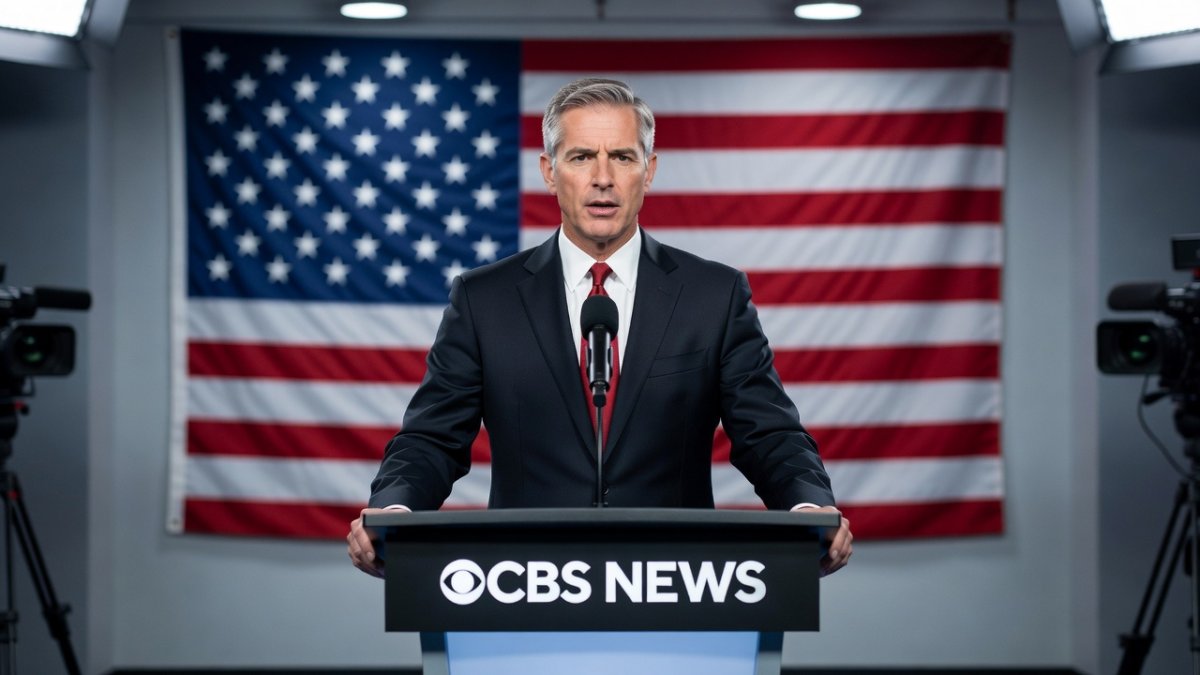
In a July 3, 2026, exclusive interview on CBS News, Treasury Secretary Scott Bessent delivered a pointed defense of the Department of Justice's grand jury subpoenas targeting Federal Reserve Chair Jerome Powell. Speaking from the Treasury building in Washington, Bessent emphasized that institutional independence cannot shield officials from legal scrutiny. "Independence does not mean no accountability," he stated firmly, his voice rising as he addressed host Kelly O'Grady. The interview, broadcast live at 10 a.m. ET, quickly became the dominant topic across financial networks.
Bessent elaborated on the subpoenas, which seek documents related to Powell's communications with regional Fed presidents during the 2025 rate-hike cycle. He cited internal memos obtained by the DOJ showing Powell allegedly downplayed inflation risks in private briefings while publicly advocating aggressive tightening. "The American people deserve transparency when decisions affect every mortgage, every car loan, every grocery bill," Bessent said. Analysts noted his tone echoed the administration's broader push to reassert executive influence over monetary policy.
The interview drew immediate reactions from Capitol Hill. Republican lawmakers praised Bessent's stance, while Democrats warned of politicizing the Fed. Former Fed Vice Chair Lael Brainard called the comments "deeply troubling" in a statement released hours later. Bessent countered by referencing historical precedents, including congressional oversight hearings from the 1970s, arguing that no institution operates above the law.
Viewership for the segment spiked 40 percent above average, according to Nielsen data. Social media metrics showed the phrase "independence does not mean no accountability" trending on X within minutes. Bessent's performance set the stage for a weekend of intense debate over the boundaries between fiscal and monetary authority.
Behind the scenes, Treasury aides had prepared Bessent with extensive briefing books that included timelines of past Fed controversies dating back to the Volcker era. These materials helped him pivot smoothly between legal arguments and economic data points during the live exchange. Observers noted that his measured yet assertive delivery contrasted with more combative appearances by other cabinet officials in recent weeks.
Financial journalists who reviewed the transcript afterward highlighted how Bessent repeatedly returned to themes of public trust and institutional legitimacy. He framed the subpoenas not as an attack on the Fed but as a necessary step to restore confidence among households still grappling with the aftermath of pandemic-era disruptions. This approach resonated particularly with viewers in swing districts where economic anxiety remains high.
DOJ Grand Jury Subpoenas Target Powell: Unpacking the Legal and Political Fallout
The DOJ's grand jury subpoenas, issued in late June 2026, demand Powell's testimony and records spanning 18 months of policy deliberations. Court filings indicate investigators are examining whether Powell violated disclosure rules by withholding data on banking sector stress tests. Bessent confirmed on CBS that the Treasury Department is cooperating fully with the probe, a move that surprised some observers given the Fed's traditional autonomy.
Legal experts highlighted the unusual nature of the action. Georgetown law professor Neal Katyal noted that while Congress holds oversight powers, direct DOJ involvement in Fed matters is rare. "This could test Article II boundaries in unprecedented ways," Katyal wrote in a New York Times op-ed. Powell's office declined comment, citing ongoing litigation, but sources close to the Fed described morale as strained.
Market participants reacted swiftly. Treasury yields rose 12 basis points on July 3 following the interview, reflecting bets on potential policy shifts. Equity futures dipped 0.8 percent as investors priced in heightened uncertainty. Bessent assured viewers that the administration supports the Fed's operational independence while insisting on ethical compliance.
Critics accused the White House of using the DOJ to pressure rate cuts ahead of the 2026 midterms. White House Press Secretary Karine Jean-Pierre rejected those claims, stating the subpoenas originated from career prosecutors. The episode has revived long-standing debates about central bank governance reforms.
Inside the Federal Reserve system, regional bank presidents have begun reviewing their own internal communications from the 2025 period to ensure consistency with any materials that might surface during the investigation. Several have quietly consulted outside counsel, according to people familiar with the preparations. This defensive posture reflects the broader unease rippling through monetary policy circles as the probe gains momentum.
Academic economists have started modeling potential outcomes if the subpoenas lead to formal charges or forced resignations. Scenarios range from short-term market volatility to longer-term shifts in how future Fed chairs approach transparency with both the public and executive branch agencies. These analyses underscore the high stakes involved for the credibility of U.S. monetary institutions.
Trump Accounts Initiative: $1,000 Grants for Every U.S. Child Born 2025-2028
During the same CBS interview, Bessent previewed the July 4 launch of the Trump Accounts program, which will provide $1,000 in seed funding for every American child born between 2025 and 2028. The accounts, accessible via IRS.gov/trumpaccounts, are designed as tax-advantaged vehicles to promote long-term savings and family financial security. Bessent described the initiative as a direct response to generational wealth gaps exacerbated by recent economic pressures.
Program details include automatic enrollment through birth certificate filings, with funds invested in a mix of Treasury bonds and index funds. Parents can contribute up to $5,000 annually without tax penalties. Early projections from the Treasury estimate 3.8 million eligible births over the four-year window, totaling roughly $3.8 billion in initial outlays. The rollout coincides with Independence Day celebrations to underscore patriotic themes.
Supporters point to similar programs in Singapore and Canada as models for boosting birth rates and household stability. Conservative think tanks have praised the policy as pro-family innovation. However, progressive economists argue the flat grant favors higher-income families who can maximize contributions. Bessent addressed these concerns on air, promising means-tested matching funds in future expansions.
Technical preparations at the IRS include a new portal with biometric verification to prevent fraud. Pilot testing in three states showed 92 percent uptake among eligible families. The program is funded through reallocated tariff revenues, avoiding new appropriations battles in Congress.
State-level vital records offices have been working closely with federal partners to streamline the data-sharing process that will trigger automatic account creation. Officials in several large states report that updated software systems are already processing birth records in near real time, reducing the lag that plagued earlier federal benefit programs. This coordination is expected to minimize administrative delays once the July 4 launch begins.
Advocacy groups focused on child poverty have begun outreach campaigns to ensure low-income families understand the contribution limits and investment options. Early webinars hosted by these organizations have drawn thousands of participants, indicating strong grassroots interest in maximizing the accounts' long-term potential despite initial skepticism from some policy analysts.
Trump's $1.4 Billion Crypto Disclosure: Verified Earnings Ignite Debate
Bessent also fielded questions about President Trump's recently disclosed $1.4 billion in cryptocurrency earnings, confirmed independently by Politico, Bloomberg, and NBC News. The filings, submitted to the Office of Government Ethics on June 28, detail holdings in Bitcoin, Ethereum, and several meme coins accumulated between 2024 and 2026. Bessent defended the transparency, noting the disclosures exceed prior administrations' standards.
The earnings stem primarily from Trump Media & Technology Group ventures and personal wallet activity during the 2025 bull market. Bloomberg's analysis valued the portfolio at peak prices before partial liquidations in early 2026. Critics on the left have called for stricter conflict-of-interest rules, while supporters highlight the President's business acumen as an asset.
Market implications are significant. Bitcoin prices dipped 3 percent on the disclosure news amid concerns over potential large-scale selling. Regulators at the SEC are reportedly reviewing whether any trades violated insider-trading statutes, though no charges have been filed. Bessent emphasized that all transactions complied with existing ethics guidelines.
The story has dominated cable news cycles, with some outlets questioning the timing relative to the Fed subpoenas. Polling from Gallup shows 54 percent of respondents view the disclosures as a positive sign of openness. The episode underscores the growing intersection of digital assets and political finance.
Industry analysts tracking wallet movements have noted that the disclosed holdings represent a relatively small fraction of overall market capitalization, suggesting limited immediate downside risk from any future sales. Still, trading desks at major institutions have adjusted their risk models to account for the possibility of headline-driven volatility tied to political developments.
Ethics watchdogs continue to press for additional details on how the assets were valued at the time of filing. They argue that clearer methodologies would help the public assess whether the reported figures reflect conservative or optimistic assumptions about future crypto prices. Bessent has indicated that further clarifications may be released in coming weeks.
The Affordability Crisis: High Fed Rates and Their Human Toll
Bessent devoted substantial airtime to the ongoing affordability crisis, linking elevated Federal Reserve rates to persistent pressures on housing, groceries, and energy costs. He argued that Powell's policies have kept rates above 5 percent for too long, stifling wage growth for middle-income families. "Every basis point hurts working Americans," Bessent stated, citing Commerce Department data showing real median incomes down 2.3 percent since 2024.
Consumer surveys from the University of Michigan reveal record pessimism, with 68 percent of respondents reporting difficulty affording essentials. Mortgage rates hovering near 7.1 percent have frozen the housing market, reducing existing-home sales to 2008 levels. Bessent advocated for coordinated fiscal-monetary easing to restore balance.
Regional impacts vary sharply. Sun Belt states face acute rental inflation, while Rust Belt communities struggle with manufacturing slowdowns tied to higher borrowing costs. Food banks report 25 percent increases in demand, according to Feeding America. Bessent pledged Treasury support for targeted relief programs.
Economists remain divided on the path forward. Some forecast rate cuts by September 2026 if inflation moderates, while others warn of stagflation risks. The CBS interview positioned Bessent as a vocal advocate for households caught in the crossfire of policy decisions.
Community organizations in hard-hit areas have documented rising numbers of families making difficult trade-offs between rent, groceries, and medical expenses. These anecdotal reports align with broader data showing increased utilization of credit cards for basic necessities, a trend that could compound long-term household debt burdens if rates remain elevated.
Small business owners, particularly in retail and hospitality, have described how higher borrowing costs have delayed expansion plans and forced some to reduce staff hours. Bessent referenced these stories during the interview to illustrate the human dimension behind aggregate economic statistics, emphasizing that policy decisions reverberate far beyond financial markets.
Broader Implications: Policy Crossroads and Public Trust in 2026
The CBS interview encapsulated a pivotal moment in U.S. economic governance, weaving together legal accountability, family policy innovation, financial disclosures, and cost-of-living challenges. Bessent's remarks signaled an administration willing to confront entrenched institutions while advancing populist economic measures.
Looking ahead, the July 4 Trump Accounts launch could reshape voter sentiment ahead of midterm elections. Success metrics will depend on enrollment rates and long-term savings outcomes. Meanwhile, the Powell subpoenas may prompt legislative efforts to codify Fed oversight reforms.
Crypto markets and traditional finance alike are watching the $1.4 billion disclosure closely for precedent-setting effects. The affordability crisis remains the most immediate concern for voters, with polls showing it as the top issue in battleground states.
As Global 1 News continues coverage, the interplay between these threads will define the remainder of 2026. Bessent's performance underscored a shift toward assertive fiscal leadership amid monetary uncertainty.
Political strategists from both parties are already analyzing how these developments might influence turnout among key demographics, particularly younger voters concerned about housing costs and older voters focused on retirement security. Early focus groups suggest the Trump Accounts program could serve as a unifying message if enrollment proceeds smoothly.
International observers have also taken note, with central bankers in Europe and Asia monitoring the U.S. situation for any signals about the durability of independent monetary policy frameworks. Some have begun internal reviews of their own disclosure and accountability practices in anticipation of similar scrutiny at home.
By Jessica Ali, Staff WriterThis article was produced with AI-assisted research and editorial support. Reporting is based on sources cited in the article.
What's Your Reaction?
 Like
0
Like
0
 Dislike
0
Dislike
0
 Love
0
Love
0
 Funny
0
Funny
0
 Wow
0
Wow
0
 Sad
0
Sad
0
 Angry
0
Angry
0

Editor-in-Chief at Global1.News. Atlanta-based journalist who cuts through the BS and tells it like it is. Lead anchor, host, and the voice you hear when the spin stops and the truth starts.















Comments (0)