
Drumming Up Identity: Burundi's UMUKOZO Festival Celebrates a UNESCO-Guarded Heritage
The streets of Bujumbura came alive with the thunderous rhythm of royal drums as Burundi hosted the fifth edition of the UMUKOZO Festival, a powerful celebration of the country's rich cultural heritage that transformed the capital into a living museum of tradition. Drumming Up Identity: Burundi's UMUKOZO Festival Celebrates a UNESCO-Guarded Heritage Bujumbura, Burundi — The fif
The streets of Bujumbura came alive with the thunderous rhythm of royal drums as Burundi hosted the fifth edition of the UMUKOZO Festival, a powerful celebration of the country's rich cultural heritage that transformed the capital into a living museum of tradition.
Drumming Up Identity: Burundi's UMUKOZO Festival Celebrates a UNESCO-Guarded Heritage
Bujumbura, Burundi — The fifth edition of the UMUKOZO Festival carried the theme "Our Identity is Culture" and stood as a clear symbol of peace and national unity in a nation rebuilding after years of conflict. Crowds lined the streets to witness how traditional drumming could knit communities together across ethnic lines. Organizers from the AMAGABA cultural troupe framed the event as proof that Burundi's living heritage could anchor both reconciliation and economic renewal.
A Drum Carnival Through the Heart of Bujumbura
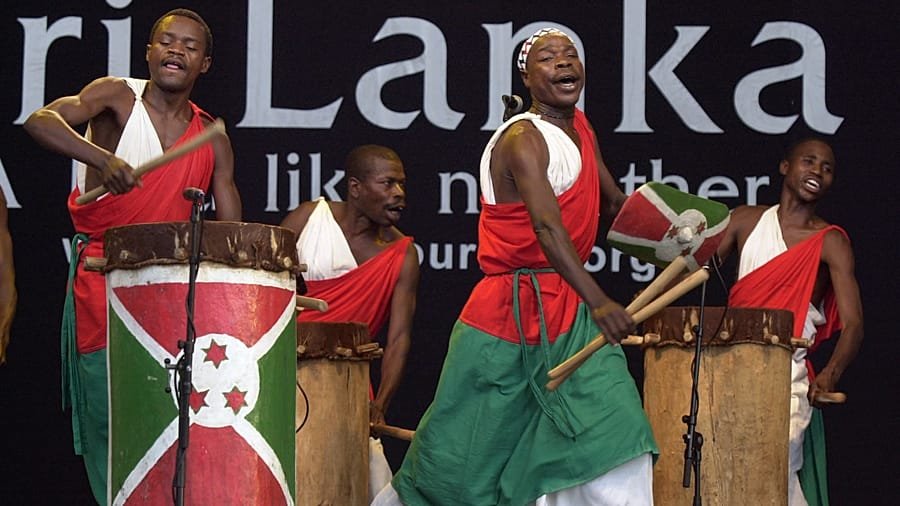
The first-ever Drum Carnival moved along Boulevard de l'Uprona on the morning of June 5, 2026, with seven drumming groups halting at marked points to perform before thousands of spectators. Performers balanced heavy royal drums on their heads while marching in formation, creating a moving spectacle that drew families from every quarter of the capital.
Amagaba opened the route with deep bass tones that echoed off government buildings, followed closely by Intahemuka whose dancers spun in tight circles between drum strikes. Umuco and Yagamahoro maintained the pace through the central market district, their synchronized routines blending music, dance and ritual gestures passed down for generations.
Ruciteme Batimbo de Buyenzi joined at the Place de l'Indépendance, their athletic leaps drawing cheers from students who had skipped classes to watch. Birinzi Vya Ntare de Muramvya and the Gitega Drummers closed the procession with warrior formations that incorporated call-and-response singing without ever breaking the rolling rhythm.
Each stop lasted roughly twelve minutes, allowing the groups to rotate between drumming, dancing and singing while the crowd pressed forward to photograph the gleaming drum skins. The carnival route ended at Terrain Département, where the groups reassembled for a joint performance that lasted into the evening.
Local vendors sold grilled plantains and fresh mango juice along the sidewalks, turning the parade into an impromptu street fair that mixed commerce with cultural display. The spectacle demonstrated how Burundi's royal drumming tradition could animate public space in ways that felt both ancient and freshly relevant.
Voices of Peace and Cultural Pride
Spectator Pascal Niyonkuru stood near the Boulevard de l'Uprona junction and said, "I feel very happy hearing the sound of the Burundian drum and seeing the national flag waving. It proves that there is peace and security in our country." His words captured the mood of many residents who see the festival as living evidence that stability has returned.
The UMUKOZO events placed traditional and contemporary dances side by side, allowing groups from different provinces to present variations that celebrate Burundi's regional diversity. Young performers mixed older warrior steps with newer choreography, showing how the same drum patterns can carry both ancestral memory and present-day expression.
Community leaders noted that the festival's emphasis on collective performance helps heal divisions that once fueled conflict. By requiring groups to share the same stage and street route, organizers created practical opportunities for cooperation across former fault lines.
Women from Buyenzi neighborhood prepared indigo-dyed cloths that dancers wore during the evening shows, linking textile traditions with the drumming displays. These small details reinforced the festival's message that cultural pride extends beyond the drum circle into everyday crafts and family life.
Teachers brought school groups to the Terrain Département venue so students could witness the performances firsthand, turning the event into an informal classroom on national heritage. The visible joy on young faces suggested that the next generation is absorbing the rhythms as part of their own identity.
UNESCO and the Royal Drumming Tradition
Director Jean Claude Niyuhire told reporters that the Burundian drum is recognized by UNESCO as part of the world's intangible cultural heritage after its inscription on the Representative List of Intangible Cultural Heritage in 2014. He stressed that the ancient art form requires performers to rotate between drumming, dancing and singing without breaking rhythm, a skill passed from father to son across generations.
The royal drums themselves produce deep, hypnotic tones that can carry for several kilometers when played in open spaces. During the festival, drummers demonstrated the athletic movements required to keep the heavy instruments balanced while executing rapid footwork and vocal calls.
Training for these performances begins in childhood within family compounds, where boys learn to read the subtle cues that allow seamless transitions between roles. This oral transmission system has preserved techniques that predate colonial records and continue to evolve with each new cohort of players.
Niyuhire explained that the UNESCO listing has helped secure modest government support for instrument maintenance and youth workshops, though much of the daily work still rests with cultural clubs. The recognition also opens doors for exchanges with other African drumming traditions that share similar communal performance structures.
Visitors from neighboring countries remarked on the physical stamina displayed during the long carnival route, noting parallels with drum ensembles in the Great Lakes region. The shared emphasis on collective endurance rather than individual virtuosity marks a distinctive feature of Burundi's approach.
Five Years of Cultural Revival
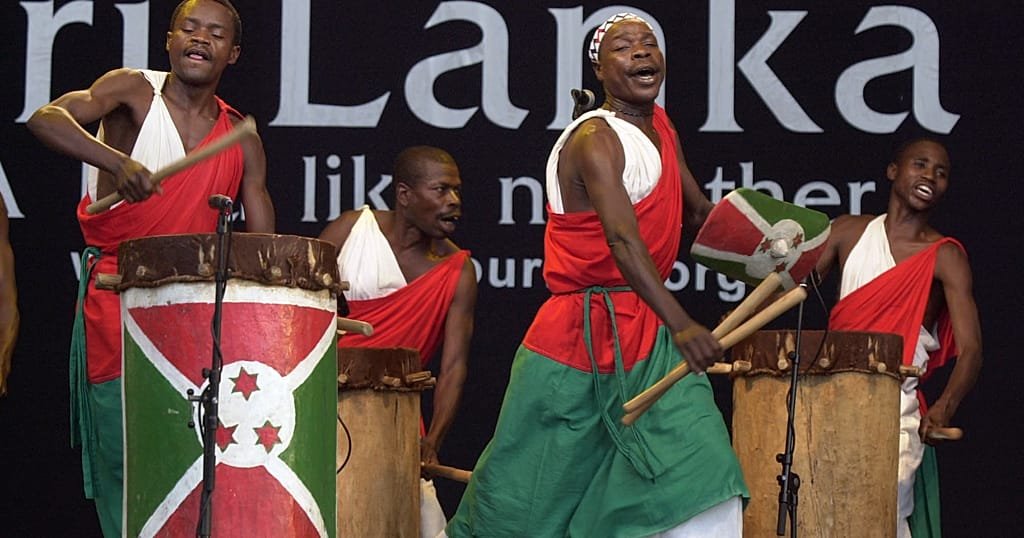
The AMAGABA Cultural Club has organized the UMUKOZO Festival annually since 2021, making the 2026 edition the fifth in the series. After a two-year pause caused by funding shortfalls, the event returned to Terrain Département, the basketball ground in central Bujumbura, on June 5 and 6, 2026.
Beyond the drumming displays, the program included warrior dances from Muramvya province, craft stalls selling basketry and pottery, and evening music sessions that blended traditional scales with modern amplification. These additions broadened the festival's appeal to families who might not attend a pure drumming competition.
Lead organizers from the AMAGABA cultural troupe issued a public call for partners and sponsors to support future editions, noting that international media interest from CGTN Africa and TV5MONDE has increased production costs. They argued that sustained funding would allow the festival to expand its reach into rural provinces.
The return after the pause demonstrated the resilience of grassroots cultural networks that continued rehearsing even when the main stage went dark. Club members used the break to document older drumming patterns that risk disappearing as elder practitioners pass away.
Attendance figures released by the organizing committee showed strong local participation, with many spectators traveling from Gitega and Ngozi to witness the street carnival. This turnout confirmed that the festival has become a fixed point on Burundi's cultural calendar.
Cultural Tourism and Pan-African Significance
The UMUKOZO Festival aligns directly with the "Visit Burundi" tourism campaign that seeks to position intangible heritage as a source of national pride and foreign revenue. Organizers highlighted how the street carnival and craft displays can draw visitors who might otherwise overlook the country.
Coverage by CGTN Africa and TV5MONDE brought images of the royal drums to audiences across the continent and beyond, generating early inquiries from tour operators interested in cultural packages. Such visibility matters for a nation still working to rebuild its international image after conflict.
In Senegal, similar efforts at the Saint-Louis Jazz Festival and the Dakar Biennale have shown how annual events can anchor year-round creative economies while preserving living traditions. Burundi's drumming festival follows the same logic, turning heritage into a renewable resource rather than a static museum piece.
Pan-African cultural networks have begun exchanging performers between Burundi and Senegal, allowing drummers to study how each country balances tourism demands with artistic integrity. These exchanges strengthen the broader argument that Africa's intangible heritage deserves investment on its own terms.
Local hoteliers reported increased bookings during the June dates, suggesting that even modest growth in cultural tourism can create immediate income for small businesses around Bujumbura. The pattern mirrors successes recorded in other African cities that have invested consistently in heritage festivals.
What to Watch For
The future of the UMUKOZO Festival depends on whether organizers can convert international media attention into reliable sponsorship. Early signs point to growing interest from regional airlines and cultural foundations that see value in Burundi's unique drumming tradition.
Potential for UNESCO-backed international recognition could bring technical support for documentation and training programs, helping the AMAGABA Cultural Club archive patterns that remain largely oral. Such recognition would also strengthen arguments for protecting rehearsal spaces threatened by urban development.
Across Africa, annual festivals sustained by cultural clubs and grassroots organizations have proven more durable than top-down government initiatives. Burundi's experience adds another data point showing that community ownership remains the surest guarantee of continuity.
Calls for partners and sponsors will likely intensify in the coming months as the club prepares the sixth edition. Success will hinge on demonstrating that the festival delivers measurable benefits for both cultural preservation and local livelihoods.
Festivals like UMUKOZO represent Africa's cultural confidence by preserving ancient traditions while building contemporary cultural economies that can employ young people and attract visitors. When the royal drums sound again along Boulevard de l'Uprona, they will carry not only Burundi's history but also a practical model for how heritage can shape the continent's future.
By Amara Diop, Staff Writer
This article was produced with AI-assisted research and editorial support. Reporting is based on sources cited in the article.
What's Your Reaction?
 Like
0
Like
0
 Dislike
0
Dislike
0
 Love
0
Love
0
 Funny
0
Funny
0
 Wow
0
Wow
0
 Sad
0
Sad
0
 Angry
0
Angry
0

West Africa/Sahel Correspondent at Global1.News. Dakar-based journalist covering politics, security, climate, and development across Francophone and Anglophone West Africa. Tells the stories of a region undergoing profound transformation.













Comments (0)