
3 Ex-TMC Rajya Sabha MPs Join BJP in Kolkata on July 9 2026
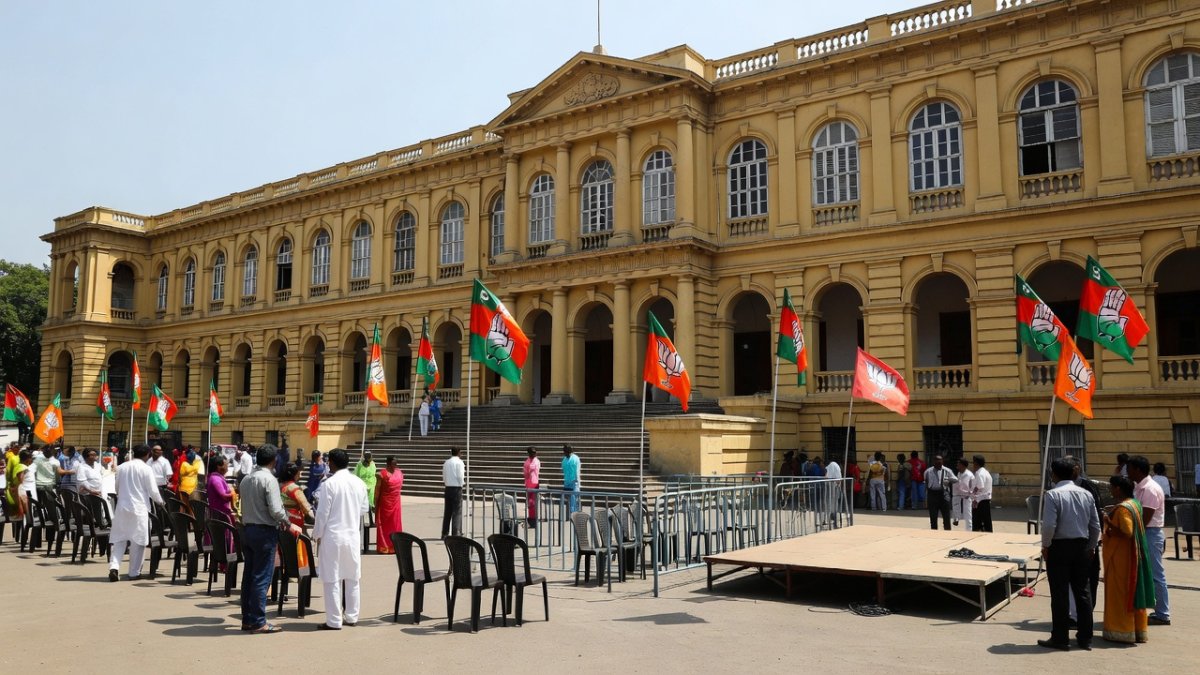
Three Former TMC Rajya Sabha MPs Formally Join BJP in Kolkata on July 9 2026 On Thursday July 9 2026 three former Trinamool Congress Rajya Sabha members Sushmita Dev Sukhendu Sekhar Ray and Prakash Chik Baraik joined the Bharatiya Janata Party at a ceremony in Kolkata West Bengal. West Bengal BJP President Samik Bhattacharya inducted the leaders hours before the party announced
Three Former TMC Rajya Sabha MPs Formally Join BJP in Kolkata on July 9 2026
On Thursday July 9 2026 three former Trinamool Congress Rajya Sabha members Sushmita Dev Sukhendu Sekhar Ray and Prakash Chik Baraik joined the Bharatiya Janata Party at a ceremony in Kolkata West Bengal. West Bengal BJP President Samik Bhattacharya inducted the leaders hours before the party announced their candidacies for the Rajya Sabha bypolls scheduled for July 24 2026. The move followed their resignations from the Rajya Sabha and exit from the TMC in June 2026 after the assembly elections of April 23 and 29 2026.
The three leaders created vacancies when Sukhendu Sekhar Ray resigned first followed by Sushmita Dev and then Prakash Chik Baraik. Sushmita Dev previously a close associate of Rahul Gandhi had joined the TMC ahead of the 2021 polls and later met Assam Chief Minister Himanta Biswa Sarma in Delhi after her resignation. These steps occurred against the backdrop of 61 TMC MLAs already switching to the BJP after the assembly results.
Assembly Election Results and the End of 15-Year TMC Rule
The BJP secured 206 to 207 seats out of 293 in the 2026 West Bengal Assembly elections while the TMC fell to 80 or 81 seats from its previous 215 in 2021. Voter turnout reached 92.84 percent across the state. Mamata Banerjee's government which had ruled since 2011 for 15 consecutive years came to an end with these numbers. The scale of the defeat triggered immediate internal shifts within the TMC including the earlier defection of 61 MLAs and the subsequent Rajya Sabha resignations.
These figures reflect a decisive voter realignment in districts across West Bengal from Kolkata to rural areas in the north and south. The BJP's seat tally more than doubled its previous position while the TMC lost over 130 seats in a single cycle. Such data points indicate sustained organisational work by the BJP in the state following its earlier gains in 2021.
BJP Strategy for Consolidating Power in West Bengal
The induction of the three former TMC MPs and their immediate nomination for the July 24 2026 Rajya Sabha bypolls forms part of the BJP's calculated expansion in West Bengal. By absorbing leaders with prior parliamentary experience the party strengthens its presence in the upper house while signalling openness to defectors from the defeated ruling party. Samik Bhattacharya's role in the Kolkata ceremony underscores the state unit's direct involvement in managing these transitions.
For Indian citizens and taxpayers in West Bengal this strategy points to potential shifts in policy priorities once the BJP forms the government. Education and healthcare frameworks long shaped by TMC initiatives may see revised funding allocations and administrative oversight from Delhi. Patterns observed in other states after similar realignments show accelerated central scheme implementation in health infrastructure and school modernisation once opposition strongholds weaken.
Reshaping of Opposition Politics and Mamata Banerjee's Future
The departure of Sushmita Dev Sukhendu Sekhar Ray and Prakash Chik Baraik along with 61 MLAs earlier illustrates the rapid erosion of the TMC's organisational base. Mamata Banerjee who led the party through 15 years in power now faces a diminished legislative presence of just 80 or 81 seats. This contraction limits her ability to mount effective opposition in the assembly and reduces leverage in national political negotiations.
Broader patterns across Indian states reveal that post-election defections often accelerate when a ruling party loses a clear majority. In West Bengal the sequence from assembly defeat to Rajya Sabha exits mirrors trends seen in other regions where leaders seek new platforms after voter verdicts. For voters this means reduced checks on the incoming government and a more fragmented opposition landscape heading into future cycles.
Implications for Healthcare Education and Governance in Bengal
Political realignments of this magnitude carry direct consequences for public services in West Bengal. The TMC's 15-year tenure shaped healthcare delivery and school education systems in Kolkata and districts such as Howrah and Darjeeling. With the BJP now positioned to assume power following its 206-207 seat victory policy continuity in these sectors faces review.
Taxpayers in the state may observe faster rollout of national health missions and revised education curricula once the new government stabilises. Historical data from comparable transitions in other states show measurable changes in hospital bed capacity and teacher recruitment within two years of such shifts. The 92.84 percent turnout in the April 2026 polls already demonstrated strong public engagement with these governance questions.
Long-Term Patterns of Party Realignment Across Indian States
The Kolkata ceremony on July 9 2026 fits into recurring cycles of post-poll adjustments observed nationwide. Leaders from defeated parties frequently migrate toward the winning side when seat differentials reach the scale seen here with the TMC dropping from 215 to 80-81 seats. The BJP's decision to field all three new members for the July 24 2026 bypolls accelerates this consolidation ahead of the next national electoral cycle.
Indian citizens across regions benefit from understanding these dynamics because they influence resource distribution between states and the centre. In West Bengal the combination of assembly results 61 prior MLA switches and the Rajya Sabha moves creates conditions for a durable BJP presence. This trajectory aligns with the party's approach in multiple states where initial breakthroughs lead to sustained institutional strengthening over successive elections.
The verified sequence of events from the April 2026 polls through the June resignations to the July 9 induction demonstrates how electoral data drives immediate political restructuring. For voters in Kolkata and beyond these developments signal a new phase in state governance with implications extending to economic policy and social sector delivery.
— By Dr. Raj Patel, Staff WriterThis article was produced with AI-assisted research and editorial support. Reporting is based on sources cited in the article.
What's Your Reaction?
 Like
0
Like
0
 Dislike
0
Dislike
0
 Love
0
Love
0
 Funny
0
Funny
0
 Wow
0
Wow
0
 Sad
0
Sad
0
 Angry
0
Angry
0

Caribbean Correspondent at Global1.News. Based in Port of Spain, Trinidad, covering Caribbean politics, economy, energy, climate, and culture. Amplifying the voices and stories of the Caribbean region.














Comments (0)