
CNTE Teachers End 19-Day Mexico City Protest Over Pensions
**Keywords:** CNTE Section 22, Mexico City protest, ISSSTE law, Oaxaca teachers, Claudia Sheinbaum, education budget, Zócalo encampment, teacher pensions, student disruption, Mario Delgado, AFORES, historic center businesses, Mexican education reform, World Cup Fan Festival The 19-Day Protest That Tested Mexico City's Historic Center The teachers from Oaxaca’s CNTE Section 22 b
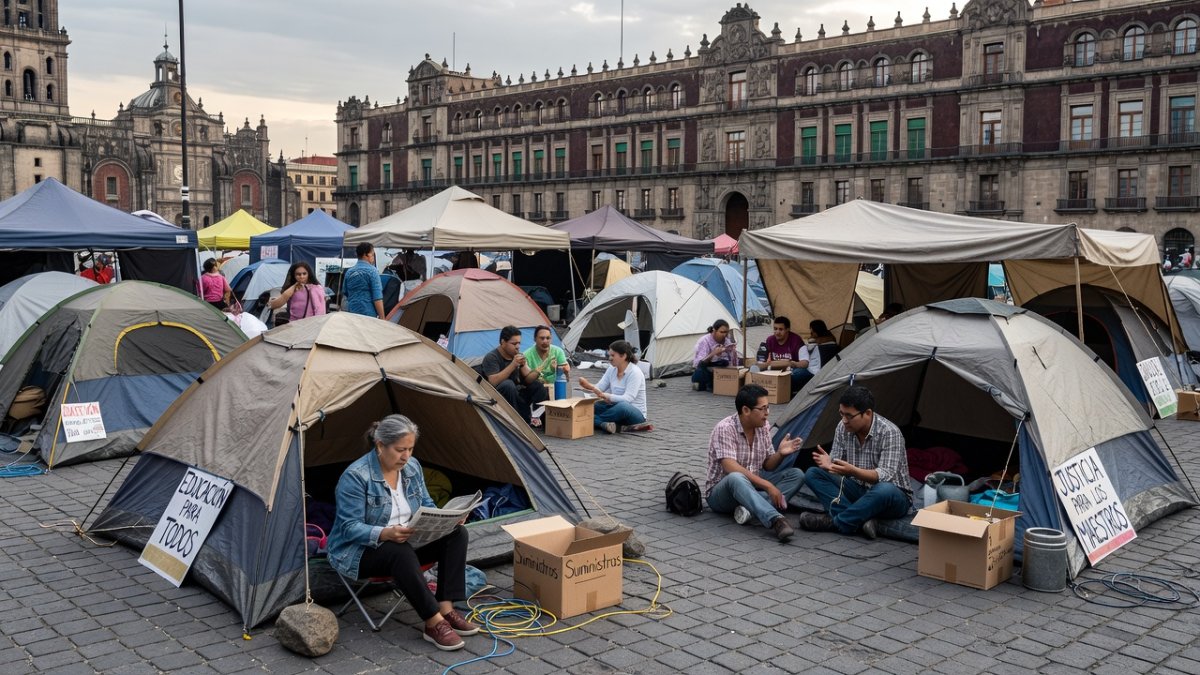
The 19-Day Protest That Tested Mexico City's Historic Center
The teachers from Oaxaca’s CNTE Section 22 began setting up their encampment near the Zócalo, Mexico City’s historic central square, drawing on a long tradition of visible public protest that resonates deeply in Mexican civic life. Families across the capital watched as tents and banners appeared, transforming a bustling tourist area into a site of organized resistance. The camp stood for exactly 19 days, a period that tested both the patience of local residents and the organizational strength of the union.
Teachers arrived in coordinated groups, establishing a structured presence with areas for meetings, rest, and communication with supporters. The location near the Zócalo placed their demands directly in front of government buildings and daily foot traffic, ensuring visibility. By the end of the first week, the encampment had grown to include hundreds of participants who maintained shifts to keep the protest continuous.
Community members in surrounding neighborhoods felt the immediate changes in atmosphere, with some offering solidarity through food donations while others navigated altered routes to work. The 19-day timeline reflected careful planning, as union members voted on key decisions before beginning to dismantle tents on a Friday night. This measured approach highlighted the disciplined nature of Section 22 actions, rooted in Oaxaca’s history of collective organizing.
Local families discussed how the protest echoed past movements that shaped Mexican social policy, reminding everyone that education remains a central pillar of national identity. The camp’s presence near iconic sites like the cathedral created powerful images of teachers standing for dignity in retirement and fair wages.
The 800 Million Pesos Controversy — What the Government Actually Said
Education Minister Mario Delgado addressed reporters on Saturday, clarifying that the 800 million pesos would flow directly to schools in Oaxaca rather than through any union channel. He emphasized the allocation would create new teaching positions where shortages exist and support infrastructure improvements. President Claudia Sheinbaum reinforced this message at her Monday morning press conference, stating clearly that the funds have nothing to do with the CNTE.
Sheinbaum stressed the money targets the education of girls and boys in Oaxaca, building on last year’s distribution of computers and printers to schools in need. Officials described a direct-to-schools model designed to bypass intermediaries and reach classrooms faster. This approach aligns with broader efforts to strengthen public education across southern Mexico, where many communities rely on consistent federal support.
Assertions on social media suggested the allocation served as payment for ending the protest, yet both Delgado and Sheinbaum rejected those claims outright. The government framed the resources as part of the regular education budget, separate from any negotiation with Section 22. Families in Oaxaca welcomed the focus on additional teachers and school upgrades, viewing it as recognition of long-standing needs in rural and indigenous areas.
Community leaders noted that transparent distribution matters deeply in Mexican education policy, where trust between authorities and parents often determines whether reforms succeed. The repeated denials aimed to separate legitimate budget decisions from the protest timeline, preserving focus on student outcomes rather than political speculation.
Behind the ISSSTE Law — Why Teachers Have Been Fighting for Years
The 2007 ISSSTE Law fundamentally altered pension calculations for state workers, including teachers, shifting from a defined-benefit system toward individual retirement accounts managed through AFORES. Section 22 members have argued for years that this change reduced retirement security for educators who dedicate decades to Mexico’s classrooms. The reform linked pensions more closely to market performance, creating uncertainty for workers who entered the profession expecting stable support after retirement.
Teachers across Oaxaca and other states have organized repeated actions to highlight how the law affects family planning and long-term financial stability. Many educators view the 2007 changes as a break from Mexico’s tradition of protecting public servants who serve rural and underserved communities. The fight centers on restoring a system that recognizes the physical and emotional demands of teaching in challenging environments.
Community discussions in Oaxaca often connect the ISSSTE reform to broader economic pressures facing Mexican families, where reliable retirement income supports multigenerational households. Union leaders have used protests to draw national attention to AFORES administrators and their role in managing these funds. The ongoing demand for repeal reflects deep cultural values around dignity in old age and collective responsibility for workers who shape future generations.
Parents and former teachers share stories of colleagues who delayed retirement or faced reduced benefits, illustrating why the issue remains central to Section 22’s platform. This sustained advocacy keeps the conversation alive in Mexican political life, where education workers continue pressing for adjustments that honor their contributions.
1.4 Million Students Affected — The Human Cost of the Strike
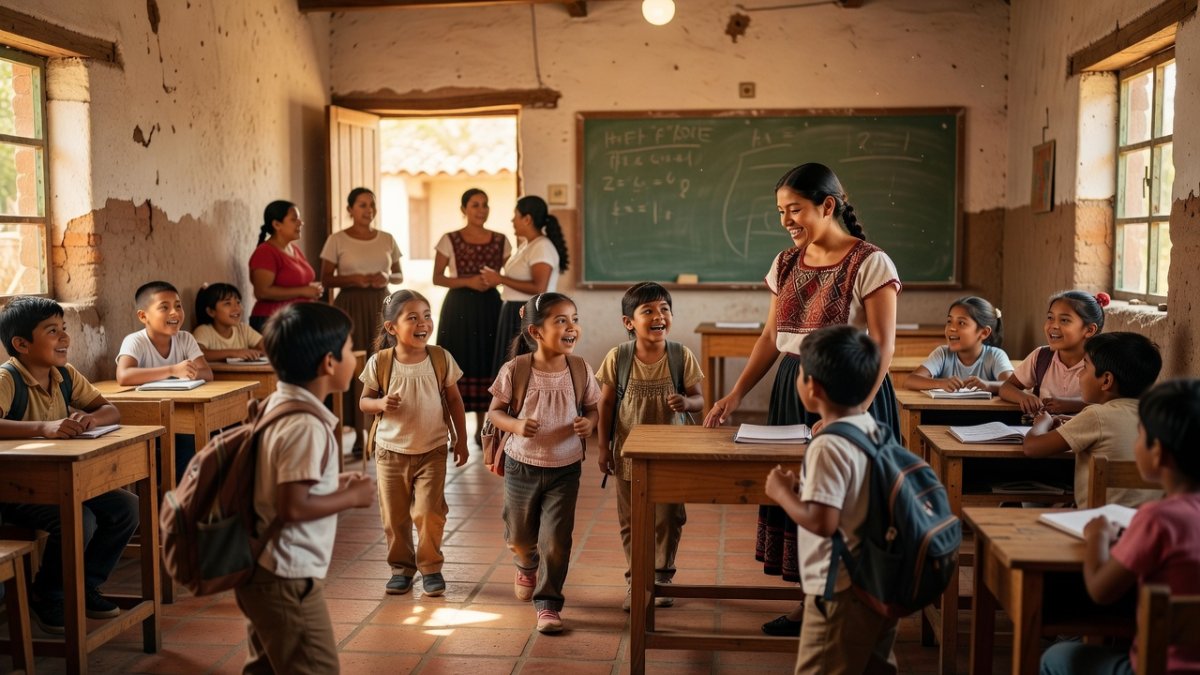
More than 1.4 million students in Oaxaca and additional states experienced disrupted classes during the protest period, placing real strain on families who depend on consistent schooling. Parents in rural communities adjusted work schedules and childcare arrangements, often relying on grandparents or neighbors to fill gaps. The absence of regular classroom time affected learning routines, especially for younger children building foundational skills.
In Oaxaca’s indigenous and agricultural regions, the impact extended beyond academics to daily community life, where schools serve as centers for meals, health programs, and social support. Families described the emotional weight of uncertainty, knowing extended strikes can widen gaps for students already navigating economic challenges. Many households balance limited resources while hoping for swift resolutions that return children to stable environments.
Local educators and parent associations worked to maintain some continuity through informal study groups, reflecting the strong communal bonds characteristic of Mexican society. The human cost became visible in conversations about lost instructional days and the pressure on working mothers who coordinate alternative care. Communities expressed relief when the protest concluded, anticipating a return to regular schedules that support both education and family stability.
These disruptions underscore how teacher actions ripple through entire towns, reminding everyone of the interconnected nature of education and daily life in southern Mexico.
Teachers Vow to Continue — 'We Will Return With More Strength'
General secretary Yenny Aracely Pérez Martínez spoke directly about the decision to end this stage of the protest, emphasizing that teachers are reorganizing rather than retreating. She highlighted the historic nature of recent actions that brought national and international attention to retirement fairness and the role of AFORES. Pérez Martínez noted the visible intransigence of the federal government during negotiations, yet framed the pause as preparation for continued advocacy.
She stated that the fight has raised awareness about the lack of a fair retirement system for workers across Mexico. Pedro Hernández Morales, a CNTE leader in Mexico City, echoed this view, rejecting any narrative of defeat. Both leaders stressed that the encampment’s dismantling allows time to strengthen organization for future efforts focused on pay increases and repeal of the 2007 ISSSTE Law.
Union members returned to their communities with renewed commitment, planning local meetings to maintain momentum. The warm solidarity among Section 22 teachers reflects Oaxaca’s deep tradition of collective action, where families support one another through extended campaigns. Pérez Martínez’s words about returning with more strength resonated in gatherings where educators discussed next steps while caring for their own households.
This determination connects to broader Mexican values of perseverance and community resilience, ensuring the conversation about dignified retirement continues in homes, union halls, and public forums.
Economic Fallout and Relief for Historic Center Businesses
Business owners around Mexico City’s Zócalo reported significant losses during the 19 days the encampment occupied prime public space near the ongoing FIFA World Cup Fan Festival. Restaurants, shops, and street vendors experienced reduced foot traffic as visitors altered their routes around the protest area. Many families who own small enterprises in the historic center described the period as particularly difficult, coming after pandemic recovery efforts.
The presence of tents and sustained gatherings changed the usual flow of tourists and locals who frequent the central square for cultural events and daily commerce. Relief spread quickly once dismantling began on Friday night, allowing preparations for festival activities to proceed without obstruction. Government officials and business associations welcomed the return to normal operations around this iconic location.
Community conversations in the capital often balance respect for teachers’ demands with concern for neighborhood economies that rely on steady visitor numbers. The Zócalo remains a vital heart of Mexican public life, where commerce and civic expression intersect daily. Local merchants expressed hope that future protests might occur in designated areas that minimize disruption while still allowing voices to be heard.
This episode highlighted the delicate relationship between social movements and the small businesses that form the backbone of Mexico City’s historic districts, where every day of normal activity supports families across generations.
What to Watch For — The Road Ahead for Teachers, Students, and Schools
President Sheinbaum has acknowledged the legitimate demands of protesting teachers while noting budgetary constraints prevent meeting every request at once. Future negotiations will likely focus on gradual improvements to pay structures and continued discussion of the 2007 ISSSTE Law. Education officials have signaled openness to dialogue that keeps student needs at the center.
Communities in Oaxaca will monitor how the 800 million pesos reach classrooms and whether new teaching positions materialize as promised. Parents and union members alike hope upcoming budget cycles create space for addressing retirement concerns without further extended disruptions. The reorganization announced by Section 22 leaders suggests sustained engagement rather than withdrawal from the national conversation.
Local families across affected states watch for signs of compromise that honor both educators’ contributions and children’s right to consistent schooling. Mexican traditions of dialogue and collective problem-solving offer pathways forward, even amid complex fiscal realities. Observers expect continued attention to how direct funding models perform in practice and whether they strengthen trust between government and education workers.
The coming months will reveal whether this pause leads to meaningful progress that supports teachers, students, and the communities that depend on them throughout Mexico.
By Rosa Martinez, Staff Writer
This article was produced with AI-assisted research and editorial support. Reporting is based on sources cited in the article.
What's Your Reaction?
 Like
0
Like
0
 Dislike
0
Dislike
0
 Love
0
Love
0
 Funny
0
Funny
0
 Wow
0
Wow
0
 Sad
0
Sad
0
 Angry
0
Angry
0

Latin America/Andes Correspondent at Global1.News. Based in Bogota, covering politics, environment, energy, and social movements across the Andean region. Passionate about environmental journalism and communities protecting their land.














Comments (0)