
Ukraine's Expanding Deep-Strike Operations Reach Deep into Russian Territory
Ukraine's Expanding Deep-Strike Operations Reach Deep into Russian Territory Russian regions stretching from the Ural Mountains to the Caspian Sea coast are now facing repeated Ukrainian drone and missile strikes, a development that has accelerated in recent months. Data compiled by the conflict monitor ACLED and examined by The Economist indicate that Ukrainian attacks on targ
Ukraine's Expanding Deep-Strike Operations Reach Deep into Russian Territory
Russian regions stretching from the Ural Mountains to the Caspian Sea coast are now facing repeated Ukrainian drone and missile strikes, a development that has accelerated in recent months. Data compiled by the conflict monitor ACLED and examined by The Economist indicate that Ukrainian attacks on targets more than 100 kilometers inside Russia have more than doubled over the past year. If the current rate holds, Ukraine is on track to carry out roughly 800 such strikes by year-end, compared with 658 recorded in 2025. At least 60 Russian regions have experienced attacks since the full-scale war began.
These operations target energy infrastructure, manufacturing sites, and ports previously considered beyond reach. Samuel Bendett of the Center for Naval Analyses noted that the strikes are bringing the conflict home in ways not seen earlier. Ukrainian forces have struck locations more than 1,700 kilometers from the border, including Yekaterinburg and Chelyabinsk, where a high-rise building caught fire and drones were intercepted near a metallurgical plant.
The Large-Scale Assault on Moscow's Kapotnya Refinery
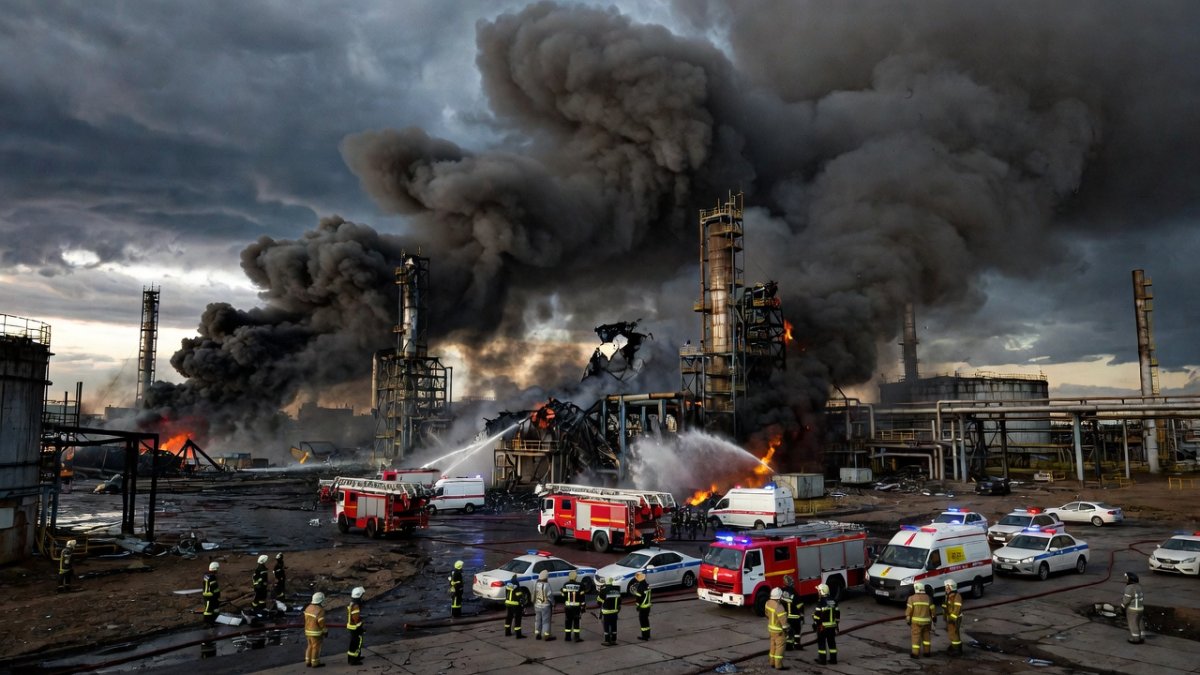
Last week Moscow endured its most intense drone attack of the conflict when Ukrainian systems struck the Kapotnya oil refinery in the southeast of the city. Satellite imagery released over the weekend confirmed the destruction of at least three oil storage tanks, while Ukraine's General Staff reported four tanks knocked out and an additional refining unit damaged. Reuters noted that a shopping center was also hit during the same operation.
Some Western analyses, including one from The New York Times, suggested that Russian air defenses may have contributed to the refinery damage through inadvertent impacts. The strike produced visible black smoke across the capital, underscoring how even core economic assets near the seat of power are now vulnerable.
Damage to Key Export Facilities and Oil Production Trends
In March, repeated drone strikes over a single week crippled the Ust-Luga port complex in northwest Russia. At least six storage tanks were destroyed at a facility that normally handles daily exports of 700,000 barrels of oil. Industry experts assessed that repairs would require several months. Comparable attacks have disabled other major oil-export terminals along the Baltic and Black Sea coasts.
Russian oil production has now fallen for six consecutive months through June, directly reducing export earnings. A separate strike in mid-June using Ukrainian "flamingo" missiles reportedly collapsed a large section of a drone-component manufacturing plant in Cheboksary, the capital of Chuvashia, according to low-resolution satellite images taken two days later.
Stock Market Decline and Central Bank Policy Response
Russian equities fell more than 4 percent on Monday, pushing the benchmark MOEX index below 2,368 points for the first time since March 2023. The index has lost over 14 percent of its value since the start of the year and remains on a downward path that began in March.
On Friday the Central Bank reduced its key interest rate by 25 basis points. Igor Dodonov, deputy head of equity analysis at Finam Financial Group, observed that the modest cut combined with Governor Elvira Nabiullina's hawkish tone signals slower monetary easing than markets had anticipated. These financial pressures coincide with sustained Ukrainian strikes on energy and industrial targets.
Rising Fuel Prices, Regional Shortages, and the Situation in Crimea
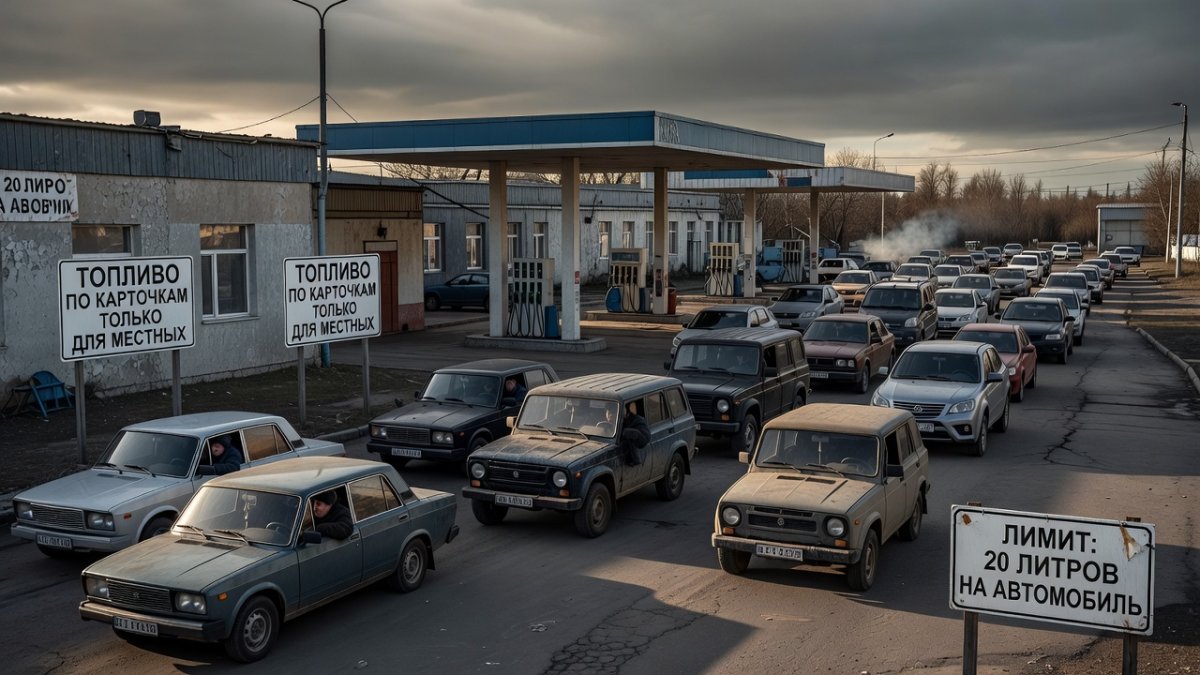
The national average price of gasoline has increased 6.6 percent since January, reaching 69.11 rubles per liter as of mid-June. In Crimea, Russian-appointed governor Sergei Aksyonov suspended all bookings for children's and youth summer camps following a major Ukrainian attack that killed four people and prompted authorities to halt fuel sales across the peninsula.
Ukraine's military also reported a missile strike on a Voronezh manufacturing plant producing electronic components for Russian forces, with regional governor Alexander Gusev confirming significant damage to the facility. These localized disruptions have compounded broader supply strains in affected regions.
Strategic Intent and Long-Term Economic Pressure
President Vladimir Putin stated that the Ukrainian campaign aims to create divisions in Russian society, sow confusion, and inflict economic damage. Kremlin officials have framed the strikes as attempts to undermine domestic stability rather than purely military objectives.
Energy exports remain central to Russian state revenues, and repeated hits on refineries and ports are eroding that foundation. The combination of falling production volumes, higher domestic fuel costs, and equity market weakness points to accumulating fiscal strain that extends well beyond frontline areas.
Perspectives from Russian regional authorities emphasize the need for enhanced air defenses, while independent analysts highlight how Ukraine's growing drone and missile inventory is forcing Moscow to divert resources to protect rear-area infrastructure. The widening geography of attacks illustrates a shift in the conflict's economic dimension that continues to unfold in recent days.
By Irina Volkov, Staff WriterThis article was produced with AI-assisted research and editorial support. Reporting is based on sources cited in the article.
What's Your Reaction?
 Like
0
Like
0
 Dislike
0
Dislike
0
 Love
0
Love
0
 Funny
0
Funny
0
 Wow
0
Wow
0
 Sad
0
Sad
0
 Angry
0
Angry
0

Russia/Eastern Europe Correspondent at Global1.News. Covering Russian politics, energy, security, and the shifting dynamics of the post-Soviet space. Provides clear-eyed analysis on one of the world's most opaque regions.














Comments (0)