
Montreal Police Officer, Civilian Killed in Côte-des-Neiges Shooting; Suspect Dead
In a recent CBC News report, the tragic events that unfolded in Montreal's Côte-des-Neiges neighbourhood on Monday have left the city and the nation in mourning. Three people are dead — including a police officer and a civilian — after a suspect wearing camouflage gear opened fire near the intersection of Courtrai and Trans Island avenues, prompting a province-wide emergency al
In a recent CBC News report, the tragic events that unfolded in Montreal's Côte-des-Neiges neighbourhood on Monday have left the city and the nation in mourning. Three people are dead — including a police officer and a civilian — after a suspect wearing camouflage gear opened fire near the intersection of Courtrai and Trans Island avenues, prompting a province-wide emergency alert and a lockdown of schools and synagogues in the area.
Montreal in Mourning: Police Officer, Civilian Killed in Côte-des-Neiges Shooting; Suspect Dead After Incel Manifesto Emerges
Montreal, Quebec – This week — The Service de police de la Ville de Montréal has confirmed that Const. Mohamed Lamine Benredouane, 34, was killed in the line of duty on Monday morning, making him the first Montreal police officer to die from gunfire in 24 years. The civilian victim, Michael Mizrahi, 68, a well-known suit salesman, was also killed in the crossfire near a hotel in the densely populated neighbourhood. A female officer who responded alongside Const. Benredouane was injured but is in stable condition, with her life no longer in danger. The suspect, whose identity has not been publicly released by authorities, was also killed at the scene. Investigators have confirmed that the individual distributed a violent incel manifesto targeting women before the attack.
The Sequence of Events on Monday
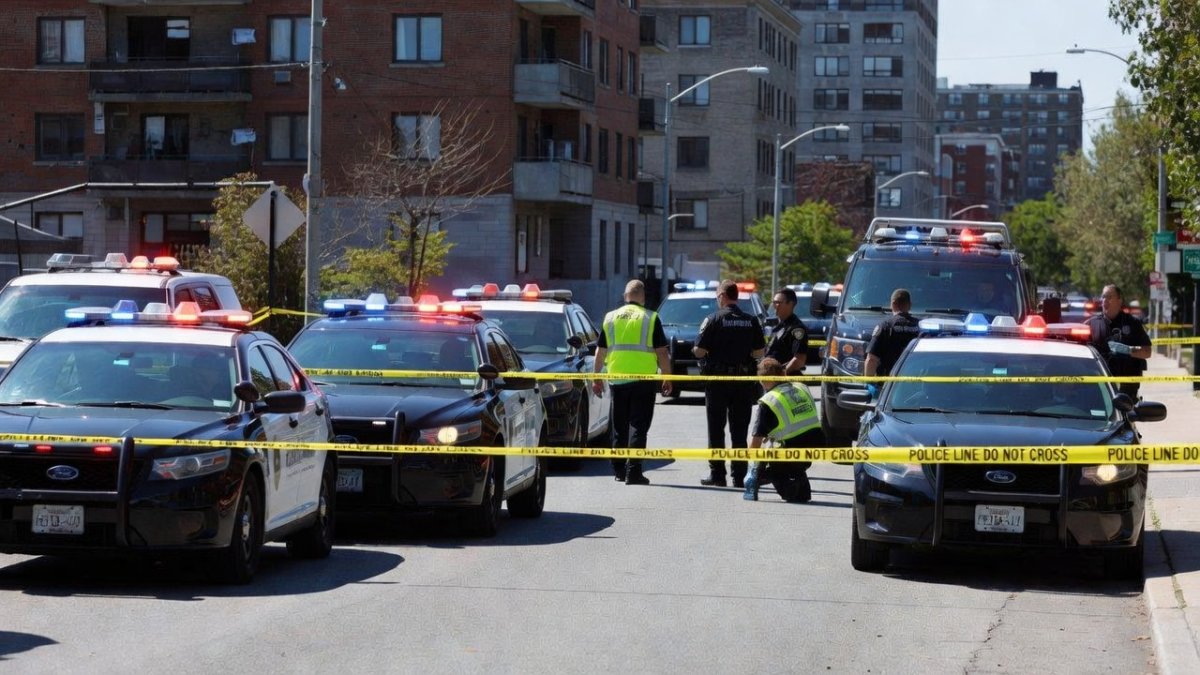
The shooting began at approximately 11:35 a.m. ET on Monday near the corner of Courtrai and Trans Island avenues in the Côte-des-Neiges district. Witnesses reported seeing a man dressed in full camouflage gear carrying a long gun walking past local stores moments before the confrontation. More than 20 shots were fired during the exchange, according to multiple witness accounts cited in the CBC News coverage. The female officer on scene engaged the individual despite sustaining serious injuries that would later require hospitalisation.
Montreal police initially reported that two officers had been shot, and by 12:30 p.m., the province of Quebec issued an emergency alert directing residents in the area to shelter in place, lock their doors, and stay away from windows. The suspect was confirmed neutralised at the scene shortly thereafter. Montreal Police Chief Fady Dagher confirmed at a news conference that only one suspect had been involved and that there was no ongoing threat to the public. The quick containment of the situation prevented what could have been a far deadlier outcome in a neighbourhood where residential towers, schools, and synagogues stand in close proximity to commercial strips.
Profiles of Those Lost
Const. Mohamed Lamine Benredouane, 34, had served with the Service de police de la Ville de Montréal since 2021. His death marks the first time in 24 years that a Montreal police officer has been killed in the line of duty — a sobering statistic that underscores the inherent dangers of frontline policing in Canadian urban centres. Colleagues have described him as a committed officer who engaged actively with the diverse Côte-des-Neiges community. In a statement, the SPVM expressed "immense sadness" at his death, and flags at police stations across the city were lowered to half-mast in his honour.
Michael Mizrahi, 68, was a suit salesman who had built his career in Montreal's clothing retail sector. Those who knew him remembered him as a generous man who took pride in his work and his community. He was caught in the crossfire near a hotel on Trans Island Avenue while going about his day. The Jewish community in Côte-des-Neiges, where Mizrahi was a familiar presence, has been particularly shaken by his death. His loss represents the second tragic dimension of this incident — a civilian whose only offence was being in the wrong place at the wrong time, in a neighbourhood he had called home for decades.
The Suspect and the Incel Manifesto
The suspect, whose identity has not been released by Montreal police, was wearing full camouflage gear and carrying a long gun during the confrontation. Authorities have confirmed that before carrying out the attack, he distributed a violent manifesto linked to the incel — involuntary celibate — movement, which explicitly targeted women. According to Radio-Canada, the manifesto was described as "representative of the incel movement" by investigators. The document is now a central piece of evidence in the investigation, providing insight into the ideological motivations behind the shooting.
The incel ideology has gained increasing attention from Canadian law enforcement and national security agencies in recent years. In 2020, a man inspired by incel ideology carried out a mass stabbing at a Toronto massage parlour that killed one woman and injured two others, in what was believed to be Canada's first terrorism case linked to the movement. While the Montreal suspect's specific affiliations remain under investigation, the presence of such a manifesto has raised renewed questions about how radicalisation occurs within online communities and what can be done to intervene before individuals move from rhetoric to violence. Chief Dagher confirmed there was no information suggesting additional suspects were involved.
Emergency Response and Province-Wide Alert
The Quebec government's emergency alert system was activated shortly after 12:30 p.m. on Monday, directing residents across the province to remain indoors while police secured the Côte-des-Neiges area. The alert specifically warned of an "armed and dangerous" suspect in the vicinity of Courtrai and Trans Island avenues. Schools and synagogues throughout the neighbourhood were placed under immediate lockdown, with students sheltering in place and worshippers confined to their buildings until police confirmed the area was secure.
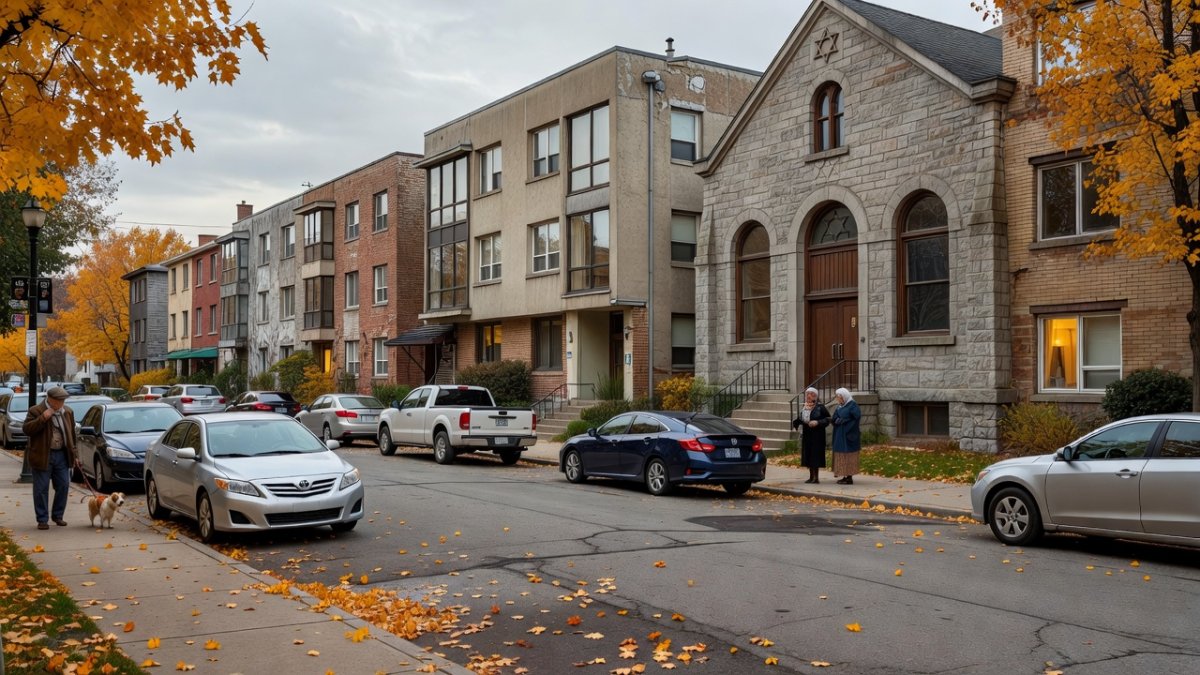
Côte-des-Neiges is one of Canada's largest centres of Jewish life, with numerous synagogues, Jewish schools, and community institutions — including Beth Rivkah Academy, Chabad NDG, the Vaad Ha'ir, and the Chai Centre — operating within blocks of the shooting. The lockdown disrupted daily routines for thousands of families who rely on the neighbourhood's dense network of community institutions for education, religious observance, and cultural activities. Emergency services coordinated with these institutions to ensure safe evacuations once the threat was neutralised. The province-wide alert system, which links Montreal operations with broader Quebec emergency resources, demonstrated both the reach and the necessity of rapid communication during active-threat situations.
Police Chief Dagher's Response
Montreal Police Chief Fady Dagher addressed the media on Monday afternoon in what he described as one of the most difficult news conferences of his career. "It's a tragedy and a nightmare," Dagher said, confirming the deaths of Const. Benredouane and Mr. Mizrahi. He praised the actions of the female officer who had engaged the armed suspect despite sustaining injuries, crediting her with preventing further loss of life. The chief confirmed that the suspect was the sole perpetrator and that no additional threats to public safety existed.
Under Chief Dagher's direction, the SPVM has initiated a full operational review of the response, including tactical procedures and communication protocols used during the incident. He also emphasised the importance of supporting officers and their families in the aftermath of the tragedy. The chief's steady public presence throughout the day helped maintain clear communication channels and prevent the spread of misinformation — a significant challenge in an era of rapid social media dissemination. His message of institutional commitment to honouring those who have fallen while serving Montreal neighbourhoods resonated deeply with both the force and the public.
Impact on Montreal's Diverse Communities
The shooting has sent shockwaves through Côte-des-Neiges, a neighbourhood celebrated for its extraordinary ethnic and linguistic diversity. Home to large populations of Jewish, South Asian, Chinese, Filipino, Arabic-speaking, and French-Canadian residents, the district is often described as one of the most multicultural neighbourhoods in Canada. The targeting of an area with such a dense concentration of Jewish institutions has inevitably drawn comparisons to other attacks on Jewish communities in North America and Europe, though investigators have not confirmed whether the suspect specifically targeted the Jewish community versus the area more broadly.
Community leaders have begun mobilising support resources, including counselling services for those who witnessed the shooting or were affected by the lockdown. Local synagogues and community centres have offered their spaces for gathering and reflection. The incident has renewed conversations about security around religious and cultural institutions in Canadian cities — a discussion that has gained urgency in recent years as communities across the country have grappled with how to balance openness with safety. For Côte-des-Neiges residents, the path forward involves processing the trauma of Monday's events while reaffirming the neighbourhood's character as a place where diversity is embraced.
Broader Implications for Canadian Public Safety
The death of Const. Benredouane has reignited national conversations about officer safety and the resources available to frontline police in Canada. With the suspect's manifesto highlighting incel ideology, authorities from coast to coast are examining how to detect and interrupt pathways that lead individuals toward ideologically motivated violence. The Canada Centre for Community Engagement and Prevention of Violence — the federal agency responsible for countering radicalisation — may play a role in analysing the manifesto and its connections to broader trends in domestic extremism.
The incident also raises questions about emergency alert systems and their effectiveness during active-threat situations. While the province-wide alert on Monday reached millions of Quebecers quickly, some residents in the immediate vicinity reported receiving notifications after the threat had already been contained — a timing gap that provincial authorities may need to address. Additionally, the shooting has renewed discussions about firearms policy in Canada, particularly regarding access to long guns by individuals who may be radicalised online. The federal government's recent legislative efforts to strengthen gun control face fresh scrutiny in light of this tragedy. As the investigation continues and Montreal begins to mourn, the broader implications for Canadian policing, community safety, and counter-radicalization efforts will unfold in the weeks and months ahead.
By Alex Thompson, Staff Writer
This article was produced with AI-assisted research and editorial support. Reporting is based on sources cited in the article.
What's Your Reaction?
 Like
0
Like
0
 Dislike
0
Dislike
0
 Love
0
Love
0
 Funny
0
Funny
0
 Wow
0
Wow
0
 Sad
0
Sad
0
 Angry
0
Angry
0
Canada Correspondent at Global1.News. Based in Toronto, covering Canadian politics, energy, trade, and US-Canada relations. Provides the Canadian perspective on North American and global affairs.










Comments (0)