
China's EV Breakthrough in Canada: How Carney's Pivot Reshapes North American Trade Dynamics
Keywords: Chinese EVs Canada, Mark Carney Xi Jinping, EV tariff reduction, US Canada border, North American trade, BYD Chery Geely In a recent CGTN report covering the video "Chinese EVs debut in Canada," the arrival of initial shipments from brands such as BYD, Chery, and Geely highlights a notable shift in bilateral economic ties. The footage shows vehicles reaching ports in
In a recent CGTN report covering the video "Chinese EVs debut in Canada," the arrival of initial shipments from brands such as BYD, Chery, and Geely highlights a notable shift in bilateral economic ties. The footage shows vehicles reaching ports in Quebec and British Columbia, setting the stage for retail deliveries expected in late Q2 or Q3 2026. This development stems directly from the January 2026 strategic partnership signed during Canadian Prime Minister Mark Carney's visit to Beijing with President Xi Jinping.
The January 2026 Strategic Partnership
The agreement between Ottawa and Beijing established a framework allowing up to 49,000 Chinese-made electric vehicles per year to enter Canada at approximately 6.1 percent tariff. This represents a substantial reduction from the prior 106.1 percent rate that aligned Canada closely with United States policy. In return, China committed to lowering tariffs on key Canadian agricultural exports including canola, lobster, and crab. The partnership reflects Beijing's Dual Circulation strategy, which prioritizes expanding export markets while securing stable supplies of raw materials and food products.
Prime Minister Carney presented the deal as an opportunity for economic diversification and support for Ontario's auto sector through potential technology partnerships. Historical context shows Canada had previously mirrored American restrictions on Chinese EVs to maintain integrated North American supply chains. The new terms indicate Ottawa's calculation that selective engagement with Chinese manufacturers could yield domestic benefits without full reliance on Washington-led frameworks.
Tariff Adjustments and Reciprocal Market Access
Under the terms, the reduced tariff applies specifically to passenger EVs meeting certain criteria, with a long-term target requiring 50 percent of imported units to be priced under 35,000 Canadian dollars by 2030. This pricing threshold aims to broaden consumer access while protecting segments of the domestic market. China, through the Ministry of Commerce, reciprocated by easing barriers on Canadian agricultural goods, addressing longstanding disputes over market access that had affected prairie farmers.
From Beijing's perspective, this arrangement advances technological self-sufficiency goals by demonstrating the competitiveness of Chinese EV platforms in a developed Western market. For Canada, the move balances domestic political pressures for lower vehicle prices against alliance commitments. Second-order effects may include pressure on European Union automakers to accelerate their own tariff negotiations with China.
Initial Shipments and Dealer Network Growth
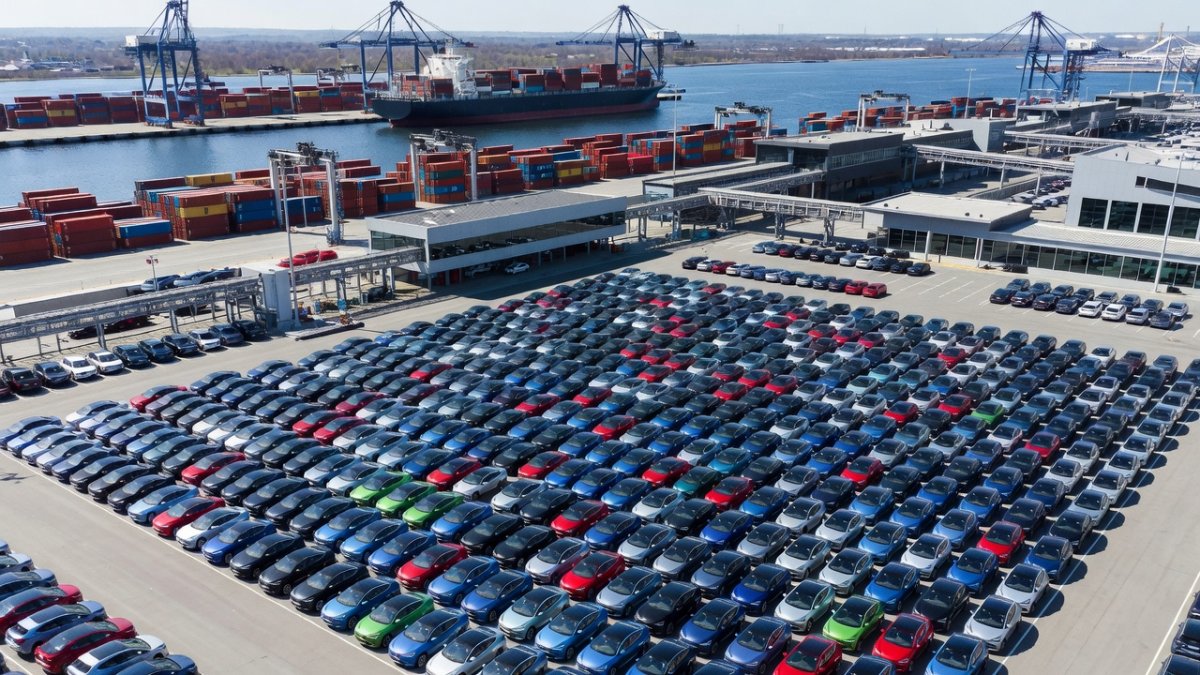
By May and June 2026, the first Chinese-made EVs began arriving at Canadian ports, primarily serving registered dealers in Quebec and British Columbia. Nearly 400 dealerships across these provinces have already signed agreements to distribute vehicles from BYD, Chery, and Geely. This rapid network formation suggests strong commercial interest in models that combine competitive pricing with advanced battery technology.
Logistical preparations include compliance with Canadian safety and emissions standards, which Chinese manufacturers have adapted through prior experience in other export markets. The concentration in Quebec and British Columbia aligns with existing consumer preferences for EVs in provinces offering stronger incentives. Early volumes remain modest relative to total Canadian demand, allowing gradual integration into the market.
American Concerns Over Border Security
United States lawmakers have voiced strong reservations about the potential for Chinese-connected vehicles to cross the US-Canada border. Proposals for restrictions focus on data security risks associated with connected car technologies and vulnerabilities in North American supply chains. These reactions underscore Washington's view of EVs as strategic assets rather than purely commercial products.
The leverage held by the United States includes existing integrated automotive manufacturing under the USMCA framework. However, Canada's independent action reveals limits to that influence when Ottawa perceives clear economic gains. ASEAN nations and the Global South may observe this episode as evidence that middle powers can negotiate selective openings with China despite American pressure.

China's Broader Strategic Calculus
Beijing regards Canada as a valuable entry point into the North American market, testing regulatory acceptance and consumer response ahead of potential wider expansion. This aligns with foreign policy objectives of building multilateral ties that dilute the impact of unilateral tariffs. The Ministry of Foreign Affairs has framed such partnerships as mutually beneficial cooperation under the principles of peaceful development.
Second-order effects could reshape competitive dynamics for European and Japanese automakers operating in Canada. If successful, the model may encourage similar arrangements with other resource-rich economies seeking agricultural export relief. For the Chinese auto industry, validated performance in Canada would strengthen arguments for technological leadership in global EV transition.
Outlook for North American Automotive Trade
The partnership introduces new variables into US-Canada relations, particularly as American policymakers consider further measures to secure supply chains. Ontario's auto sector may benefit from component sourcing opportunities, though risks of retaliatory US actions remain. Overall, the arrangement illustrates how targeted tariff adjustments can serve both commercial and geopolitical aims without immediate full-scale confrontation.
Continued monitoring of delivery volumes and pricing compliance through 2030 will determine whether the framework achieves its stated diversification goals. Both sides have incentives to maintain stability, given mutual interests in agricultural trade and emerging mobility technologies.
By Prof. Marcus Chen, Staff WriterThis article was produced with AI-assisted research and editorial support. Reporting is based on sources cited in the article.
What's Your Reaction?
 Like
0
Like
0
 Dislike
0
Dislike
0
 Love
0
Love
0
 Funny
0
Funny
0
 Wow
0
Wow
0
 Sad
0
Sad
0
 Angry
0
Angry
0

World Politics Analyst at Global1.News. Based in Beijing, covering US-China relations, global trade, and geopolitical strategy. Brings deep analytical perspective to the power dynamics shaping international affairs.















Comments (0)