
China's Robotaxi Push: Leveraging EV Ecosystems for Autonomous Mobility Leadership
The Overlapping Industrial Ecosystems Fueling Autonomy Chinese firms are advancing robotaxi operations in designated urban zones, drawing directly on the supply chains that propelled the country's electric vehicle sector to global scale. Established manufacturers such as BYD, Chery, Geely and SAIC produce the underlying vehicle platforms, while specialist developers supply the
The Overlapping Industrial Ecosystems Fueling Autonomy
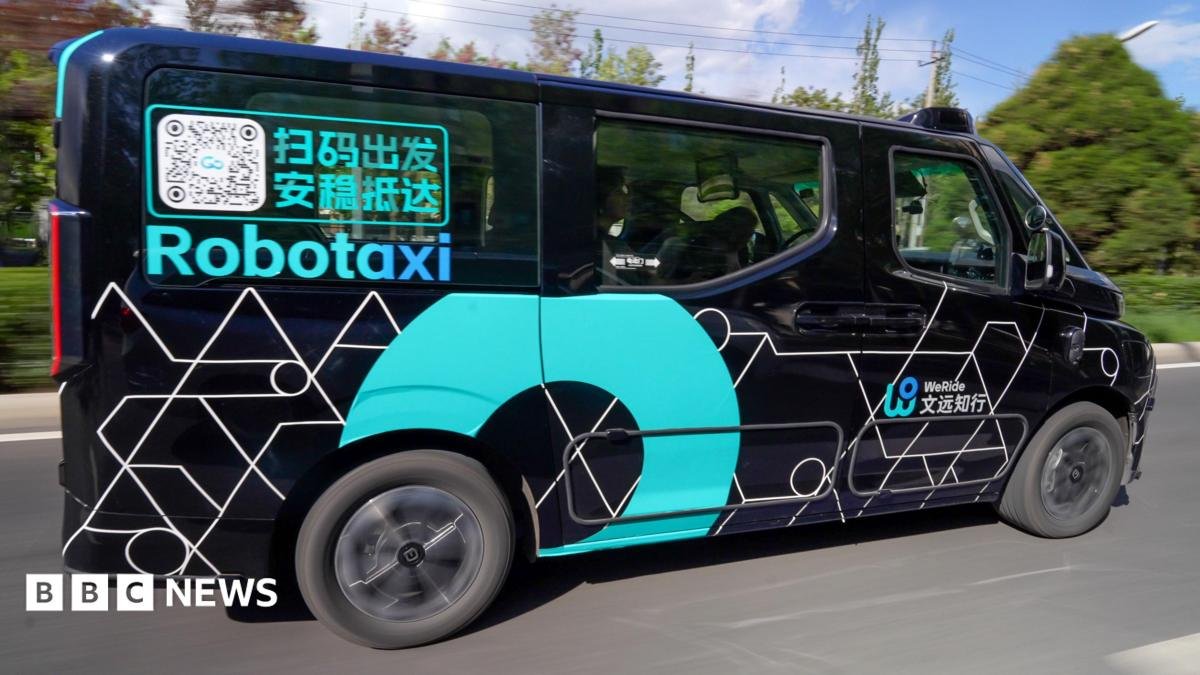
Chinese firms are advancing robotaxi operations in designated urban zones, drawing directly on the supply chains that propelled the country's electric vehicle sector to global scale. Established manufacturers such as BYD, Chery, Geely and SAIC produce the underlying vehicle platforms, while specialist developers supply the software layers. This division of labour mirrors the EV model, where batteries, sensors, chips and onboard computers serve dual purposes across passenger cars and autonomous systems.
Foreign policy fellow Kyle Chan of the Brookings Institution has described these linkages as overlapping tech industrial ecosystems. The same production capacity that supports mass EV output now extends into autonomous hardware, reducing duplication costs and accelerating iteration. Unlike vertically integrated approaches that concentrate design in-house, China's networked structure distributes risk and draws on existing component suppliers already optimised for high-volume output.
Policy Frameworks and Complex Operating Environments
Pilot programmes across multiple cities permit testing on selected public roads, creating controlled conditions for data collection without immediate nationwide rollout. These initiatives align with broader state objectives of technological self-sufficiency, allowing domestic firms to refine algorithms under real-world stress. Beijing's Yizhuang district illustrates the approach, where robotaxis and autonomous delivery vans operate alongside conventional traffic.
China's dense urban settings generate extensive operational data. Heavy precipitation, fog, extreme temperatures and mixed traffic flows involving buses, cyclists and pedestrians test sensor reliability and decision-making software. Firms such as QCraft are extending their platforms across passenger vehicles, buses and logistics fleets, capitalising on this diversity to strengthen system robustness. James Yu, QCraft's chairman and CEO, has noted the technology's trajectory toward broader integration within five to ten years.
Global Expansion Pathways and Competitive Positioning
Chinese autonomous driving companies are moving beyond domestic markets, seeking partnerships that extend their reach. In the United States, Uber and Lyft have entered collaborations with Chinese developers, while Waymo maintains its position as the leading commercial operator. Amazon-owned Zoox and Tesla proceed with more measured deployments. This pattern reflects China's interest in exporting standards and components rather than pursuing isolated national champions.
The EV precedent offers a template: rapid scaling through integrated supply chains followed by selective overseas market entry. Robotaxi services could follow similar routes, particularly in regions prioritising cost-effective mobility solutions. Yet regulatory divergence and differing liability regimes introduce friction that Chinese firms must navigate without assuming uniform global acceptance.
Strategic Calculus for Beijing and Its Counterparts
From Beijing's perspective, automation addresses demographic pressures from a shrinking workforce while advancing digital infrastructure goals. Policymakers frame these technologies as productivity enhancers rather than labour displacers, consistent with long-term planning that emphasises technological upgrading. This stance contrasts with union concerns in the United States over potential job displacement in driving sectors.
Each side pursues distinct objectives. Chinese entities seek data scale and ecosystem control to achieve self-reliance in critical technologies. Western competitors emphasise safety validation and public trust. Second-order effects could reshape mobility in ASEAN economies through affordable fleet services, influence EU regulatory debates on data localisation, and offer Global South markets alternatives to established Western platforms. Leverage rests on China's manufacturing depth, yet success hinges on demonstrating consistent reliability beyond controlled test zones.
Workforce Implications and Domestic Political Signalling
Automation narratives in China emphasise adaptation to labour shortages rather than outright replacement. This messaging supports social stability objectives by aligning technological change with national development priorities. In practice, the transition will require reskilling programmes and phased integration to avoid abrupt disruptions in transport employment.
Historical parallels with EV adoption suggest gradual absorption of new roles in fleet management, maintenance and software oversight. Policymakers are likely to monitor pilot outcomes closely before expanding commercial permissions, maintaining alignment between industrial policy and employment considerations.
Outlook for Sustained Global Influence
China's robotaxi trajectory depends on translating EV-derived advantages into reliable, scalable services that meet diverse regulatory and operational standards abroad. The networked industrial model provides cost and speed benefits, yet international expansion will test adaptability to varying infrastructure and liability environments. Geopolitical dynamics will shape access to markets and components, with outcomes influencing broader competition in intelligent transportation systems.
Continued progress in sensor fusion, edge computing and fleet coordination could reinforce China's position, provided timelines remain realistic and data advantages are converted into verifiable safety records. The coming years will clarify whether robotaxis replicate the export momentum seen in electric vehicles or encounter distinct structural constraints.
By Prof. Marcus Chen, Staff WriterThis article was produced with AI-assisted research and editorial support. Reporting is based on sources cited in the article.
What's Your Reaction?
 Like
0
Like
0
 Dislike
0
Dislike
0
 Love
0
Love
0
 Funny
0
Funny
0
 Wow
0
Wow
0
 Sad
0
Sad
0
 Angry
0
Angry
0

World Politics Analyst at Global1.News. Based in Beijing, covering US-China relations, global trade, and geopolitical strategy. Brings deep analytical perspective to the power dynamics shaping international affairs.















Comments (0)