
Nadezhdin Says His Political Campaign Is Over Amid Kremlin Pressure
Nadezhdin Declares End of Legal Opposition Activity as Kremlin Tightens Grip Boris Nadezhdin, the veteran Russian liberal politician known for his outspoken anti-war stance, announced this week that he sees no further path for legal political engagement inside Russia.
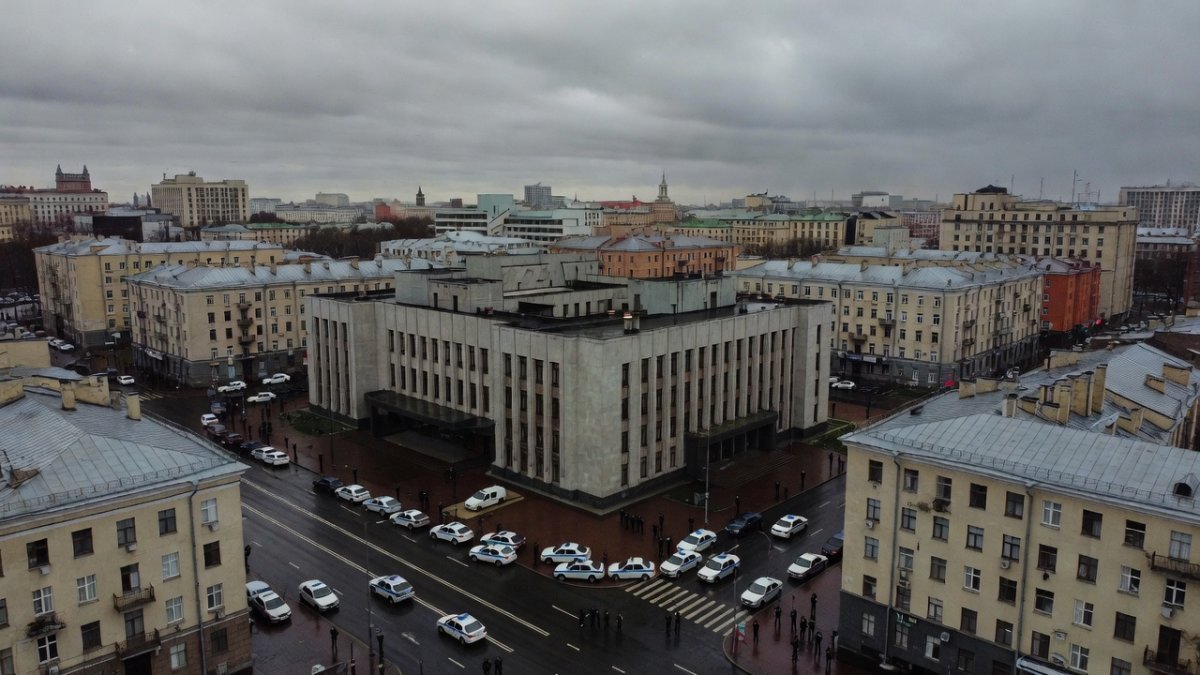
Nadezhdin Declares End of Legal Opposition Activity as Kremlin Tightens Grip
Boris Nadezhdin, the veteran Russian liberal politician known for his outspoken anti-war stance, announced this week that he sees no further path for legal political engagement inside Russia. Speaking to independent media, including The Moscow Times, Nadezhdin stated, “I no longer have any opportunity to engage in opposition politics legally in Russia.” The declaration comes amid a rapid escalation of pressure from state institutions following his April 2026 announcement that he intended to contest seats in both the State Duma and the Moscow City Duma in the September elections.
The development marks another chapter in the systematic narrowing of political space that has defined Russian politics since the full-scale invasion of Ukraine in 2022. Nadezhdin’s case illustrates how the Kremlin has refined tools of administrative and legal repression to sideline even moderate critics without resorting to immediate criminal prosecution in every instance.
From Presidential Bid to Duma Aspirant: Nadezhdin’s Recent Trajectory
Boris Nadezhdin first gained widespread attention during the 2024 presidential election cycle when he attempted to run as an anti-war candidate. His campaign collected the required signatures but was ultimately blocked by the Central Election Commission on technical grounds widely viewed by independent observers as politically motivated. Despite the rejection, Nadezhdin’s public appearances and criticism of the military campaign earned him respect among segments of the urban liberal electorate disillusioned with the conflict.
In April 2026, Nadezhdin declared his intention to participate in the upcoming September 2026 parliamentary elections, targeting both federal State Duma seats and positions in the Moscow legislative assembly. The move was seen by analysts as an attempt to rebuild an institutional foothold for the democratic opposition after years of exile, imprisonment, or marginalisation of figures such as Alexei Navalny, Vladimir Kara-Murza and others. Nadezhdin positioned himself as a pragmatic voice capable of operating within the narrow legal boundaries still formally available.
That strategy has now collapsed. On 10 July 2026 the Justice Ministry added Nadezhdin to the registry of “foreign agents,” a designation that carries onerous reporting requirements, financial restrictions and public stigma. Three days later, on 13 July, police briefly detained him in Dolgoprudny, in the Moscow region, during what authorities described as an unsanctioned public gathering. By 16 July reports emerged that border officials had barred him from leaving the country, effectively placing him under a de facto travel ban despite no formal criminal charges.
The Foreign Agent Law as Instrument of Political Neutralisation
Russia’s foreign agent legislation, originally introduced in 2012 and repeatedly expanded, has evolved into one of the Kremlin’s most effective tools for sidelining independent voices. According to data compiled by independent monitors, more than 800 individuals and organisations have been designated since the law’s tightening in 2021. Once labelled, a person must declare their status in all public communications, faces banking restrictions, and is prohibited from holding certain public offices or working in education and media.
Opposition figures and human rights lawyers argue the designation is applied selectively against government critics while sparing Kremlin-aligned organisations that receive foreign funding. The Justice Ministry maintains the label is applied according to transparent criteria linked to foreign financing or influence. In Nadezhdin’s case, the ministry cited unspecified “foreign sources” and his contacts with émigré networks, though specific evidence has not been made public.
Independent analysts suggest the timing — less than two months before the September elections — was deliberate. Maria Lipman, a veteran observer of Russian politics now based outside the country, told Global1.News that “the foreign agent label has become the default pre-emptive strike against any candidate the authorities do not wish to see on the ballot.” The designation does not automatically disqualify a candidate, but combined with other administrative measures it renders meaningful campaigning nearly impossible.
Security Services Drive Campaign to Exclude Nadezhdin from September Ballot
Multiple sources familiar with the situation, speaking on condition of anonymity, told The Moscow Times and other outlets that the pressure campaign against Nadezhdin is being coordinated by security officials rather than purely civilian electoral authorities. The Interior Ministry and the Federal Security Service (FSB) have reportedly taken the lead, using the foreign agent designation as legal cover for further restrictions.
The brief detention in Dolgoprudny on 13 July followed a small gathering of supporters. Police claimed the meeting violated rules on public assemblies, although Nadezhdin’s team insisted it was a private event. The travel ban imposed days later mirrors tactics used against other opposition politicians, effectively turning them into internal exiles unable to seek support or advice from colleagues abroad.
Kremlin spokesman Dmitry Peskov declined to comment directly on Nadezhdin’s case when asked by journalists this week, stating only that “all decisions regarding electoral participation are made within the framework of Russian legislation by the relevant authorities.” Peskov’s office referred questions to the Central Election Commission and the Justice Ministry.
Kremlin Strategy for Controlled Parliamentary Elections
The September 2026 State Duma elections represent the first full parliamentary vote since the beginning of the Ukraine conflict. United Russia, the ruling party, is expected to maintain its constitutional majority, but the Kremlin has shown heightened sensitivity to any potential protest vote. Independent polling, though limited by repressive conditions, suggests growing fatigue with the war economy, inflation and conscription policies in certain urban districts.
Political technologists close to the Presidential Administration have reportedly adopted a multi-layered approach: disqualification of prominent critics before registration, heavy media control, and selective repression that stops short of mass arrests. The case of Nadezhdin fits this pattern. By labelling him a foreign agent and imposing a travel ban, authorities avoid the international backlash that might accompany a criminal case while achieving the same practical result — removal from the political arena.
Central Election Commission chair Ella Pamfilova has repeatedly stated that the commission operates independently. However, critics point to consistent patterns where candidates critical of the government encounter bureaucratic obstacles that loyal candidates do not. In recent days, several lesser-known independent candidates in Moscow districts have also reported sudden difficulties with signature verification and venue access.
Impact on Russia’s Shrinking Opposition Landscape
Nadezhdin’s announcement carries symbolic weight for what remains of Russia’s democratic opposition. After the death of Alexei Navalny in an Arctic penal colony and the imprisonment or exile of most prominent figures, Nadezhdin had emerged as one of the few nationally recognisable politicians still attempting to work inside the country. His departure from legal politics leaves a further vacuum.
Lev Shlosberg, a veteran Yabloko party politician who has faced his own legal pressures, commented this week that “each new case like Nadezhdin’s demonstrates that the space for legal opposition is being closed methodically and deliberately.” Shlosberg himself was designated a foreign agent in 2023 and barred from running in previous elections.
Younger activists and regional organisers interviewed by Global1.News expressed discouragement. Many described a sense of futility: even moderate, legally compliant activity now triggers state retaliation. Some have shifted focus to underground education initiatives or émigré coordination, while others have withdrawn from politics entirely. The pattern echoes the post-Soviet experience of the 2000s when the Kremlin under Vladimir Putin gradually dismantled independent political parties and media.
Reactions from Kremlin Allies and Independent Observers
State-aligned media have portrayed Nadezhdin’s difficulties as self-inflicted. Rossiya 1 commentator Vladimir Solovyov suggested on his programme this week that Nadezhdin’s foreign contacts proved he was never a genuine Russian politician but rather an agent of external influence. Similar narratives appeared in Komsomolskaya Pravda and other pro-Kremlin outlets.
Conversely, exiled opposition leader Mikhail Khodorkovsky, speaking from London, described Nadezhdin’s statement as “the logical conclusion of a policy designed to eliminate any alternative to Putin’s power.” Khodorkovsky warned that the elimination of legal opposition channels increases the risk of unpredictable social explosions in the future.
Western governments have reacted with measured criticism. The European Union’s external affairs spokesperson called the travel ban and foreign agent designation “further evidence of the Russian authorities’ determination to suppress pluralistic voices ahead of parliamentary elections.” The US State Department issued a similar statement, urging Moscow to respect its OSCE commitments on democratic standards.
Inside Russia, public reaction has been muted. State television has given the story minimal coverage, while independent Telegram channels and YouTube channels critical of the government have seen spikes in discussion. Sociologists note that fear of repression has made many ordinary citizens reluctant to express political opinions openly, particularly in provincial cities far from Moscow and St Petersburg.
What Nadezhdin’s Withdrawal Means for September Elections and Beyond
With Nadezhdin effectively removed from contention, the September ballot will lack one of the few recognisable anti-war voices. Analysts suggest this will further depress turnout among liberal voters and strengthen the position of systemic parties such as the Communist Party and LDPR, which offer limited criticism but remain loyal to the overall framework of power.
The episode also highlights the evolving nature of Kremlin control. Rather than outright bans, authorities increasingly rely on layered administrative measures — foreign agent lists, assembly laws, banking restrictions and travel bans — that cumulatively achieve exclusion. This approach allows the regime to maintain a façade of legality while neutralising threats.
For ordinary Russians, the implications are significant. The contraction of legal political competition reduces accountability mechanisms and limits public debate on critical issues such as economic policy, conscription, and the human cost of the Ukraine conflict. As independent institutions weaken, decision-making becomes even more centralised within the Presidential Administration and security structures.
Nadezhdin has not ruled out future activity entirely. In his statement to The Moscow Times he left open the possibility of continued civic work, though he made clear that formal politics under current conditions is no longer viable. His experience will likely be studied by remaining opposition groups as they recalibrate strategies for survival in an increasingly hostile environment.
The coming weeks will reveal whether other independent candidates face similar coordinated pressure. With less than two months until polling day, the window for registration and campaigning is narrowing rapidly. The Justice Ministry, Interior Ministry and Central Election Commission will continue to shape the field, while the FSB monitors potential flashpoints of discontent.
Russia’s post-Soviet political system, once marked by chaotic pluralism in the 1990s, has been steadily transformed into a managed democracy where opposition exists primarily on terms acceptable to the Kremlin. Boris Nadezhdin’s declaration this week serves as the latest confirmation that those terms have become narrower than ever.
By Irina Volkov, Staff Writer
This article was produced with AI-assisted research and editorial support. Reporting is based on sources cited in the article.
What's Your Reaction?
 Like
0
Like
0
 Dislike
0
Dislike
0
 Love
0
Love
0
 Funny
0
Funny
0
 Wow
0
Wow
0
 Sad
0
Sad
0
 Angry
0
Angry
0
Russia/Eastern Europe Correspondent at Global1.News. Covering Russian politics, energy, security, and the shifting dynamics of the post-Soviet space. Provides clear-eyed analysis on one of the world's most opaque regions.












Comments (0)