
Chad's Amdjarass Hosts Landmark Saharan Culture Festival, Uniting Desert Nations
The International Festival of Saharan Cultures has transformed Amdjarass, a remote town in Chad's Ennedi-Est province, into a vibrant crossroads of desert traditions — uniting dozens of ethnic groups from across the Sahara in a celebration of music, dance, and shared heritage that transcends national borders. Chad's Amdjarass Hosts Landmark Saharan Culture Festival, Uniting Des
The International Festival of Saharan Cultures has transformed Amdjarass, a remote town in Chad's Ennedi-Est province, into a vibrant crossroads of desert traditions — uniting dozens of ethnic groups from across the Sahara in a celebration of music, dance, and shared heritage that transcends national borders.
Chad's Amdjarass Hosts Landmark Saharan Culture Festival, Uniting Desert Nations
Amdjarass, Chad — Set against the dramatic backdrop of the UNESCO-listed Ennedi Massif, the 6th edition of the International Festival of Saharan Cultures has returned after a seven-year hiatus, transforming this remote Saharan outpost into a global cultural capital and reaffirming the enduring bonds between desert peoples across West and Central Africa.
A Triumphant Return After Seven Years
The 6th edition of FICSA marked a powerful homecoming for the International Festival of Saharan Cultures, the first since around 2019 or 2020 after a six-to-seven-year absence that left many longing for its unifying spirit. Founder and coordinator Issouf Elli Moussami had long nurtured a vision of bringing desert communities together, and this edition showed how that dream has grown more refined with each passing year.
Chadian Prime Minister attended the opening ceremony, lending official weight to the gathering and later watching the camel races with evident pride. For one full week the quiet town of Amdjarass pulsed with life as thousands arrived from across the Sahara, turning dusty lanes into lively processions of color and song.
Niger served as guest of honor, a choice that underscored deep regional ties. Niger PM Ali Mahamane Lamine Zeine joined the celebrations, while Niger Minister of Crafts and Tourism Aghaichata Guichene Atta spoke movingly about the shared history that binds the two nations.
Delegations from Mali, Mauritania, Burkina Faso, and Morocco added further richness, with Mali's Minister of Culture Mamou Daffé among those present. The scale of participation reflected how the festival has matured into a true pan-Saharan platform.
Issouf Elli Moussami often reminds visitors that each edition builds on lessons from the last, and this February the event felt both rooted in tradition and ready for wider recognition across the continent.
Local residents opened their homes and hearts, proving once again that hospitality remains one of the Sahara's most enduring gifts.
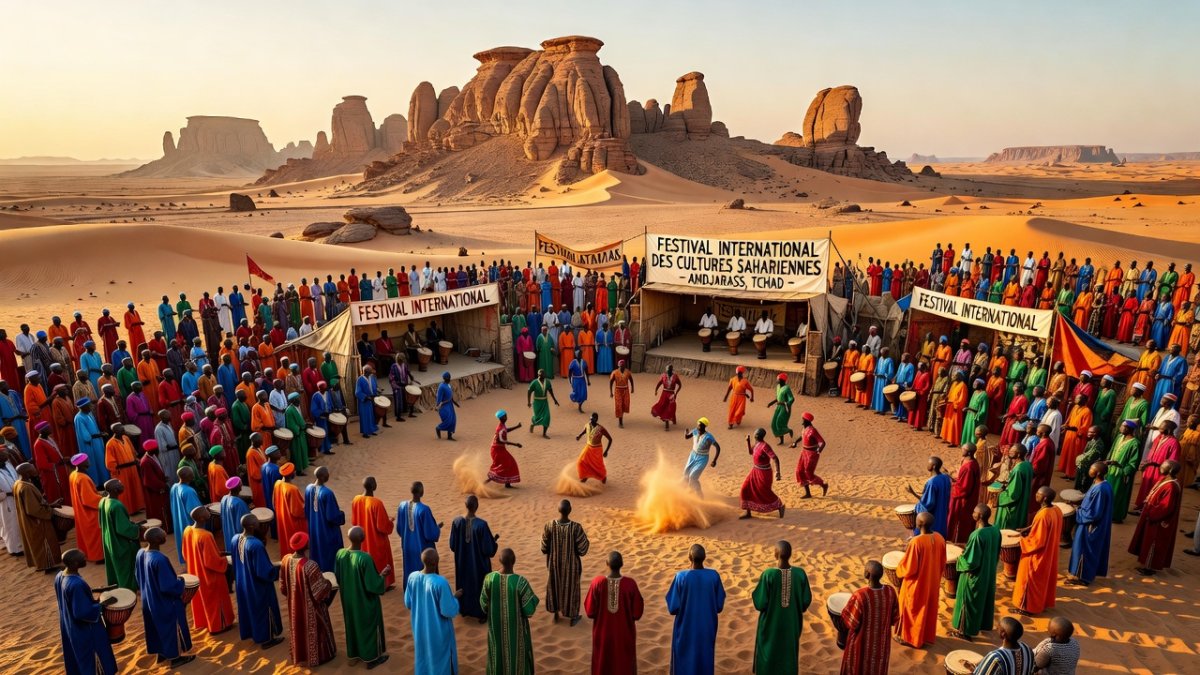
Ennedi Massif: A UNESCO World Heritage Backdrop
The Ennedi Massif rises like a living cathedral behind the festival grounds, its sandstone formations carved by wind and time into arches, pillars, and canyons that earned UNESCO World Heritage status. These dramatic landscapes have sheltered human life for millennia, and their presence lent every performance an almost sacred quality.
Ancient rock paintings still visible on sheltered cliffs tell stories of giraffes, elephants, and hunters from eras when the desert was greener. Visitors often pause before these images, reminded that the cultures celebrated at FICSA stretch back thousands of years.
Natural gueltas, or rock pools, dot the massif and provide vital water even in the driest months. The Guelta de Bachikélé drew many festival-goers on organized excursions, its clear waters reflecting both sky and the faces of new friends from distant countries.
Geologists and cultural historians alike marvel at how the Ennedi has shaped nomadic movement, trade routes, and artistic expression across the Sahara. The setting itself became a silent participant in the festival, drawing photographers and storytellers from around the world.
For African readers far from Chad, the Ennedi reminds us that our continent's deserts are not empty spaces but living archives of resilience and creativity.
Many left the festival with plans to return, drawn as much by the stones and water as by the music and races.
Music, Dance and the Rhythms of the Sahara
Traditional music filled the evenings as dozens of ethno-linguistic communities took the stage, from Toubou and Gorane performers to Tuareg-influenced groups whose rhythms echo across national borders. Drumming, chanting, and synchronized group dances created a living tapestry of Saharan sound.
Colorful traditional robes and turbans transformed the festival grounds into a moving palette of indigo, saffron, and white. Each garment carried stories of lineage, region, and identity that audiences absorbed with quiet respect.
Mock combat and sword dances thrilled spectators while also serving as reminders of the desert's warrior traditions now channeled into celebration rather than conflict. Processions wound through the town each afternoon, their joyful energy reflecting both reconciliation and the daily realities of nomadic life.
The festival stands as a vital showcase for Saharan intangible cultural heritage, ensuring that younger generations see their traditions honored on an international stage. Mauritanian mayor Mokhtar Abdallah captured the spirit when he said, "This festival lifts the veil that sometimes exists between Saharan cultures."
From my Senegalese vantage point, these performances echo the communal dances of the Casamance yet carry the distinct pulse of the open desert, reminding us how African expressive forms travel and adapt while remaining deeply rooted.
Each night ended with audiences reluctant to leave, the music still echoing across the massif long after the last drum fell silent.
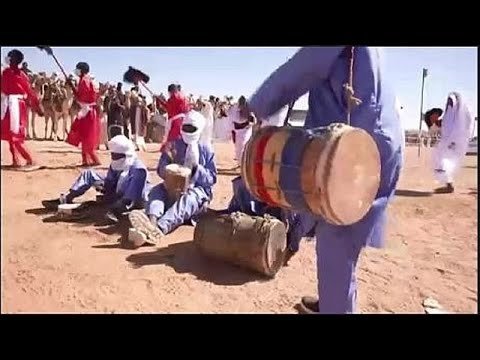
The Great Camel Race: A Spectacle of the Desert
The camel race stood as the undisputed flagship event, known locally as the "épreuve reine" or queen event. Nearly 400 méharistes competed over an 8 km course, their mounts moving with astonishing grace across the stony terrain.
Participants arrived from 16 nations, turning the race into a true gathering of desert expertise. The UAE, through Abu Dhabi, offered support via what many called "camel diplomacy," strengthening ties through this ancient practice.
Thousands of spectators lined the course, their cheers rising like desert wind as the riders thundered past. The event honored the deep nomadic tradition of camel racing that has long served both practical and ceremonial purposes across the Sahara.
Equestrian displays ran alongside the camel races, with horses appearing as living cultural symbols adorned in traditional finery. One Chadian participant explained the importance of such adornment: "Without this adornment, a horse is like a person who is not dressed."
The races offered more than spectacle; they reinforced bonds between communities that still rely on camels for transport, trade, and identity in an era of rapid change.
By the finish line, winners embraced riders from neighboring countries, the shared joy underscoring the festival's deeper purpose of connection.
Connecting Continents: Sahara as a Shared Cultural Space
Throughout the week, the Sahara emerged not as a barrier dividing nations but as one continuous cultural space where stories, melodies, and lifeways flow freely. Niger's role as guest of honor strengthened Chad-Niger relations in tangible ways.
Minister Aghaichata Guichene Atta spoke eloquently about the deep historical ties between Chad and Niger, noting how families and trade routes have crossed the border for centuries. Delegations from Mali, Mauritania, Burkina Faso, and the UAE added further layers to these conversations.
A crafts village bustled with artisans displaying traditional Saharan goods, from leatherwork to silver jewelry, allowing visitors to carry pieces of the desert home. These stalls became informal meeting points where ideas about cultural preservation were exchanged alongside purchases.
The festival serves as a practical platform for regional cooperation in the Sahel, showing that cultural events can complement diplomatic efforts. By celebrating together, participants reaffirmed that unity does not erase distinct identities but enriches them.
For African audiences watching from afar, FICSA offers a model of how shared heritage can bridge divides that politics sometimes widens.
Issouf Elli Moussami's steady hand ensured the gathering remained focused on these larger goals while staying grounded in local realities.
Boosting Local Economy and Desert Tourism
The economic ripple effects reached every corner of Amdjarass and the wider Ennedi region. Local artisans sold crafts and traditional goods directly to visitors, keeping income within families that have long lived from the desert's gifts.
The festival has become a clear driver for desert tourism, with many guests extending their stays for excursions to Ennedi UNESCO sites including the Guelta de Bachikélé. These outings introduced travelers to landscapes they might otherwise never encounter.
Issouf Elli Moussami expressed his ongoing vision clearly: "We are refining our approach to make this festival a major cultural and tourist event in Chad." His words reflect both ambition and a commitment to measured growth.
Accessibility remains a challenge in such remote Saharan locations, yet the 7-day festival duration allowed time for meaningful exchange despite the distances involved. Organizers continue to explore ways to ease travel while protecting fragile sites.
The potential for FICSA to grow into a major pan-Saharan event feels tangible, provided cultural preservation stays at the heart of every decision. Balancing tourism with respect for living traditions will determine the festival's long-term success.
Already the gathering has put Amdjarass on maps where it once appeared only as a distant dot, opening doors for sustainable development rooted in heritage.
What to Watch For
Future editions promise even greater international recognition for Saharan cultural heritage, building on the momentum of this triumphant return. Similar festivals across the Sahel region are watching closely, learning from FICSA's blend of spectacle and substance.
Preserving nomadic traditions amid modernization remains an urgent task, and the festival offers one powerful tool for keeping those lifeways visible and valued. Younger participants especially seemed energized by seeing their elders celebrated on such a stage.
African audiences can engage with Saharan events through travel when possible, but also through recordings, documentaries, and cultural exchanges that bring desert voices to coastal cities and vice versa. The connections forged here matter far beyond Chad's borders.
Cultural festivals like FICSA play a quiet yet vital role in African unity, reminding us that our shared stories run deeper than the lines drawn on maps. As the Ennedi winds carried music across the massif once more, that truth felt especially alive.
Reports from the ground, including work by Dominic Wabwireh with other agencies for africanews, confirm the event's success and point toward an even brighter horizon for desert cultures.
By Amara Diop, Staff Writer
This article was produced with AI-assisted research and editorial support. Reporting is based on sources cited in the article.
What's Your Reaction?
 Like
0
Like
0
 Dislike
0
Dislike
0
 Love
0
Love
0
 Funny
0
Funny
0
 Wow
0
Wow
0
 Sad
0
Sad
0
 Angry
0
Angry
0

West Africa/Sahel Correspondent at Global1.News. Dakar-based journalist covering politics, security, climate, and development across Francophone and Anglophone West Africa. Tells the stories of a region undergoing profound transformation.









Comments (0)