
CCRAS Fire: Blaze at Ayurvedic Research Council Building in Delhi's Sagarpur Raises Fire Safety Concerns
A fire broke out on the third floor of the Central Council for Research in Ayurvedic Sciences (CCRAS) headquarters in Delhi's Sagarpur area on June 18, 2026, raising serious concerns about fire safety protocols at government research institutions under the Ministry of Ayush. The blaze, which prompted an immediate response from the Delhi Fire Services, was brought under control
A fire broke out on the third floor of the Central Council for Research in Ayurvedic Sciences (CCRAS) headquarters in Delhi's Sagarpur area on June 18, 2026, raising serious concerns about fire safety protocols at government research institutions under the Ministry of Ayush. The blaze, which prompted an immediate response from the Delhi Fire Services, was brought under control after assessment operations. This is the fourth significant fire incident in the national capital in June 2026 alone, following a deadly hotel blaze that claimed 21 lives earlier this month.
Fire Erupts at CCRAS Headquarters in Sagarpur
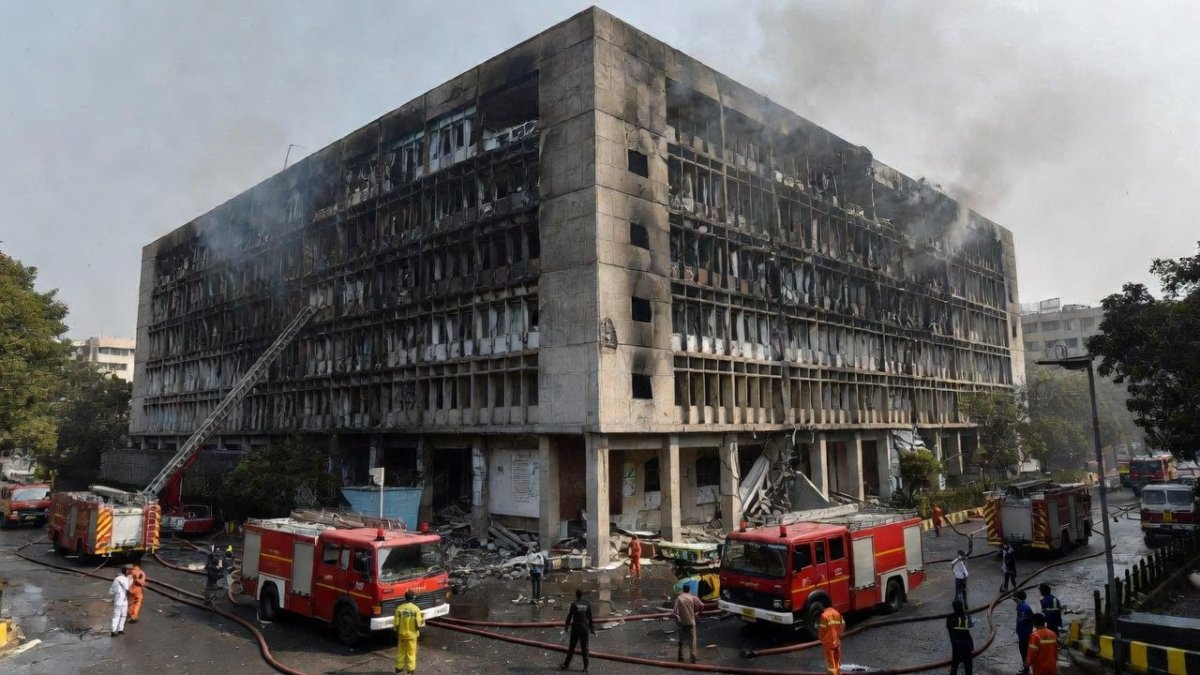
On June 18, 2026, a fire broke out on the third floor of the Central Council for Research in Ayurvedic Sciences building in Sagarpur, South West Delhi. Delhi Fire Services personnel responded promptly, conducted assessment operations, and brought the blaze under control. Visuals from the site show charred interiors and damaged research infrastructure at this apex body under the Ministry of Ayush.
CCRAS Role in National Ayurveda Research
The Central Council for Research in Ayurvedic Sciences serves as the apex autonomous body responsible for formulation, coordination, development, and promotion of scientific research in Ayurveda. Headquartered in New Delhi, CCRAS oversees regional research institutes across multiple states and directly supports evidence-based validation of Ayurvedic formulations. The Ministry of Ayush has steadily expanded this network to integrate traditional medicine into mainstream healthcare delivery.
Pattern of Delhi Fires in June 2026
This incident forms part of a documented cluster of fire events across the capital. On June 4, a hotel fire claimed 21 lives and triggered a city-wide fire safety crackdown. On June 12, three people died in a residential building blaze in Govindpuri. On June 14, another fire occurred at a restaurant near the Kalkaji-Govindpuri flyover. Delhi Fire Services has remained on high alert throughout the month, highlighting systemic vulnerabilities in both commercial and government structures.
Implications for Ayurvedic Research Continuity
Disruption at the CCRAS headquarters directly affects ongoing clinical trials, herbarium collections, and data repositories that support national Ayurveda policy. Researchers at affiliated institutes in states such as Kerala, Karnataka, and Uttar Pradesh rely on central coordination from Delhi. Any loss of records or laboratory capacity slows the validation pipeline that feeds into public health programmes run by state Ayush departments.
Fire Safety Standards Across Ayush Infrastructure
Government buildings housing research councils must comply with National Building Code provisions and Delhi Fire Services norms. The June 2026 sequence of incidents demonstrates that enforcement remains inconsistent even in centrally funded institutions. Taxpayers fund the Ministry of Ayush’s infrastructure expansion; repeated fire events risk wasting public investment and delaying delivery of validated Ayurvedic interventions to patients in district hospitals and primary health centres.
Broader Policy and Economic Context
India’s push to position Ayurveda as a global wellness export depends on credible scientific output from bodies such as CCRAS. Fire-related setbacks increase costs for reconstruction, equipment replacement, and insurance claims borne ultimately by the exchequer. Citizens seeking affordable integrative care at AIIMS-Ayush collaborative clinics or state dispensaries face indirect delays when central research stalls. Strengthened fire audits, mandatory third-party inspections, and real-time monitoring systems represent immediate policy requirements to protect both research assets and public trust in the Ayush mission.
— By Dr. Raj Patel, Staff WriterThis article was produced with AI-assisted research and editorial support. Reporting is based on sources cited in the article.
What's Your Reaction?
 Like
0
Like
0
 Dislike
0
Dislike
0
 Love
0
Love
0
 Funny
0
Funny
0
 Wow
0
Wow
0
 Sad
0
Sad
0
 Angry
0
Angry
0

India/South Asia Correspondent at Global1.News. Analytical voice with a background in science and health journalism. Based in New Delhi, covering Indian politics, education, healthcare, technology, and policy. Breaks down complex data into clear, actionable reporting.













Comments (0)