
Carney and Eby Sign Canada-BC Prosperity Deal, Maintain Tanker Ban While Unlocking $200 Billion in Investments
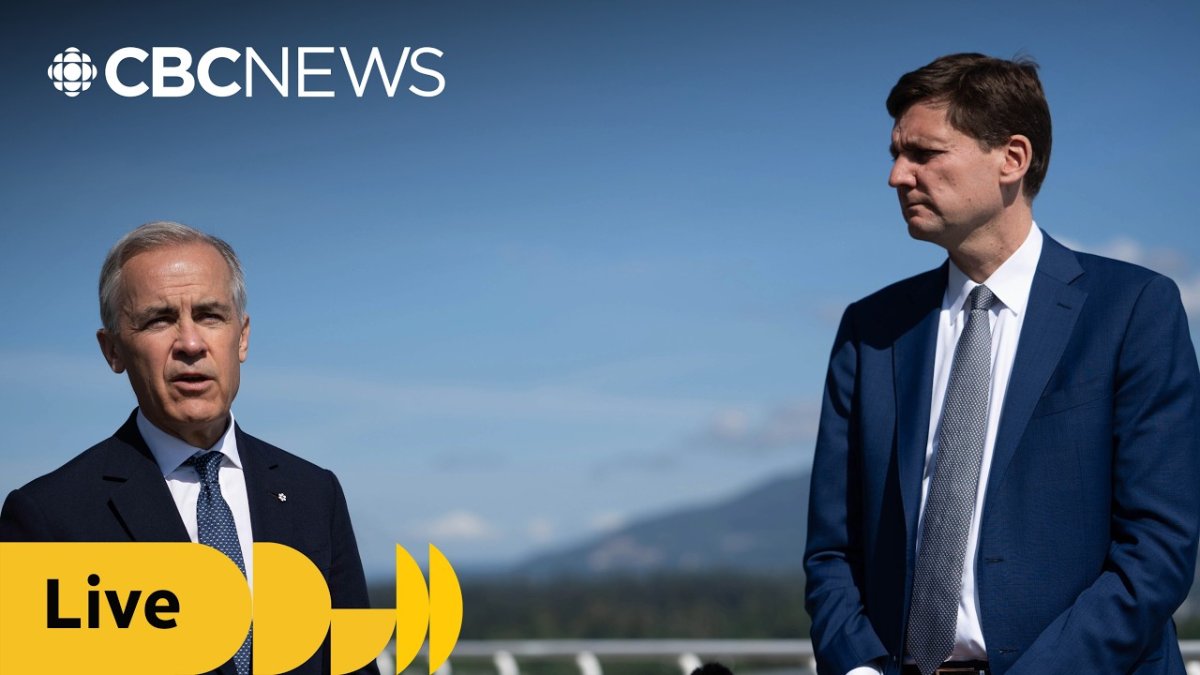
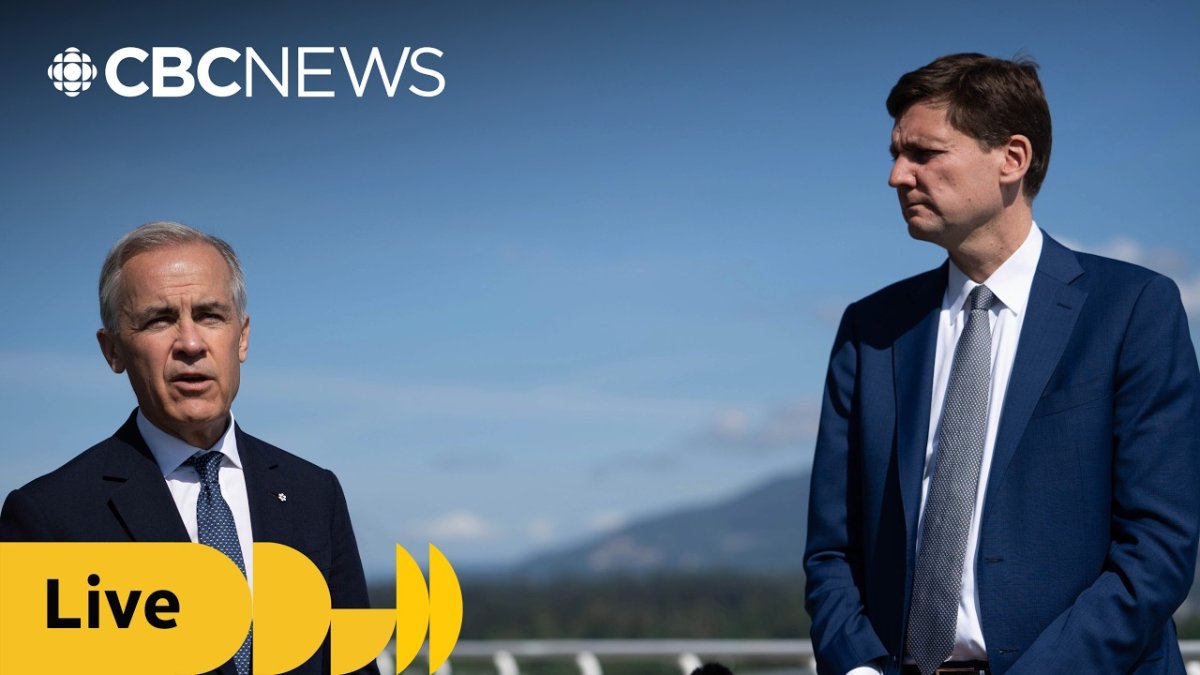
In a CBC News video posted on July 2, 2026, Prime Minister Mark Carney and British Columbia Premier David Eby stood together in Vancouver to announce the Canada-BC Cooperative Prosperity Agreement. The live broadcast captured the leaders signing a memorandum of understanding that maintains the North Coast oil tanker ban while unlocking major energy investments. Viewers across t
In a CBC News video posted on July 2, 2026, Prime Minister Mark Carney and British Columbia Premier David Eby stood together in Vancouver to announce the Canada-BC Cooperative Prosperity Agreement. The live broadcast captured the leaders signing a memorandum of understanding that maintains the North Coast oil tanker ban while unlocking major energy investments. Viewers across the country watched as the federal and provincial governments outlined terms that balance resource development with environmental safeguards.
Carney and Eby Sign Canada-BC Prosperity Deal, Maintain Tanker Ban While Unlocking $200 Billion in Investments
Vancouver, British Columbia – July 2, 2026 — Prime Minister Mark Carney and British Columbia Premier David Eby signed the Canada-BC Cooperative Prosperity Agreement at a Vancouver ceremony on Thursday, July 2, establishing a framework for $150-200 billion in new investments across energy, ports and transmission infrastructure. The memorandum of understanding keeps the federal North Coast oil tanker ban in place while committing British Columbia not to launch court challenges against a future privately funded bitumen pipeline. Both leaders described the accord as a pragmatic step that recognises British Columbia’s role as Canada’s economic linchpin on the Pacific coast.
The Vancouver Agreement: Core Terms
The memorandum of understanding signed at the Vancouver Convention Centre on July 2 outlines five core commitments. The North Coast oil tanker ban remains federal law, protecting the coastline from Kitimat to the Alaska border — a non-negotiable condition that Premier Eby placed at the centre of negotiations. Ottawa will provide British Columbia with dedicated compensation for environmental risks tied to any future pipeline, including an emergency response fund held jointly in trust by the province and Coastal First Nations. The size of the compensation package has not been publicly disclosed, though federal officials confirmed it includes annual contributions indexed to inflation with initial funding drawn from existing Trans Mountain pipeline revenue. Premier David Eby explicitly pledged that British Columbia will not initiate court proceedings against a pipeline application, stating that the province “learned this the hard way on the last pipeline” during the Trans Mountain expansion dispute that dragged through Canadian courts for years. Prime Minister Mark Carney confirmed that the federal government views the agreement as the foundation for renewed federal-provincial cooperation on resource projects. The document also establishes a joint oversight committee that will meet quarterly in Victoria and Ottawa to monitor compliance with environmental and investment targets, with powers to recommend adjustments if either side falls short of its commitments.
Energy Infrastructure and LNG Development
The agreement directly supports four liquefied natural gas projects on British Columbia’s North Coast. LNG Canada Phase 2 expansion at Kitimat will proceed with federal regulatory fast-tracking, while the Ksi Lisims LNG facility near Ging̱olx receives environmental assessment support. Cedar LNG at Kitimat and Woodfibre LNG near Squamish are listed as priority projects eligible for streamlined permitting. In addition, the federal government committed $500 million toward the Red Chris Mine expansion near Iskut, increasing copper production capacity by 15 percent through new processing infrastructure. The North Coast Transmission Line will deliver clean hydroelectricity from the Peace River region to remote communities and industrial sites, reducing diesel dependence. Trans Mountain pipeline throughput will be optimised from 890,000 barrels per day to 1.2 million barrels per day through pump station upgrades and terminal improvements at Burnaby and Westridge. These measures are projected to add 12,000 construction jobs across northern British Columbia by 2029.
Port Upgrades and Transportation Corridors
Significant federal and provincial funding will flow to port and highway infrastructure along the Lower Mainland and North Coast. The Port of Vancouver-Roberts Bank corridor will receive new rail and road connections to handle increased container and bulk cargo volumes. The George Massey Tunnel replacement project on Highway 99 will advance with federal cost-sharing to improve access between Delta and Richmond. At the Port of Prince Rupert, terminal expansions will accommodate larger vessels and additional rail capacity from the interior. The Port of Stewart will see dredging and berth upgrades to support mineral exports from the Red Chris and neighbouring mines. These transportation investments are designed to reduce congestion at existing facilities and strengthen British Columbia’s position as Canada’s primary gateway for Asia-Pacific trade. Construction timelines released on July 2 indicate that the Massey Tunnel replacement will begin major works in spring 2027.
First Nations and the Tanker Ban Legacy
Coastal First Nations president Marilyn Slett addressed the July 2 gathering, describing the day as “a good day” after more than 50 years of Indigenous advocacy that produced the tanker ban. Slett emphasised that “no technology can clean up an oil spill at sea,” underscoring the continued importance of the moratorium for communities from Haida Gwaii to the central coast. The agreement establishes a permanent seat for Coastal First Nations on the emergency response fund board, ensuring that Indigenous governments participate directly in spill preparedness planning. Federal officials confirmed that the compensation package includes annual contributions indexed to inflation, with initial funding drawn from the existing Trans Mountain revenue stream. Slett noted that the arrangement honours the legal and moral obligations arising from decades of court cases and environmental assessments that shaped the current tanker restrictions.
The Alberta Pipeline Puzzle
Following the Vancouver announcement, Prime Minister Mark Carney travelled to Calgary on the evening of July 2 to meet Alberta Premier Danielle Smith. The two leaders discussed the fall 2025 energy framework that identified a privately funded and privately operated bitumen pipeline as the only acceptable route to tidewater. No private-sector backer has yet been named, and Carney reiterated that any proposal must secure its own financing without direct federal loans or guarantees. Premier Smith has maintained her threat to hold a fall referendum on Alberta’s place in Confederation if progress stalls — a political pressure point she has used since signing last year's energy accord. Industry analysts in Calgary noted that the absence of a committed proponent leaves the project in a holding pattern until at least the first quarter of 2027. The Alberta government continues to argue that access to new markets remains essential for the province’s fiscal stability, with the bitumen price differential costing the provincial treasury an estimated $15 billion annually in foregone revenue compared to tidewater pricing.
The political calculus differs sharply between the two provinces. Smith faces pressure from her United Conservative Party base to deliver concrete pipeline progress, while also managing the separatist movement that has gained traction in recent months. Carney, for his part, must balance Alberta's demands against the environmental commitments he made to secure the support of progressive voters in the last federal election. The proposed pipeline route has not been publicly released, though industry sources suggest the most feasible corridor would follow existing energy infrastructure south of the Lower Mainland rather than north to Prince Rupert, given the tanker ban on the North Coast. The southern route would take oil to the Port of Vancouver or to Washington State via the Trans Mountain terminal at Burnaby, though that would require additional approvals on the American side of the border.
Impact on Canadian Economy and Confederation
The July 2 agreement tests long-standing tensions between resource development and environmental protection across Canada. British Columbia gains substantial port and transmission investments while preserving the tanker ban, a position that moderates domestic criticism from environmental organisations. Alberta’s concerns about market access remain unresolved, yet the explicit requirement for private funding reduces the likelihood of renewed federal-provincial litigation that has historically delayed major energy projects by years. Economists at the Conference Board of Canada estimate that the combined LNG, mining and port projects could add 0.7 percentage points to national GDP growth by 2030 if timelines are met, representing tens of thousands of direct and indirect jobs across multiple provinces. The deal also illustrates how federal leadership under Mark Carney seeks to organise investment around existing regulatory frameworks rather than new legislation, a pragmatic approach that avoids reopening parliamentary debates on contentious environmental laws.
Observers in Ottawa suggest the arrangement may serve as a template for future resource agreements in Atlantic Canada and the North, where offshore energy and critical minerals development face similar federal-provincial jurisdictional questions. The model — provincial consent and compensation in exchange for federal co-investment — could apply to hydroelectric projects in Labrador, offshore wind in Nova Scotia, and mining infrastructure in the territories. For average Canadians, the practical implications will play out over several years: shovels in the ground on transmission lines and port expansions in 2027 and 2028, new LNG export capacity coming online toward the end of the decade, and the ongoing political drama of Alberta's pipeline ambitions and Confederation referendum threat serving as a backdrop to it all.
What Happens Next
Regulatory filings for the optimised Trans Mountain throughput are expected before the end of 2026, while the four LNG projects will submit updated environmental assessments in the coming months. The joint oversight committee will hold its first meeting in Victoria on August 15, 2026. Private-sector interest in the proposed bitumen pipeline will be gauged through a formal request for expressions of interest issued by the Alberta government in September. First Nations consultations on the emergency response fund governance structure are scheduled to begin in September as well. Both provinces have committed to quarterly public progress reports, with the next joint update planned for October 2026 in Edmonton. The timeline leaves open the possibility that a pipeline proponent could be announced before the Alberta referendum window closes in late 2026.
By Alex Thompson, Staff Writer
This article was produced with AI-assisted research and editorial support. Reporting is based on sources cited in the article.
What's Your Reaction?
 Like
0
Like
0
 Dislike
0
Dislike
0
 Love
0
Love
0
 Funny
0
Funny
0
 Wow
0
Wow
0
 Sad
0
Sad
0
 Angry
0
Angry
0
Canada Correspondent at Global1.News. Based in Toronto, covering Canadian politics, energy, trade, and US-Canada relations. Provides the Canadian perspective on North American and global affairs.













Comments (0)