
Canada's Recession Debate 'Neither Accurate Nor Helpful,' Says RBC Chief Economist
In a CBC News segment aired on Sunday, CBC chief political correspondent Rosemary Barton sits down with RBC Senior Vice President and Chief Economist Frances Donald to discuss why she believes the technical recession debate is focusing on the wrong thing. Donald argues that the label is "neither accurate nor helpful" for understanding Canada's broader economic transformation, h
In a CBC News segment aired on Sunday, CBC chief political correspondent Rosemary Barton sits down with RBC Senior Vice President and Chief Economist Frances Donald to discuss why she believes the technical recession debate is focusing on the wrong thing. Donald argues that the label is "neither accurate nor helpful" for understanding Canada's broader economic transformation, highlighting that consumer spending remained moderately strong with 1.5 percent growth in the first quarter while investments in machinery, equipment, intellectual property and research and development have risen sharply.
Canada's Recession Debate 'Neither Accurate Nor Helpful,' Says RBC Chief Economist
Ottawa, Ontario – June 7, 2026 — The video features three distinct segments, beginning with Donald's analysis before moving to comments from Parliamentary Secretary to the Minister of Finance Ryan Turnbull and Kayla Dillon, an Ontario mother of four who explains why one-time government payments are not a sustainable answer to the rising cost of groceries.
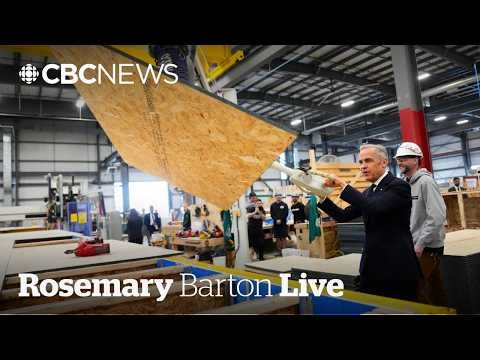
RBC Economist Challenges Recession Narrative
Frances Donald of RBC argued during the June 7 broadcast that the narrow focus on two consecutive quarters of contraction misses the underlying resilience in household behaviour and business capital formation. She pointed specifically to the 1.5 percent rise in consumer spending during the first quarter as evidence that Canadians continue to support economic activity despite higher costs for groceries and housing. Donald emphasised that rising outlays on machinery, equipment, intellectual property and research and development signal preparation for a more productive economy rather than outright weakness.
The RBC chief economist noted that the technical recession label distracts policymakers and the public from the structural adjustments now underway under Prime Minister Mark Carney. She stated that government spending had previously supported growth but was not a factor in the first-quarter outcome, allowing private-sector signals to emerge more clearly. Donald's assessment aligns with the federal government's stated goal of building a stronger, more resilient and more independent Canadian economy through reduced reliance on population-driven expansion.
Donald further observed that the data will remain uneven during this settling-in period, a phrase also used by Prime Minister Carney in recent days. She urged analysts to track forward-looking investment trends rather than backward-looking gross domestic product prints alone. This perspective directly challenges the Conservative Party's repeated assertion that Canada is experiencing the only recession among G7 nations.
Statistics Canada Reports Contraction in First Quarter
Statistics Canada data released in recent days showed real gross domestic product declined 0.1 percent annualized in the first quarter of 2026, following a larger contraction in the fourth quarter of 2025. Under the standard technical definition, two consecutive quarters of negative growth constitute a recession. Exports fell 4.1 percent while business investment dropped 3.6 percent, contributing to the overall contraction.
Imports of gold surged during the quarter, exerting additional downward pressure on the headline GDP figure. Economists at TD Bank later described reliance on this single category as an unreliable basis for declaring a recession. The first-quarter result also reflected the impact of reduced immigration levels, which Prime Minister Carney has implemented to flatten population growth and ease pressure on housing and services.
Prime Minister Carney described the current phase as a necessary settling-in period that will lay the foundation for long-term strength. He noted that the data will be uneven while the economy reduces the pace of government spending growth and shifts toward private investment. These comments were delivered as the House of Commons prepared for further debate on the Conservative motion that would formally recognise the prime minister as having caused the recession.
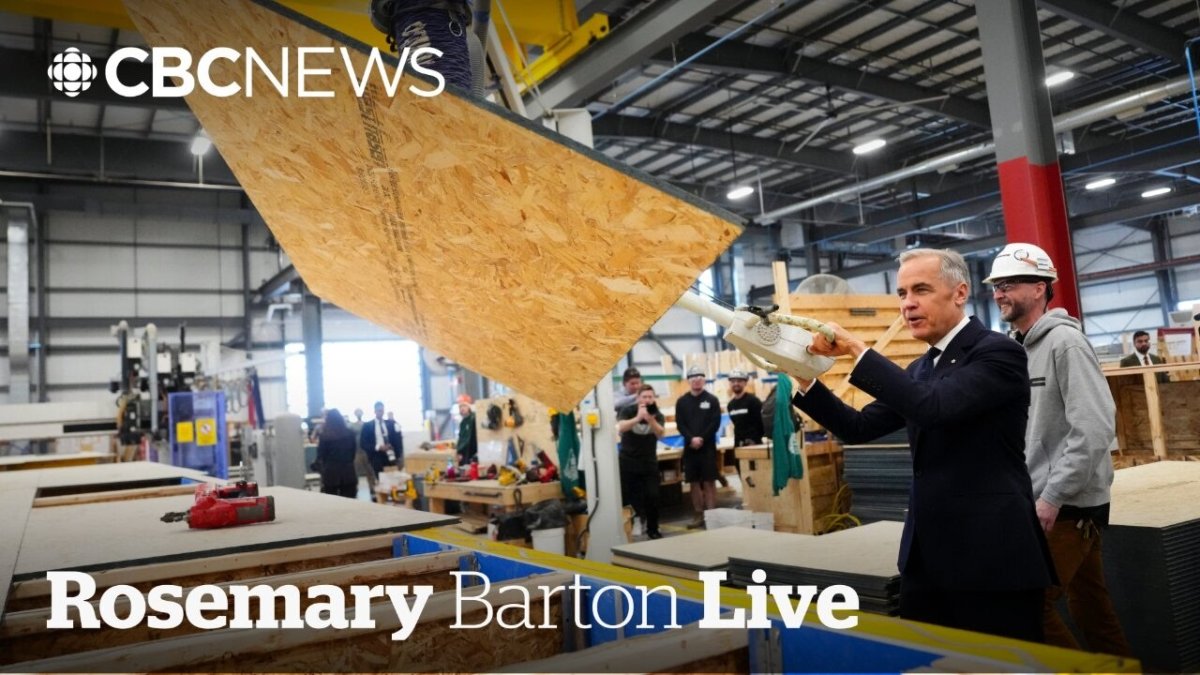
Federal Government Rolls Out Affordability Supports
Parliamentary Secretary to the Minister of Finance Ryan Turnbull appeared in the CBC News segment to outline new federal measures aimed at easing cost-of-living pressures. GST and HST top-up payments began on June 5, 2026, with quarterly amounts increasing by 25 percent starting July 3 under the Canada Groceries and Essentials Benefit. More than 12 million Canadians qualify for the enhanced support, which delivers up to 950 dollars for single individuals and up to 1,890 dollars for families of four this year.
Turnbull stressed that these targeted payments form part of a broader strategy to support households while the economy undergoes structural change. The federal government has simultaneously reduced the rate of growth in its own spending and lowered immigration targets to moderate population increases that have strained infrastructure. These steps are intended to complement the sharp rise in business investment in machinery, equipment, intellectual property and research and development recorded over the past six months.
Despite the immediate relief provided by the GST top-up, the measures are not presented as a permanent fix for grocery inflation. Turnbull indicated that the government continues to monitor Bank of Canada guidance and will adjust fiscal settings as the labour market and trade environment evolve ahead of the CUSMA review deadline on July 1.
Labour Market Shows Unexpected Strength
Canada added 88,000 jobs in May 2026, marking the first significant employment gain since November 2025 and surpassing economist expectations. The strong reading occurred even as gross domestic product figures showed contraction in the preceding two quarters. This divergence underscores the limitations of relying solely on the technical recession definition when assessing labour market health.
The May employment increase provides concrete evidence that businesses are continuing to hire despite volatility in exports and business investment. Senior Deputy Governor Carolyn Rogers of the Bank of Canada told the House of Commons public accounts committee that the economy likely rebounded in April, further complicating any simple recession narrative. The job gains also reflect the federal government's efforts to reduce immigration-driven population growth, which had previously contributed to rapid labour-force expansion.
Labour market resilience matters for Canadian households facing elevated shelter and grocery costs. Continued hiring supports wage growth and consumer spending, which Frances Donald identified as remaining moderately positive at 1.5 percent in the first quarter. The contrast between employment strength and GDP weakness illustrates why multiple indicators are required to judge the true state of the Canadian economy.
Political Opposition Amplifies Recession Claims
Conservative Leader Pierre Poilievre has hammered the Liberal government daily since the GDP release, declaring Canada the only G7 country in recession. The Conservative caucus introduced a House motion that would formally recognise Prime Minister Mark Carney as having caused the downturn. Poilievre has accused the prime minister of remaining in hiding on economic issues while families struggle with affordability.
The political pressure coincides with the approaching July 1 CUSMA review deadline, where unresolved trade issues and tariff disputes between Canada and the United States remain on the table. Negotiators have indicated they will blow past the deadline rather than rush an incomplete agreement. This external uncertainty adds another layer of complexity to the domestic recession debate.
Opposition tactics have centred on the technical definition of two consecutive quarters of contraction, even as other data points such as the May employment gain and rising business investment point to a more nuanced picture. The Conservative motion is expected to trigger extended debate in the House of Commons in the coming weeks, testing the government's ability to maintain focus on long-term structural reforms.
Bank of Canada and Economists Offer Nuanced Views
Bank of Canada Senior Deputy Governor Carolyn Rogers told the House of Commons public accounts committee that two quarters of contraction meet one definition of recession but do not capture the full economic picture. She noted the likelihood of a rebound in April, consistent with the strong May employment report. The central bank continues to monitor both inflation and growth signals as it prepares future interest-rate decisions.
BMO chief economist Douglas Porter stated there is no sugar-coating the sour GDP result yet described the episode as a recession in name only. CIBC economist Avery Shenfeld attributed much of the volatility to harsh winter weather and tariff-induced trade swings rather than fundamental weakness. TD economist Marc Ercolao warned that it would be irresponsible to declare a recession solely on the basis of surging gold imports that distorted the first-quarter figures.
These assessments reinforce Frances Donald's central point that the technical recession label is neither accurate nor helpful for understanding Canada's current trajectory. The combination of job gains, rising capital investment and targeted federal supports suggests the economy is navigating a deliberate transition rather than entering a broad-based downturn. Canadian readers will continue to watch both the labour market and the outcome of CUSMA negotiations for clearer signals of the path ahead.
By Alex Thompson, Staff Writer
This article was produced with AI-assisted research and editorial support. Reporting is based on sources cited in the article.
What's Your Reaction?
 Like
0
Like
0
 Dislike
0
Dislike
0
 Love
0
Love
0
 Funny
0
Funny
0
 Wow
0
Wow
0
 Sad
0
Sad
0
 Angry
0
Angry
0

Canada Correspondent at Global1.News. Based in Toronto, covering Canadian politics, energy, trade, and US-Canada relations. Provides the Canadian perspective on North American and global affairs.













Comments (0)