
B.C. government considering new hydroelectric project as energy demand grows
B.C. government considering new hydroelectric project as energy demand grows The British Columbia government and BC Hydro are advancing planning for additional hydroelectric capacity to address projected electricity demand increases of roughly 20 per cent by 2030 and 50 per cent by 2050. Energy Minister Adrian Dix outlined the approach on Monday, emphasizing the need to build o
B.C. government considering new hydroelectric project as energy demand grows
The British Columbia government and BC Hydro are advancing planning for additional hydroelectric capacity to address projected electricity demand increases of roughly 20 per cent by 2030 and 50 per cent by 2050. Energy Minister Adrian Dix outlined the approach on Monday, emphasizing the need to build on the province’s clean energy resources while supporting economic growth and community expansion.
Two potential sites, Site E on the Peace River and the Homathko system near Bute Inlet, are under consideration alongside upgrades to existing infrastructure and investments in emerging technologies.
Provincial Announcement Details
Energy Minister Adrian Dix presented the updated long-term vision for BC Hydro during a Monday afternoon statement in Victoria. The announcement responds directly to BC Hydro’s load forecasts, which anticipate steady growth driven by population increases, industrial electrification, and broader economic development across the province. Dix framed the initiative as an opportunity to reinforce British Columbia’s position as a clean-energy leader while ensuring the grid remains reliable for households and businesses alike.
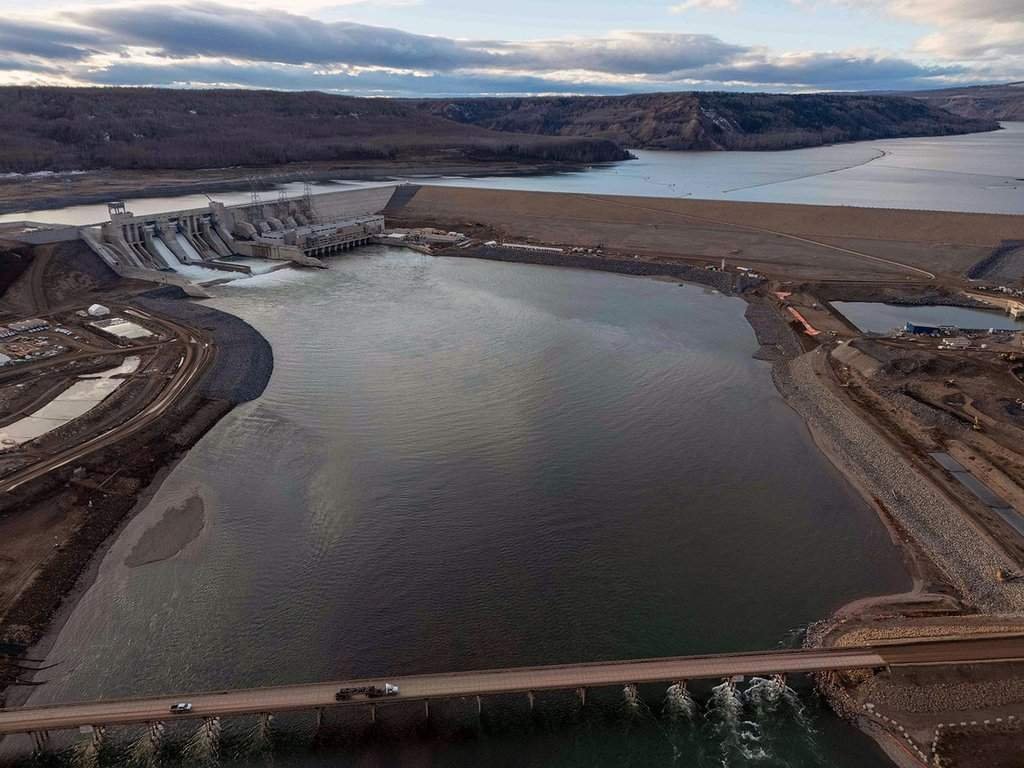
The minister highlighted that rising electricity demand reflects successful provincial strategies to attract investment and expand communities. Rather than reacting to shortages, the government intends to plan proactively through renewed capital investments and operational improvements. This approach builds on the recent completion of the John Horgan Dam, formerly known as Site C, which added substantial baseload capacity to the system.
Officials stressed that the current exercise involves detailed feasibility work rather than immediate construction commitments. BC Hydro will examine how best to integrate new generation with existing assets, including transmission enhancements that could link remote sites to major load centres such as Vancouver Island and the Interior. The announcement aligns with the province’s Industrial Electrification and Clean Energy Strategy, which seeks to reduce emissions while maintaining affordability for ratepayers.
Site E and Homathko: The Proposed Projects
Site E, situated on the Peace River approximately 60 kilometres downstream from the John Horgan Dam, represents one of the two primary options under review. Preliminary estimates suggest the project could deliver up to 750 megawatts of generating capacity and produce around 3,000 gigawatt hours of energy annually. This output would complement the roughly 5,100 gigawatt hours already supplied by the recently completed upstream facility, which itself cost approximately $16 billion and serves roughly 500,000 homes.
The Homathko proposal near Bute Inlet would involve a more complex configuration of up to four dams and three powerhouses. Depending on final design choices, the system could provide between 500 and 900 megawatts of capacity and generate 3,000 to 4,500 gigawatt hours each year. BC Hydro is also assessing the adjacent Southgate river system for an additional 200 megawatts. Transmission studies will evaluate new lines connecting these potential developments to the provincial grid at Williams Lake and Vancouver Island.
Both locations would require extensive environmental assessment and Indigenous consultation before any construction decisions. The scale of these projects echoes earlier hydroelectric developments in the province, yet planners emphasize that modern designs must address contemporary concerns around fish passage, reservoir impacts, and cumulative effects on surrounding ecosystems. No construction timelines have been confirmed at this stage.
Emerging Technologies and Conservation Measures
Alongside new large-scale hydro options, BC Hydro intends to expand its exploration of geothermal, biomass, and utility-scale battery storage technologies. These resources could provide flexible generation and storage capabilities that complement the variability of existing hydroelectric output. Geothermal resources in particular offer potential for consistent baseload power in regions where subsurface heat is accessible, while biomass facilities could utilize sustainable forestry residues.
The utility will also scale up its Power Smart conservation program, which launched in May 2026 with a commitment exceeding $1 billion over three years. The expanded initiative will increase incentives for energy efficiency upgrades in homes, businesses, and industrial facilities. Officials expect these measures to moderate demand growth and defer the need for additional generation in some cases.
System optimization forms another key pillar. BC Hydro plans to modernize aging equipment at existing hydroelectric stations, improve operational efficiency through digital controls, and enhance demand-response programs. These steps aim to extract greater value from the current asset base before committing to major new builds. The combined strategy reflects a balanced approach that pairs supply expansion with demand management.
Broader Canadian Energy and Climate Context
British Columbia’s planning occurs within a national framework of emissions-reduction targets and federal-provincial coordination on clean electricity. The province’s Industrial Electrification and Clean Energy Strategy supports Canada’s broader climate commitments, including contributions to the Pan-Canadian Framework on Clean Growth and Climate Change. Federal funding mechanisms for green infrastructure may influence project economics, although specific cost-sharing arrangements remain under discussion.
Any new hydroelectric development will require meaningful engagement with First Nations whose territories overlap the proposed sites. Past projects, including Site C, demonstrated the importance of early and sustained consultation processes under the United Nations Declaration on the Rights of Indigenous Peoples, which British Columbia has incorporated into provincial law. Land-use planning and revenue-sharing agreements will likely feature prominently in future negotiations.
Interprovincial electricity trade also factors into long-term considerations. Enhanced transmission could allow British Columbia to support neighbouring jurisdictions during peak periods while importing power when advantageous. This regional perspective aligns with federal efforts to strengthen the national electricity grid and reduce reliance on fossil fuels across Western Canada.
Economic and Community Implications
Expanded hydroelectric capacity could support industrial growth in sectors such as mining, hydrogen production, and data centres that require reliable, low-emission power. Proponents argue that secure electricity supplies help maintain British Columbia’s competitive position relative to jurisdictions still dependent on higher-carbon sources. Job creation during construction and ongoing operations would benefit communities near the Peace River and Bute Inlet regions.
At the household level, careful planning is intended to moderate upward pressure on rates. Conservation investments through Power Smart and efficiency upgrades at existing facilities are expected to help offset some capital costs. Nevertheless, the scale of potential new projects raises questions about long-term rate impacts, particularly given the substantial investment required for Site C.
Local governments in the Interior and on Vancouver Island have expressed interest in the transmission components, which could improve reliability for growing populations. Municipal leaders note that predictable electricity costs influence housing affordability and business attraction decisions. The province will need to balance these economic benefits against environmental and social considerations during the upcoming review phases.
What Happens Next
BC Hydro will now undertake detailed feasibility studies for Site E, the Homathko system, and associated transmission corridors. These assessments will examine technical viability, environmental effects, and economic parameters over the coming years. Public consultation processes, including engagement with Indigenous communities, local governments, and stakeholders, are expected to form a central part of the work.
Regulatory reviews under the Environmental Assessment Act and other provincial statutes will determine whether projects proceed to permitting. Federal involvement may arise depending on project scope and potential impacts on fish habitat or navigable waters. No decisions on construction have been made, and timelines remain subject to the outcomes of these studies.
Parallel work on geothermal, biomass, and battery storage pilots will continue, alongside the rollout of the expanded Power Smart program. Progress reports from BC Hydro are anticipated at regular intervals to keep the public informed about findings and next steps. The overall approach reflects a deliberate, multi-year planning horizon rather than an accelerated construction schedule.
Tags: B.C. Hydro, hydroelectric projects, Adrian Dix, Site E, Homathko, clean energy, electricity demand, British Columbia
By Alex Thompson, Staff Writer
This article was produced with AI-assisted research and editorial support. Reporting is based on sources cited in the article.
What's Your Reaction?
 Like
0
Like
0
 Dislike
0
Dislike
0
 Love
0
Love
0
 Funny
0
Funny
0
 Wow
0
Wow
0
 Sad
0
Sad
0
 Angry
0
Angry
0
Canada Correspondent at Global1.News. Based in Toronto, covering Canadian politics, energy, trade, and US-Canada relations. Provides the Canadian perspective on North American and global affairs.














Comments (0)