
Ankara Forum: Türkiye-Central Asia Strategic Partnership
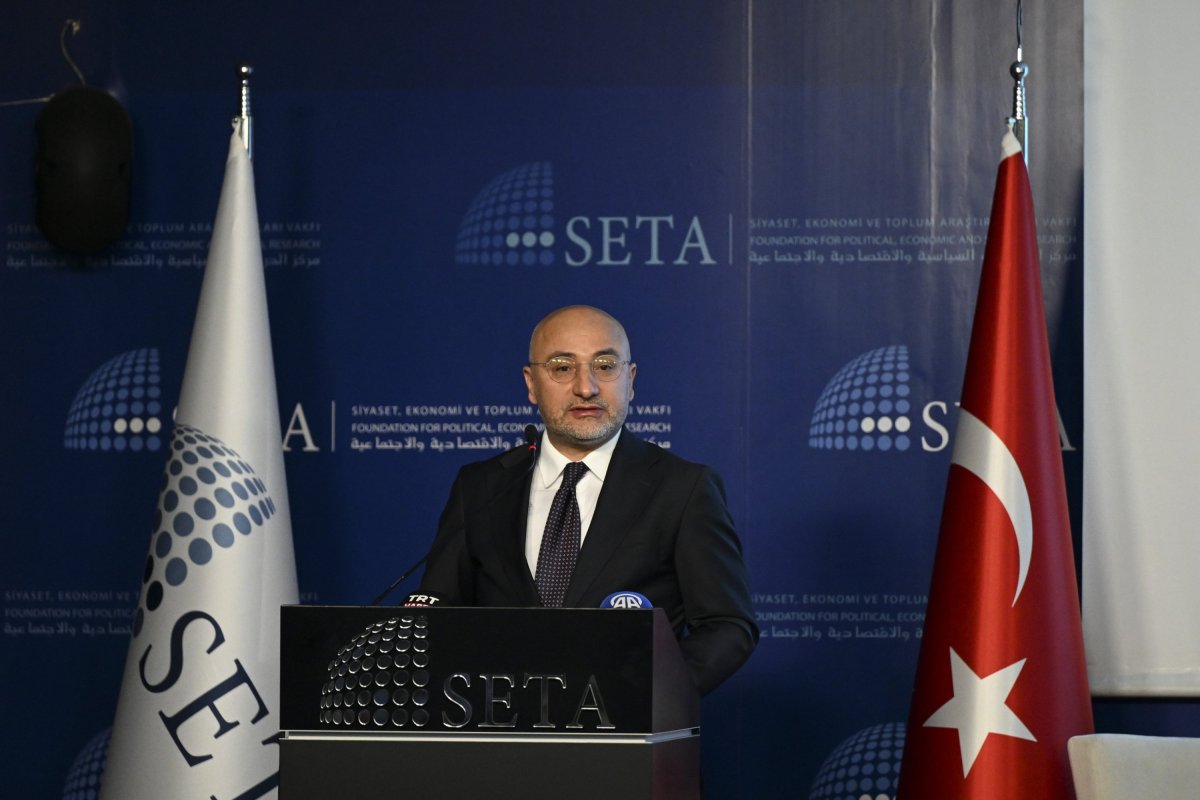
** Ankara Forum Bolsters Türkiye-Central Asia Strategic Partnership ** The Central Asia-Türkiye Forum in Ankara underscores deepening ties in trade, energy, connectivity and technology amid Eurasian geopolitical shifts, with insights from SETA and Uzbek officials on shared heritage and the Middle Corridor. The Central Asia-Türkiye Forum convened in Ankara this week under the th
Historical Foundations of Türkiye-Central Asia Ties
Relations between Türkiye and Central Asia rest on foundations laid immediately after the Central Asian states regained independence in 1991. Turkish diplomacy moved quickly to recognize the new republics and to affirm their sovereignty and territorial integrity, a stance that has remained consistent across successive Turkish governments. This early political support created a reservoir of trust that later initiatives could build upon without the suspicion that often accompanies external engagement in the region.
SETA Foreign Policy Research Director Murat Yeşiltaş underlined that current cooperation is not merely the product of contemporary geopolitical calculations. He stressed that shared history, culture and heritage continue to shape the partnership in ways that purely transactional relationships cannot replicate. These intangible bonds, he argued, provide a durable platform even when economic or security interests fluctuate.
The emphasis on heritage also serves a practical diplomatic function. It allows both sides to frame cooperation as an organic extension of longstanding ties rather than an externally imposed alignment. In an era when great-power competition often casts Central Asia as an arena for zero-sum influence, this narrative of common identity offers a distinct alternative that resonates with local elites seeking balanced partnerships.
Over three decades, this foundation has enabled regular high-level contact and the gradual institutionalization of dialogue. While infrastructure and trade volumes have grown, officials at the forum repeatedly returned to the point that cultural affinity remains the underlying enabler of sustained political will.
Diplomatic Momentum at the Ankara Forum
The Ankara meeting, convened by SETA in cooperation with the International Institute for Central Asia and Hasan Kalyoncu University, provided a structured setting for policymakers and academics to translate political goodwill into operational agendas. SETA Coordinator General Nebi Miş highlighted that strong political will and regular leader-level dialogue have already converted a common identity into tangible political cooperation. This continuity of engagement, he noted, distinguishes the Türkiye-Central Asia relationship from more episodic external involvements.
Miş further argued that partnerships grounded in trust and shared values become a strategic asset precisely when global supply chains, energy routes and transportation networks undergo reconfiguration. In such periods, reliable interlocutors reduce transaction costs and accelerate decision-making. The forum itself was presented as evidence of this advantage, allowing participants to move beyond declaratory statements toward coordinated planning.
Participants stressed that infrastructure projects and increased trade alone cannot sustain long-term cooperation. Miş called for shared analytical work, coordinated regulatory frameworks and joint assessments of global risks. Without these supporting mechanisms, physical connectivity risks remaining underutilized or vulnerable to external disruption.
The presence of both Turkish and Uzbek diplomatic representatives reinforced the message that bilateral channels remain active alongside the multilateral forum format. This combination of formats allows sensitive issues to be addressed at multiple levels while maintaining public momentum.
The Middle Corridor as a Strategic Economic Route
Javlon Vakhabov, director of the International Institute for Central Asia and deputy foreign policy adviser to the Uzbek president, described the Middle Corridor as the backbone of cooperation between Türkiye and Central Asia. The route links Central Asian economies to European and Middle Eastern markets through the Caspian Sea, the South Caucasus and Türkiye, offering an alternative to pathways that traverse Russian or Iranian territory.
Transit times along the Middle Corridor have improved markedly in recent years, although capacity constraints remain. For Central Asian exporters seeking to diversify destinations and reduce exposure to single-route dependencies, the corridor provides both commercial and strategic value. Turkish ports and logistics infrastructure serve as the western terminus, positioning Ankara as a natural hub for east-west flows.
Vakhabov noted that the corridor’s significance extends beyond freight. It facilitates people-to-people contacts, knowledge exchange and the movement of energy resources. As sanctions regimes and regional conflicts periodically close or complicate other routes, the Middle Corridor’s reliability has become a recurring theme in official statements from both Turkish and Central Asian capitals.
Forum participants acknowledged that further investment in ports, rail links and customs harmonization will be required to realize the corridor’s full potential. Yet the political consensus around its importance already represents a shift from earlier periods when connectivity discussions remained largely aspirational.
Energy Security and Türkiye's Role as a Transit Hub
Central Asia possesses substantial hydrocarbon reserves in the Caspian Basin, and Turkmenistan in particular holds large untapped gas resources. Türkiye’s geographic position makes it a logical transit country for these resources to reach European and Mediterranean markets. Officials at the forum framed Ankara’s ambition to become a regional energy hub as complementary to Central Asian diversification strategies.
While no new pipeline announcements emerged from the discussions, participants pointed to ongoing regulatory alignment and technical cooperation as necessary precursors to future infrastructure decisions. Coordinated approaches to certification, pricing mechanisms and environmental standards can shorten the timeline once political and commercial conditions align.
Energy security considerations intersect directly with the Middle Corridor concept. Gas and electricity links that follow similar routes benefit from the same political support and risk-mitigation frameworks. Turkish officials have long argued that diversified supply sources enhance Europe’s resilience; Central Asian producers view Turkish demand and transit infrastructure as a means to monetize reserves without exclusive reliance on northern or southern outlets.
The forum underscored that energy cooperation cannot be isolated from broader connectivity and technology agendas. Joint planning across these domains, participants suggested, increases the likelihood that individual projects will reinforce rather than compete with one another.
Great Power Competition in Central Asia
China’s Belt and Road Initiative, Russia’s Collective Security Treaty Organization and Eurasian Economic Union, and various Western assistance programs all maintain active footprints in Central Asia. Türkiye’s engagement is distinguished by the cultural and historical affinities repeatedly cited by speakers. This differentiation allows Ankara to position itself as a partner that does not require Central Asian states to choose between competing external poles.
Nebi Miş emphasized that trust-based partnerships confer strategic advantage precisely because they reduce the perception of zero-sum competition. When governments perceive a relationship as rooted in shared values rather than temporary tactical alignment, they are more willing to pursue deeper integration in sensitive sectors such as energy and digital infrastructure.
Central Asian states have consistently sought multi-vector foreign policies that preserve autonomy. Türkiye’s profile as a NATO member with independent regional initiatives offers an additional vector that does not automatically trigger balancing responses from Moscow or Beijing. This flexibility has become increasingly valuable as great-power tensions intensify.
Forum discussions suggested that sustained Turkish engagement can also serve as a conduit for Central Asian perspectives within wider Eurasian and Middle Eastern forums. This brokerage function adds diplomatic utility beyond direct bilateral gains.
Türkiye's Multi-Vector Foreign Policy
Türkiye’s outreach to Central Asia forms one pillar of a broader multi-vector approach that extends beyond its NATO and European Union orientations. Officials at the forum presented this engagement as pragmatic rather than ideological, driven by concrete interests in connectivity, energy and technology. The presence of ambassadors from both sides underscored that day-to-day diplomatic work continues to expand even as headline initiatives attract attention.
Uzbek Ambassador Ilham Haydarov noted significant progress in bilateral relations over the past 18 months. Türkiye’s Ambassador to Tashkent Ufuk Ulutaş, speaking virtually, observed that political dialogue and practical cooperation have expanded rapidly in recent years. These assessments reflect incremental but steady institutionalization rather than sudden breakthroughs.
Turkish policymakers have learned to calibrate ambitions to local preferences, avoiding language that could be interpreted as neo-imperial. The emphasis on equal partnership and mutual benefit aligns with Central Asian insistence on sovereignty. This calibrated approach has allowed cooperation to deepen without provoking the balancing behavior that sometimes accompanies more assertive external actors.
The Ankara forum illustrated how this multi-vector posture operates in practice: Turkish representatives engage Central Asian counterparts on terms that acknowledge regional agency while advancing shared functional goals.
Technology and Digital Transformation
Javlon Vakhabov outlined an ambitious forward agenda centered on technology and digital transformation. Priority areas include artificial intelligence, cybersecurity, digital public services, agricultural technologies and water-saving solutions. These domains address both immediate developmental needs and long-term competitiveness in a rapidly digitizing global economy.
Central Asian governments face common challenges in upgrading legacy systems and building domestic capacity. Cooperation with Türkiye offers access to relevant expertise and scalable models without the political conditionalities sometimes attached to Western assistance. Turkish experience in e-government and agricultural modernization provides concrete reference points.
Ambassador Ilham Haydarov and Ambassador Ufuk Ulutaş both highlighted recent bilateral progress as evidence that such cooperation can move from concept to implementation. Regulatory harmonization and joint pilot projects were identified as logical next steps. Cybersecurity cooperation, in particular, carries implications for critical infrastructure protection across the Middle Corridor routes.
Participants acknowledged that technology partnerships also serve a hedging function. By developing indigenous or partner-sourced capabilities, Central Asian states reduce exposure to supply-chain disruptions or technology-access restrictions arising from great-power competition.
Regional Implications for the Middle East
The Ankara forum’s outcomes carry direct relevance for Middle Eastern actors monitoring Eurasian connectivity. Gulf states have shown growing interest in Central Asian energy and agricultural resources; the Middle Corridor offers them an additional route that bypasses traditional chokepoints. Iranian officials, by contrast, may view the corridor’s development as reducing the strategic value of their own transit territory.
Sunni-Shia dynamics intersect with these economic calculations. Türkiye’s cultural and religious affinities with Central Asian populations provide a soft-power advantage that complements its geographic position. This combination can facilitate commercial and security cooperation that Gulf partners may seek to leverage indirectly.
Energy cooperation between Türkiye and Central Asia also intersects with OPEC+ dynamics. Increased gas flows from the Caspian region could influence pricing and diversification strategies for Middle Eastern producers. While the forum did not address OPEC+ explicitly, the broader reconfiguration of Eurasian energy routes forms part of the same strategic landscape.
Israeli interest in Central Asian energy and technology partnerships may similarly be affected. Stable Turkish-Central Asian corridors could create new opportunities for trilateral or multilateral arrangements involving Israeli technical expertise, provided political conditions permit.
Outlook: Institutionalizing the Partnership
Nebi Miş concluded his remarks by stressing that durable cooperation requires more than infrastructure and trade. Shared analyses, coordinated regulatory frameworks and joint assessments of global risks must accompany physical connectivity. Without these institutional layers, partnerships remain vulnerable to shifts in leadership or external pressure.
Forum participants identified several practical steps. Regular working groups on regulatory alignment, joint risk-assessment mechanisms and periodic leader-level reviews could convert the current political consensus into enduring operational habits. Technology cooperation, because it involves sensitive data and standards, particularly benefits from such structured dialogue.
The emphasis on trust-based relationships does not imply immunity from friction. Differing regulatory traditions, varying levels of administrative capacity and occasional commercial disputes will continue to arise. Institutional mechanisms provide channels for managing these issues before they erode political will.
Ultimately, the Ankara forum demonstrated that Türkiye and Central Asia have moved beyond declaratory statements toward a phase of deliberate institutionalization. Success will depend on whether the momentum generated in Ankara translates into sustained follow-up across the identified priority sectors.
The Central Asia-Türkiye Forum captured a relationship maturing at a critical juncture in Eurasian affairs. By combining cultural affinity with pragmatic cooperation in connectivity, energy and technology, the partnership offers Central Asian states an additional vector that enhances rather than constrains their strategic autonomy. Whether this model scales will shape regional dynamics well beyond the immediate participants. By Malik Hassan, Staff WriterThis article was produced with AI-assisted research and editorial support. Reporting is based on sources cited in the article.
What's Your Reaction?
 Like
0
Like
0
 Dislike
0
Dislike
0
 Love
0
Love
0
 Funny
0
Funny
0
 Wow
0
Wow
0
 Sad
0
Sad
0
 Angry
0
Angry
0
Middle East Correspondent at Global1.News. Based in Beirut, covering politics, conflict, energy, and society across the Middle East. Brings context and depth to a region often reduced to headlines.













Comments (0)