
US-Iran Peace Deal Signed: Full 14-Point Plan Revealed
In a recent BBC News report, the full details of the landmark 14-point US-Iran peace agreement were revealed, marking a dramatic turning point in one of the most destructive conflicts of the modern era. US-Iran Peace Deal Signed: Full 14-Point Plan Revealed After G7 Summit Evian-les-Bains, France – 18 June 2026 — The agreement, read verbatim to reporters by senior US officials
In a recent BBC News report, the full details of the landmark 14-point US-Iran peace agreement were revealed, marking a dramatic turning point in one of the most destructive conflicts of the modern era.
US-Iran Peace Deal Signed: Full 14-Point Plan Revealed After G7 Summit
Evian-les-Bains, France – 18 June 2026 — The agreement, read verbatim to reporters by senior US officials during a background briefing, runs to 14 detailed points covering everything from nuclear enrichment to the territorial integrity of Lebanon. But for all its ambition, the document notably leaves key issues unresolved — including Iran's ballistic missile programme, its support for proxy forces across the Middle East, and the final status of Israeli operations in southern Lebanon.
Background to the February 2026 Conflict
The conflict that led to this agreement began on February 28, 2026, when the United States and Israel launched joint strikes on Iranian targets. Over the following months, fighting expanded to multiple fronts, with more than 3,783 people killed in Lebanon alone since March. The US naval blockade of Iranian ports disrupted global shipping and triggered sharp rises in energy prices. President Donald Trump repeatedly warned that continued hostilities risked a worldwide depression, a concern that shaped the urgency of negotiations at the G7 summit in Evian-les-Bains, France. Diplomatic history shows repeated cycles of escalation and tentative de-escalation between Washington and Tehran, often mediated indirectly through European channels or Gulf intermediaries, yet previous frameworks collapsed under mutual distrust. Analysts suggest the latest round of fighting could indicate a structural shift, where energy supply lines became explicit leverage points rather than secondary concerns. The blockade’s effects rippled beyond the region, with analysts noting potential long-term realignments in crude purchasing patterns among Asian importers previously reliant on Iranian volumes. In recent days, observers have highlighted how the absence of direct Russian or Chinese military involvement during the peak phase may have preserved space for later diplomatic engagement, allowing Moscow and Beijing to position themselves as potential stabilizers once hostilities paused. This backdrop of layered economic pressure and selective great-power restraint frames the current memorandum as an attempt to reset incentives without resolving every underlying friction at once.
The Versailles Signing and Key Participants
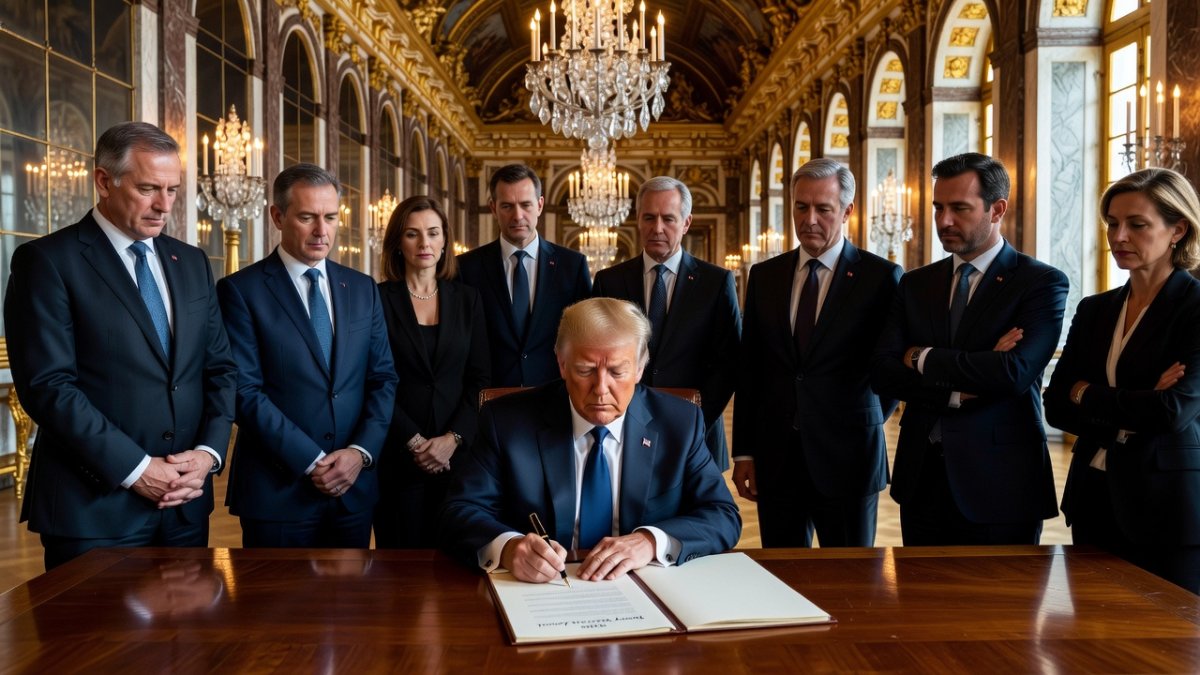
President Trump signed the 14-point Memorandum of Understanding at the Palace of Versailles during a post-G7 dinner. Iranian President Masoud Pezeshkian signed the document from Tehran. Vice President JD Vance is scheduled to complete the US side at a formal ceremony in Geneva on Friday. The agreement is explicitly performance-based, meaning Iran receives benefits only upon verified compliance. Iranian chief negotiator Mohammad Bagher Ghalibaf described the text as a record of US failure, while Trump stated that the alternative would have been economic catastrophe. Structurally, the choice of Versailles for the initial signing carries symbolic weight, evoking earlier moments of post-conflict diplomacy even as the current text avoids comprehensive security guarantees. According to officials familiar with the talks, the performance-based design was intended to address past criticisms that previous accords front-loaded concessions without sufficient verification milestones. Analysts suggest this approach could indicate a pragmatic recognition that full normalization remains distant, with each compliance step unlocking incremental relief rather than a single transformative reset. Russian and Chinese perspectives, voiced through state media in recent days, have framed the signing as evidence that unilateral pressure alone cannot dictate regional outcomes, potentially strengthening their hand in future energy and security discussions. The scheduled Geneva ceremony adds another layer of procedural formality, allowing both sides additional time to align domestic constituencies before further commitments are locked in.
Detailed Provisions of the 14-Point Memorandum
The first point establishes an immediate and permanent end to military operations on all fronts, including Lebanon. The second commits both parties to respect sovereignty and refrain from interference in internal affairs. Subsequent points address the lifting of the US naval blockade, reopening of the Strait of Hormuz toll-free for 60 days, and waivers for Iranian crude oil exports. Iran agrees never to develop nuclear weapons, with its 440-kilogram stockpile of highly enriched uranium to be down-blended under IAEA supervision. A $300 billion reconstruction fund will be financed by Gulf partners rather than the United States. Washington will also unfreeze Iranian assets held abroad. The memorandum sets a 60-day timeline, extendable by mutual consent, for a final comprehensive peace deal. Notably absent are any references to Iran’s ballistic missile program or its support for proxy groups such as Hezbollah and the Houthis. Interpreted structurally, the memorandum prioritizes verifiable nuclear and maritime steps while deferring harder political questions, creating a sequenced pathway that could reduce immediate economic friction without requiring simultaneous resolution of every regional dispute. Analysts suggest the emphasis on Gulf financing for reconstruction may reflect an effort to distribute financial risk while tying regional actors more closely to implementation outcomes. The 60-day window for a follow-on agreement introduces a clear but flexible deadline that could encourage continued engagement or, conversely, expose remaining gaps if milestones slip. Energy market participants are watching the blockade-lifting provisions particularly closely, as any sustained reopening of Hormuz would alter global supply dynamics in ways that extend well beyond bilateral US-Iran relations.
Regional Reactions from Israel, Gulf States, and Hezbollah
Israeli officials expressed sharp outrage, according to Bloomberg reporting, with domestic backlash mounting against Prime Minister Benjamin Netanyahu. Trump publicly warned Israel that continued operations in Lebanon would violate the understanding, stating that Israeli forces could do better. Hezbollah chief Naim Qassem called the agreement a great victory for his movement. Gulf states, expected to fund the reconstruction package, have remained cautious, with analysts noting their long-standing concerns over Iranian regional influence. The European Union has welcomed the de-escalation but stressed the need for verification mechanisms on nuclear commitments. Analysts suggest the muted Gulf response could indicate a preference for calibrated engagement over outright confrontation, especially given the reconstruction fund’s reliance on their capital contributions. Israeli domestic criticism has centered on the perceived lack of explicit constraints on Iranian proxies, raising questions about how the memorandum will interact with ongoing operations in southern Lebanon. Hezbollah’s public framing of the text as a victory may serve internal mobilization purposes while leaving room for future flexibility if implementation proceeds. European statements have consistently paired support for de-escalation with calls for robust IAEA access, reflecting a broader institutional emphasis on verification that could shape the 60-day follow-on negotiations. These varied reactions underscore the memorandum’s selective scope, which addresses certain flashpoints while leaving others open to continued contestation.
Russian and Chinese Perspectives on Gulf Stability
Russia maintained diplomatic channels with Tehran throughout the conflict and views itself as a potential mediator in any long-term security framework. Chinese energy companies, previously major buyers of Iranian crude, are positioned to resume imports quickly once the Strait reopens. Both Moscow and Beijing have noted that the agreement leaves Iran’s proxy networks in Syria and Iraq unaddressed, potentially preserving sources of future instability. Kremlin analysts have highlighted how energy politics in the Persian Gulf directly affect Russian leverage in global markets. Analysts suggest Moscow’s continued outreach could indicate an interest in positioning itself as an indispensable interlocutor should implementation encounter obstacles. Chinese commentary has focused more on the commercial opportunities created by resumed crude flows, with state-linked firms already signaling readiness to re-engage once waivers take effect. The absence of missile and proxy provisions has drawn quiet commentary in both capitals, where analysts note that unresolved regional influence questions could complicate any broader Gulf security architecture. Energy market implications extend to Russian export strategies, as shifts in Iranian supply volumes could alter price expectations and bargaining positions in European and Asian markets. These perspectives frame the memorandum less as a conclusive settlement and more as one phase in an ongoing multipolar competition over Gulf resources and influence.
Economic and Energy Market Implications
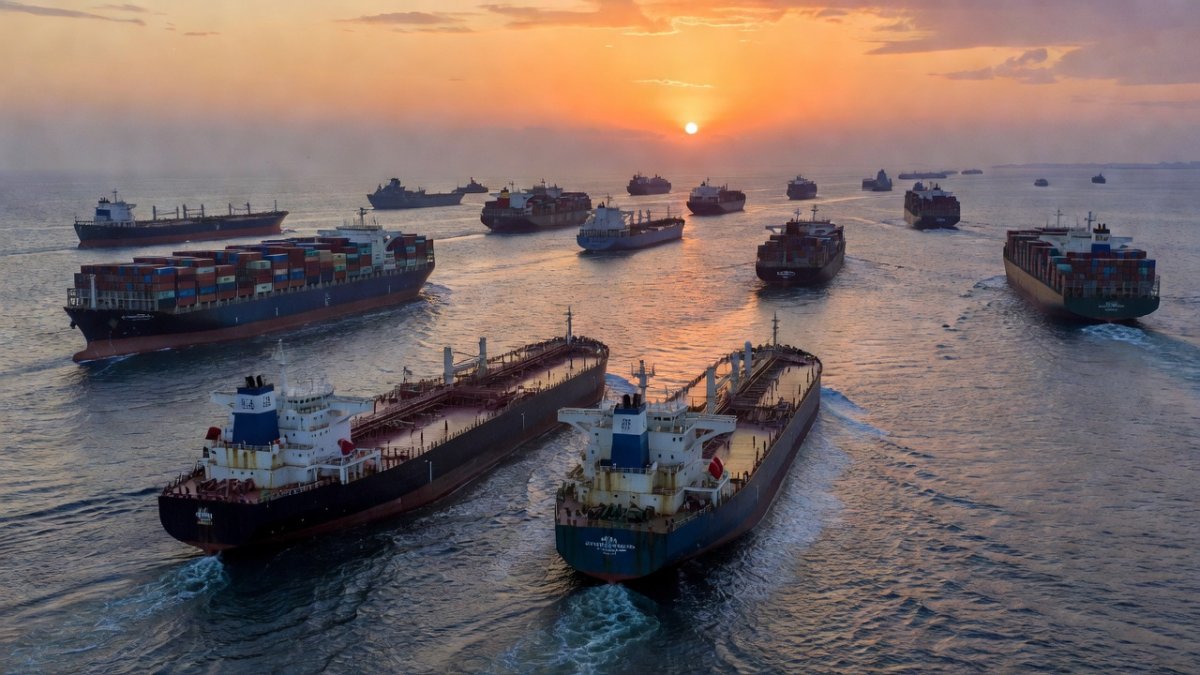
The reopening of the Strait of Hormuz and removal of impediments at Iranian ports will allow approximately 600 stranded vessels to resume transit. US waivers on Iranian crude exports are expected to ease pressure on global oil supplies within weeks. The performance-based structure ties each benefit to compliance milestones, creating incentives for Tehran to meet nuclear and cessation obligations. However, the absence of missile and proxy provisions leaves significant uncertainties for energy security in the region. Analysts suggest the phased release of Iranian volumes could moderate price volatility in the near term while introducing new variables for OPEC+ coordination. Gulf partners financing the reconstruction fund may seek assurances that their contributions will not indirectly subsidize activities they view as destabilizing, potentially linking financial disbursements to parallel political understandings. Energy traders are monitoring the 60-day timeline closely, as any extension or breakdown could reintroduce risk premiums that have eased since the memorandum was announced. The structural decision to separate nuclear and maritime issues from ballistic and proxy questions may allow faster supply-side relief but leaves longer-term market confidence dependent on subsequent negotiations. Russian and Chinese perspectives add another dimension, with both powers positioned to benefit from stabilized flows yet wary of arrangements that could marginalize their own regional roles.
Challenges in Implementation and the 60-Day Timeline
Trump cautioned that any Iranian non-compliance would prompt a return to military action, warning that the United States would go right back to dropping bombs. The 60-day period for a final deal begins immediately and requires mutual consent for extension. Iranian dissident groups have already voiced alarm over provisions that end US rhetorical support for internal protests. Verification of the uranium down-blending and reconstruction fund contributions will test the agreement’s durability. Perspectives from EU capitals emphasize the importance of IAEA access, while Gulf partners weigh their financial commitments against lingering security concerns. Analysts suggest the performance-based design could create early momentum if initial milestones are met, yet the same structure risks rapid reversal if verification disputes arise. The exclusion of missile and proxy issues means that even successful nuclear and maritime implementation may not eliminate all sources of regional tension, leaving open the possibility of renewed friction within the 60-day window. Diplomatic history indicates that similar sequenced agreements have sometimes generated follow-on talks and sometimes stalled when core political differences resurfaced. Energy market participants will track compliance signals closely, as any perceived slippage could reintroduce volatility that the memorandum has temporarily eased. These implementation challenges highlight the memorandum’s character as a partial but consequential step rather than a definitive resolution.
By Irina Volkov, Staff Writer
This article was produced with AI-assisted research and editorial support. Reporting is based on sources cited in the article.
What's Your Reaction?
 Like
0
Like
0
 Dislike
0
Dislike
0
 Love
0
Love
0
 Funny
0
Funny
0
 Wow
0
Wow
0
 Sad
0
Sad
0
 Angry
0
Angry
0
Russia/Eastern Europe Correspondent at Global1.News. Covering Russian politics, energy, security, and the shifting dynamics of the post-Soviet space. Provides clear-eyed analysis on one of the world's most opaque regions.













Comments (0)