
100 Ordained for Princess Bajrakitiyabha as Thailand Mourns
In recent days, the Thai government sponsored the ordination of 100 mourners at Wat Rajabopit in Bangkok to honor the memory of Princess Bajrakitiyabha, the eldest child of King Maha Vajiralongkorn and Princess Soamsawali. The ceremony took place on Sunday amid a national 15-day mourning period that began on Friday following the princess's passing on Thursday night. This act of
In recent days, the Thai government sponsored the ordination of 100 mourners at Wat Rajabopit in Bangkok to honor the memory of Princess Bajrakitiyabha, the eldest child of King Maha Vajiralongkorn and Princess Soamsawali. The ceremony took place on Sunday amid a national 15-day mourning period that began on Friday following the princess's passing on Thursday night. This act of merit-making reflects deep-rooted Thai Buddhist traditions of remembrance and community support during times of loss.
The Government-Sponsored Ordination at Wat Rajabopit
On Sunday, the Thai government sponsored the ordination of 100 people at Wat Rajabopit in Bangkok to honor Princess Bajrakitiyabha. PM's Office permanent secretary Yupha Taweewattanakitborvon oversaw the ceremony with senior monks from the temple leading the rituals. The new monks will study dharma at Wat Rajabopit before continuing at the Meditation Studies Institute of the Supreme Patriarch in Lam Luk Ka, Pathum Thani.
The programme remains open until June 29 at Wat Bovoranives Vihara, Wat Rajapradit, Wat Debsirin, and Wat Buranasiri Mattayaram across Bangkok. These temples have long served as centers for temporary ordinations in Thai Buddhist practice. Local communities in the capital have joined the efforts to support the mourners through this period of reflection.
Participants from various provinces have traveled to these sites to take part in the ordinations. The initiative highlights the government's role in facilitating collective merit-making for the royal family. Such events strengthen bonds between state institutions and Buddhist communities throughout Thailand.
Princess Bajrakitiyabha: Thailand's Lawyer Princess
Princess Bajrakitiyabha earned recognition as Thailand's Lawyer Princess through her graduation from Cornell Law School and her subsequent work on judicial reform. She published scholarly articles that addressed improvements in Thailand's legal system and advocated for greater access to justice in rural areas. Her efforts connected legal scholarship with practical support for communities in regions such as Isaan.
She founded the Women and Men Progressive Movement Foundation to promote gender equality and social progress across Thai society. The foundation has supported programs in education and community development that align with Buddhist values of compassion. Her work continues to inspire local organizations in provinces like Chiang Mai and Phuket.
As a published legal scholar, Princess Bajrakitiyabha focused on reforms that would benefit ordinary citizens in their daily interactions with the courts. Her background in law shaped initiatives that addressed both urban and rural challenges in Thailand. These contributions remain part of ongoing discussions in Thai legal circles this week.
Royal Funeral Rites at the Grand Palace
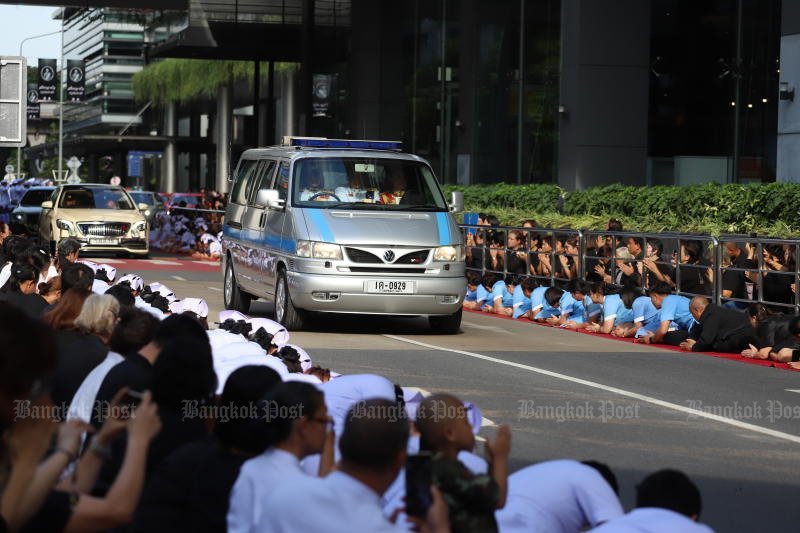
The Royal Household Bureau announced the princess's passing on Friday morning, after which her body was moved to the Grand Palace on Saturday. King Maha Vajiralongkorn led the initial funeral rites at the palace in accordance with royal traditions. These ceremonies drew thousands of mourners who have been queueing respectfully outside the palace grounds in recent days.
Palace protocols have guided the careful arrangement of the funeral proceedings with attention to Buddhist customs. Officials from the Bureau have coordinated with temple authorities to ensure smooth conduct of the rites. The presence of the King at the early stages underscores the personal nature of the national loss.
Visitors from across Thailand have gathered at the Grand Palace to pay their respects during the mourning period. The site serves as a focal point for collective remembrance in the heart of Bangkok. Such gatherings reflect the deep cultural ties between the monarchy and the Thai people.
National Mourning Across Thailand
The country is observing a 15-day mourning period that began on Friday, with flags at half-mast at government offices nationwide. The PM's Office has issued guidelines for public observances that include subdued events and respectful attire in workplaces. These measures extend to communities in Chiang Mai, Phuket, and the Isaan region where local temples have held additional prayer sessions.
Residents in rural areas have adapted the mourning practices to their local Buddhist traditions while honoring the central directives. Schools and markets in these provinces have adjusted schedules to allow time for reflection. The uniform observance strengthens a sense of shared national identity during this time.
Government offices in Bangkok have set examples by lowering flags and limiting public celebrations. Similar actions in southern and northern provinces demonstrate the reach of these protocols. Community leaders have encouraged quiet acts of merit-making to support the mourning process.
The Meaning of Buddhist Ordination in Times of Loss
Ordination represents the highest form of merit-making in Theravada Buddhism, a tradition deeply embedded in Thai culture. Temporary ordination allows laypeople to participate in monastic life for a period, offering spiritual support to the deceased and their families. The number 100 holds special symbolism of completeness in Thai Buddhist practices.
The Supreme Patriarch oversees meditation programs that guide the newly ordained monks in their studies. This structure connects the ordination events to broader networks of temples across the country. Participants often return to their home communities with renewed perspectives on compassion and impermanence.
In times of loss, such ordinations provide a structured way for families and communities to channel grief into positive action. Thai Buddhists view these acts as bridges between the living and the departed. The current ceremonies at multiple temples illustrate this enduring cultural response.
Her Diplomatic Legacy and ASEAN Impact
Princess Bajrakitiyabha served as Ambassador to Austria and Permanent Representative to the UN Office at Vienna, where she advanced Thailand's positions on international issues. She collaborated with the UNODC on programs addressing transnational crime and drug control that benefited ASEAN member states. Her diplomatic efforts strengthened Thailand's voice in regional cooperation forums.
Through her UN work, she promoted initiatives that supported cross-border efforts against illegal activities affecting communities in Southeast Asia. These programs have influenced policies in neighboring countries and fostered dialogue among ASEAN leaders. Her contributions continue to shape Thailand's engagement with international organizations.
Local Thai communities have taken pride in her role as a bridge between national interests and global concerns. Her legacy includes support for legal frameworks that protect vulnerable populations across the region. Discussions in diplomatic circles this week often reference her steady influence on these matters.
What to Watch For
Additional ordinations will continue through June 29 at the designated temples in Bangkok, allowing more mourners to participate in the merit-making process. Next phases of the funeral rites at the Grand Palace will include public viewing schedules that accommodate visitors from across the country. Regional implications may involve similar ceremonies in provincial temples as communities seek ways to honor the princess.
Officials from the PM's Office have indicated that guidelines for the mourning period will remain in place to ensure respectful observances. Public interest in the meditation programs at the institute in Pathum Thani may grow as more people learn about the new monks' training. These developments connect the capital's events with broader national participation.
Observers note that the combination of royal rites and government-sponsored ordinations highlights Thailand's integrated approach to loss and remembrance. Upcoming activities will likely draw continued attention from both urban and rural populations. The focus remains on supporting families and communities through these structured traditions.
Thai culture has long emphasized remembrance through acts of merit and community gatherings that bring people together in times of sorrow. The ordination of 100 mourners and the ongoing funeral rites at the Grand Palace illustrate how Buddhism and royal traditions provide comfort and unity across the nation. Local communities from Bangkok to the provinces continue to offer quiet support as the mourning period unfolds.
By Ann Srisawat, Staff Writer
This article was produced with AI-assisted research and editorial support. Reporting is based on sources cited in the article.
What's Your Reaction?
 Like
0
Like
0
 Dislike
0
Dislike
0
 Love
0
Love
0
 Funny
0
Funny
0
 Wow
0
Wow
0
 Sad
0
Sad
0
 Angry
0
Angry
0

Southeast Asia Correspondent at Global1.News. Based in Bangkok, covering Thai and Southeast Asian politics, economy, technology, and culture. Deep regional perspective on one of the world's most dynamic regions.













Comments (0)