
Yuan Pricing Shifts in Iron Ore Contracts Signal New Pressures for Korean Resource Security
Yuan Pricing Shifts in Iron Ore Contracts Signal New Pressures for Korean Resource Security The BHP-CMRG Settlement and Benchmark Realignment In April, BHP concluded a seven-month standoff with China Mineral Resources Group, the state-backed purchaser that coordinates iron ore acquisitions for Chinese steel producers. The resolution required BHP to revise the pricing formula fo
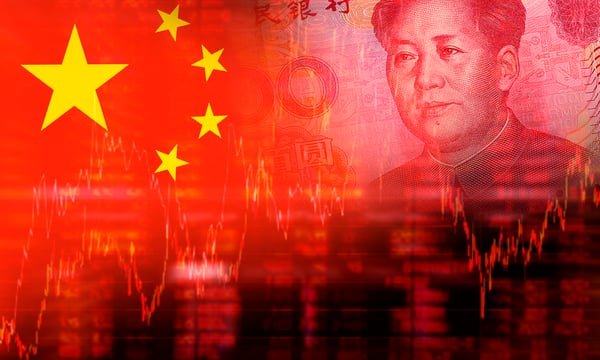
The BHP-CMRG Settlement and Benchmark Realignment
In April, BHP concluded a seven-month standoff with China Mineral Resources Group, the state-backed purchaser that coordinates iron ore acquisitions for Chinese steel producers. The resolution required BHP to revise the pricing formula for Jimblebar fines, which represent approximately one-quarter of its Pilbara output. Under the new structure, a yuan-denominated Chinese port index anchors 51 percent of the formula, displacing the prior S&P Global Platts benchmark entirely.
This arrangement marks the first instance in which a major iron ore producer has permitted a yuan-denominated Chinese index to determine the majority weight in a long-term pricing formula. Earlier experiments with yuan settlement for individual cargoes, dating back to 2017, left dollar-based indexes intact and therefore preserved the underlying pricing architecture.
From Settlement Metrics to Embedded Pricing Formulas
Analyses of yuan internationalization often emphasize payment shares recorded through SWIFT, which have remained near 3 percent in recent periods. Settlement volumes, however, remain reversible and therefore offer limited insight into structural change. Pricing formulas embedded in multi-year contracts, hedging arrangements, and corporate accounting systems prove more durable once adopted.
China Mineral Resources Group, established in 2022, consolidates purchasing power derived from China's position as the destination for roughly three-quarters of seaborne iron ore. The entity has applied this leverage to shift contract terms, as evidenced by earlier adjustments by Rio Tinto and Fortescue that replaced Platts references with Argus and Mysteel indexes in December. BHP's concession extends the precedent by incorporating a yuan port index at majority weight.
Exposure for Korean Steelmakers POSCO and Hyundai Steel
Korean steel producers import the bulk of their iron ore requirements, with China serving as both a major customer for finished steel and a pivotal node in regional supply chains. POSCO and Hyundai Steel therefore face direct transmission of any shift in benchmark currency denomination. When a yuan-linked index governs a substantial portion of the pricing formula, fluctuations in the yuan exchange rate against the won introduce an additional layer of cost variability that dollar benchmarks previously insulated.
Because Korean mills settle most raw-material purchases in dollars, the new formula creates a mismatch between revenue currencies and input costs. This mismatch can compress margins during periods of yuan appreciation or force more frequent hedging operations. KIEP assessments of commodity price transmission have long highlighted Korea's structural vulnerability arising from heavy dependence on imported bulk materials, a pattern that the BHP-CMRG formula change now amplifies.
Korea's Import Dependence and Trade Asymmetries with China
Korea maintains one of the highest ratios of raw-material import dependence among OECD economies. Iron ore, coking coal, and other base metals arrive predominantly via seaborne routes priced against established dollar indexes. The emergence of yuan-anchored formulas alters the risk profile of these flows without immediately displacing dollar settlement rails.
China's share of Korean steel exports remains substantial, creating a dual exposure: Korean mills sell finished products into the same market that now exerts greater influence over input pricing. Historical precedents, including earlier episodes of Chinese export restrictions on rare earths, illustrate how concentrated demand can translate into bargaining leverage. The current iron-ore adjustment follows the same logic, though applied to a commodity where physical delivery occurs at Chinese ports and observable transaction data support local indexes.
Policy Implications for the Bank of Korea and Ministry of Economy and Finance
Officials at the Bank of Korea and the Ministry of Economy and Finance monitor commodity currency risks as part of broader external-sector surveillance. A sustained shift toward yuan-linked pricing would require updated stress-testing of corporate balance sheets and potentially revised foreign-exchange reserve management strategies. KIEP policy briefs have previously recommended diversification of import sources and expansion of long-term supply contracts denominated in multiple currencies to mitigate single-benchmark dependence.
Seoul's response is likely to emphasize hedging instrument availability and bilateral financial cooperation rather than direct confrontation over pricing formulas. The Ministry of Economy and Finance has supported development of won-yuan swap lines and offshore yuan liquidity facilities that could, in principle, accommodate greater yuan revenue exposure for Korean importers. Whether these facilities scale sufficiently to match the depth of dollar derivatives markets remains an open operational question.
Prospects for Extension to Other Commodities and Korean Strategic Options
The iron-ore case benefits from concentrated Chinese demand, physical delivery into monitored ports, and credible local indexes. Oil, LNG, and many base metals exhibit more diversified buyer bases and entrenched dollar benchmarks, limiting immediate replication. Nevertheless, Chinese scholars such as Zhang Ming have advocated bloc negotiations across bulk commodities to normalize yuan pricing terms.
For Korean policymakers, the relevant metric is therefore not aggregate settlement statistics but the appearance of yuan-linked clauses in copper, soybean, or LNG contracts relevant to Korean industry. Should such clauses proliferate, the Bank of Korea may accelerate development of corresponding hedging markets and the Ministry of Economy and Finance may revisit trade-finance support programs. These adjustments would aim to preserve competitiveness for POSCO and Hyundai Steel while managing the wider implications of evolving commodity pricing architecture for Korea's resource security.
By Prof. David Park, Staff Writer
This article was produced with AI-assisted research and editorial support. Reporting is based on sources cited in the article.
What's Your Reaction?
 Like
0
Like
0
 Dislike
0
Dislike
0
 Love
0
Love
0
 Funny
0
Funny
0
 Wow
0
Wow
0
 Sad
0
Sad
0
 Angry
0
Angry
0

East Asia/Technology Correspondent at Global1.News. Seoul-based voice covering Korean politics, technology, business, and culture. Analyzes how technology and geopolitics intersect across East Asia.













Comments (0)