
The Yazidi Doctor Who Restored Lives After Islamic State Captivity
The Kidnapping in Sinjar on 3 August 2014 Shireen was at home in Sinjar preparing for a high school examination when Islamic State militants entered her house and took her away. This event occurred on 3 August 2014, marking the beginning of a prolonged period of captivity for the 19-year-old Yazidi woman. The sudden disruption of her studies reflected the broader interruption o
The Kidnapping in Sinjar on 3 August 2014
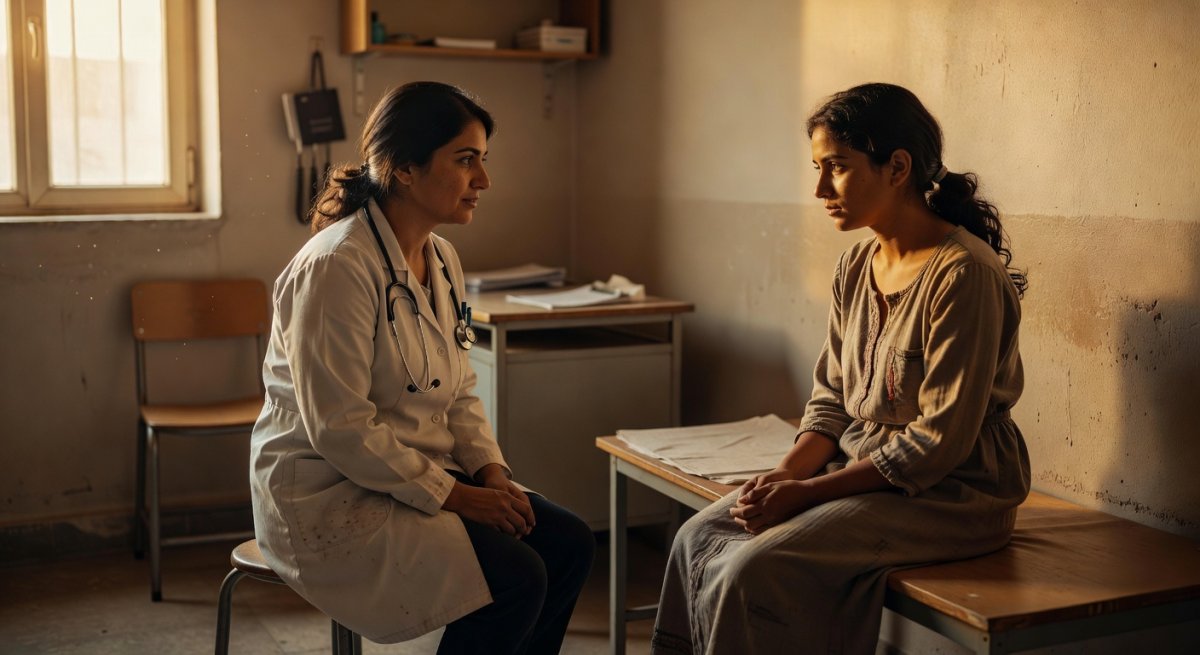
Shireen was at home in Sinjar preparing for a high school examination when Islamic State militants entered her house and took her away. This event occurred on 3 August 2014, marking the beginning of a prolonged period of captivity for the 19-year-old Yazidi woman. The sudden disruption of her studies reflected the broader interruption of daily life for many in the region during the militant advance.
The seizure of individuals like Shireen formed part of a systematic pattern that affected thousands of Yazidi families. Her experience began with forced removal from her home environment, separating her from familiar surroundings and support networks. Such actions aligned with the documented scale of abductions reported during that period in northern Iraq.
Context from the events shows how the attack on Sinjar targeted civilian populations, leading to immediate displacement and loss. Shireen's case illustrates the personal dimension of these larger movements, where young women faced particular vulnerabilities in the initial hours of the assault.
The Ordeal of Captivity and Repeated Sales
Following her abduction, Shireen was sold as a sex slave to an Islamic State militant in Tal Afar. Three months later, she was transferred again to another fighter named Abu Omar in Mosul. During this time, she was confined to the house and required to perform domestic tasks such as cooking and cleaning while enduring frequent sexual violence.
Shireen later described the contradiction in the militant’s statements, noting that expressions of affection did not align with the reality of repeated rape. This period lasted more than two years, during which she had no freedom of movement and lived under constant control. The psychological impact included the destruction of her previous sense of normalcy and future prospects.
Her account highlights the layered forms of exploitation faced by Yazidi women held by the group. The repeated sales between different locations in Iraq demonstrated the organized nature of the trafficking system that operated across captured territories.
Release During the Mosul Campaign and Lasting Losses
In 2016, Iraqi forces liberated Shireen as part of operations to retake Mosul from Islamic State control. Upon release, she confronted severe mental health difficulties, including depression and recurring nightmares. These symptoms persisted alongside the knowledge that her uncle and friends had been killed during the conflict.
Additional family members remained unaccounted for, with her father and sister missing since the original events of 2014. The combination of physical freedom and unresolved losses created ongoing challenges for survivors returning from captivity. Shireen’s situation reflected the incomplete nature of liberation for many who had endured similar ordeals.
The timing of her release coincided with wider military efforts in the region, yet individual recovery required separate attention beyond the battlefield gains. The absence of immediate family support compounded the difficulties of reintegration into civilian life.
Dr. Nagham Nawzat’s Medical and Emotional Support
After her release, Shireen sought care from Dr. Nagham Nawzat, a Yazidi gynaecologist based in Duhok. The doctor provided both a physical examination and emotional support during the initial visits. Shireen credited this assistance with enabling her continued presence and recovery, stating that without it she would not be here today.
Dr. Nawzat extended similar care to numerous other survivors, establishing herself as a consistent point of contact for women returning from Islamic State captivity. Her approach involved listening to their expressed fears while conducting necessary medical checks. This combination addressed both the physical consequences and the immediate psychological needs of those who had been held.
At age 42, Dr. Nawzat had already assisted an estimated 1,200 Yazidi women through her work. Her background as a graduate of Mosul’s Medical College in 2002 informed her capacity to respond to the specific health requirements arising from gender-based violence in conflict settings.
The Scale of Yazidi Abductions and UN Genocide Recognition
By July 2018, Hussein al-Qaidi, director of Kidnapped Affairs at the KRG in Duhok, reported that 2,023 Yazidi women had been liberated from Islamic State territories. This figure represented only those who had returned, against a backdrop where at least 12,000 Yazidis overall were killed or kidnapped during the 2014 seizures of territory.
The United Nations has characterized these actions as an ongoing genocide. Islamic State forces captured almost a third of Iraq that year, placing Yazidi communities under direct threat across multiple locations. The resulting displacement and loss affected entire family structures and community networks.
Dr. Nawzat’s direct involvement with roughly 1,200 survivors positioned her at the center of efforts to address the aftermath for a significant portion of those liberated. The numbers underscore the concentrated demand for specialized services in the Duhok area following the peak of abductions.
The International Women of Courage Award in 2016
In March 2016, Dr. Nagham Nawzat received the International Women of Courage Award presented by US Secretary of State John Kerry. The recognition highlighted her contributions to supporting Yazidi survivors and addressing gender-based violence in the post-conflict environment.
This award came at a time when the full extent of the abductions was becoming clearer through returning accounts. It drew attention to the medical and psychosocial work occurring at facilities in northern Iraq amid ongoing regional instability.
Dr. Nawzat’s selection reflected the international acknowledgment of local practitioners who continued providing care despite the scale of the crisis. Her receipt of the award connected individual clinical efforts to broader discussions on accountability for violence against women in conflict zones.
The Duhok Survivors’ Centre and UNFPA Funding
Dr. Nawzat joined the Duhok Survivors’ Centre in 2015, a facility funded by UNFPA that stands as the only specialized center in Iraq focused on gender-based violence. The centre provided a dedicated space for examinations and support tailored to the needs of women who had survived captivity.
Its establishment addressed a gap in services for survivors returning to the Kurdistan Region of Iraq. The centre’s role extended beyond immediate medical intervention to include sustained engagement with those experiencing the long-term effects of their experiences.
By concentrating resources in Duhok, the facility enabled consistent follow-up for women like Shireen who arrived seeking both physical and emotional assistance. The UNFPA support facilitated operations in an area receiving a high volume of liberated individuals.
Post-Traumatic Medical Approach and Ongoing Recovery
Dr. Nawzat applies a post-traumatic medical approach that combines physical check-ups with attentive listening to survivors’ accounts of their fears. She positions herself as a supportive figure, offering guidance similar to that of a trusted family member in whom survivors can confide.
This method acknowledges the interconnected nature of physical and psychological recovery for women who endured extended periods of captivity and violence. The approach has proven relevant for the estimated 1,200 individuals she has assisted, many of whom arrived with complex health and emotional needs.
Through consistent application of these practices at the Duhok Survivors’ Centre, Dr. Nawzat has contributed to the gradual rebuilding of lives disrupted since 2014. Her work continues to serve as a reference point for addressing the human consequences of the documented genocide against the Yazidi people.
By Fatima Al-Rashid, Staff WriterThis article was produced with AI-assisted research and editorial support. Reporting is based on sources cited in the article.
What's Your Reaction?
 Like
0
Like
0
 Dislike
0
Dislike
0
 Love
0
Love
0
 Funny
0
Funny
0
 Wow
0
Wow
0
 Sad
0
Sad
0
 Angry
0
Angry
0
Gulf/MENA Correspondent at Global1.News. Based in Doha, covering Gulf politics, energy markets, diplomacy, and development across the Middle East and North Africa. Tracks the economic transformation of the Gulf states.











Comments (0)