
Visayas Grid Challenges Test the Spirit of Filipino Communities
Warnings from Energy Officials Highlight Prolonged Supply Strains Energy Secretary Sharon Garin shared during a Department of Energy press briefing on June 1 that the Visayas grid may face supply problems for the next one to two years. New power plants and transmission facilities are struggling to keep pace with rising demand across the region. This assessment places the Visaya
Warnings from Energy Officials Highlight Prolonged Supply Strains
Energy Secretary Sharon Garin shared during a Department of Energy press briefing on June 1 that the Visayas grid may face supply problems for the next one to two years. New power plants and transmission facilities are struggling to keep pace with rising demand across the region. This assessment places the Visayas as the main concern among the three major grids, according to Energy Undersecretary Mario Marasigan.
Peak demand in the Visayas can exceed 2,700 megawatts, yet available supply has dipped as low as 2,044 megawatts during critical periods. Between May 12 and June 1 alone, the grid recorded 17 yellow alerts and four red alerts. These figures reflect real pressures felt by families and local government units from Cebu to Iloilo and beyond.
Secretary Garin pointed to the difficulty of synchronizing power plant completions with transmission upgrades. Some facilities require three to five years to build, leaving gaps that temporary measures must fill in the meantime.
Daily Life Disrupted in Visayas Households
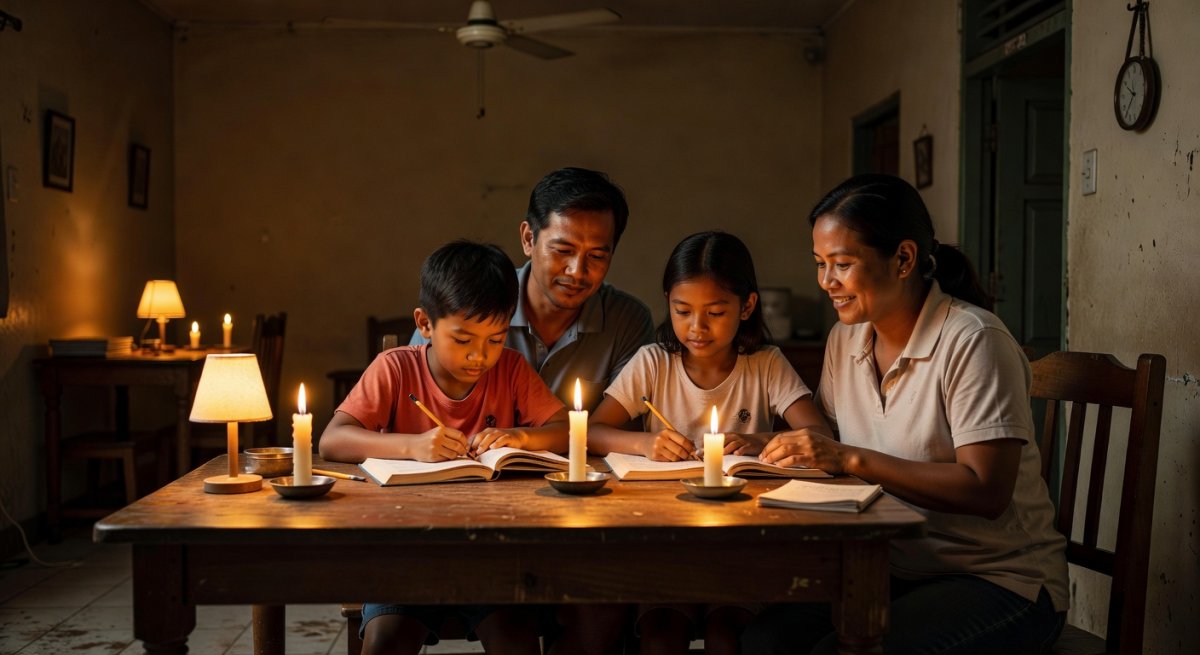
Rolling brownouts touch every corner of ordinary Filipino homes in the Visayas. Families preparing evening meals find themselves switching to candlelight or portable gas lamps when power drops. Parents juggle work-from-home tasks with children who lose access to online lessons or quiet study time after sunset.
Students in provinces like Bohol and Negros face added hurdles during exam seasons. Without reliable electricity, they gather around shared lamps or move to relatives' homes with steadier supply. This strains household budgets already stretched by rising costs of living.
Many communities respond by reviving age-old practices of sharing resources. Neighbors lend generators or pool funds for fuel, keeping a sense of bayanihan alive even as alerts continue.
Small Businesses Bear the Weight of Unreliable Power
Market vendors and sari-sari store owners in Visayas towns see direct hits to their daily earnings when power fails during peak selling hours. Refrigerators lose cooling, spoiling perishables that represent hard-earned inventory. Owners often absorb the losses rather than raise prices on loyal customers.
Local eateries and small workshops in cities like Bacolod and Tacloban must adjust operating hours or invest in costly backups. These steps cut into already thin margins and slow plans for expansion that could create jobs in the community.
Despite these pressures, business owners demonstrate quiet determination. Many coordinate with nearby establishments to share generator access during extended outages, preserving a network of mutual support rooted in Philippine culture.
Hospitals and Essential Services Navigate Critical Moments
Healthcare facilities across the Visayas work under added vigilance when supply dips. Hospitals rely on backup systems to maintain life-support equipment and preserve medicines that require constant refrigeration. Staff members stay on alert, ready to shift patients if needed.
Rural health centers in areas with frequent yellow alerts face tougher choices. Routine procedures may be rescheduled, and families wait longer for results from diagnostic machines that depend on stable electricity.
Local government units have begun coordinating with the Philippine National Police and barangay officials to prioritize power restoration for medical sites. These efforts reflect the practical side of community resilience when national grid issues persist.
Renewable Energy Strengths and Their Limits in the Visayas
The Visayas grid stands out with renewable sources supplying around 45 percent of its power, well above the national average of 25 percent. This mix brings environmental benefits and aligns with long-term goals for cleaner energy in the Philippines.
Secretary Garin noted that renewables require steady backup because solar output drops during rain and wind power varies with weather patterns. The high share of these sources adds value but also underscores the need for reliable complements during peak demand.
Communities that have embraced solar installations on homes and schools see both promise and challenges. When combined with planned temporary supplies, these local efforts can help ease daily disruptions felt by ordinary residents.
Temporary Solutions Under Consideration by the DOE
The Department of Energy is exploring options such as power barges, diesel units, modular gensets, and battery energy storage systems to add at least 150 megawatts of reserve capacity. These steps aim to stabilize the grid over the coming year or two while longer-term plants come online.
Secretary Garin confirmed that the DOE has contacted the National Grid Corporation of the Philippines regarding possible direct arrangements for ancillary services. Such measures could provide breathing room for households and businesses already adapting to alerts.
Undersecretary Marasigan emphasized that these temporary resources would target the Visayas specifically, recognizing the unique pressures on its transmission network and generation fleet.
Looking Forward with Resilience and Collective Effort
Unavailable plants including Therma Visayas Units 1 and 2, Panay Energy Development Corp. Unit 3, and Kepco-Salcon Power Corp. Unit 2 have contributed to recent shortfalls. Scheduled returns, such as Kepco Unit 2 by June 2 and Therma Visayas units by late August, offer some relief, yet officials stress that broader fixes will take time.
Filipino families continue to draw on their deep well of adaptability. From organizing community charging stations to supporting local initiatives for energy efficiency, residents show how bayanihan can bridge gaps left by infrastructure delays.
As the DOE advances its plans, the focus remains on protecting the daily rhythms of Visayas life. Businesses, schools, and hospitals stand ready to work alongside government agencies, ensuring that the region's strong community bonds help weather this period of adjustment.
By Bella Reyes, Staff WriterThis article was produced with AI-assisted research and editorial support. Reporting is based on sources cited in the article.
What's Your Reaction?
 Like
0
Like
0
 Dislike
0
Dislike
0
 Love
0
Love
0
 Funny
0
Funny
0
 Wow
0
Wow
0
 Sad
0
Sad
0
 Angry
0
Angry
0

Philippines/Southeast Asia Correspondent at Global1.News. Manila-based journalist covering Philippine politics, environment, maritime security, and social issues. Passionate about marine conservation and the communities protecting the Philippines' natural heritage.














Comments (0)