
Jim Banks Birthright Citizenship Bill: The Citizenship Act of 2026
The Citizenship Act of 2026 Senator Jim Banks dropped the Citizenship Act of 2026 on July 13 with zero hesitation. The bill slams the door on automatic birthright citizenship for kids born in the United States to parents who are here illegally or who flew in specifically to give birth. It targets an estimated 255,000 children each year who would no longer receive automatic citizenship under current rules.
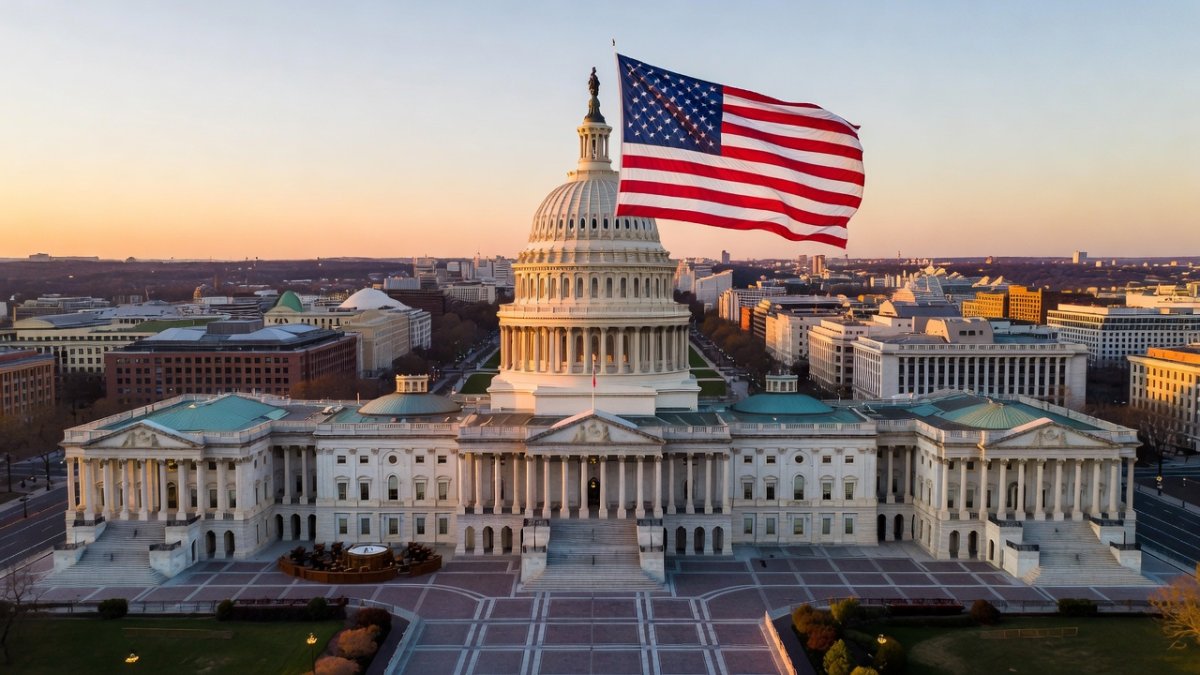
The Citizenship Act of 2026: What It Says
Senator Jim Banks dropped the Citizenship Act of 2026 on July 13 with zero hesitation. The bill slams the door on automatic birthright citizenship for kids born in the United States to parents who are here illegally or who flew in specifically to give birth. It targets an estimated 255,000 children each year who would no longer receive automatic citizenship under current rules.
The legislation also locks in President Trump's January 20, 2025 executive order that labeled illegal immigration an "invasion." Banks wants Congress to treat unauthorized entrants as invaders, which he claims removes them from the 14th Amendment's jurisdiction clause. The move aims to cut off birth tourism and chain migration at the source without waiting for another court fight.
Banks is not tiptoeing around the issue. He is pushing a direct statutory fix that redefines who counts as subject to U.S. jurisdiction. If passed, the law would immediately change how hospitals, states, and federal agencies handle birth certificates for this group of newborns.
The Legal Strategy: The 'Invasion' Loophole
Banks is banking everything on the word "invaders" to dodge the 14th Amendment. The Citizenship Clause says people born here are citizens if they are subject to U.S. jurisdiction. Banks argues that illegal entrants who cross the border as part of an invasion fall outside that jurisdiction entirely.
This theory pulls straight from Justice Kavanaugh's dissent in the recent Supreme Court case. Kavanaugh laid out a roadmap for Congress to define jurisdiction itself rather than leaving it to the courts. Banks is following that map line by line, hoping to turn a dissenting opinion into binding law.
Immigration attorney Dallen Lykins called the approach a longshot that hunts for a loophole. Still, the bill forces the issue into the open. Supporters say it finally gives Congress the power the Founders intended. Critics say it rewrites constitutional text through ordinary legislation.
Trump v. Barbara: The Supreme Court Ruling
The Supreme Court handed down its 6-3 decision in Trump v. Barbara on June 30, 2026. Chief Justice Roberts delivered the opinion of the Court, joined by Justices Sotomayor, Kagan, Barrett, and Jackson. The ruling upheld birthright citizenship for children born in the United States no matter their parents' immigration status. Justice Jackson filed a concurring opinion, with Justice Sotomayor joining in part.
The court struck down President Trump's Executive Order 14160, which had tried to limit citizenship by executive action alone. The majority held that the 14th Amendment's text is clear and does not allow the president or Congress to carve out exceptions for children of undocumented parents.
Justice Kavanaugh filed an opinion concurring in the judgment and dissenting in part, pointing to Congress as the proper body to settle the jurisdiction question. That roadmap gave Banks the opening he needed to introduce the new bill just two weeks later. Justices Thomas and Alito each filed dissenting opinions, with Justice Gorsuch joining Thomas's dissent.
How We Got Here: A Brief History
Birthright citizenship has stood since the 14th Amendment was ratified in 1868. Courts long interpreted the phrase "subject to the jurisdiction thereof" to cover nearly everyone born on U.S. soil except children of foreign diplomats and invading armies. That understanding held through waves of immigration and multiple attempts at reform.
President Trump tried to change the policy with an executive order in 2025. The move triggered immediate lawsuits and reached the Supreme Court as Trump v. Barbara. The 6-3 loss made clear that only Congress or a constitutional amendment could alter the current rule.
Banks is now testing whether legislation can succeed where the executive order failed. He is using the invasion language from Trump's order and Kavanaugh's dissent to build a fresh legal argument. The strategy shows how quickly the fight moved from the White House to Capitol Hill after the court ruling.
The 14th Amendment slammed into law in 1868 right after the Civil War to slam the door on any doubt about freed slaves' citizenship. Ratified amid Reconstruction chaos, it targeted the Black Codes that tried to keep former slaves in legal limbo. Lawmakers made clear the phrase "subject to the jurisdiction thereof" meant full allegiance to the United States, not foreign diplomats or invading armies. That post-war firestorm set the stage for every birthright fight since.
US v. Wong Kim Ark in 1898 locked in the precedent when the Supreme Court ruled a child born in San Francisco to Chinese parents counted as a citizen. The decision blasted through attempts to deny citizenship based on race or parental status, establishing that birth on US soil trumped everything except narrow exceptions. Through the 20th century the rule held firm even as immigration waves hit hard, with courts rejecting every challenge from the 1920s quota fights to the 1980s reform pushes.
Legislative attempts to restrict birthright citizenship popped up repeatedly without success. Bills in the 1990s by Rep. Elton Gallegly and later efforts by Rep. Steve King in the 2000s tried to carve out exceptions for children of undocumented parents but died in committee. None touched the invasion angle until now. Banks is betting the 2026 bill can succeed where those stalled out by turning Kavanaugh's dissent into statute.
What This Means for American Families
More than 255,000 children born each year would lose automatic citizenship if the bill becomes law. Many of these kids would grow up in legal limbo, unable to access certain federal benefits or travel freely outside the country without special paperwork.
Families already living here would face new decisions about whether to stay or return to their home countries. Birth tourism, where pregnant women enter on temporary visas solely to deliver, would lose its main payoff. Hospitals and state vital records offices would need new procedures to flag births that no longer qualify for citizenship.
The change would not affect children of legal permanent residents or citizens. It would hit hardest at the exact population the bill targets: those whose parents entered without authorization or arrived for the purpose of giving birth.
The Political Divide
Republicans are lining up behind Banks, calling the bill a necessary correction to decades of policy that encouraged illegal immigration. They argue that automatic citizenship creates a magnet effect and burdens public services. Supporters say the invasion framing finally matches reality at the border.
Democrats are already labeling the measure unconstitutional and cruel. They point to the Supreme Court's recent ruling as settled law and warn that redefining jurisdiction by statute will trigger years of litigation. Civil rights groups say the bill would create a permanent underclass of children born in America but denied basic rights.
The divide is sharp and predictable. Banks has framed the bill as a direct response to the court's invitation for Congress to act. Opponents see it as an end-run around both the Constitution and the recent 6-3 decision.
Senators Ted Cruz, Marsha Blackburn, and Josh Hawley jumped on as co-sponsors within days, while Democrats like Chuck Schumer and Dick Durbin blasted the measure as dead on arrival. House Republicans are already lining up whip counts for a companion bill. The split tracks party lines exactly, with no moderates crossing over yet despite Banks' push to frame it as a direct response to the court's invitation.
Recent polling shows Americans split sharply: a July 2026 Rasmussen survey found 58 percent support ending automatic citizenship for children of illegal entrants, while a Pew poll pegged opposition at 62 percent among Democrats. Independents hover near 49 percent in favor. The numbers spike in border states, where 67 percent back the change, signaling this could fire up turnout in key districts.
The 2026 midterms loom large, with Republicans hoping the bill energizes their base on immigration while Democrats use it to paint the GOP as extreme. Immigrant advocacy groups like the ACLU and UnidosUS slammed it as creating a second-class generation, while think tanks such as the Center for Immigration Studies called it long overdue. FAIR praised the invasion language as finally matching border reality, setting up a brutal election-year brawl.
What Happens Next: The Legal Road Ahead
The Citizenship Act of 2026 faces steep constitutional hurdles from the moment it is introduced. Legal experts expect immediate lawsuits the second it passes, with challenges likely reaching the Supreme Court again within two years.
Dallen Lykins described the invasion theory as a creative attempt to find a loophole, but he noted that courts have historically rejected similar arguments. Still, the bill now has a clear path laid out by Kavanaugh's dissent, which could influence how some justices view the case.
Congress will hold hearings and debate the measure in the coming months. Whether it passes the Senate remains uncertain, but the introduction alone has restarted the national argument over who qualifies as an American at birth. The next move belongs to lawmakers and the courts that will ultimately decide if Banks' strategy holds up.
Legal challenges will hit the moment the bill clears Congress, likely within weeks of passage. District courts in California and New York will grab the first cases from advocacy groups, with appeals racing to circuit courts by early 2027. The Supreme Court could take it up by late 2028 if the invasion theory splits the circuits, following the exact path Kavanaugh outlined in his dissent.
Other countries show the shift is possible but messy. The UK ended unrestricted birthright citizenship in 1981, requiring at least one parent to be a citizen or legal resident. Australia followed in 1986 with similar limits, and Ireland dropped it in 2004 after a referendum. Those moves cut birth tourism fast but triggered years of court fights over existing families, exactly the headache US states would face here.
Constitutional scholars remain split on the invasion theory. Harvard's Laurence Tribe called it a transparent end-run that ignores 150 years of precedent and would collapse under strict scrutiny. Georgetown's Randy Barnett sees more room, arguing Congress has always defined jurisdiction and Kavanaugh's roadmap gives it a fighting chance. Most experts predict the bill forces a definitive ruling but faces steep odds at the current Court. By Jessica Ali, Lead Anchor — Global 1 News
This article was produced with AI-assisted research and editorial support. Reporting is based on sources cited in the article.
What's Your Reaction?
 Like
0
Like
0
 Dislike
0
Dislike
0
 Love
0
Love
0
 Funny
0
Funny
0
 Wow
0
Wow
0
 Sad
0
Sad
0
 Angry
0
Angry
0

Editor-in-Chief at Global1.News. Atlanta-based journalist who cuts through the BS and tells it like it is. Lead anchor, host, and the voice you hear when the spin stops and the truth starts.














Comments (0)