
The Chinese Graduate Accused of Mexico's Fentanyl Pipeline — The Brother Wang Case
As the United States prepares for fresh tariff clashes with China and Mexico, the New York trial of Zhang Zhidong lays bare the deadly China-Mexico pipeline that fuels the fentanyl crisis killing tens of thousands across the Americas. Prosecutors allege the former mining executive orchestrated shipments of precursor chemicals that Sinaloa cartel labs turned into more than 1,800 kilograms of fentanyl, generating roughly $150 million annually. The case arrives at a moment when
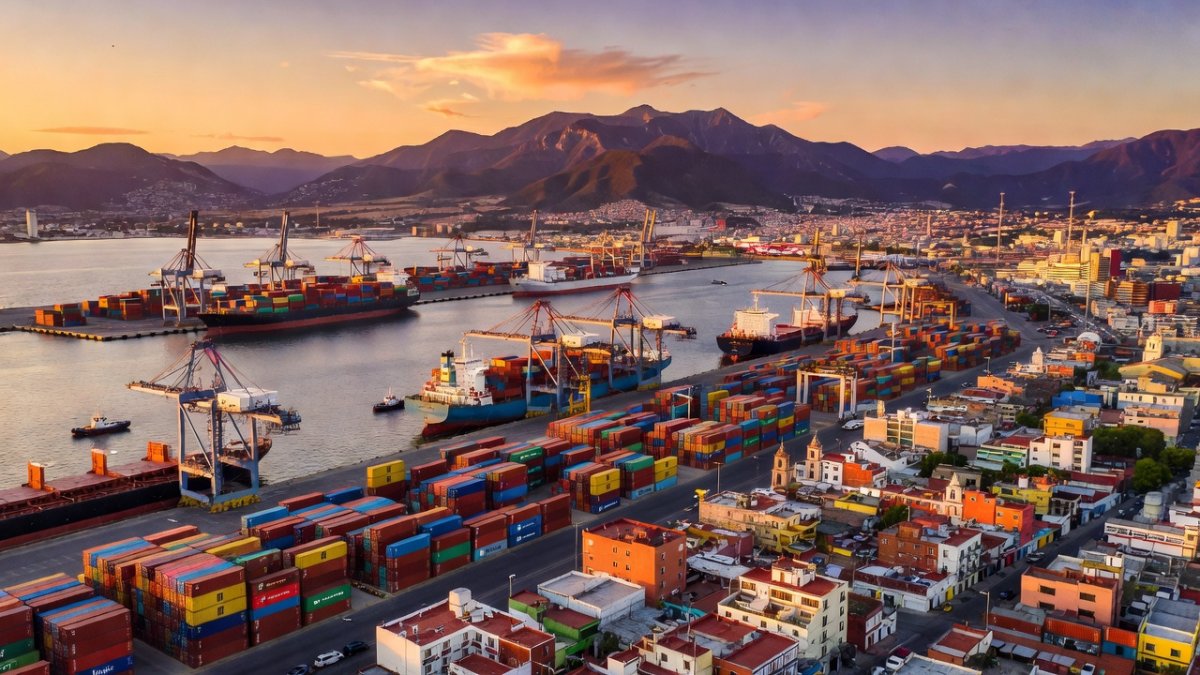
Zhang Trial Exposes China-Mexico Fentanyl Pipeline
Culiacán, Mexico — article continues...
The Shadow Network Linking Two Continents
Zhang’s alleged role highlights a pipeline that has quietly sustained Mexico’s drug war for more than a decade. Chinese firms supply the precursor chemicals that arrive in Mexican ports, where Sinaloa operatives convert them into fentanyl inside hidden labs scattered across Sinaloa state. The resulting product moves north, fueling overdoses that have overwhelmed hospitals and emptied small towns on both sides of the border. Today this trade is no longer a distant smuggling story; it sits at the center of diplomatic tensions as Washington weighs tariffs against Beijing and renewed pressure on Mexican authorities.
The pipeline pulses with calculated precision. From the sprawling ports of Shanghai and Ningbo, drums labeled as industrial dyes or solvents depart under false manifests, their true cargo aniline, benzyl chloride, and n-phenethyl-4-piperidinone destined for Mexican shores. They land at Manzanillo and Lázaro Cárdenas, where customs brokers tied to Sinaloa fronts clear the shipments through layers of shell companies and rapid re-export declarations that dissolve any paper trail before inspectors can react.
Once inside Mexico, the precursors travel hidden routes to clandestine laboratories scattered across the mountains around Culiacán. There, cartel chemists—many trained in rudimentary university labs—transform the raw materials into finished fentanyl tablets and powder using industrial reactors smuggled piece by piece. The operation’s scale reveals itself in the sheer volume: enough precursors to produce millions of lethal doses cross the Pacific each month, sustained by bribes that reach port officials and protected by the cartel’s ruthless enforcement.
This is not random smuggling but a vertically integrated supply chain that treats human lives as collateral in the pursuit of profit. The same vessels that once carried legitimate trade now ferry death, their manifests rewritten in boardrooms from Guangdong to Guadalajara.
From Peking University to the Mexican Mines
Zhang graduated from Peking University in 2010 with a degree in Spanish, an elite credential that opened doors few others possessed. He arrived in Mexico the following year to work for a Chinese-owned iron-ore mining company, quickly mastering the local dialect while retaining the crisp Beijing accent that later became part of his legend. Former colleague Alex, who attended the same university, recalls that Zhang “was capable of negotiating with people, very resourceful, and able to adapt to all kinds of environments.” Those skills proved equally useful whether haggling over ore contracts or, prosecutors allege, arranging chemical shipments for cartel labs.
Brother Wang and the Sinaloa Connection
Inside criminal circles Zhang became known simply as “Brother Wang,” the man who could guarantee steady flows of fentanyl precursors. Sinaloa coordinator Enrique described him bluntly: “Brother Wang was very important. He was number one.” Court documents claim he coordinated shipments that ultimately produced more than 1,800 kilograms of fentanyl, alongside large quantities of cocaine and methamphetamine, generating roughly $150 million in annual proceeds. The Sinaloa cartel’s dominance in Culiacan gave him a ready-made distribution network, while his Chinese contacts ensured the raw materials kept arriving despite occasional port inspections.
A Dramatic Escape and an Extradition to New York
Earlier this year Mexican authorities arrested Zhang, only to watch him stage a brief escape before recapture. He was soon extradited to face charges in New York, where he has pleaded not guilty. U.S. Deputy Attorney General Todd Blanche has called him “one of the world’s most dangerous traffickers.” The case arrives at a politically charged moment: President Trump has labeled fentanyl dealers “narco-terrorists” and directed that certain precursor chemicals be treated as weapons of mass destruction, raising the stakes for any future plea negotiations or sentencing.
The Human Cost Across the Americas
Fentanyl’s reach extends far beyond courtroom headlines. In Mexico the Sinaloa cartel’s control of Culiacan has turned once-vibrant neighborhoods into battlegrounds where families mourn sons lost to both addiction and cartel violence. In the United States the drug has become the leading cause of death for Americans aged 18 to 45, overwhelming treatment centers from California to New England. Public-health officials across Latin America now treat the crisis as a regional emergency, one that cannot be solved by enforcement alone while the chemical pipeline from China remains intact.
Last year alone, more than seventy thousand Americans perished from fentanyl overdoses, a toll that has emptied entire neighborhoods from Appalachia to the Pacific Northwest. Yet the devastation does not stop at the northern border. In Mexican cities like Tijuana and Ciudad Juárez, morgues overflow with young men and women whose bodies bear the unmistakable blue tint of synthetic opioids, while families sell everything to pay for burials that public health systems can no longer afford.
The poison has spread southward through Central America’s migrant corridors and into South American capitals, where cheap fentanyl-laced pills now circulate in markets once dominated by cocaine. Treatment access remains almost nonexistent; naloxone kits are scarce outside a handful of NGOs, and governments still treat addiction as a criminal matter rather than a public-health emergency. Reports from regional health agencies describe entire villages in Honduras and Guatemala where a single contaminated batch can kill dozens in a single weekend.
These are not statistics but the lived reality of communities sacrificed to a trade that enriches distant factories while leaving mothers to bury their children in unmarked graves across the hemisphere.
The Next Broker Already Waiting
Cartel members have told investigators that another Chinese national is already being positioned to replace Zhang, suggesting the network will adapt rather than collapse. This continuity underscores how deeply the China-Mexico chemical trade has embedded itself in the economics of the drug war. As long as demand persists in the United States and precursors remain available from Asian factories, the cycle is likely to continue regardless of any single arrest.
Why the Trial Matters Now
Zhang’s proceedings in New York will test whether prosecutors can prove the full scope of an operation that allegedly spanned three countries and multiple criminal organizations, including the rival CJNG. More importantly, the case forces a public reckoning with the uncomfortable reality that the fentanyl epidemic is not merely a Mexican or American problem but a genuinely hemispheric one sustained by global supply chains. How governments respond—through tariffs, port controls, or deeper cooperation—will shape whether the next “Brother Wang” faces similar justice or simply inherits an unbroken route.
As Trump threatens fresh tariffs on both Beijing and Mexico City, the Zhang case has become geopolitical ammunition. Washington accuses China of deliberately flooding the market with precursors while Beijing counters that it has tightened export controls and blames American demand for the crisis. The rhetoric masks a deeper struggle: fentanyl has been weaponized in trade negotiations, turning a public-health catastrophe into leverage for concessions on semiconductors, electric vehicles, and agricultural imports.
China’s official responses remain carefully calibrated denials, insisting that most precursors are dual-use chemicals with legitimate industrial applications. Yet enforcement at the source remains lax, allowing the same factories that supply legitimate pharmaceutical companies to divert product to cartel intermediaries with minimal risk. The broader U.S.-China trade war now intersects directly with drug policy, as each new tariff round raises the stakes for cooperation that neither side appears willing to deliver.
This trial therefore arrives at a decisive moment, exposing how the fentanyl pipeline has become another front in a conflict that prioritizes economic dominance over the lives lost on both sides of the Pacific.
By Elena Vasquez, Staff WriterThis article was produced with AI-assisted research and editorial support. Reporting is based on sources cited in the article.
What's Your Reaction?
 Like
0
Like
0
 Dislike
0
Dislike
0
 Love
0
Love
0
 Funny
0
Funny
0
 Wow
0
Wow
0
 Sad
0
Sad
0
 Angry
0
Angry
0

Latin America Correspondent at Global1.News. Based in Mexico City, covering politics, economics, energy, and culture across the region. Brings an on-the-ground perspective to stories spanning from the Rio Grande to Patagonia.












Comments (0)