
Nigerian Senate Rejects PFIPC Probe Amid Forgery Scandal
Senate Rejects Second Attempt to Probe PFIPC Controversy The Nigerian Senate on Wednesday once again declined a motion seeking an independent legislative investigation into the high-profile Presidential Foreign Investment Promotion Council (PFIPC) scandal that has gripped Abuja for weeks. Senator Suleiman Kawu, representing Kano South, raised the matter during plenary under matters of urgent public importance.
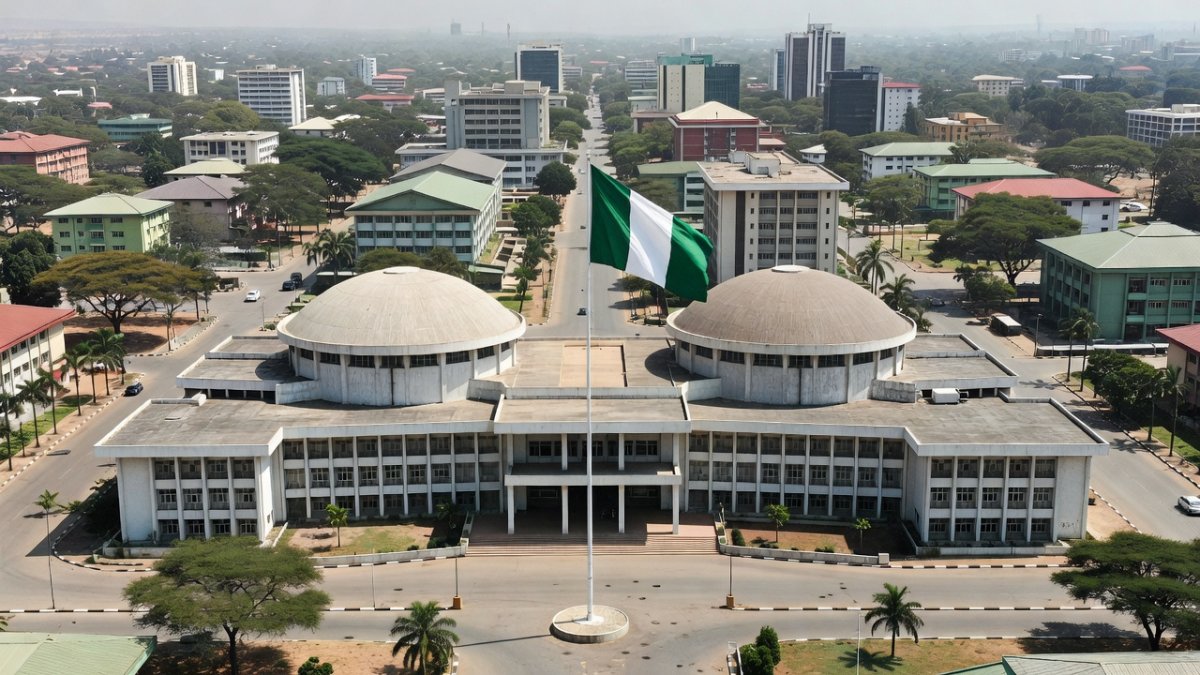
Senate Rejects Second Attempt to Probe PFIPC Controversy
The Nigerian Senate on Wednesday once again declined a motion seeking an independent legislative investigation into the high-profile Presidential Foreign Investment Promotion Council (PFIPC) scandal that has gripped Abuja for weeks. Senator Suleiman Kawu, representing Kano South, raised the matter during plenary under matters of urgent public importance. This marked the second time the lawmaker had attempted to push the Senate into probing the controversy involving Adeniyi Adeyemi, who allegedly forged presidential documents to present himself as Director-General of the PFIPC, formerly known as the Presidential Economic Advisory Council (PEAC).
Senate President Godswill Akpabio swiftly ruled against the motion, citing that the matter was already before a competent court and that President Bola Ahmed Tinubu had directed the Independent Corrupt Practices and Other Related Offences Commission (ICPC) to investigate. "In my view, the issue has been overtaken by events as the culprit has been charged to court. It is now sub judice to attempt to go into it again. Mr President has already directed an investigation. If we go into it now, we will probably be jumping the gun," Akpabio declared from his seat at the National Assembly complex in Abuja.
The rejection has sparked intense debate across Nigeria's political landscape, from the corridors of Aso Rock to civil society organisations in Lagos and Kano. Many observers see this as more than a procedural ruling. It touches the heart of Nigeria's constitutional democracy, the delicate balance between the executive, legislature and judiciary, and the country's ongoing struggle against high-level corruption. With Nigeria's economy still reeling from inflation rates hovering around 34 percent as reported by the National Bureau of Statistics in August 2024, questions about transparency in presidential appointments and the use of forged documents to access state resources have taken on added urgency.
The Adeniyi Adeyemi Allegations: Forgery, Fraud and Impersonation
At the centre of the storm is Adeniyi Adeyemi, a figure who until recently operated with apparent impunity in Nigeria's federal capital. According to charges filed at the Federal High Court in Abuja, Adeyemi allegedly forged an appointment letter purportedly issued by President Bola Tinubu and signed by Chief of Staff Femi Gbajabiamila. The documents positioned him as Director-General of the Presidential Foreign Investment Promotion Council, an entity that does not officially exist within the current structure of the Tinubu administration.
Court documents reveal that Adeyemi used these forged papers to request office space from the State House, seek official recognition from government agencies, solicit diplomatic support from foreign missions in Abuja, and even open bank accounts in the names of supposed government bodies. The eight-count charge borders on forgery, fraud and impersonation of public officers. When Adeyemi failed to appear for his arraignment, Justice Mohammed Umar issued a bench warrant for his arrest, directing the police and other security agencies to produce him in court on September 30, 2024.
Adeyemi had earlier denied any wrongdoing in a statement circulated through his legal team, insisting that due process must be followed. His case has drawn parallels with previous high-profile impersonation scandals in Nigeria, including the infamous "Kabu Kabu" diplomatic fraud cases that embarrassed the country in the early 2000s. Sources close to the Presidency told Global1.News that the alleged activities could have compromised Nigeria's international economic diplomacy, particularly as the country seeks to attract $10 billion in fresh foreign direct investment under the Tinubu administration's Renewed Hope Agenda.
The economic implications are significant. Nigeria's debt service currently consumes over 60 percent of federal revenue according to data from the Debt Management Office. Any scandal that undermines investor confidence, especially one involving forged presidential letters, risks further damaging the country's reputation in global markets where President Tinubu has been actively marketing opportunities in the oil and gas, technology and agriculture sectors during trips to Saudi Arabia, France and the United Kingdom.
Akpabio's Sub Judice Argument and the Separation of Powers Debate
Senate President Godswill Akpabio's invocation of the sub judice rule has become the focal point of heated constitutional debate. The principle, derived from common law tradition inherited from Britain, prevents public discussion or parallel investigations that could prejudice ongoing judicial proceedings. Akpabio, a former governor of Akwa Ibom State and seasoned politician, argued that with Adeyemi already charged and a warrant issued, any Senate probe would amount to "jumping the gun."
However, Senator Kawu pushed back forcefully, insisting that the National Assembly's constitutional oversight responsibilities cannot be suspended simply because the executive has initiated action. "The legislature has a sacred duty to Nigerians to investigate matters of public importance regardless of what the executive does," Kawu told colleagues during the tense plenary session. His position reflects a growing sentiment among some lawmakers that the sub judice doctrine is being selectively applied to shield the executive from scrutiny.
This debate mirrors similar constitutional tensions witnessed in Kenya's parliament in 2022 during the Finance Bill controversy and in South Africa's National Assembly during the Zondo Commission era. In Nigeria's context, it raises fundamental questions about the independence of the three arms of government as enshrined in Sections 4, 5 and 6 of the 1999 Constitution (as amended). Legal scholars at the University of Lagos and Ahmadu Bello University in Zaria have weighed in, with some arguing that while courts must be protected, the legislature's investigative powers under Section 88 should not be completely subordinated to executive or judicial timelines.
Former Attorney General of the Federation, Abubakar Malami, SAN, in a recent television interview on Channels TV, suggested that the Senate could still conduct a limited inquiry focused on systemic failures that allowed such impersonation to flourish rather than the specific criminal charges against Adeyemi. This nuanced position has gained traction among governance experts monitoring developments from the Nigerian Institute of Advanced Legal Studies in Abuja.
The Constitutional Oversight Role of the National Assembly
Section 88 of Nigeria's Constitution explicitly grants the National Assembly powers to investigate any matter over which it has the power to make laws and to expose corruption, inefficiency or waste in the execution or administration of laws. This provision has been the foundation for several landmark probes including the Farouk Lawan fuel subsidy scandal of 2012 and the more recent investigation into the Naira redesign policy under former President Muhammadu Buhari.
Critics of the Senate's decision argue that by deferring entirely to the ICPC and the courts, the legislature is abdicating its responsibility at a time when public trust in institutions is dangerously low. According to a recent survey by the Centre for Democracy and Development, only 28 percent of Nigerians expressed confidence in the National Assembly's ability to check executive excess, down from 41 percent in 2019.
Supporters of Akpabio's position, including Senate Leader Opeyemi Bamidele, maintain that the legislature must avoid actions that could be interpreted as interference in judicial matters, especially given the judiciary's own struggles with corruption allegations as seen in the 2016 raid on judges' homes by the Department of State Services. They point to the ongoing trial of former Central Bank of Nigeria Governor Godwin Emefiele as evidence that the judicial system can function when allowed to do so without political interference.
The debate has transcended Abuja, with the Conference of Nigerian Political Parties and the Nigeria Bar Association issuing statements calling for clarity on the boundaries of legislative oversight when matters are sub judice. In Lagos, former Vice President Atiku Abubakar's camp described the Senate's decision as "a dangerous precedent that weakens democratic checks and balances," while the ruling All Progressives Congress defended it as responsible leadership that respects the rule of law.
Presidential Response: Tinubu's Directive to the ICPC
President Bola Tinubu's swift directive to the ICPC Chairman, Dr. Musa Aliyu, to conduct a thorough investigation into the PFIPC saga demonstrates the administration's attempt to manage what could have become a major political liability. The President specifically asked the anti-graft agency to examine not only Adeyemi's actions but also how such forged documents could be produced and used within the presidential apparatus without immediate detection.
Sources within the Presidency indicate that Tinubu was particularly concerned about the potential diplomatic fallout, especially as Nigeria prepares to host the African Continental Free Trade Area business summit in December 2024. The Chief of Staff, Femi Gbajabiamila, whose signature was allegedly forged, has reportedly submitted all relevant documents to investigators, insisting that no such appointment letter ever emanated from his office.
The ICPC investigation is expected to examine security lapses at the State House, the role of civil servants who may have facilitated Adeyemi's access, and whether similar impersonation attempts have occurred in other government agencies. This aligns with Tinubu's broader governance philosophy of institutional reform, as evidenced by his ongoing overhaul of the Nigerian National Petroleum Company Limited and the Central Bank of Nigeria.
However, governance analysts in Abuja worry that an executive-led investigation might lack the independence required to restore public confidence. "When the executive investigates itself or matters close to it, questions of impartiality inevitably arise," noted Professor Ayoade Olatunji of the Department of Political Science at the University of Ibadan. This sentiment is shared across several state capitals from Enugu to Kaduna, where citizens continue to demand greater transparency in how public resources and presidential authority are deployed.
Broader Implications for Anti-Corruption Efforts in Nigeria
The Senate's decision comes at a critical time for Nigeria's anti-corruption architecture. The country slipped three places in Transparency International's 2023 Corruption Perceptions Index, scoring 25 out of 100 and ranking 145th out of 180 countries. High-profile cases involving former governors, ministers and senior government officials have yielded mixed results, with many concluding in controversial plea bargains or prolonged delays.
The PFIPC controversy highlights systemic vulnerabilities in how presidential appointments and official communications are managed. If an individual could allegedly forge documents, secure meetings with diplomats and open accounts in the name of non-existent government agencies, it raises troubling questions about the effectiveness of existing verification protocols within Nigeria's federal bureaucracy.
Anti-corruption crusaders like former EFCC Chairman Nuhu Ribadu, now National Security Adviser, have long advocated for technology-driven solutions including blockchain-based document verification systems. The current scandal may accelerate discussions around such innovations, particularly as Nigeria deepens its engagement with digital public service platforms under the National Digital Economy Policy.
Across Africa, similar challenges persist. From procurement scandals in South Africa to gold smuggling controversies in Ghana, the weaponisation of official-looking documents for personal gain remains a continental governance challenge. Nigeria's handling of the Adeyemi case will be closely watched by regional partners in the Economic Community of West African States and the African Union, especially as the country positions itself as a leader in good governance under the Tinubu administration.
Civil society groups including the Socio-Economic Rights and Accountability Project (SERAP) have filed freedom of information requests seeking details of all presidential appointments made since May 2023. Their demand reflects growing public impatience with what many perceive as selective accountability, where ordinary citizens face harsh penalties for minor infractions while alleged high-level forgery cases sometimes appear to receive kid-glove treatment.
What This Means for Executive Accountability and Legislative Independence
The Senate's repeated rejection of the probe motion raises fundamental questions about the independence of Nigeria's legislature after 25 years of uninterrupted democratic rule. While the 9th Assembly under Senator Ahmad Lawan was often criticised as a rubber stamp, the 10th Assembly under Akpabio was expected to assert greater independence following the controversial leadership emergence that saw him defeat Senator Abdulaziz Yari despite strong opposition from certain quarters.
By deferring to the executive's ICPC investigation and the judiciary's ongoing case, the Senate may have avoided constitutional confrontation but at the potential cost of its institutional credibility. Political analysts in Abuja suggest this decision could embolden the executive in future encounters, particularly as the administration pushes controversial reforms including the controversial tax bills currently before the National Assembly.
For President Tinubu, successfully navigating this controversy without major damage to his administration's reform credentials is crucial. With local government autonomy battles, fuel subsidy removal pains and foreign exchange unification challenges still dominating public discourse, the last thing the President needs is a prolonged scandal involving alleged forgery at the highest levels of government.
Looking ahead, the eventual outcome of both the court case against Adeyemi and the ICPC investigation will likely shape public perception of the Tinubu administration's commitment to transparency. Should the investigations reveal complicity within the Presidency or State House, the political cost could be substantial, particularly in the southwest geopolitical zone where expectations of good governance remain high.
Ultimately, this episode underscores the unfinished business of Nigeria's democratic evolution. The tension between different arms of government, the selective application of legal principles like sub judice, and the persistent challenge of holding powerful individuals accountable remain defining features of the country's political economy. As Nigeria approaches its 65th independence anniversary in 2025, the resolution of the PFIPC controversy may well serve as a litmus test for the quality of governance and institutional integrity in Africa's largest economy.
The coming weeks will be decisive. With Justice Umar's September 30 deadline for Adeyemi's appearance, the ICPC's ongoing probe, and continued pressure from civil society and opposition politicians, the Senate's decision to step back may yet face fresh challenges. For ordinary Nigerians struggling with economic hardship from Maiduguri to Port Harcourt, the real test lies not in constitutional arguments but in whether this saga results in genuine accountability or becomes another footnote in the country's long list of unresolved high-profile controversies.
The outcome will not only determine the fate of Adeniyi Adeyemi but will send a powerful signal about the state of democratic accountability in 21st century Nigeria. As the country continues its journey toward becoming one of the world's top 20 economies by 2050 as envisioned in national development plans, the strength of its institutions to check abuse of power will prove as important as its abundant natural resources and youthful population.
By Sarah Okafor, Staff WriterThis article was produced with AI-assisted research and editorial support. Reporting is based on sources cited in the article.
What's Your Reaction?
 Like
0
Like
0
 Dislike
0
Dislike
0
 Love
0
Love
0
 Funny
0
Funny
0
 Wow
0
Wow
0
 Sad
0
Sad
0
 Angry
0
Angry
0

Africa Correspondent at Global1.News. Based in Lagos, covering politics, business, technology, and culture across the continent. Focused on telling African stories beyond the headlines — the innovation, entrepreneurs, and communities shaping the region's future.













Comments (0)