
Venezuela-India Oil Talks Signal Shifting Energy Dynamics for Latin America
Delcy Rodríguez's India Visit Centers on Oil Amid Broader Trade Talks Delcy Rodríguez, Venezuela's acting president, is in India for meetings that include trade, investment, healthcare and renewable energy. The talks will feature a session with Prime Minister Narendra Modi this week. Yet the core of the relationship remains oil, as India seeks reliable crude supplies during glo
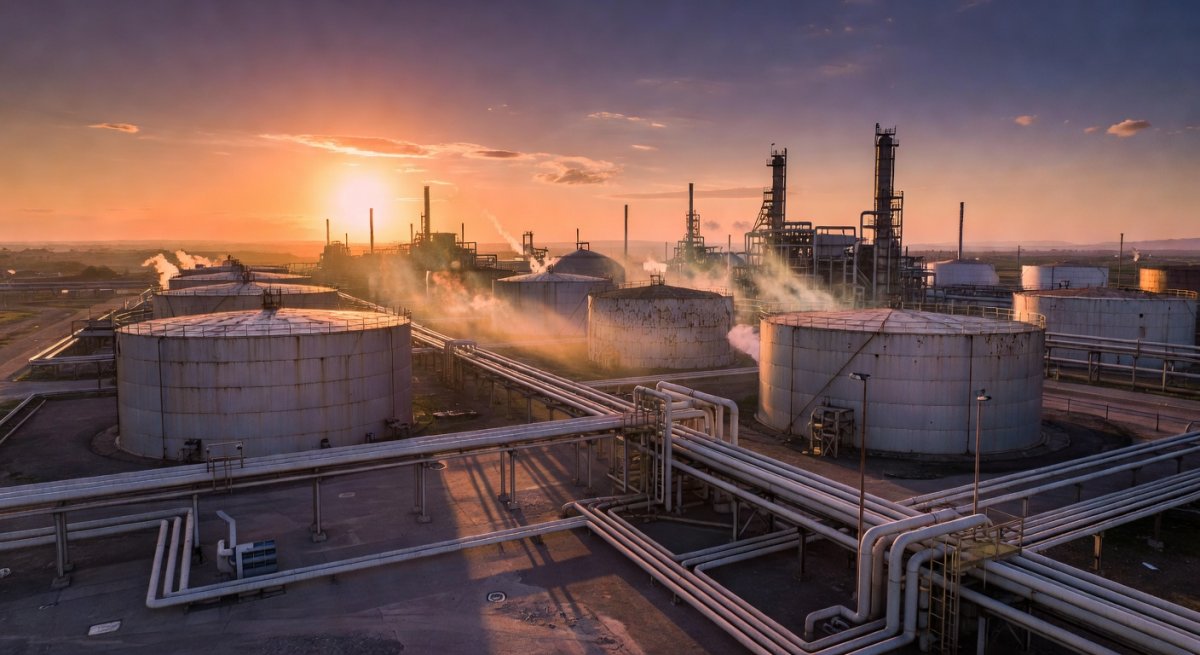
Delcy Rodríguez's India Visit Centers on Oil Amid Broader Trade Talks
Delcy Rodríguez, Venezuela's acting president, is in India for meetings that include trade, investment, healthcare and renewable energy. The talks will feature a session with Prime Minister Narendra Modi this week. Yet the core of the relationship remains oil, as India seeks reliable crude supplies during global disruptions.
Venezuela's return as a supplier follows a sanctions-easing agreement between Washington and Caracas. Indian refiners restarted purchases in February after a year-long pause caused by US measures against buyers of Venezuelan crude.
India's Crude Imports Shift Toward Venezuelan Supplies
India, the world's third-largest oil importer, buys roughly 90 percent of its crude from abroad. About half of those imports, or 2.5 to 2.7 million barrels a day, normally transit the Strait of Hormuz. Recent conflict in the region has restricted those flows, elevating Venezuela's role.
In May, Venezuela ranked as India's fifth-largest crude source, delivering around 266,000 barrels a day and accounting for 5.3 percent of India's total imports, according to maritime analytics firm Kpler. Only Russia, the UAE, Saudi Arabia and Brazil supplied more. Imports reached approximately 280,000 barrels a day in April and May, with June volumes expected above 300,000 barrels a day.
Sumit Ritolia of Kpler noted that the timing of the first post-hiatus cargoes points to a longer-term sourcing plan rather than an immediate reaction to recent events. Venezuela's heavy, sulphur-rich crude suits India's advanced refineries, which handle it efficiently.
Venezuela's Production Recovery and Indian Stakes
Venezuelan output has increased by roughly 400 to 500 thousand barrels per day this year, though it stays well below historic peaks. Before US sanctions halted flows in 2019, Venezuela ranked among India's top five suppliers and reached third place in 2012.
India's state-owned companies already hold major positions in Venezuela's oil sector and remain interested in expanding their involvement. Bilateral trade stood at 679 million dollars in 2024-25, underscoring how energy dominates the economic link.
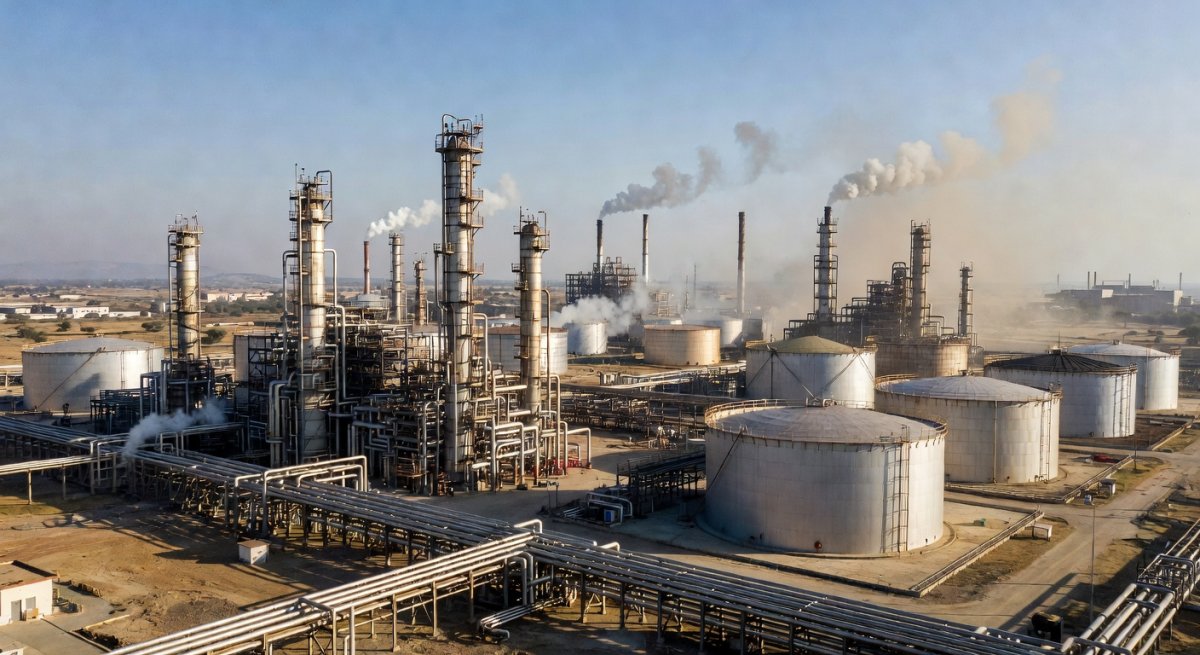
India's refineries are among the few globally capable of processing Venezuelan heavy crude at scale. (Global 1 News)
Regional Energy Flows and Brazil's Position as a Key Supplier
Latin America's energy producers now feature prominently in India's supply map. Brazil supplied more crude to India than Venezuela in recent months, placing the two nations alongside each other as significant non-Middle East sources. This pattern highlights how South American output helps India diversify away from Gulf routes that have faced interruptions.
The renewed Venezuelan volumes arrive as India looks to balance its portfolio. Michael Kugelman of the Atlantic Council observed that Venezuela gives India a chance to spread its energy sources beyond the Middle East while aligning with Washington's interest in reducing Indian dependence on Russian oil. At the same time, Kugelman cautioned that Delhi will proceed carefully and avoid large new energy commitments during the visit.
Brazil's established role as a major regional producer gives it leverage in these shifting trade patterns. Its consistent deliveries to India demonstrate how Latin American economies can meet demand from Asian refiners even when traditional routes face pressure.
Energy Transition Prospects and Lasting Oil Dependence
The agenda in New Delhi includes renewable energy alongside oil discussions. Venezuela's heavy crude remains central because few refineries outside India can process it at scale, locking in demand for the near term. Output gains this year show Venezuela's sector retains capacity to contribute, yet the overall relationship stays anchored in fossil fuels.
For Latin America, the pattern reveals both opportunity and constraint. Countries such as Brazil and Venezuela can expand sales to large importers like India, supporting local economies and state revenues. However, the emphasis on crude limits the pace of broader shifts toward renewables that many regional governments have discussed.
India's sophisticated refining sector continues to draw Venezuelan barrels precisely because of their characteristics. This technical fit reinforces oil's dominance even as talks touch on cleaner energy options.
Outlook for Latin America's Role in Global Energy Markets
The current increase in Venezuelan exports to India illustrates how one nation's production recovery can alter supply dynamics across continents. With Brazil already ahead in the same market, the two producers together strengthen Latin America's presence among India's top sources.
State firms from India hold existing assets in Venezuela and seek further openings. Any expansion would build on the infrastructure already in place, yet political and sanctions-related factors will shape the speed of growth. The modest size of overall bilateral trade outside oil further signals that energy will drive the partnership for the foreseeable future.
Across the region, producers face similar questions about how far oil revenues can fund economic stability while global buyers pursue diversification. Brazil's steady exports alongside Venezuela's rebound show that Latin American crude still meets essential demand, even as conversations about renewables continue in parallel.
By Elena Vasquez, Staff Writer
This article was produced with AI-assisted research and editorial support. Reporting is based on sources cited in the article.
What's Your Reaction?
 Like
0
Like
0
 Dislike
0
Dislike
0
 Love
0
Love
0
 Funny
0
Funny
0
 Wow
0
Wow
0
 Sad
0
Sad
0
 Angry
0
Angry
0

Latin America Correspondent at Global1.News. Based in Mexico City, covering politics, economics, energy, and culture across the region. Brings an on-the-ground perspective to stories spanning from the Rio Grande to Patagonia.














Comments (0)