
Venezuela Earthquake Miracle: Mexican Topos Azteca Rescue Security Guard After 8 Days Under Rubble
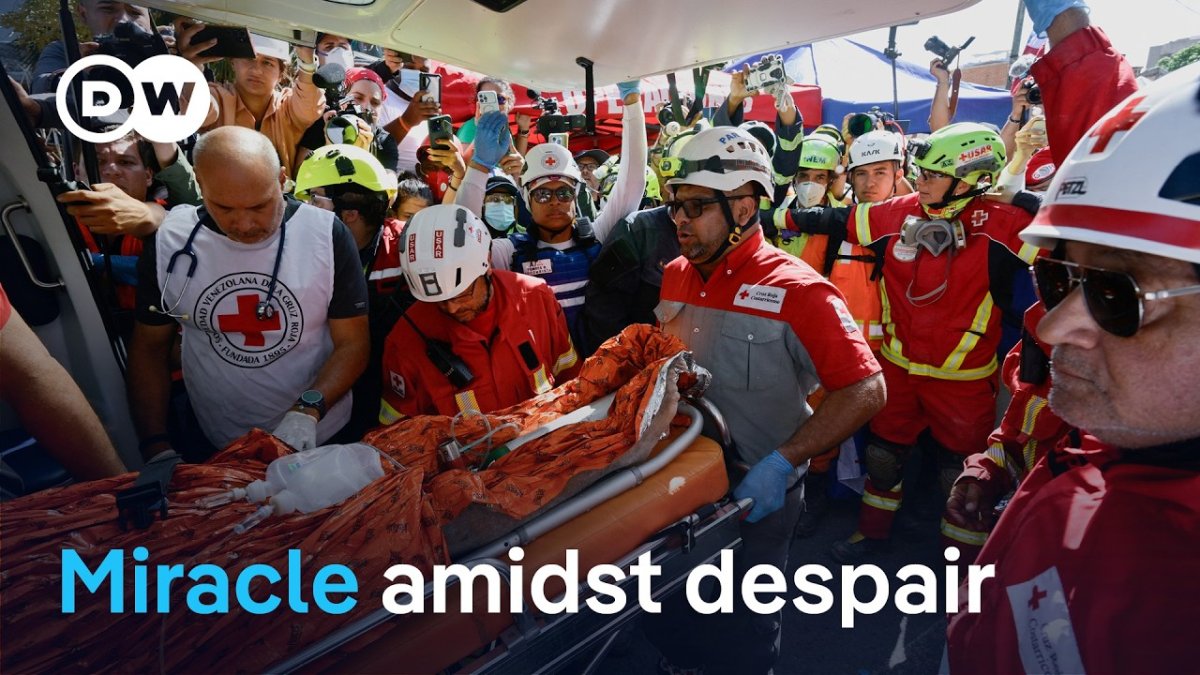
The Miracle Rescue Captured on Video The DW News video from July 2, 2026, shows the exact moment rescuers pulled 43-year-old security guard Hernán Alberto Gil Flores from beneath 140 tons of concrete at the collapsed Galerías Playa Grande shopping center in Catia La Mar, La Guaira State. Viewers across Mexico watched the footage in living rooms from colonias in CDMX to neighbor
The Miracle Rescue Captured on Video
The DW News video from July 2, 2026, shows the exact moment rescuers pulled 43-year-old security guard Hernán Alberto Gil Flores from beneath 140 tons of concrete at the collapsed Galerías Playa Grande shopping center in Catia La Mar, La Guaira State. Viewers across Mexico watched the footage in living rooms from colonias in CDMX to neighborhoods in Guadalajara, recognizing the same determination that defined their own recovery efforts decades earlier.
The twin earthquakes struck on June 24, 2026, registering 7.2 and 7.5 in magnitude. Hernán's security cabin created a narrow air pocket that kept him alive while the structure above pancaked. Rescuers worked through narrow shafts, delivering water and broth via syringe for four days before the final extraction on the eighth day.
Chilean firefighter María Paz Campos stayed in constant radio contact during the final hours, guiding Hernán through breathing exercises and reassuring him that his wife Gusbimar González and their two children waited nearby. A telescopic camera maintained visual contact, showing his face covered in dust but still responsive.
Mexican viewers noted the presence of Brigada Internacional de Rescate Topos Azteca members working alongside the Chilean team. The 80-year-old founder Héctor "El Chino" Méndez directed operations from a makeshift command post, coordinating with SEDENA and SEMAR personnel who had arrived within 48 hours of the first tremor.
The video ends with cheers as Hernán emerges on a stretcher, his arm raised slightly. For families in Monterrey watching the broadcast, the scene echoed the 2017 Mexico City earthquake rescues where similar air pockets saved lives under pancaked buildings.
Hernán's Ordeal Under the Rubble
Hernán Alberto Gil Flores, a 43-year-old father of two, was on duty at the shopping center when the first 7.2 quake hit at 3:17 a.m. The second 7.5 shock 11 minutes later brought the upper floors down, trapping him in a space no larger than a phone booth. His training as a security guard helped him remain still and conserve air.
Rescuers from multiple nations first detected signs of life on June 28 using listening devices. They created a narrow shaft and began feeding liquids through a syringe every few hours. Hernán later told doctors he could hear the voices of teams calling his name in Spanish, English, and Portuguese.
The concrete slab above him weighed an estimated 140 tons, yet the cabin's reinforced walls held. Engineers from the Los Angeles County Fire Department task force used hydraulic jacks to stabilize the surrounding debris before the final pull on July 2.
Medical teams reported Hernán suffered dehydration and minor fractures but no internal injuries. His survival after eight days stands among the longest recorded in urban search-and-rescue operations in Latin America since the 2010 Haiti earthquake.
A Family's Wait in Uncertainty
Gusbimar González, Hernán's wife, described the moment she learned he was alive as "a ray of light in the darkness." She had spent six days at the site with their children, ages 8 and 10, sleeping on blankets provided by local volunteers in a nearby parking lot.
The couple lives in Catia La Mar, where many families now queue for bottled water and canned food distributed by the Venezuelan military. Gusbimar said the children asked daily whether their father would return home before nightfall.
Neighbors from the same colonia brought tortillas and coffee to the family each morning. This comunitario support mirrors the networks that formed in Mexico City's Tlatelolco after the 1985 quake, when residents organized their own search parties before official teams arrived.
Gusbimar now helps other families at the rubble site by translating messages between Spanish-speaking rescuers and local officials. She credits the presence of Mexican volunteers for giving her renewed strength during the long vigil.
Topos Azteca: Mexico's Lifeline to the World
Brigada Internacional de Rescate Topos Azteca was founded in 1985 after the Mexico City earthquake killed nearly 10,000 people. Héctor "El Chino" Méndez, now 80, organized the first teams from the rubble of his own colonia and has led international missions for four decades.
The group arrived in La Guaira within 72 hours, bringing specialized listening equipment and canine units trained in collapsed-structure searches. SEDENA provided transport while SEMAR handled coastal logistics for heavy gear arriving by sea.
Héctor Méndez personally oversaw the shaft-digging operation near Hernán's location. At 80, he still directs shifts, reminding younger volunteers of the 1985 lessons about patience and precise listening before any concrete is moved.
Topos Azteca members have responded to disasters in Chile, Haiti, Nepal, and Turkey. Their deployment to Venezuela marks the 47th international mission since the group's founding, funded largely through private donations from Mexican communities.
Global Teams Unite in La Guaira
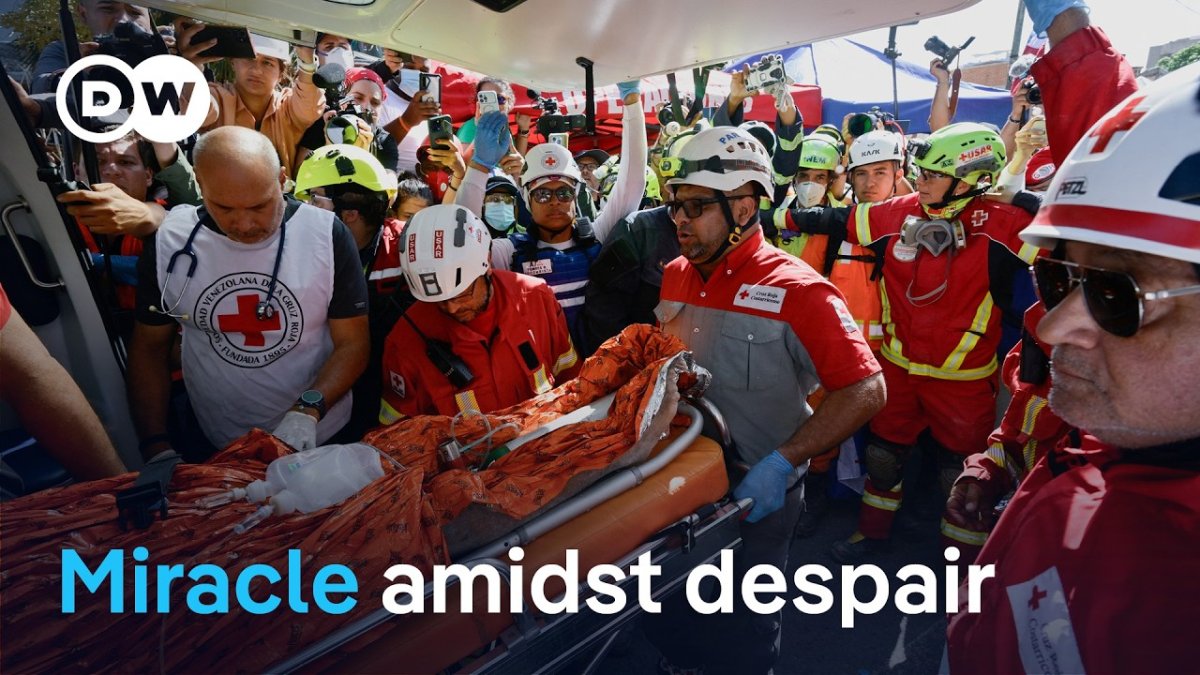
More than 300 American rescuers with 23 search canines worked alongside the Mexican brigade. Los Angeles County Fire Department task force leader Manny Sampang coordinated with Virginia Urban Search and Rescue Task Force 1 on overlapping search grids.
Spanish rescuers brought the sniffer dog Nala, who located two additional survivors on June 30. Portuguese and Costa Rican teams focused on the eastern section of the shopping center where an 18-day-old baby and mother were pulled out after 32 hours.
El Salvadoran firefighters shared equipment with Topos Azteca when hydraulic tools ran low. This cooperation occurred despite Venezuela's fragile political transition six months after the U.S.-backed ouster of Nicolás Maduro.
Acting President Delcy Rodríguez declared seven days of national mourning on June 25. The confirmed death toll stands at 2,295 according to National Assembly President Jorge Rodríguez, though CBS reports suggest the number may approach 2,600 with 11,000 injured and nearly 13,000 left homeless.
Venezuela's Deepening Crisis Amid Tragedy
Decades of economic crisis have left Venezuela's infrastructure brittle. Many buildings in Catia La Mar lacked proper reinforcement, turning the twin quakes into a catastrophe that destroyed or damaged tens of thousands of structures.
Food and water remain scarce. Long queues form daily at distribution points where survivors like 56-year-old Fatima Berroteran sleep in parking lots after her high-rise collapsed. Four police officers were arrested for stealing valuables from the rubble, highlighting the strain on public order.
Oil-rich Venezuela once boasted advanced emergency systems, yet collapsing health services now force families to rely on international teams for basic medical care. The humanitarian response includes teams from Chile, the United States, Portugal, Costa Rica, and El Salvador working under difficult conditions.
Lessons from Mexico's Own Quake History
Mexican families watching from Guadalajara and Monterrey recall the 1985 and 2017 earthquakes that killed thousands and left entire colonias without homes. The Topos Azteca story offers a reminder that organized community response can save lives even when official systems falter.
Héctor Méndez often tells new volunteers that the 1985 disaster taught Mexico to prepare for the next quake rather than wait for it. That same message now reaches Venezuelan rescuers learning alongside Mexican teams in La Guaira.
SEDENA and SEMAR continue to rotate personnel, ensuring fresh teams remain on site as aftershocks continue. Their presence strengthens long-term ties between the two nations facing similar seismic risks along the Caribbean plate boundary.
By Rosa Martinez, Staff WriterThis article was produced with AI-assisted research and editorial support. Reporting is based on sources cited in the article.
What's Your Reaction?
 Like
0
Like
0
 Dislike
0
Dislike
0
 Love
0
Love
0
 Funny
0
Funny
0
 Wow
0
Wow
0
 Sad
0
Sad
0
 Angry
0
Angry
0
Latin America/Andes Correspondent at Global1.News. Based in Bogota, covering politics, environment, energy, and social movements across the Andean region. Passionate about environmental journalism and communities protecting their land.














Comments (0)