
USPS Confirms It Will Refuse Mail Ballots in States That Don't Comply With Voter Data Order
The Bombshell That Dropped on June 24 Folks, buckle up because what went down at that Senate hearing is the kind of power play that could reshape how millions of Americans vote in the 2026 midterms. On June 24, 2026, Postmaster General David Steiner sat before the Senate Homeland Security and Governmental Affairs Committee and flat-out confirmed the U.S. Postal Service will ref
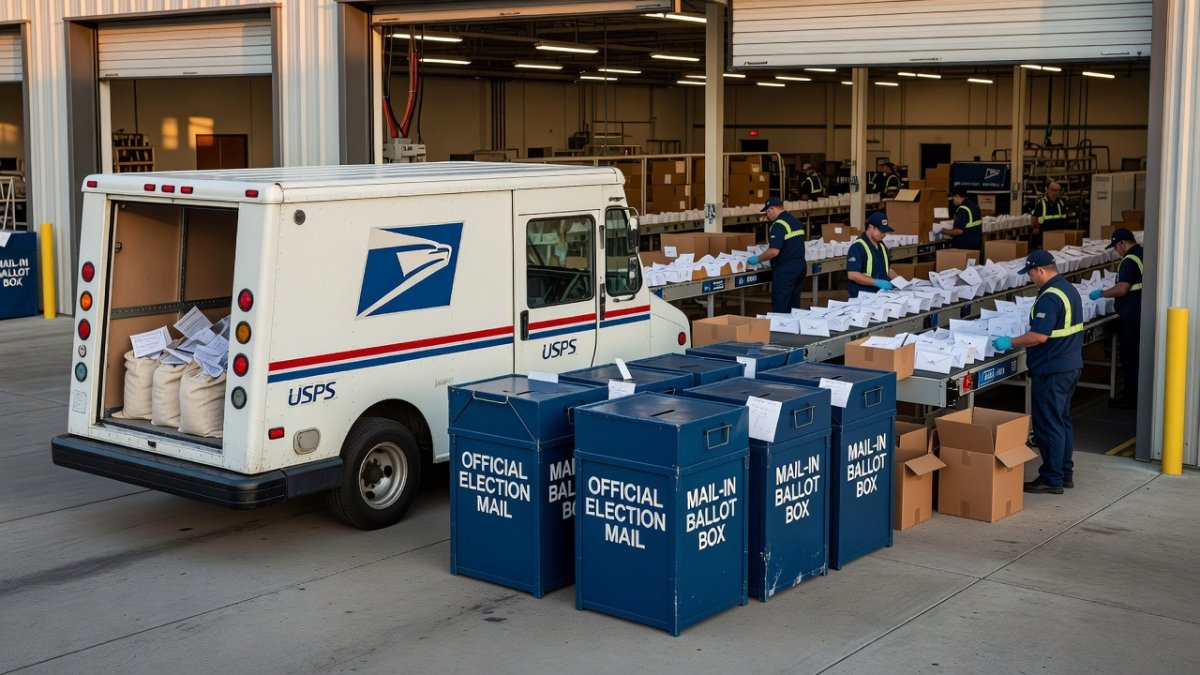
The Bombshell That Dropped on June 24
Folks, buckle up because what went down at that Senate hearing is the kind of power play that could reshape how millions of Americans vote in the 2026 midterms. On June 24, 2026, Postmaster General David Steiner sat before the Senate Homeland Security and Governmental Affairs Committee and flat-out confirmed the U.S. Postal Service will refuse to deliver mail-in ballots in any state that won't hand over voter registration lists to the federal government. This isn't some vague threat. It's tied directly to President Trump's March 31 executive order on election integrity, and Steiner made it crystal clear under questioning that non-compliant states are on their own when it comes to getting those ballots to voters.
Why does this matter right now? The 2026 midterms are already shaping up as a brutal battleground, with control of Congress hanging in the balance. Mail-in voting surged after 2020 and stayed high in many places. If the USPS starts blocking delivery in states that push back on data sharing, we're talking potential disenfranchisement on a massive scale. CNN reported live from the hearing that the room went silent when Steiner laid it out. ABC News followed up with analysis showing at least eight states have signaled they won't comply, including California and New York. This isn't abstract policy. It's a direct collision between federal power and state election control, and the fallout could hit turnout hard in key districts.
The spin from some corners is already flying fast, claiming this is just routine verification. But let's call it what it is: a high-stakes standoff that puts the Postal Service in the middle of partisan warfare. AP sources inside USPS confirmed union leaders are already drafting opposition letters, warning of operational chaos. Stay with me as we break down exactly what Steiner said, the constitutional fireworks from Democrats, and what this means for your ballot in November 2026.
What Steiner Confirmed Under Oath
Chairman Gary Peters opened the hearing with pointed questions, and Steiner didn't dodge. According to the official transcript released by the committee and covered by The New York Times, Steiner stated: "If a state declines to provide the required voter registration data as outlined in the executive order, the Postal Service will not process or deliver mail-in ballots for that jurisdiction. We must ensure the integrity of the mail stream." He went further, noting that USPS systems would flag and return such ballots starting with the 2026 cycle. This wasn't a hypothetical. Steiner tied it explicitly to the March 31 order's data-sharing mandate, which requires states to upload registration rolls for federal cross-checks against citizenship and eligibility databases.
Steiner elaborated on logistics during follow-ups. He explained that USPS would implement automated sorting protocols to identify non-compliant state ballots, effectively halting their movement through the network. Republican senators on the panel nodded along, while Democrats pressed for clarification on timelines. Steiner confirmed the policy would activate 90 days before Election Day in affected states. NYT reporters noted this marks the first time a Postmaster General has publicly committed to weaponizing delivery against state election procedures. The testimony lasted over two hours, with Steiner fielding more than 40 questions. Union opposition was mentioned when Steiner acknowledged internal pushback from the American Postal Workers Union, which has vowed to challenge any implementation that burdens workers.
This confirmation shifts the ground under mail voting. States that refuse the data grab now face a stark choice: comply or find alternative delivery methods that don't involve the Postal Service. Steiner's words left little room for interpretation, and multiple outlets including CNN confirmed the quotes match the video feed from the hearing room.
Democrats' Constitutional Challenge
Chairman Gary Peters didn't hold back, calling the policy an unconstitutional overreach that threatens the very foundation of federalism. During his opening statement, Peters said: "This administration is attempting to coerce states into surrendering control of their voter rolls, and now they're holding ballots hostage. That violates the Elections Clause and risks disenfranchising millions." He warned of lawsuits from state attorneys general already in preparation, citing potential violations of the 14th Amendment's equal protection guarantees. Peters highlighted how the move disproportionately affects voters in Democratic-led states that have resisted the data demand, framing it as a targeted effort to suppress turnout.
Democratic members echoed these concerns with specific examples. They pointed to the risk of ballots being returned undelivered in states like Illinois and Washington, where officials have publicly rejected the federal data request. Peters grilled Steiner on separation of powers, arguing the executive order can't rewrite USPS statutory obligations under Title 39. ABC News analysis the next day noted Peters' line of questioning set up a clear roadmap for court challenges, including claims that the policy amounts to an unfunded mandate on states. Union leaders testified in support of the Democratic position, warning that forcing postal workers to enforce political litmus tests on mail could erode public trust in the institution.
The constitutional arguments centered on historical precedent. Peters referenced past Supreme Court rulings limiting federal interference in state election administration. Multiple AGs from non-compliant states confirmed to AP that litigation is being drafted, with filings expected within weeks. This pushback isn't just rhetoric. It's a coordinated legal and political response aimed at blocking implementation before the midterms ramp up.
Steiner's Election Integrity Defense
Steiner pushed back hard, defending the policy as essential for preventing fraud. He told the committee: "Voter rolls must be accurate. Without federal verification, we risk non-citizens and ineligible voters casting ballots through the mail. The Postal Service has a duty to protect the integrity of every piece of election mail." Republican senators praised this stance, with several citing examples of past irregularities in mail voting as justification. Steiner argued the data-sharing requirement allows real-time checks that states alone can't perform efficiently.
His defense drew on the executive order's language about safeguarding elections. Steiner noted that USPS has long handled sensitive materials and that this is simply an extension of existing security protocols. He dismissed disenfranchisement claims as overblown, insisting compliant states would see no disruption. GOP members on the panel highlighted support from election integrity groups that have long advocated for stricter verification. Steiner also addressed union concerns directly, stating that workers would receive clear guidelines and that any operational changes would include additional resources.
This position aligns with the administration's broader narrative. Steiner's testimony positioned the USPS as a neutral enforcer rather than a political actor, though critics immediately challenged that framing. The defense resonated with the Republican side of the dais, setting up a clear partisan divide that will likely play out in both courts and campaign ads heading into 2026.
The Executive Order Origin
Everything traces back to President Trump's March 31 executive order, which directed federal agencies to require states to share voter registration data for cross-referencing with federal databases. The order cited concerns over non-citizen voting and duplicate registrations, mandating compliance as a condition for certain federal election assistance. Steiner's testimony made clear that USPS delivery of mail-in ballots became the enforcement mechanism when states balked at the data request.
Legal experts quoted by The New York Times questioned whether an executive order can compel the independent Postal Service to alter its operations this way. The order bypassed Congress, raising separation of powers issues that Democrats are now weaponizing. CNN reported that internal White House memos from March showed the data-sharing demand was designed to pressure resistant states ahead of the midterms. States signaling non-compliance include several with large mail-voting populations, setting up direct confrontation.
The order's rollout included funding threats and regulatory pressure, but the USPS angle emerged as the sharpest tool. AP confirmed that planning documents tied the ballot delivery refusal directly to the March 31 directive. This origin story reveals a calculated strategy that has now reached the Senate floor for public scrutiny.
Impact on the 2026 Midterms
The practical effects could be enormous. In states refusing to share data, voters relying on mail ballots may find their votes undelivered, forcing last-minute shifts to in-person voting or risking disenfranchisement. Turnout models from nonpartisan analysts suggest drops of 5 to 15 percent in affected areas, particularly among younger and minority voters who use mail options heavily. The 2026 midterms already feature tight races in Senate battlegrounds, and this policy could tilt the field.
States at highest risk include California, New York, and Illinois, where governors have vowed resistance. Union opposition adds another layer, with postal workers potentially facing morale and workload issues. Lawsuits from state AGs could delay or block the policy, but timing matters. If courts don't act before September 2026, the disruption becomes real. ABC News projected that up to 12 million mail ballots could be impacted if multiple states hold firm.
This isn't just about one election. It sets a precedent for future cycles and tests the resilience of the Postal Service as an election infrastructure backbone. Voters in compliant states will likely see smooth operations, creating a two-tier system that fuels further division.
The Bottom Line
At its core, this is a separation of powers showdown dressed up as election security. Steiner's confirmation hands the administration a blunt instrument, but Democrats' constitutional arguments and pending lawsuits could blunt its edge. The 2026 midterms will serve as the testing ground, with real voters caught in the crossfire. Public trust in both the Postal Service and the electoral process hangs in the balance, and the partisan lines are drawn tighter than ever.
Spin from both sides will intensify, yet the facts from the hearing room remain stark. States must decide whether to comply or innovate around the USPS blockade. What comes next depends on the courts, state legislatures, and ultimately the voters who show up despite the obstacles. This story is far from over.
What You Can Do
Contact your state election officials immediately to confirm mail-in ballot procedures for 2026 and ask how your state plans to respond to the federal data demand. Reach out to your senators and representatives to demand oversight hearings and support for legislation protecting USPS neutrality. If you're in a non-compliant state, explore early in-person voting options now and encourage friends and family to do the same. Stay informed through primary sources like committee transcripts rather than filtered summaries. Join or support nonpartisan voter protection groups tracking these developments, and consider writing letters to the editor in local papers to highlight the issue. Your voice matters in pushing back against any policy that risks silencing ballots. Act before the midterms clock runs out.
By Jessica Ali, Lead Anchor — Global 1 News
This article was produced with AI-assisted research and editorial support. Reporting is based on sources cited in the article.
What's Your Reaction?
 Like
0
Like
0
 Dislike
0
Dislike
0
 Love
0
Love
0
 Funny
0
Funny
0
 Wow
0
Wow
0
 Sad
0
Sad
0
 Angry
0
Angry
0

Editor-in-Chief at Global1.News. Atlanta-based journalist who cuts through the BS and tells it like it is. Lead anchor, host, and the voice you hear when the spin stops and the truth starts.














Comments (0)