
Supreme Court Directs Reduction in NEET-SS Qualifying Percentile for In-Service Government Doctors
Nearly 1,800 super-speciality medical seats remain unfilled across India, yet 152 seats earmarked for in-service government doctors in Tamil Nadu were on the verge of being diverted to the All India Quota — a move the Supreme Court halted on June 24, 2026, while directing that the qualifying percentile for in-service candidates must be reduced. The bench of Justices B.V. Nagara
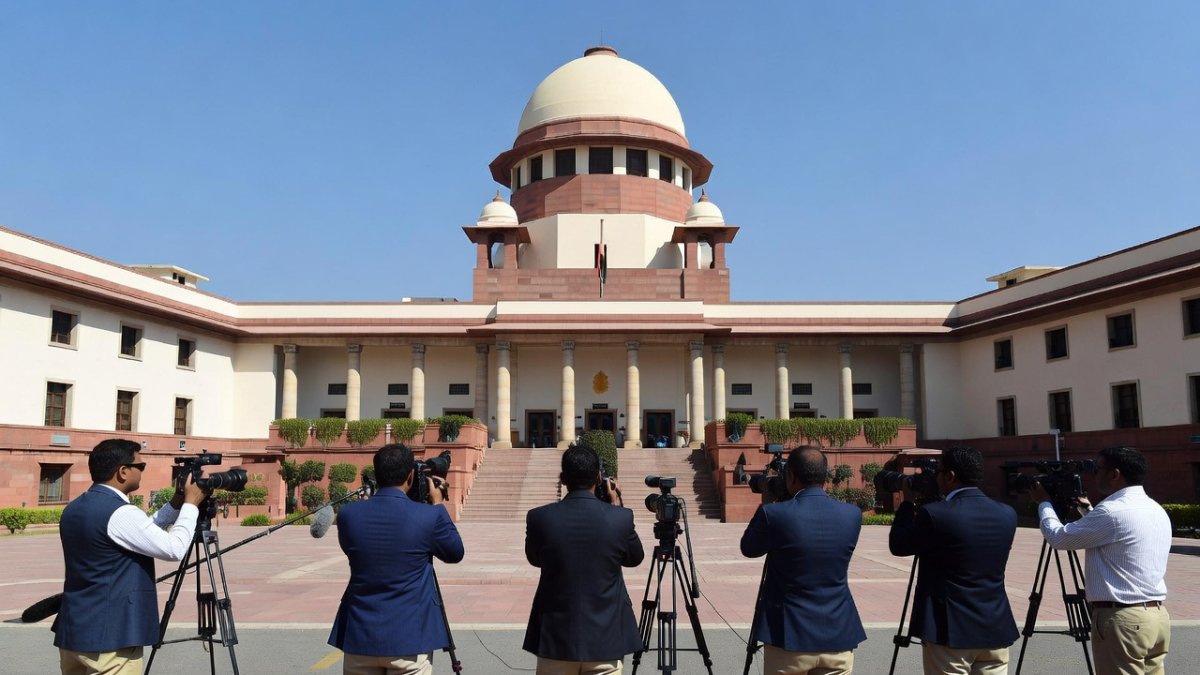
Nearly 1,800 super-speciality medical seats remain unfilled across India, yet 152 seats earmarked for in-service government doctors in Tamil Nadu were on the verge of being diverted to the All India Quota — a move the Supreme Court halted on June 24, 2026, while directing that the qualifying percentile for in-service candidates must be reduced. The bench of Justices B.V. Nagarathna and Joymalya Bagchi made it clear that government doctors serving the public while studying cannot be held to the same admission standards as full-time aspirants.
Supreme Court Directs Reduction in NEET-SS Qualifying Percentile for In-Service Government Doctors
New Delhi, India – June 25, 2026 — The Supreme Court of India on June 24, 2026, addressed a critical shortfall where 152 super-speciality seats earmarked for in-service government doctors in Tamil Nadu remained vacant after two rounds of counselling, despite 111 candidates on the waiting list. The bench comprising Justices B.V. Nagarathna and Joymalya Bagchi questioned the diversion of these seats to the All India Quota and explicitly stated that the qualifying percentile must be reduced for in-service candidates. This ruling directly impacts India's healthcare framework by highlighting systemic barriers faced by working government doctors who cannot study full-time like other aspirants.
(Global 1 News)
The Court's Reasoning on In-Service Quota and Seat Diversion
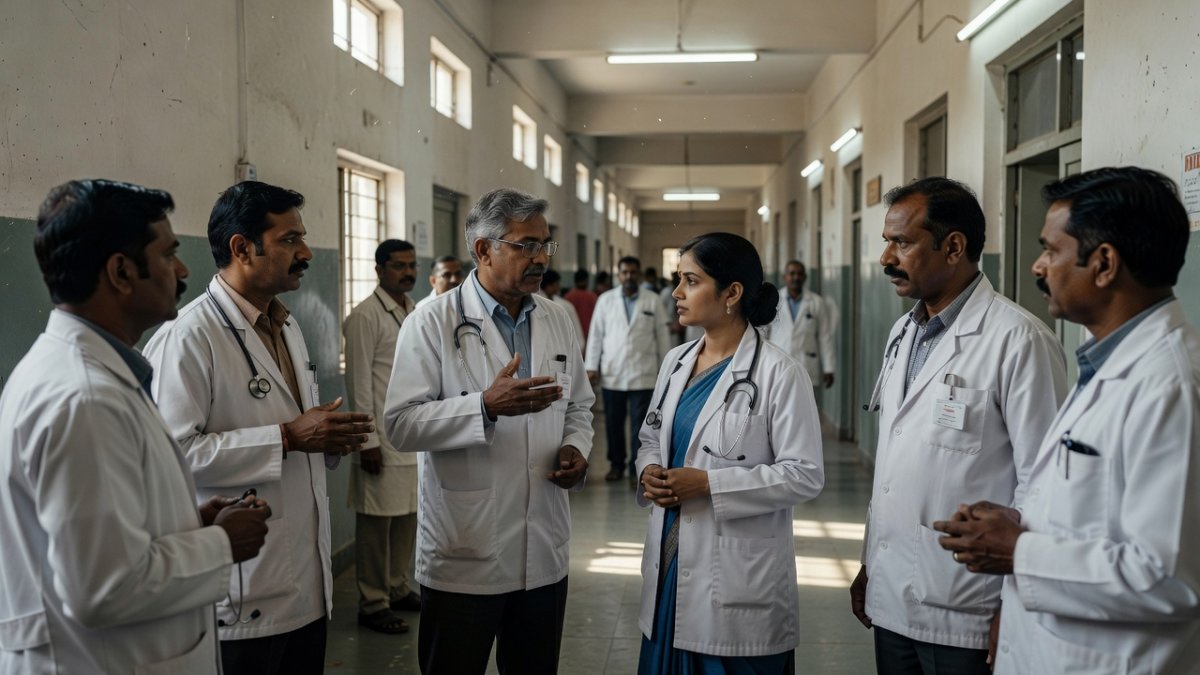
The bench examined the challenge brought by the Tamil Nadu Medical Officers Association, represented by senior advocate P. Wilson, against the premature diversion of 152 vacant super-speciality seats from the state's in-service quota to the All India Quota. Justices noted that Tamil Nadu had earmarked 219 super-speciality seats for in-service candidates for 2025-2026, yet only 68 joined after counselling. Justice Nagarathna observed that in-service doctors operate through a different channel, as they continue working while preparing, unlike candidates who can study at home uninterrupted.
The court referenced the precedent from N Kartikeyan v TN (2022), which had mandated surrender of vacant in-service seats to the All India Quota, but stressed that automatic transfer undermines state-level benefits for government doctors. A May 29, 2026 order from another bench had already directed Tamil Nadu to inform the Directorate General of Health Services of vacant seats, setting the stage for this June 24 hearing. The ruling underscores that reducing the qualifying percentile is essential to prevent further loss of opportunities for these doctors.
Tamil Nadu's Healthcare and Education Policy Context
Tamil Nadu pioneered a 50% quota for in-service doctors in super-speciality seats in 2020, integrating this into the state's healthcare framework to retain experienced government medical officers. This policy connects directly to the Indian education system by creating a parallel pathway that accounts for the dual responsibilities of clinical work and exam preparation. The current case involves the Tamil Nadu government lawyer B Karunakaran and addresses how 152 unfilled seats out of 219 earmarked ones affect the state's ability to strengthen its public health infrastructure.
With 111 in-service candidates still on the waiting list, the court's intervention aims to align the National Eligibility cum Entrance Test Super Speciality process with Tamil Nadu's model, preventing talent drain from state services. This approach reflects broader Indian politics around federal health education policies, where state quotas intersect with national counselling mechanisms managed by the Medical Counselling Committee.
(Global 1 News)
National Implications Across India's Super-Speciality Seats
Nearly 1,800 super-speciality seats remain unfilled across India, illustrating a nationwide crisis in postgraduate medical training that extends beyond Tamil Nadu. The Supreme Court issued notice to the Union Government, Directorate General of Health Services, National Medical Commission, Tamil Nadu, and the Medical Counselling Committee, with advocate Mithu Jain appearing for the NMC. The next hearing is scheduled for July 15, 2026, where the NMC has sought time to seek instructions on implementing the percentile reduction.
This development carries implications for Indian taxpayers who fund medical education and government healthcare systems, as unfilled seats represent wasted resources in training specialists. For doctors, it signals potential adjustments in the NEET-SS framework that could improve access for working professionals across states, while patients stand to benefit from a larger pool of qualified super-specialists retained in public service.
Impact on Indian Doctors, Patients, and Healthcare Delivery
The ruling directly benefits in-service government doctors by recognizing their unique constraints, potentially allowing more of the 111 waiting-list candidates in Tamil Nadu to secure seats without competing on equal terms with full-time aspirants. For Indian patients, this could translate to better-staffed super-speciality departments in state hospitals, reducing delays in advanced care. Taxpayers gain from optimized use of the 219 earmarked seats rather than repeated diversions that leave positions empty.
Justice Nagarathna's remarks emphasize that transferring seats to the All India Quota without adjustments disadvantages state doctors, affecting long-term retention in public healthcare. The case highlights how the education system must adapt to support working professionals, ensuring that policies like Tamil Nadu's 50% quota deliver on their intent to bolster India's medical workforce.
What This Means for India's Healthcare System
The June 24 Supreme Court observations reinforce the urgent need for data-driven reforms in India's medical education framework. With 1,800 super-speciality seats vacant nationally, the ruling signals that admission policies must account for the dual burden borne by government doctors — serving patients while pursuing advanced qualifications. The National Medical Commission now faces the task of recalibrating the NEET-SS percentile structure to accommodate in-service candidates without compromising merit.
The case also highlights a deeper structural issue: India's public healthcare system invests heavily in training doctors through state medical colleges, yet loses specialists when admission barriers push in-service candidates out of the pipeline. A reduced qualifying percentile for these doctors is not a concession — it is a correction to a system that currently disadvantages the very professionals it depends on for rural and public healthcare delivery.
The Bottom Line
The Supreme Court has sent a clear signal: India's super-speciality medical training framework must be redesigned to recognize the unique circumstances of in-service government doctors. With 152 vacant seats in Tamil Nadu alone and 1,800 nationally, the current system is failing both doctors and patients. The next hearing on July 15, 2026, will determine how quickly the NMC and Union Government can implement the percentile reduction — and whether this ruling becomes a precedent for states across the country. For now, over 111 doctors on the waiting list in Tamil Nadu have reason to hope that their years of public service will no longer be a barrier to advanced training.
— By Dr. Raj Patel, Staff Writer
This article was produced with AI-assisted research and editorial support. Reporting is based on sources cited in the article.
What's Your Reaction?
 Like
0
Like
0
 Dislike
0
Dislike
0
 Love
0
Love
0
 Funny
0
Funny
0
 Wow
0
Wow
0
 Sad
0
Sad
0
 Angry
0
Angry
0

Caribbean Correspondent at Global1.News. Based in Port of Spain, Trinidad, covering Caribbean politics, economy, energy, climate, and culture. Amplifying the voices and stories of the Caribbean region.












Comments (0)