
War Without End: US and Iran Trade Fire as Hormuz Blockade Returns and Oil Markets Reel
The US-Iran war reached day 137 on July 13, 2026. CENTCOM struck six Iranian sites that night in a five-hour mission ending at 10:15 p.m. ET. Trump reinstated a naval blockade and announced fees for Strait of Hormuz passage. Iran hit two tankers; Bahrain downed drones and missiles. The June 15 ceasefire collapsed. The IEA called disruptions the largest in oil market history, with 20% of global trade at risk. The war began February 28, 2026.
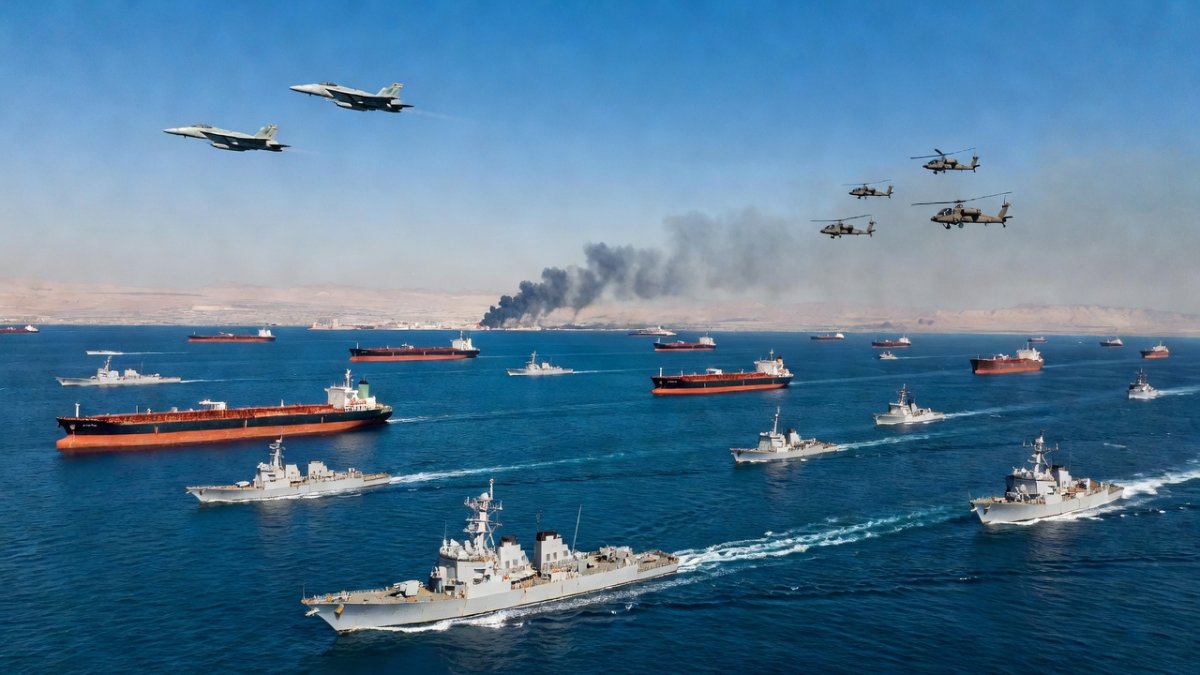
The Third Night: CENTCOM's Precision Campaign
U.S. Central Command completed its third consecutive night of strikes against Iran on July 13, 2026, wrapping up operations at 10:15 p.m. ET after a five-hour mission. Forces targeted military sites across six locations including Bushehr, Chah Bahar, Jask, Konarak, Abu Musa, and Bandar Abbas. The explicit objective remained degrading Iran's capacity to threaten commercial shipping lanes.
CENTCOM reported using precision munitions that struck dozens of targets during the operation. This marked the latest phase in a conflict that reached its 137th day on July 13. Iranian state media outlet IRNA confirmed ongoing attacks along the coastline near the Strait of Hormuz throughout the night.
These strikes followed a pattern of sustained pressure on Iranian naval and coastal infrastructure. Military analysts noted the focus on ports and missile facilities that could support attacks on vessels. The operation built directly on the previous two nights of similar activity without deviation from stated goals.
Coordination with Israeli forces, which began the conflict on February 28, 2026, continued to shape targeting priorities. No civilian sites were reported hit in the CENTCOM release. The precision approach aimed to limit broader escalation while maintaining operational tempo.
The Hormuz Blockade: Trump's Economic Weapon
President Trump announced the reinstatement of a naval blockade targeting Iranian ports during remarks on July 14, 2026. The measure includes plans to charge ships for safe passage through the Strait of Hormuz. This economic lever seeks to restrict Iran's revenue from oil exports amid ongoing hostilities.
The blockade builds on existing naval presence in the region and aims to enforce compliance with passage fees. Officials described it as a direct response to Iran's repeated threats against international shipping. Implementation details remain under development by U.S. naval commanders.
Approximately 20 percent of the world's oil trade normally transits the Strait of Hormuz, making the policy a high-stakes intervention. Trump emphasized that revenues from the fees would support U.S. operations. Iranian officials immediately condemned the move as illegal interference.
Naval assets from multiple U.S. carrier groups have repositioned to enforce the new rules. The policy marks a shift from earlier diplomatic efforts toward direct economic coercion. Shipping companies now face uncertainty over compliance costs and routing alternatives.
The naval blockade has pushed Brent crude prices to $112 per barrel, an 18% surge from pre-conflict levels of $95, while WTI reached $108, per EIA data released July 14. Shipping lines Maersk, MSC, and COSCO have suspended Hormuz transits, forcing reroutes via the Cape of Good Hope that add 12-15 days and $450,000-$600,000 per voyage in fuel and insurance. Iran faces projected oil revenue losses of $2.8 billion monthly as exports drop below 400,000 barrels per day.
Under UNCLOS Article 38, the U.S. blockade raises questions of transit passage rights through international straits, with legal experts noting potential violations absent explicit UN Security Council authorization. IEA assessments indicate the disruption exceeds prior chokepoint incidents, with 4.2 million barrels per day of Iranian and regional crude now idled.
Iran Strikes Back: Tankers and Drones
Iran retaliated by striking two oil tankers in the Strait of Hormuz on July 14, 2026. The attacks followed the U.S. announcement of the blockade and passage fees. No immediate casualty figures were released by either side.
Bahrain's military reported intercepting and destroying several Iranian drones and missiles launched toward the region. These defensive actions prevented further damage to commercial vessels. The incidents highlighted the rapid cycle of action and response now defining the conflict.
IRNA coverage framed the tanker strikes as legitimate countermeasures to U.S. aggression. Iranian forces claimed the operations targeted vessels linked to hostile interests. The moves escalated risks for all commercial traffic in the narrow waterway.
These exchanges occurred against the backdrop of the collapsed June 15 ceasefire agreement. Trump declared the deal over on July 13, citing repeated violations. The return to open hostilities has eliminated any remaining buffer between the two sides.
Global Oil Markets in Freefall
The International Energy Agency described the current situation as the largest supply disruption in the history of the global oil market. Disruptions stem directly from the blockade and ongoing strikes near key export terminals. Traders reacted with sharp price spikes on July 14 and 15.
With 20 percent of global oil trade at risk, alternative routes face immediate capacity constraints. Refineries in Asia and Europe began adjusting procurement schedules within hours of the latest announcements. The IEA warned of prolonged volatility through the summer months.
Energy analysts tracked daily fluctuations exceeding previous records set during earlier regional crises. Iranian exports have already dropped significantly since the conflict began on February 28, 2026. The combination of physical blockades and military activity compounds the supply shock.
Downstream effects include higher fuel costs for airlines and shipping firms worldwide. Governments in import-dependent nations activated strategic reserves on an emergency basis. The IEA continues to monitor developments without projecting an early resolution.
Brent crude climbed from $82 in early June to $112 by July 14, marking the steepest 30-day gain since the 1973 embargo's 300% spike over five months. The IEA labeled the event the largest supply disruption on record, surpassing 2008's $147 peak and 2020's negative prices. China, Japan, and India reported combined refinery utilization drops of 22%, with Sinopec and Reliance cutting runs by 1.1 million barrels daily.
The U.S. SPR released 28 million barrels in coordination with IEA members, while Japan drew 12 million from its reserves under Energy Minister Kenichi Hosono. Officials including IEA Executive Director Fatih Birol warned of sustained $100-plus pricing absent rapid de-escalation, with Asian importers facing $18 billion in extra import costs through September.
Diplomacy in Ruins: From Ceasefire to Escalation
The June 15 ceasefire agreement collapsed after less than a month, with President Trump declaring it over on July 13, 2026. Both sides accused the other of violations that rendered the deal untenable. No new talks are scheduled according to official statements.
Earlier diplomatic channels involving European intermediaries produced no lasting results. The rapid return to strikes on July 13 underscored the fragility of any negotiated pause. Military operations now operate without the previous constraints of the ceasefire period.
Trump's public statements tied the blockade decision directly to the ceasefire failure. Iranian leadership responded by rejecting further negotiations under current conditions. The absence of active diplomacy leaves military momentum as the dominant factor.
Regional powers have urged restraint without success. The 137-day conflict has outlasted multiple attempts at de-escalation. Each new strike cycle further reduces the likelihood of renewed talks in the near term.
The Regional Ripple Effect
Bahrain's successful interception of Iranian drones and missiles demonstrated the involvement of Gulf states in defensive operations. Neighboring countries increased patrols and alert levels following the tanker strikes. The conflict's reach now extends beyond direct U.S.-Iran exchanges.
Shipping rerouting around the Cape of Good Hope adds weeks to delivery schedules for oil and other cargo. Ports in the United Arab Emirates and Saudi Arabia reported heightened security measures. Commercial operators face rising insurance premiums for Hormuz transits.
The six targeted Iranian locations include critical naval and air facilities that support regional power projection. Damage assessments continue, but early reports indicate significant degradation of launch capabilities. This affects not only shipping but also potential missile threats to nearby nations.
Humanitarian agencies noted growing concerns over supply chain interruptions for food and medicine in affected areas. The economic weapon of the blockade amplifies pressure on civilian populations alongside military targets. Regional stability remains under sustained strain.
What Comes Next: A War Without End?
The pattern of nightly strikes and retaliatory actions shows no sign of slowing after 137 days. CENTCOM maintains operational readiness for continued missions while the blockade takes shape. Iranian forces have signaled willingness to sustain asymmetric responses.
Oil market analysts project further price pressure if the 20 percent trade flow through Hormuz faces additional restrictions. The IEA continues daily assessments of supply data. Governments worldwide monitor the situation for signs of broader involvement.
President Trump's economic measures introduce a new variable that could either force negotiations or prolong fighting. The collapse of the June 15 ceasefire removed the most recent off-ramp. Military planners on both sides prepare for extended operations.
International observers emphasize the absence of viable diplomatic pathways at present. The conflict's duration already exceeds initial expectations set after the February 28, 2026 start. Future developments hinge on whether either side alters its core objectives.
U.S. Central Command maintains two carrier strike groups in the Arabian Sea alongside 18,000 troops across Gulf bases, with readiness statements from Gen. Michael Kurilla emphasizing 72-hour response windows. Israeli coordination since the February 28 joint strikes includes shared intelligence on Iranian naval movements, while Horn of Africa deployments feature three destroyers monitoring Cape reroutes.
Military analysts at the Center for Strategic and International Studies project three scenarios: sustained blockade through October, partial easing via third-party mediation, or escalation involving Iranian mining operations. Proliferation of Cape of Good Hope traffic has already increased daily tanker traffic by 47 vessels, extending average delivery times to Asian refiners by 18 days.
By Jessica Ali, Staff WriterThis article was produced with AI-assisted research and editorial support. Reporting is based on sources cited in the article.
What's Your Reaction?
 Like
0
Like
0
 Dislike
0
Dislike
0
 Love
0
Love
0
 Funny
0
Funny
0
 Wow
0
Wow
0
 Sad
0
Sad
0
 Angry
0
Angry
0

Editor-in-Chief at Global1.News. Atlanta-based journalist who cuts through the BS and tells it like it is. Lead anchor, host, and the voice you hear when the spin stops and the truth starts.













Comments (0)