
USMCA Uncertainty, World Cup Glory: Mexico's Eventful Week
USMCA Future Sparks Bilateral Talks and Community Concerns U.S. Trade Representative Jamieson Greer announced on July 1 that the United States will not renew the USMCA for an additional 16 years. Economy Minister Marcelo Ebrard quickly reassured Mexican families that the treaty remains in force until 2036, with annual reviews built into the agreement. Bilateral talks are schedu
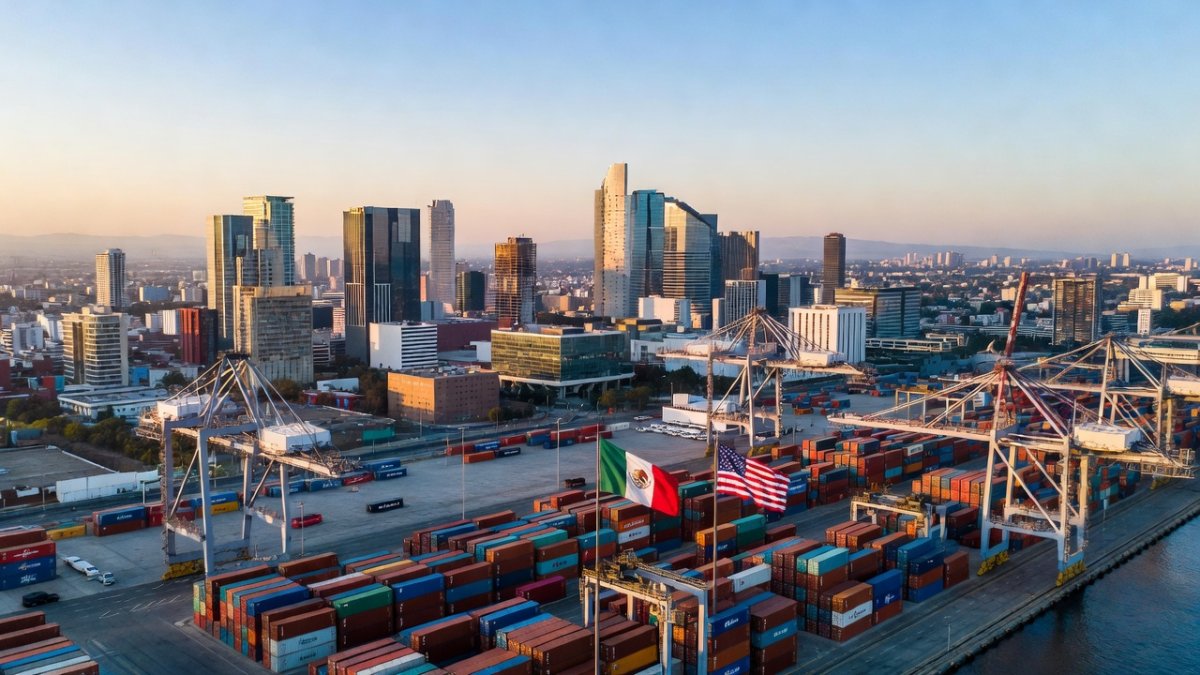
USMCA Future Sparks Bilateral Talks and Community Concerns
U.S. Trade Representative Jamieson Greer announced on July 1 that the United States will not renew the USMCA for an additional 16 years. Economy Minister Marcelo Ebrard quickly reassured Mexican families that the treaty remains in force until 2036, with annual reviews built into the agreement. Bilateral talks are scheduled for July 20, centering on Section 232 tariffs affecting steel, aluminum, and vehicles. Officials from the Secretaría de Relaciones Exteriores, including senior diplomats, have already begun preparing position papers that highlight Mexico’s role as the top trading partner for many U.S. states.
In his full statement delivered at the Palacio Nacional, Ebrard stressed that Mexico would approach the July 20 talks with both firmness and friendship, reminding listeners that any disruption to integrated supply chains would hurt workers on both sides of the border. He noted that Section 232 tariffs, originally imposed under national-security provisions, now threaten to raise costs for everything from pickup trucks assembled in Silao to aluminum window frames produced in Monterrey. For Mexican families, these tariffs could translate into higher prices at the ferretería and fewer shifts at the maquiladora, directly affecting household budgets in places where every peso counts.
Eighty-five percent of Mexican exports continue to enter the U.S. market tariff-free under current terms. This stability matters deeply for small business owners in border colonias and rural communities that rely on automotive and agricultural supply chains. Many campesinos in states tied to PEMEX and CFE operations watch closely, knowing any tariff shift could ripple through local economies. In the ejidos of Chihuahua and Sonora, families who grow tomatoes and peppers for export worry about sudden changes in vehicle-component rules that could affect the maquiladoras where their sons and daughters work.
Community leaders in Nuevo León and Tamaulipas have organized town-hall meetings to discuss how the July 20 talks might protect the thousands of jobs tied to cross-border trucking. Meanwhile, the Secretaría de Economía has pledged weekly updates through the traditional mañanera morning briefings so that everyday citizens can follow developments without needing to read dense legal texts.
INE Clears Two New Parties for 2027 Midterms
The Instituto Nacional Electoral approved Somos México, which traces roots to the marea rosa protest movement, and Construyendo Sociedades de Paz, also known as PAZ, the successor to Encuentro Solidario. Both will appear on the 2027 midterm ballot. Two additional applications were denied after failing to meet signature thresholds in at least 20 states. INE counselors emphasized that the decisions followed months of verification visits to party offices in Mexico City, Guadalajara, and Mérida.
The marea rosa emerged in 2022 as a wave of peaceful marches across dozens of cities, with participants waving pink handkerchiefs to demand accountability after controversial judicial reforms. Its energy later coalesced into the new party Somos México, which now positions itself as a centrist option focused on transparency and citizen oversight. Meanwhile, Encuentro Solidario began as a faith-inspired civic group in 2020 before evolving into PAZ, broadening its platform to include social-welfare programs and anti-corruption measures while retaining its emphasis on family values and community solidarity.
These decisions by INE open fresh avenues for political participation ahead of votes in the Congreso de la Unión. Residents in indigenous communities and urban neighborhoods see the new options as potential platforms for voices long underrepresented in Palacio Nacional debates. The process highlights Mexico’s ongoing commitment to democratic expansion through established institutions. In the colonias of Iztapalapa and Ecatepec, local organizers already plan signature drives to help the new parties gather the 3 percent national vote share required to keep their registry.
Historic World Cup Victory Ignites Nationwide Celebrations
Mexico defeated Ecuador 2-0 on June 30, securing its first knockout-stage win since 1986. Julián Quiñones and Raúl Jiménez scored the goals. More than one million people gathered along Paseo de la Reforma to celebrate, though four individuals died of asphyxiation near the Angel de la Independencia. Emergency services from the Mexico City government and the Cruz Roja worked through the night to assist those affected.
When Quiñones headed in the second goal in the 78th minute, the roar that swept through the crowd felt like a single heartbeat shared by an entire nation. Strangers embraced, mariachi bands struck up “Cielito Lindo,” and green-white-and-red flags waved like a living sea stretching from the Diana Cazadora all the way to the Zócalo. President Sheinbaum later issued a statement praising the players’ discipline and the fans’ passion, while also urging everyone to honor the victims by celebrating responsibly in the days ahead.
Mayor Clara Brugada has since announced that future large-scale gatherings will be capped at 25,000 participants. The victory resonated far beyond the capital, uniting families in rural villages and migrant-worker communities who followed the match on radios and shared screens. In the southern state of Chiapas and the northern border city of Ciudad Juárez, neighbors set up outdoor projectors so that entire ejidos could watch together. The moment underscored Mexico’s enduring passion for fútbol as a source of collective pride.
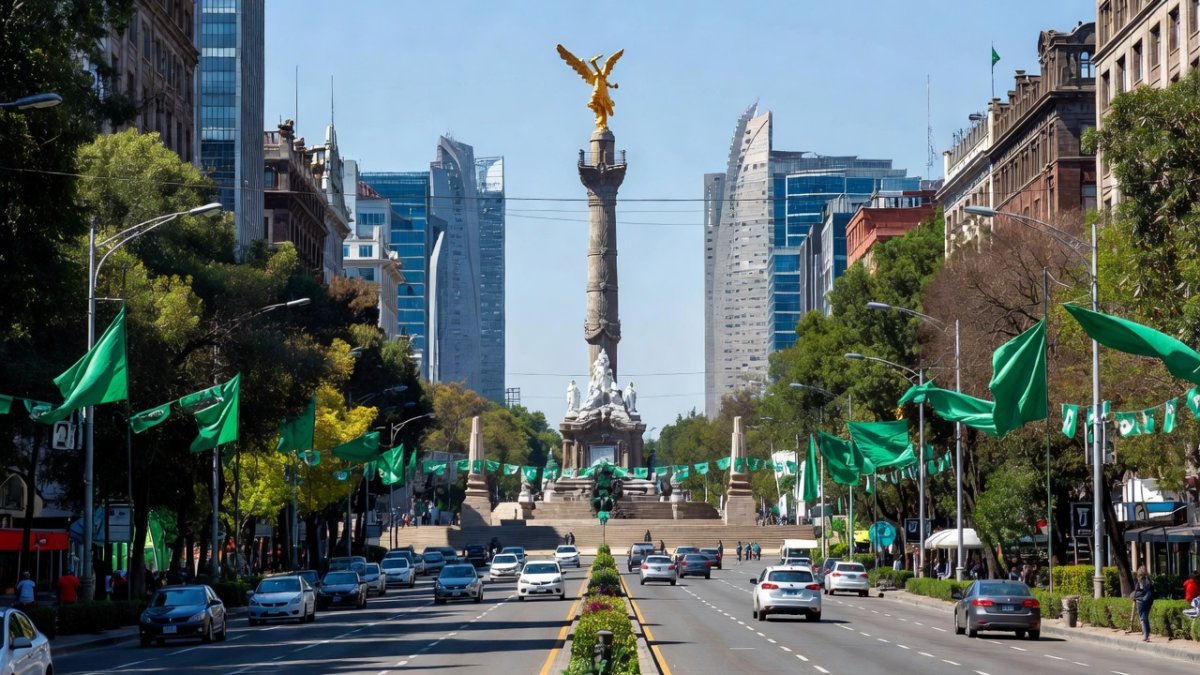
Concanaco estimates that the spontaneous street parties and related tourism generated roughly one billion dollars in economic activity nationwide, from street-food vendors to hotel bookings in host cities. Brugada’s office is now coordinating with state governors to create regional fan zones that respect both safety limits and the cultural importance of public celebration. Schools in several states have already requested permission to hold smaller victory parades so children can share in the joy without traveling to the capital.
Indigenous and Afro-Mexican Rights Law Moves Toward Congress
The government is consulting more than 16,000 Indigenous and Afro-Mexican communities on the proposed General Law on the Rights of Indigenous and Afro-Mexican Peoples. The legislation is expected to reach the Congreso de la Unión on October 12. If approved, it would directly benefit 25.8 million people across 69 Indigenous groups. Coordinators from the Secretaría de Gobernación have visited remote mountain villages in Oaxaca and Guerrero, as well as coastal Afro-Mexican towns in Veracruz and Guerrero, to record oral testimonies.
This consultation process was made possible by the sweeping 2024 constitutional reform that elevated collective rights to the same level as individual guarantees, requiring free, prior, and informed consent for any legislation affecting ancestral territories. The reform also recognized Afro-Mexican communities as subjects of collective rights for the first time in national law, opening the door for the current draft to address both Indigenous and Afro-descendant claims in a single statute.
Discussions involve coordination with SEGOB and draw on input from CONEVAL regarding poverty metrics in affected regions. Rural families and indigenous leaders emphasize the need for stronger protections over land, language, and cultural practices. The consultations represent a careful, phased approach to legislative change that respects community timelines. In many ejidos, elders have formed committees to translate key articles of the draft law into native languages so that everyone can participate fully.
Presidential Performance Index Rises Amid Economic Challenges
President Sheinbaum recorded a performance index of 64.8 out of 100 for May, an increase of 4.8 points. Inflation stood at 3.94 percent, the lowest level since January. The decline in homicide rates continued to accelerate, while economic growth remained the weakest pillar in the assessment. Data from INEGI and the Fiscalía General de la República show that 12 states recorded double-digit drops in violent crime compared with the same month last year.
Nationally, homicides fell 11.4 percent year-over-year, with the steepest declines in Guanajuato (down 19 percent) and Baja California (down 17 percent). These figures reflect sustained coordination between federal forces and state attorneys general, alongside social programs aimed at at-risk youth in high-violence municipalities. The trend offers tangible relief to families who have lived under the shadow of cartel-related crime for more than a decade.
INEGI data and FGR reports inform these measurements, which matter to households across the country. Small business owners and workers in CFE-dependent regions note modest relief from lower inflation, even as broader growth concerns persist. The index reflects steady progress in several areas while highlighting ongoing priorities for the administration. During recent mañanera sessions, the president has pointed to new public-works projects in Michoacán and Sinaloa as examples of how federal spending can eventually lift the growth numbers.
INEGI Reports on Inflation and Growth Trends
Additional INEGI figures released this week showed that core inflation, which excludes volatile food and energy prices, fell to 3.2 percent. This improvement brings relief to families who buy tortillas, beans, and cooking oil at neighborhood tienditas. At the same time, the agency noted that manufacturing output in the automotive sector grew only 1.1 percent, underscoring the need for continued dialogue on USMCA rules. Economists at the Banco de México have warned that any new tariffs could quickly erase these modest gains.
Local Governments Respond to National Developments
Governors in border states have formed working groups with the Secretaría de Economía to prepare contingency plans ahead of the July 20 bilateral talks. In Mexico City, Mayor Clara Brugada’s administration is studying how new party registration rules might affect local assembly races in 2027. Meanwhile, state human-rights commissions are helping Indigenous communities prepare written submissions for the October 12 legislative package.
Community Voices Shape Mexico’s Path Forward
Across colonias, rural towns, and indigenous territories, the week’s developments intersect with daily life. Families weigh trade stability against political openings, celebrate sporting milestones with measured caution, and participate in rights consultations that could reshape legal protections. Institutions such as the SCJN and SRE continue to play supporting roles in these national conversations. In the markets of Oaxaca and the factories of Monterrey, people speak of both hope and caution as Mexico moves through this eventful period.
The events from June 29 to July 3, 2026, illustrate Mexico’s capacity to balance external pressures with internal progress. As bilateral talks approach and legislative processes advance, communities remain at the center of decisions that will influence the coming years.
What to Watch For
Looking ahead, all eyes remain on the July 20 bilateral meeting in Washington, where negotiators will seek to shield Mexican exporters from renewed Section 232 tariffs while preserving the integrated North American supply chains that sustain millions of jobs. Observers also anticipate the first public drafts of the Indigenous and Afro-Mexican rights legislation, which could set precedents for land-use consultations nationwide. On the political front, the newly registered parties will begin signature drives in earnest, testing whether the marea rosa spirit and the rebranded Encuentro Solidario can translate street energy into ballot-box strength by 2027. Finally, Mexico’s national team will face its quarterfinal opponent on July 4, with fans hoping the euphoria on Paseo de la Reforma can be repeated safely across regional fan zones.
Tags: Mexico USMCA, World Cup 2026, Indigenous rights, INE parties, Sheinbaum index, Marcelo Ebrard, Clara Brugada, Mexican communities
By Rosa Martinez, Staff Writer
This article was produced with AI-assisted research and editorial support. Reporting is based on sources cited in the article.
What's Your Reaction?
 Like
0
Like
0
 Dislike
0
Dislike
0
 Love
0
Love
0
 Funny
0
Funny
0
 Wow
0
Wow
0
 Sad
0
Sad
0
 Angry
0
Angry
0
Latin America/Andes Correspondent at Global1.News. Based in Bogota, covering politics, environment, energy, and social movements across the Andean region. Passionate about environmental journalism and communities protecting their land.









Comments (0)