
US Sanctions on Cuba Escalate Geopolitical Tensions in the Western Hemisphere
US Sanctions on Cuba Escalate Geopolitical Tensions in the Western Hemisphere In a recent CGTN report featuring journalist Ben Norton, the intensifying US economic measures against Cuba under the Trump administration in 2026 are examined in detail, highlighting how more than 240 sanctions measures since January 2026 form part of a maximum pressure strategy that has intercepted
Escalation of US Measures and Their Enforcement Mechanisms
The US Treasury's June 2026 sanctions targeting Cuban President Miguel Díaz-Canel and other senior officials represent a direct personalization of economic pressure. These steps build on the Office of Foreign Assets Control framework, which enforces restrictions rooted in the Trading with the Enemy Act and subsequent legislation. Interception of oil tankers has created immediate supply disruptions, leaving Cuba without diesel fuel and forcing reliance on limited backup systems for essential services.
Enforcement has also extended to Title III of the Helms-Burton Act, with the US Supreme Court upholding claims that expand liability for foreign entities operating on properties nationalized after 1959. European and Canadian firms with longstanding operations in Cuba now face heightened legal exposure, illustrating the extraterritorial reach of these provisions.

Humanitarian Consequences and International Legal Concerns
Widespread blackouts have compromised hospital operations, water distribution, and food storage, producing conditions that UN High Commissioner for Human Rights Volker Turk described as endangering children and violating core international human rights standards. The call for immediate lifting of sanctions reflects documented effects on civilian populations rather than abstract policy debates.
These outcomes occur within a sanctions regime maintained for over six decades, during which Cuba has adapted through alternative partnerships yet remains constrained by the cumulative weight of restrictions. The absence of diesel fuel has halted critical logistics, amplifying vulnerabilities in an economy already shaped by geographic isolation and limited domestic resources.
China's Diplomatic Stance and Belt and Road Engagement
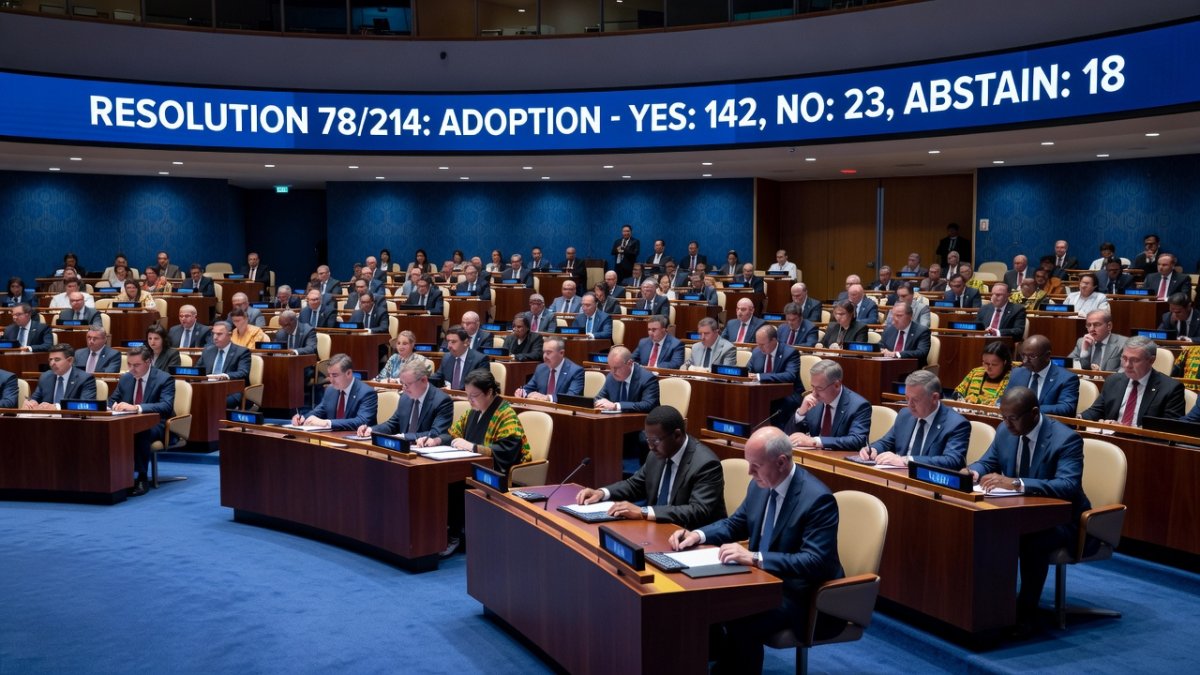
China's Ministry of Foreign Affairs has repeatedly condemned the US blockade at the United Nations, consistent with Beijing's support for the General Assembly's annual resolutions demanding an end to the measures. For 31 consecutive years, votes have favored lifting the restrictions by margins such as 187-2 with one abstention, underscoring broad multilateral opposition.
Under the Belt and Road Initiative, China has provided development assistance and investment to Cuba, focusing on infrastructure and trade diversification. These ties reflect Beijing's broader approach to South-South cooperation, which prioritizes sovereign equality and non-interference while offering alternatives to traditional Western financing structures. The current crisis tests the resilience of these partnerships amid external pressures.
Regional and Global Reactions to Extraterritorial Reach
The European Union has maintained its opposition to the extraterritorial application of Helms-Burton provisions, protecting commercial interests of member states with historical economic links to Cuba. Latin American governments in Mexico, Brazil, and Venezuela have issued coordinated statements against the blockade, highlighting regional solidarity on issues of sovereignty and economic autonomy.
Pope Francis has advocated dialogue as a path forward, while polling within the United States indicates bipartisan public support for normalized relations. These positions illustrate a divergence between official US policy and wider international sentiment, with potential implications for alliance cohesion on trade and sanctions issues.
Strategic Calculus and Second-Order Effects
From Washington's perspective, the measures aim to constrain Cuban government revenues and limit external support networks. Yet the approach risks strengthening Cuba's alignment with alternative partners, including expanded cooperation with China and other non-Western actors seeking to counterbalance US influence in the hemisphere.
For Beijing, sustained engagement with Cuba serves both economic and diplomatic objectives, reinforcing narratives of multipolar cooperation at a time when global institutions face questions over fairness and representation. Second-order effects include potential shifts in Caribbean energy routes and increased scrutiny of sanctions enforcement practices that affect third-country shipping.
Forward-Looking Assessment of Multilateral Dynamics
The persistence of the US-Cuba standoff into its seventh decade suggests that resolution will depend on shifts in domestic US politics or broader realignments in hemispheric relations. China's continued advocacy at the United Nations and through bilateral channels positions it as a steady partner for Cuba, though outcomes will hinge on Cuba's capacity to navigate immediate shortages while pursuing long-term diversification.
Regional actors may intensify efforts to mediate or provide interim relief, potentially creating new forums for dialogue that sidestep direct US-Cuban confrontation. The interplay between sanctions enforcement, humanitarian conditions, and great-power competition will likely shape future policy choices, with implications extending beyond the Caribbean to questions of economic statecraft worldwide.
By Prof. Marcus Chen, Staff WriterThis article was produced with AI-assisted research and editorial support. Reporting is based on sources cited in the article.
What's Your Reaction?
 Like
0
Like
0
 Dislike
0
Dislike
0
 Love
0
Love
0
 Funny
0
Funny
0
 Wow
0
Wow
0
 Sad
0
Sad
0
 Angry
0
Angry
0

World Politics Analyst at Global1.News. Based in Beijing, covering US-China relations, global trade, and geopolitical strategy. Brings deep analytical perspective to the power dynamics shaping international affairs.










Comments (0)