
Arrest of US Scholar Min Zin in Kunming Raises Questions About China-Myanmar Academic Research Boundaries
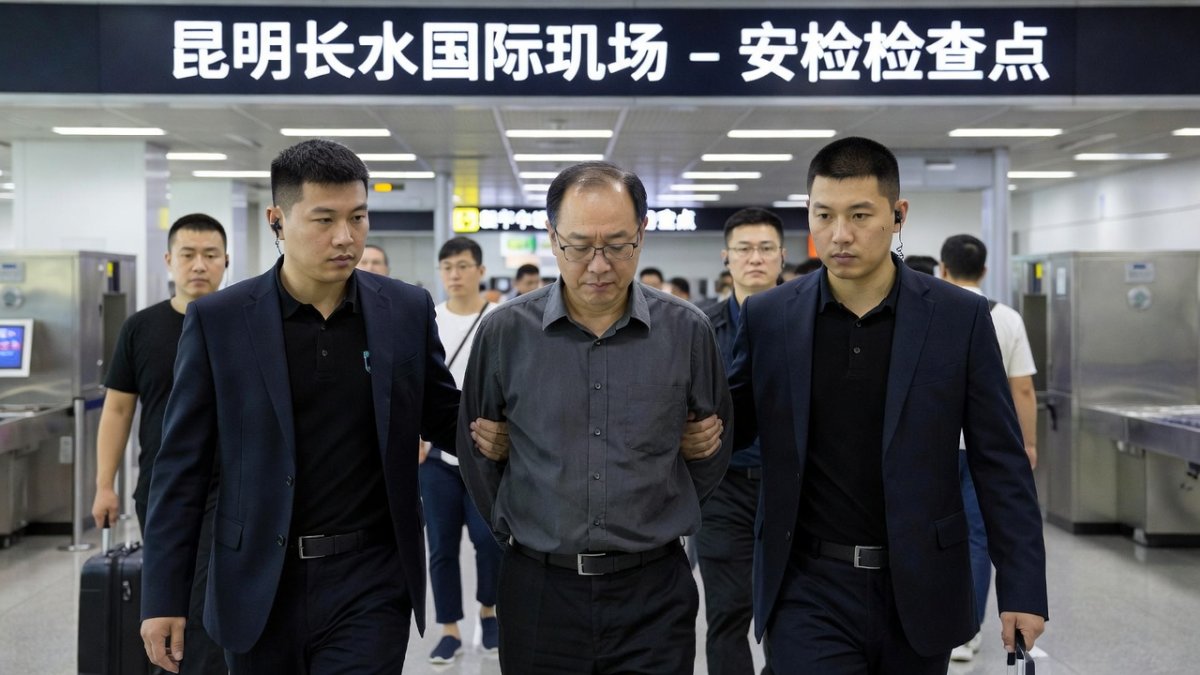
The Circumstances Surrounding the Detention in Kunming The arrest of US scholar Min Zin occurred at Kunming airport on 3 June, according to reports from AFP. Chinese authorities have confirmed through the foreign ministry that the individual faces accusations of spying and endangering national security. This development took place in a city that serves as a key gateway near the
The Circumstances Surrounding the Detention in Kunming
The arrest of US scholar Min Zin occurred at Kunming airport on 3 June, according to reports from AFP. Chinese authorities have confirmed through the foreign ministry that the individual faces accusations of spying and endangering national security. This development took place in a city that serves as a key gateway near the Myanmar border, highlighting the sensitive nature of cross-border movements in the region.
Details remain limited, as is typical in such cases involving national security claims by Chinese officials. The scholar reportedly disappeared while in Kunming, prompting family members to engage with the US consulate in Guangzhou for consular assistance. Such interventions underscore the procedural channels available when US citizens encounter legal issues abroad.
The timing aligns with broader diplomatic calendars, occurring shortly after high-level US-China meetings. Analysts note that Kunming's role as a transportation hub amplifies scrutiny on travelers engaged in research related to neighboring countries. This incident marks an uncommon instance of a US citizen facing such charges.
Background and Career Trajectory of Min Zin
Min Zin participated as a student activist in Myanmar's 1988 pro-democracy movement before fleeing to Thailand to avoid detention by military authorities. He subsequently pursued studies in the United States and returned to Myanmar in 2010. These experiences shaped his focus on political and strategic issues affecting the country.
Currently serving as executive director at the Myanmar Institute for Strategic and Policy Studies (ISP-Myanmar), a think tank based in Thailand, Min Zin oversees research examining China's role in Myanmar. He is also enrolled as a PhD student at the University of California Berkeley, combining academic pursuits with policy analysis.
His planned participation in a conference in Kathmandu later in the month illustrates ongoing international engagement typical of scholars in this field. The think tank's location in Thailand facilitates regional perspectives on bilateral dynamics without direct operation inside Myanmar.
China's Approach to National Security in Research Contexts
Chinese foreign ministry statements emphasize the protection of national security as a core priority when handling cases involving foreign nationals. This framework applies particularly to activities perceived as intelligence-related, even when conducted under academic auspices. Officials maintain that such measures safeguard sovereignty amid expanding international interactions.
Academic research touching on strategic topics near borders often encounters heightened oversight. In this instance, the focus on China's involvement in Myanmar through ISP-Myanmar activities may have intersected with these boundaries. Chinese doctrine prioritizes stability in peripheral regions as integral to overall foreign policy objectives.
Instances of US citizens detained on national security grounds remain infrequent, suggesting selective application of these provisions. The process typically involves coordination across relevant ministries to assess potential risks. This approach reflects a consistent emphasis on preventing external influences from affecting domestic or regional security calculations.
Diplomatic Timing Linked to Trump's Beijing Engagement
The detention follows US President Donald Trump's visit to Beijing, during which he received a grand welcome from Chinese President Xi Jinping. That engagement highlighted efforts to manage bilateral tensions through direct leader-level dialogue. Such visits often set the stage for subsequent developments in related policy areas.
High-level summits between the two powers frequently address overlapping interests in Asia, including influence in neighboring states. The sequence of events places the Kunming arrest within a period of active diplomatic maneuvering. Chinese strategic interests in maintaining leverage over regional partners factor into these calculations.
Observers examine how such incidents might influence ongoing channels of communication between Washington and Beijing. The grand reception accorded to the US leader contrasted with the subsequent security action, illustrating the multifaceted nature of the relationship. Second-order effects could include adjustments in academic mobility protocols.
Myanmar Military Leadership and Scheduled Beijing Interactions
Junta leader Min Aung Hlaing, head of Myanmar's military government that assumed power following the 2021 coup, is scheduled to visit Beijing in the coming period. Beijing maintains established ties with this administration, rooted in longstanding strategic and economic considerations. These connections support China's broader objectives in Southeast Asia.
The proximity of the scholar's detention to this planned visit raises questions about coordination between security actions and diplomatic scheduling. Myanmar's military government relies on Chinese support for infrastructure and political backing, creating mutual dependencies. Chinese foreign policy doctrine stresses the value of stable partnerships along its southwestern frontier.
Analysis of leverage points suggests that Beijing calibrates its engagements to balance influence with neighboring entities. The head of Myanmar's military government seeks to consolidate external relations amid internal challenges. This dynamic produces ripple effects on research communities monitoring these ties.
Boundaries of Academic Inquiry in China-Myanmar Studies
Think tanks such as ISP-Myanmar produce analyses that examine economic corridors and political linkages between China and Myanmar. When such work involves travel to Chinese territory, researchers navigate evolving regulatory environments. The arrest prompts reconsideration of permissible topics and data collection methods.
China's strategic calculus prioritizes control over narratives concerning its regional projects. Scholars focusing on these areas may encounter restrictions when their inquiries touch sensitive infrastructure or governance matters. This environment shapes the second-order effects on international academic networks.
Future research agendas may shift toward remote methodologies or alternative venues to mitigate risks. The incident illustrates how national security frameworks intersect with knowledge production on bilateral relations. Institutions based outside China, including those in Thailand, continue to fill informational gaps while adapting to these constraints.
Geopolitical Ramifications and Regional Leverage Dynamics
China's foreign policy in Myanmar emphasizes connectivity through initiatives that enhance economic integration and security cooperation. The detention signals a willingness to enforce boundaries when research activities are viewed as potentially compromising. This stance aligns with doctrines that treat information flows as strategic assets.
US academic involvement in the same space introduces additional variables into the triangular relationship involving Washington, Beijing, and Naypyidaw. Leverage accrues to the party best positioned to shape access and narratives. Second-order effects might include reduced willingness among scholars to undertake fieldwork in border zones.
Overall, the episode underscores the interplay between security imperatives and scholarly mobility. Chinese authorities balance openness to certain exchanges against vigilance in areas deemed vital to national interests. Regional actors, including Myanmar's military leadership, monitor these developments for indicators of shifting alignments.
By Prof. Marcus Chen, Staff WriterThis article was produced with AI-assisted research and editorial support. Reporting is based on sources cited in the article.
What's Your Reaction?
 Like
0
Like
0
 Dislike
0
Dislike
0
 Love
0
Love
0
 Funny
0
Funny
0
 Wow
0
Wow
0
 Sad
0
Sad
0
 Angry
0
Angry
0

World Politics Analyst at Global1.News. Based in Beijing, covering US-China relations, global trade, and geopolitical strategy. Brings deep analytical perspective to the power dynamics shaping international affairs.













Comments (0)