
US, Iran agree on framework for 60-day ceasefire extension – Report
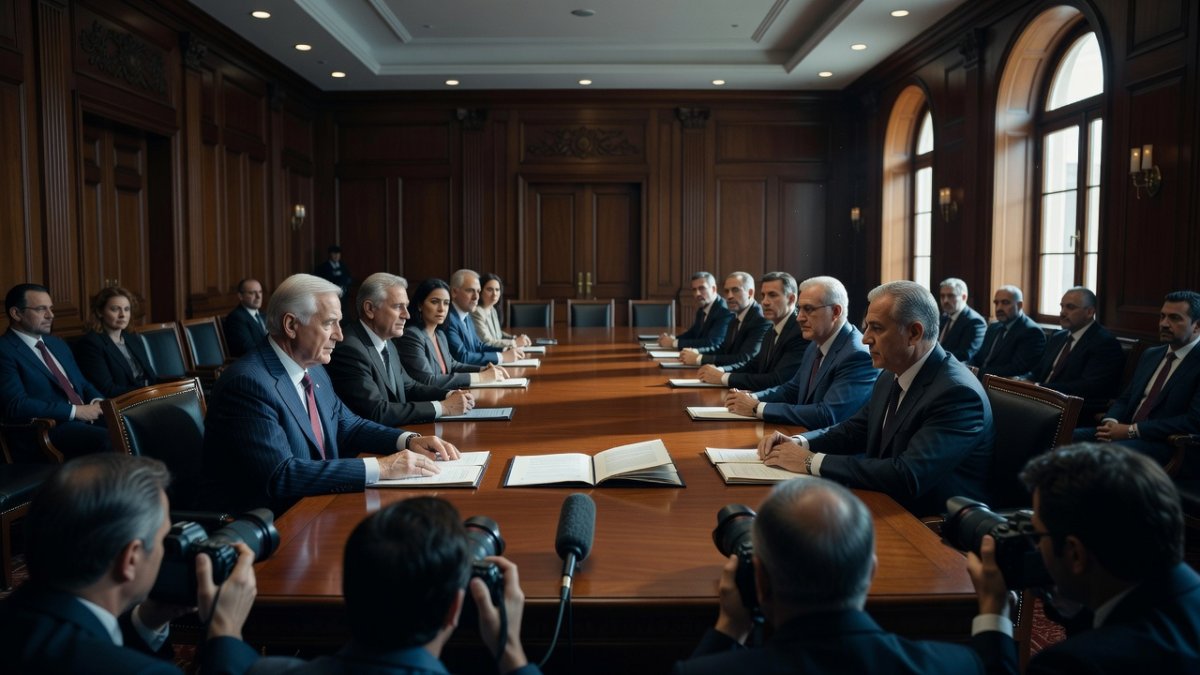
US, Iran Agree on Framework for 60-Day Ceasefire Extension – Report
In a development that could reshape energy markets and global trade flows, negotiators from the United States and Iran have reached a preliminary framework for extending the current ceasefire by 60 days, according to senior American sources familiar with the closed-door talks. The agreement remains contingent on final sign-off from US President Donald Trump, who is expected to review the terms within the next 48 hours.
Breaking the Stalemate in High-Stakes Diplomacy
The reported framework emerged late yesterday after three days of indirect negotiations mediated through Oman and Switzerland. Both sides have reportedly committed to maintaining the fragile halt in hostilities that began six weeks ago following escalated strikes on shipping lanes in the Strait of Hormuz. Under the proposed extension, Iran would continue limiting uranium enrichment to 3.67 percent while allowing enhanced International Atomic Energy Agency inspections at three additional sites. In return, the US would pause new sanctions designations targeting Iranian oil exports for the duration of the 60-day period.
American sources described the deal as “narrow but workable,” emphasizing that it avoids any permanent concessions on ballistic missile programs or regional proxy activities. Iranian officials, speaking on condition of anonymity, confirmed the framework exists but stressed that domestic hardliners still demand guarantees against snapback sanctions once the extension expires.
Economic Stakes for Global Energy Markets
The timing of this extension carries immediate consequences for oil prices and African producers. Brent crude has already eased 4.2 percent since the initial ceasefire announcement, settling at $78.40 per barrel yesterday. A verified 60-day reprieve could push prices toward the $72–74 range, according to analysts at Standard Chartered, potentially shaving $1.8 billion from Nigeria’s projected 2025 oil revenue if sustained.
Nigeria’s economy remains acutely exposed. With 1.4 million barrels per day currently exported, even a modest price dip directly affects the naira’s stability and the federal government’s ability to fund capital projects. Central Bank of Nigeria data shows that every $5 decline in average annual oil prices widens the fiscal deficit by approximately 0.8 percent of GDP. Traders in Lagos are already repricing forward contracts, with some shifting hedges toward longer-dated positions in anticipation of further volatility once the 60-day window closes.
Background: From Maximum Pressure to Fragile Truce
The current ceasefire traces its roots to a series of maritime incidents that began in late 2024. Iranian-backed forces targeted commercial vessels transiting the Strait of Hormuz after the US reimposed secondary sanctions on Chinese refiners purchasing Iranian crude. Washington responded with limited airstrikes on IRGC naval assets in the Persian Gulf, prompting Tehran to threaten closure of the vital chokepoint through which 21 percent of global oil trade passes.
Diplomatic channels reopened only after quiet intervention by European and Gulf intermediaries. The initial 30-day pause, agreed in early March, included a prisoner exchange and limited humanitarian waivers. The proposed 60-day extension would represent the longest formal de-escalation since the 2018 US withdrawal from the Joint Comprehensive Plan of Action.
Trump’s Pending Decision and Domestic Politics
President Trump has not publicly commented on the framework. White House sources indicate he is weighing the proposal against pressure from congressional hawks and Israeli officials who argue that any extension rewards Iranian intransigence. A final decision is expected before markets open on Monday.
Market participants are pricing in roughly a 65 percent probability of approval, according to prediction platforms. Rejection would likely trigger an immediate 6–8 percent spike in Brent futures and renewed pressure on emerging-market currencies, including the Nigerian naira.
Implications for Africa and Nigeria’s Strategic Positioning
Beyond immediate price effects, a sustained ceasefire could unlock modest sanctions relief that indirectly benefits African economies. Iranian petrochemical exports, if permitted under temporary waivers, might compete with Nigerian methanol and fertilizer shipments in Asian markets. Conversely, stable Hormuz transit lowers insurance premiums for West African crude cargoes, improving margins for Dangote Refinery and other domestic operators.
Abuja has maintained studied neutrality throughout the crisis, with the Ministry of Foreign Affairs issuing only a brief statement calling for “dialogue and restraint.” Behind the scenes, however, Nigerian diplomats are reportedly exploring opportunities to position the country as a neutral energy supplier should Iranian volumes remain constrained long-term.
Expert Perspectives on Durability
Dr. Aisha Bello, senior fellow at the Lagos-based African Centre for Energy Policy, noted that the framework’s narrow scope leaves critical issues unresolved. “Sixty days buys time, but it does not address the structural mistrust,” she said. “Investors will remain cautious until they see whether Washington and Tehran can convert this tactical pause into a broader understanding.”
Regional security analysts also highlight the risk of spoiler actions by non-state actors. Past ceasefires have been tested by attacks attributed to Iranian-backed militias in Iraq and Yemen, raising the possibility that the 60-day extension could collapse before its scheduled end.
Forward Outlook: Markets and Diplomacy
Should President Trump grant approval, attention will immediately shift to the next phase of talks scheduled to begin in Geneva in mid-May. Those discussions are expected to tackle longer-term sanctions architecture and regional deconfliction mechanisms. For Nigerian policymakers, the priority remains diversifying export destinations and accelerating non-oil revenue reforms to reduce vulnerability to Middle East shocks.
Oil traders in Lagos are already modeling scenarios. A successful extension followed by renewed tensions could push prices back above $85 by July, while a durable agreement might anchor Brent near $70 through year-end. Either outcome will test Nigeria’s fiscal buffers and the resilience of its recently reformed foreign exchange regime.
The coming 48 hours will determine whether this framework marks a genuine turning point or merely another temporary reprieve in one of the world’s most consequential rivalries.
This is Sarah Okafor for Global1 News, reporting from Lagos. 🇳🇬
This article was produced with AI-assisted research and editorial support. Reporting is based on sources cited in the article.
What's Your Reaction?
 Like
0
Like
0
 Dislike
0
Dislike
0
 Love
0
Love
0
 Funny
0
Funny
0
 Wow
0
Wow
0
 Sad
0
Sad
0
 Angry
0
Angry
0

Africa Correspondent at Global1.News. Based in Lagos, covering politics, business, technology, and culture across the continent. Focused on telling African stories beyond the headlines — the innovation, entrepreneurs, and communities shaping the region's future.













Comments (0)